
Translated material
"Tax on conscience"
Will the law banning advertising from foreign agents kill independent media?
The law banning advertising by foreign agents, which will come into force the other day, has already dealt a serious blow to independent and opposition media in Russia. If you follow it, then placing an advertisement on a foreign agent’s resources will result in a fine of up to 500 thousand rubles. Foreign agents are now also prohibited from posting advertisements on their premises under penalty of criminal prosecution. And all this greatly cuts the budgets of the media, which do not take money from the Russian authorities. No Future, together with the media “Devil”, tried to understand whether the Russian independent media will be screwed, whether there will be more propaganda, how the clearing will change, and most importantly, how to survive?
Destruction?
After the bill passed its first reading in the State Duma, well-known content makers who continued to work in Russia made statements about stopping or reducing the work of their resources.
Alexey Pivovarov, who heads the “Editorial” project on YouTube (4.11 million subscribers), said that the law hit the project harder than those who work from abroad. “One of the first consequences of this law for me was the need to say goodbye to a significant part of the team, since I simply cannot pay people’s salaries anymore,” he wrote in his Telegram channel.
Pivovarov fired all the authors of the Editorial Board who filmed the reports and will create his channel “almost in splendid isolation.” He also transferred legal rights and management of the “Editorial” telegram channel (1 million subscribers) to the project team and it is now called “Context”.
Another project “Tell Gordeeva” (1.65 million subscribers) announced its closure on February 28 after the bill was adopted in the third reading. In her post, Katerina Gordeeva wrote that advertising integrations were the only source of income for her project and now she is unable to continue working.
In addition, the journalist stated that even before the ban, anonymous “well-wishers” were actively intimidating her advertisers. However, a week later, on March 6, Katerina changed her mind. According to her, this was influenced by the support of her viewers: they offered alternative sources of funding, their own free professional help for the project, regular donations and money. “We will try to hold out. True, at least at first, we will really need your help,” Gordeeva wrote.
For those “foreign agents” who emigrated and work abroad, the situation is not so dramatic - they are not threatened with criminal prosecution for advertising, and they have access to foreign advertisers and grants. But for them, the ban on Russian advertising was a serious blow.
Ilya Varlamov, author of the YouTube channel varlamov (4.9 million subscribers), also made a statement on February 28. He did not announce any layoffs or suspensions, but also asked for financial support from his viewers and subscribers. In his opinion, it was thanks to advertising and monetization of YouTube that many independent authors were able, in principle, to appear and work without the influence of censorship. They have become full-fledged market players who compete with huge state media. “Today they came for the independent authors who continued to work. With the new law, it will be impossible to finance even small editorial offices as before. Many will have to close. As a result, there will be no need to block YouTube. Undesirable journalists simply will not be able to produce content,” he concluded.
A little later, Ilya Varlamov prepared a separate video dedicated to the work of his channel. In it, he stated that they most likely would not be able to survive without the support of the audience. The project will have to either close down or disband part of the team. In the video, Varlamov, in particular, explains why he cannot live only by monetizing YouTube. In addition to the blocking of monetization in Russia, this is also influenced by the very low cost of one view in the CIS countries, where the Russian-speaking audience is concentrated: 1000 views in the USA costs $15, and 1000 views in Belarus are less than one.
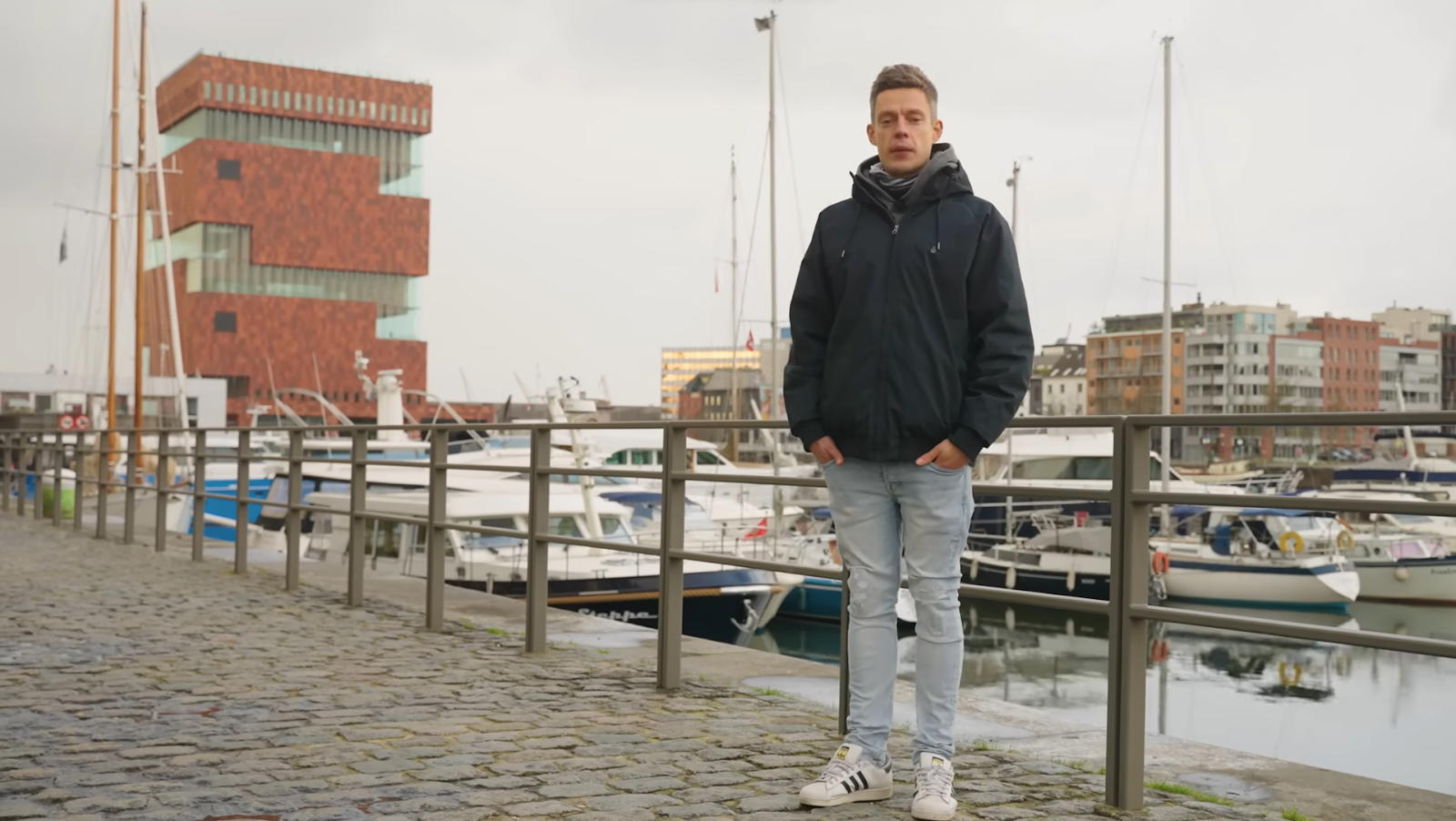
One of the most popular authors-foreign agents, journalist Yuri Dud, who has more than 10 million subscribers on YouTube, is also forced to rebuild his work. On March 12, he addressed representatives of foreign companies that can still order advertising from “foreign agents” and called on them to cooperate. “There remain a large number of businesses in the world that have no legal connection with Russia - a wonderful country, but an increasingly insane state that discriminates another category of its citizens (the ban on advertising to foreign agents is what it is; by the way, it directly contradicts the Constitution),” wrote Yuri Dud.
Journalist Karen Shainyan with a YouTube channel of the same name (214 thousand subscribers) told Cherta that advertising did not constitute a significant part of his budget, but nevertheless the ban affected him too. “I have a criminal case, and even despite this, someone came and ordered advertising from me.” Like Yuri Dud, he hopes for companies that are not legally registered in Russia: after the ban was adopted, quite large friendly companies announced that they would stop cooperating with him.
Why does the Russian government need this and what does it want to achieve?
The Russian government is consistently clearing the media field of content beyond its control, and the law banning advertising by “foreign agents” is another brick in the wall it is building. One of the main areas for the authorities to combat “undesirable” content is YouTube, which, due to its popularity among Russians, is still afraid to block. After YouTube itself turned off monetization in Russia, the ban on advertising from the point of view of the authorities looks like a decisive blow to independent politicized channels.
“I’m surprised they just did this now because it’s weird. It was clear that someday they would get there. People who work in the advertising market and on YouTube have been talking about this for the last year and a half. Therefore, there are no special emotions, everything is expected,” says journalist-foreign agent Dmitry Kolezev, who runs the YouTube channel of the same name.
Kolezev draws attention to the fact that the new law will affect not only those who are already recognized as foreign agents, but also almost all media or bloggers who occupy an independent position. Advertisers will simply be afraid to enter into contracts with those who could become foreign agents tomorrow. These are big risks for business. “Now any blogger who earns money understands that without trial or investigation, simply with a snap of his fingers, he will lose all his earnings. With one decision of the Ministry of Justice, which, as we know, no longer even has to prove anything. You just fell under foreign influence - you have the status of a foreign agent. This means that starting tomorrow you are not allowed to place any advertisements. Moreover, your old advertising should also be removed,” predicts Kolezev.
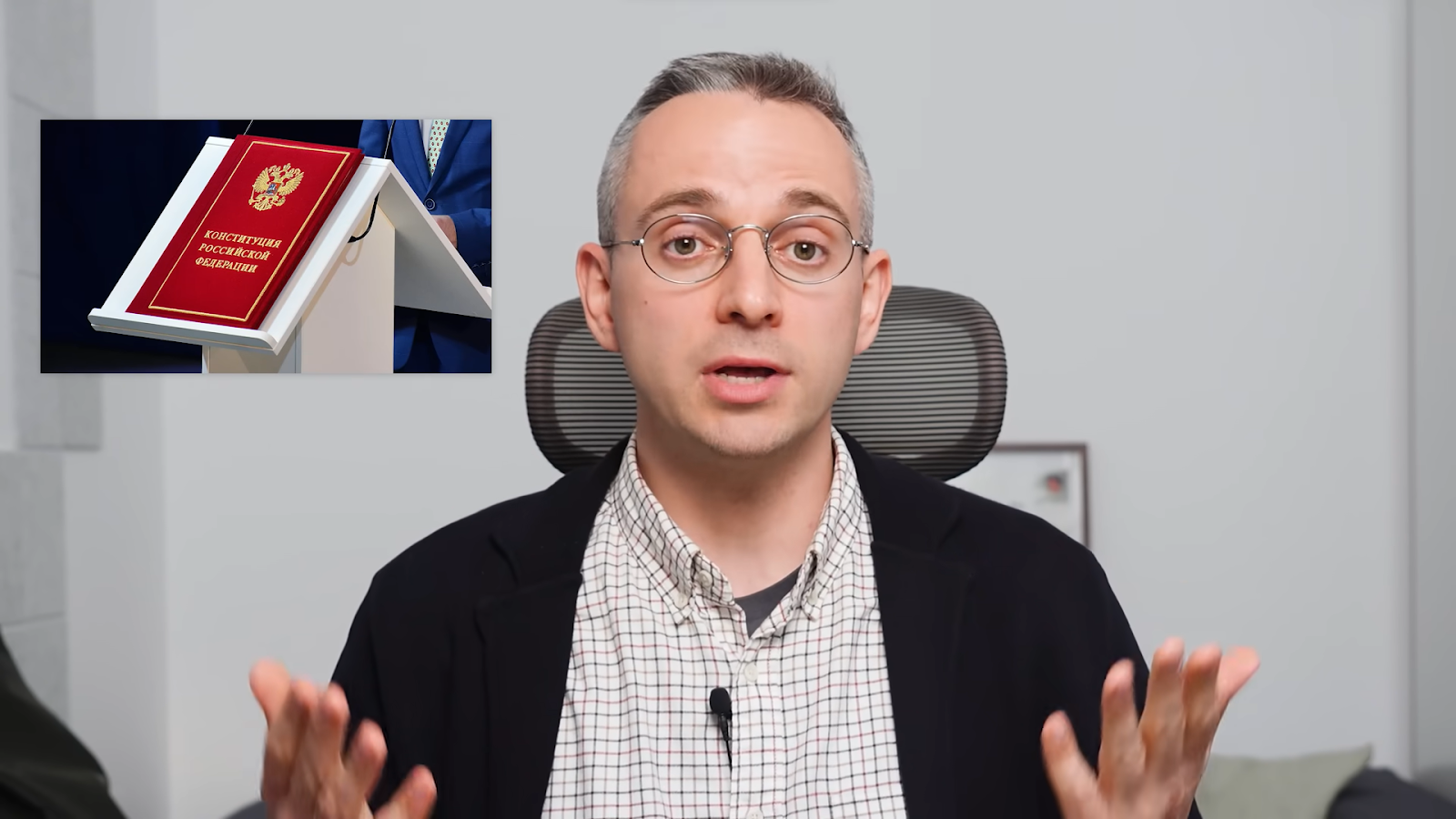
“This is a neo-totalitarian regime. They modernized Stalinism, adapted it a little, added something from the practices of Hitlerism, from the DPRK, Iran. And they did just that. They also renewed the institution of the enemy of the people. And, of course, we, foreign agents, are enemies of the people,” says journalist Maxim Glikin, recognized as a foreign agent. He believes that pressure on foreign agents is nothing more than a fight against the enemies of the people, only in a new way, without executions. “Therefore, the enemies of the people must be struck down in their rights. But not like under Stalin. More precisely, not immediately like under Stalin. And somehow modern, somehow modern,” adds Glikin.
Producer Daria Volya argues that the new law deals a blow not only to independent media, but also to those advertisers who tried to save face. “Now the advertiser doesn’t have much choice, and it is clear that in the end (yes, such a forecast is easy to make) everyone will have to get dirty, the choice will remain between, roughly speaking, completely disgusting or bloody projects,” she says.
Dmitry Kolezev has no doubt that the authorities, clearing the media space of foreign agents, first of all hope that more people will watch propaganda. “But the audience that has been watching the same Pivovarov or Dudya or Gordeeva for years, even if they stop making content, is unlikely to become spectators of propaganda. They would rather spend time on some non-political content, on TV series, than on Solovyov or Simonyan,” Kolezev is sure.
The purge of the media space, Maxim Glikin believes, can bring results that are completely unexpected for the authorities and draws a parallel between the purge of journalism in today's Russia and the persecution of Orthodoxy during the time of Stalin. Then such a phenomenon as “Catacomb Orthodoxy” appeared. The church could not afford churches and believers gathered in small groups almost in basements. Likewise, now media in Russia can be made underground, without large resources and editorial offices with a lot of departments. “Guys, what edition? There is a war going on here. [We must] survive. And the little ones will survive,” predicts Glikin.
How to survive?
Dmitry Kolezev believes that despite its repressive nature, the law will not hit all foreigners hard. “You need to understand that out of hundreds of foreign agents, only about 20 people actually place advertisements on their resources. And they will suffer. Now people will look for some solutions. But at the same time, a huge number of media outlets associated with foreign agents or declared foreign agents do not place any advertising. And they work great for themselves using other sources of funding, be it donations, grant money or something else. This is such a blow to a small number of foreign agents, and quite moderate ones at that. Neither Khodorkovsky Life nor Popular Politics made money from advertising. It hit Dudu, it hit Pivovarov, it hit Shikhman, it hit Gordeeva. In general, for such authors who did not climb the barricades,” says Kolezev.
It is difficult for Kolezev to say what exact share of the budget of the foreign agents’ YouTube channels was the advertising portion. Before the law was passed, 40% of his channel's budget consisted of advertising money. “But I have a relatively small channel, there are 300 thousand subscribers, and it doesn’t have a very large budget. All production costs approximately 5,000 euros per month. These are the salaries of editors, editors, studio rent... Of these, about two thousand are advertising. About the same amount is donations on Patreon and Busti, and 10-15 percent is monetization of YouTube itself, at the expense of viewers outside Russia,” explains Kolezev.
According to Karen Shainyan, among his acquaintances only a few live entirely on advertising, and most independent authors are looking for grant support or secret sponsors - philanthropists and patrons of the arts. “Nothing changes. Many do not live in Russia and their companies are not legally connected with Russia. They don’t care about the new law,” the journalist believes. “The fact that they passed a law that should prevent people from ordering advertising from us—well, okay.” Some people will probably still order it, but others, in fact, have stopped a long time ago.”
Indeed, after the start of the war, not only content producers, but also business owners emigrated. And they continue to cooperate with “foreign agents”, despite the new restrictions. The founder of the Imigrata company, Alexei Khodorkovsky, told Cherta that his company spent about three million rubles on advertising with “foreign agents” and the ban on advertising for them was rather positive news. Imigrata does not have a Russian legal entity and they hope that now the price for advertising on the sites of “foreign agents” will become more adequate and his company will receive a greater return on the money invested. He is also optimistic about the further development of his segment of the advertising market. According to him, in recent years, Russian business has learned to adapt and diversify: “Today no one keeps all their eggs in one basket, so strategies will change and new advertising channels will be found, perhaps much more profitable.”
According to Dmitry Kolezev’s observations, advertisers now have plans for placement “on the foot” and everyone has taken a wait-and-see attitude. Businesses want to see exactly how the law will work. He cites the example of Aviasales, which was actively advertised on Yuri Dud’s channel. The company's head office is not registered in Russia, and the law banning advertising from foreign agents, in theory, is not a threat to it. But at the same time, the company has some kind of legal entity in Russia, which means that Aviasales can be put under pressure. But for now everyone is watching and guessing. “If it is clear that the Russian authorities are not doing anything special about this, then maybe others will follow the same path, maybe some advertisers will open foreign entities or will use those foreign legal entities that already exist. Advertising with foreign agents is profitable, of course, because the audience is loyal, but the punishments of the Russian state are worse than the loss of this audience,” explains the journalist.
Another option to get rid of the risks associated with state pressure, according to Kolezev, lies in diversification. He cites the example of Alexei Pivovarov, who, even before Putin signed the law, announced that he was no longer related to his former Telegram channel and now it would be made by his own team of editors. “Some channels may try to rename themselves and say that this is no longer Tamara Eidelman’s channel, but some kind of “Fascinating Story” and Tamara Eidelman simply works there,” Kolezev argues.
An anonymous advertising expert on Telegram also agrees with him in absentia. “Pivovarov redistributed resources, but I personally have no doubt that he was still there as a leader. The sign was changed, but everything remained in its place. I simply removed my face and surname from there,” says our interlocutor. He also said that Telegram has a huge advertising market, built mostly on anonymous payments between each other. The security forces simply do not have enough resources to track who advertises to “foreign agents.” “Everyone uses the wrong bank cards. You won’t send all the cops to look for who is selling advertising on Telegram. There are probably tens of thousands of advertising posts published on Telegram every day. A considerable part of them comes from foreign agents. I myself don’t know the names of the people who give me 400 thousand a month [for advertising],” explains the expert.
Tax on conscience
Many experts and market participants see donations from individuals as one of the main solutions to the financing problem.
“Grants for the media have been getting worse lately,” an employee of one of the European media foundations reminds him. "Western funds are super slow. They somehow mobilized and helped the media, which were forced to flee Russia with the beginning of the big war, but at the same time they kept saying that this help was, like, temporary, emergency. They said that they were ready to support for a year or two and that the media should rebuild and find some other sources of funding. As far as I know, all the media hinted that it would be nice to arrange some kind of cool crowdfunding, so as not to depend on one source of income or grants. Unfortunately, it all turned out to be bullshit, and everyone depends on grants,” says an employee of a fund that helps media, on condition of anonymity.
Despite the limitations of this method of earning money, Dmitry Kolezev believes that media can exist on donations. The main thing is to be open and transparent with the audience, to explain exactly what value your content brings. He himself recorded a video message to subscribers. In it, Kolezev said that after the adoption of the law, the budget of his channel will decrease by about 2,000 euros per month and urged people to subscribe to regular donations or increase them if viewers are already subscribed. “And this target has almost been achieved. There are about $500 more subscriptions left per month, and the losses will be fully compensated,” Kolezev is optimistic. — Maxim Kats, in my opinion, also compensated. But he has a different order of numbers there. He needed to make up something like 35 thousand dollars a month.”
Crowd producer Daria Volya also sees the future in crowdfunding, and she also actively works with fundraising for foreign agents. “All this can exist by subscription, if, again, there are no large investors. It must be explained that such a subscription is also part of the struggle, in a different field. Don't just repeat: like and subscribe. This is a kind of tax on conscience, a reasonable tithe for free people who have to constantly rack their brains on how to change the situation,” says Volya.
To publish materials more often, we need your donations. We will spend them on fees for authors, photographers and illustrators. Below there is a form for donating any amount for the future No future.
You can give us some money or sign up for regular donations
You can send Bitcoin (BTC) to this address without a sign:
bc1qcn5qxdpz8m4ktr5p5zx9ez8rc36qtgzz47cju6
And send USDT (Tron) to this address:
TFvVAB95QVgqUw12RD7xF6aBj6cFL6GuLX
And in this form you can donate rubles: