
Translated material
People against the backdrop of a huge emptiness
Interview with the photographer Alexander Gronsky, who shoots Moscow wartime, like no one
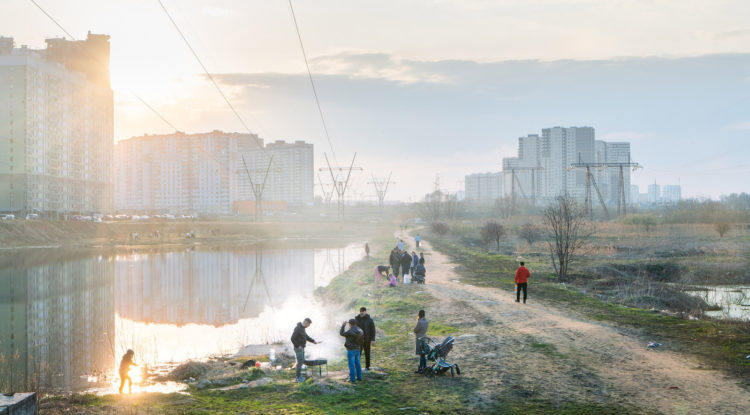
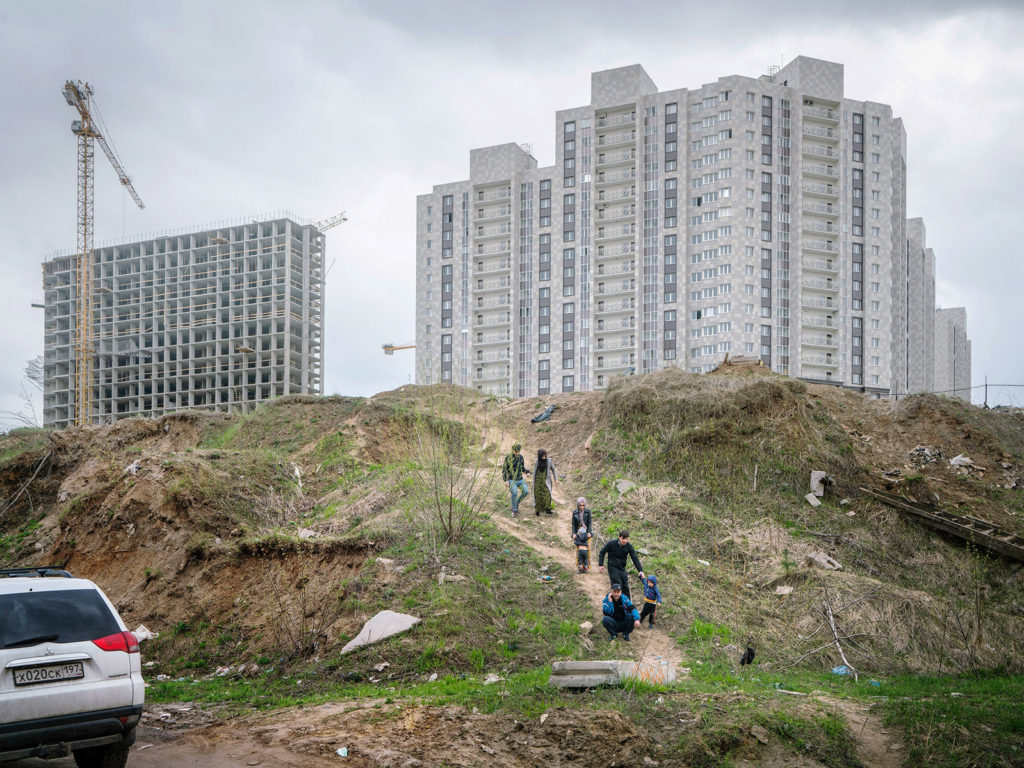
In the XXI century, photographer Alexander Gronsky renewed the landscape genre and became known all over the world - he received many international art and journalistic awards, including the prestigious World Press Photo . His photos look like the great painting of old masters, and people on them also become part of the landscape. Gronsky could easily leave Russia after February 24, 2022, but decided to stay and has been fixing for two years how Moscow has been looking and living during the war. He shot Navalny's funeral and the consequences of the drones attack on Moscow City, but his photographs are not at all like reporting personnel. At the same time, the spirit of time is very clearly felt in them and how the war invades the city space. The editor of Kholoda, Alexander Gorbachev, talked with Gronsky about how he achieves such an effect.
In order not to miss the main materials of the "cold", subscribe to our Instagram and telegram .
For the past two years, I have been looking at Moscow with other people's eyes-and I see how different these eyes look at the city. One such: nothing has changed, people are sitting in restaurants, traveling on bicycle paths, going to clubs - and the war does not break into this ordinary life. Another thing: this is the space of totalitarian police control, where you can get into the department simply because someone will see something on your balcony or overheard a conversation in the subway. Moscow in your pictures is some third. This is not a city that lives an ordinary life, but this is not realized anti -utopia. How do you formulate for yourself - what is it, this Moscow?
- I myself have this question. Actually, I answer him for myself with my photos. Well, not only I answer: my work does not have a conceptual rod, I do not think that I want to tell about Moscow this and that. I leave the house and I want to find out: what is happening to Moscow?
Immediately [after February 24] there was a feeling that Moscow is an epicenter of some events, but these events are completely invisible. And the method arose from my confusion. That is, I began to do what as if it was no longer very decent to do-to engage in classic street photography: just stagger along the streets and click what touches the eye. At first it seemed that I was making a completely fragmented garbage, but over time something began to crystallize, the focus points arose.
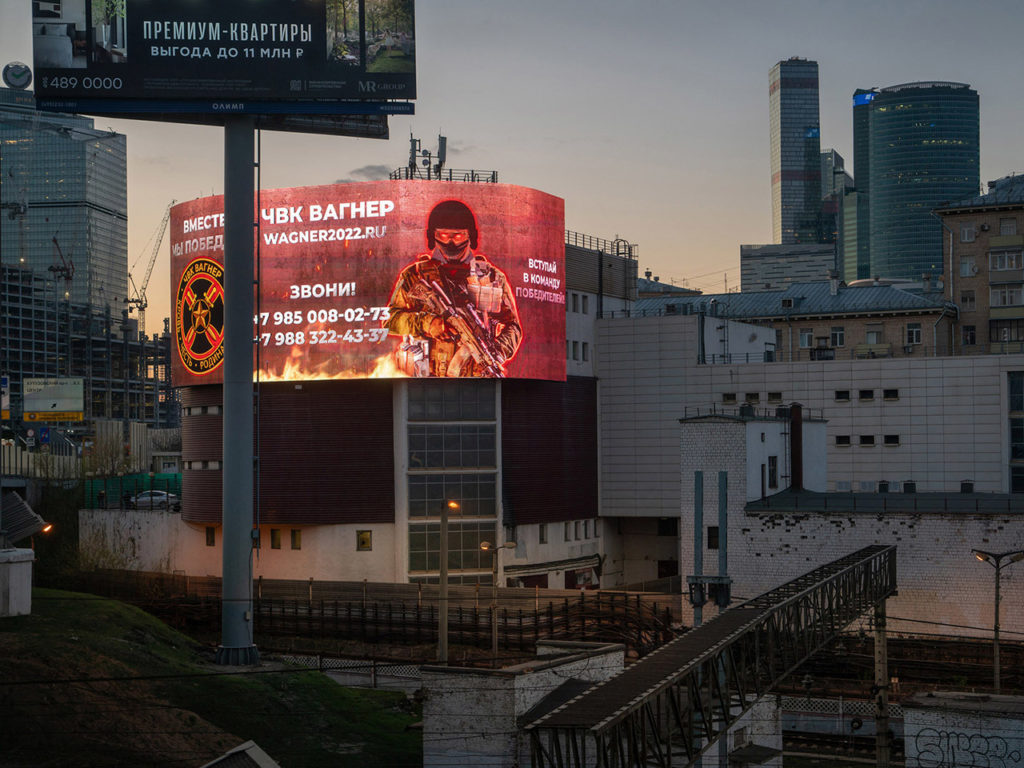
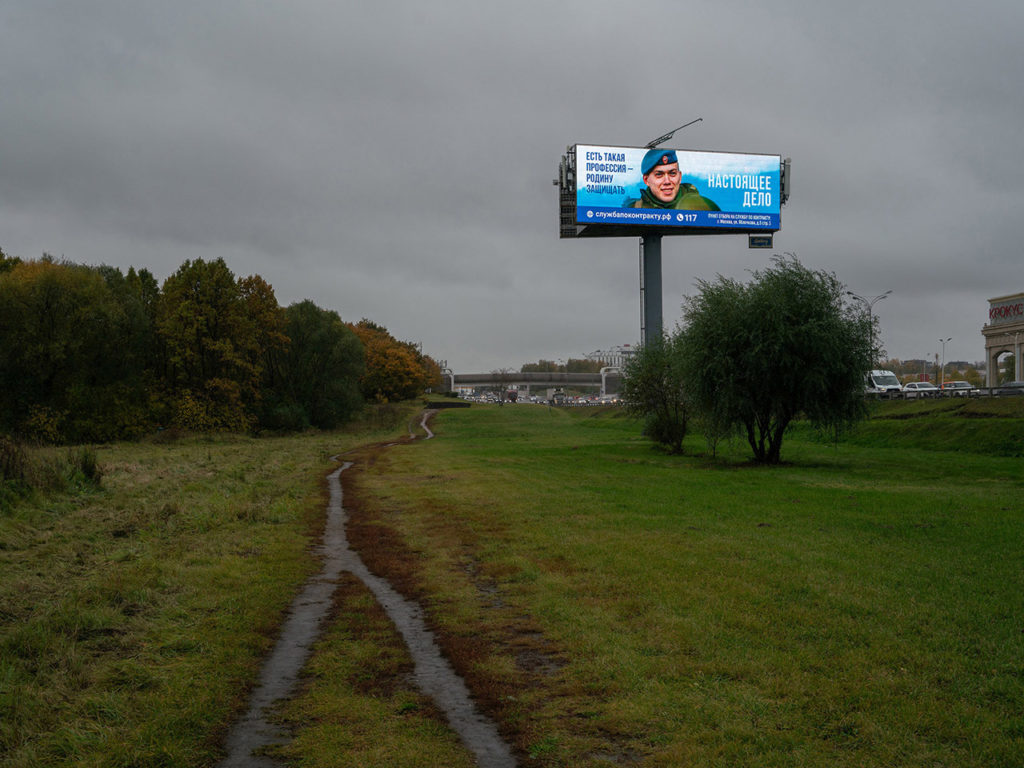
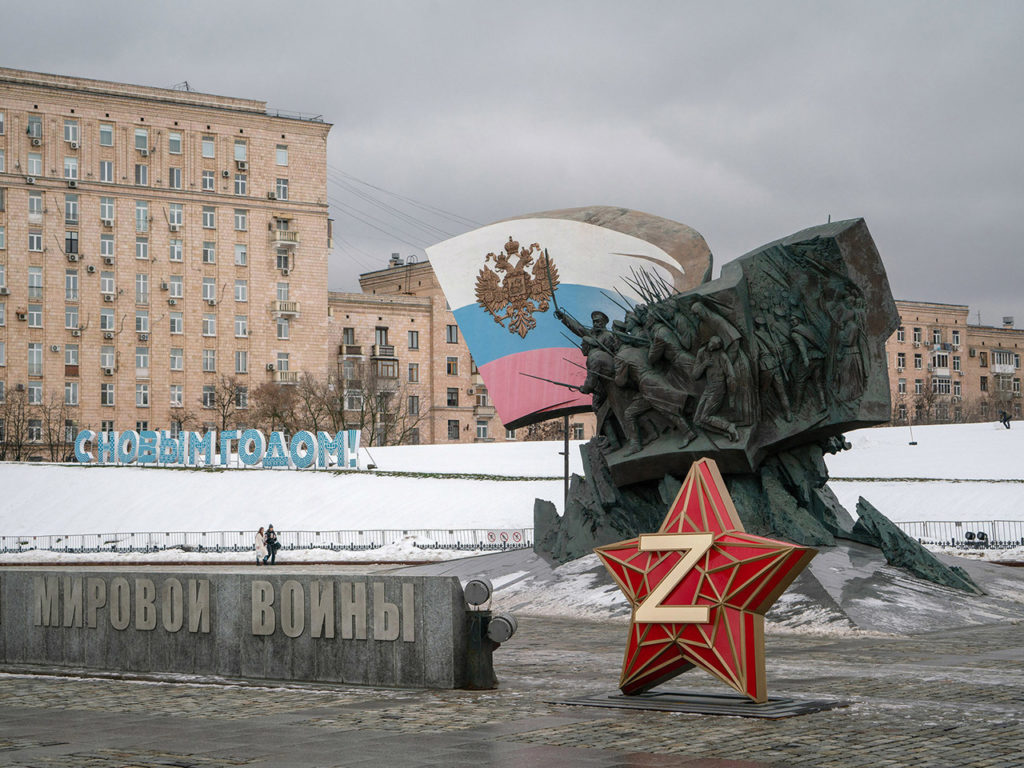
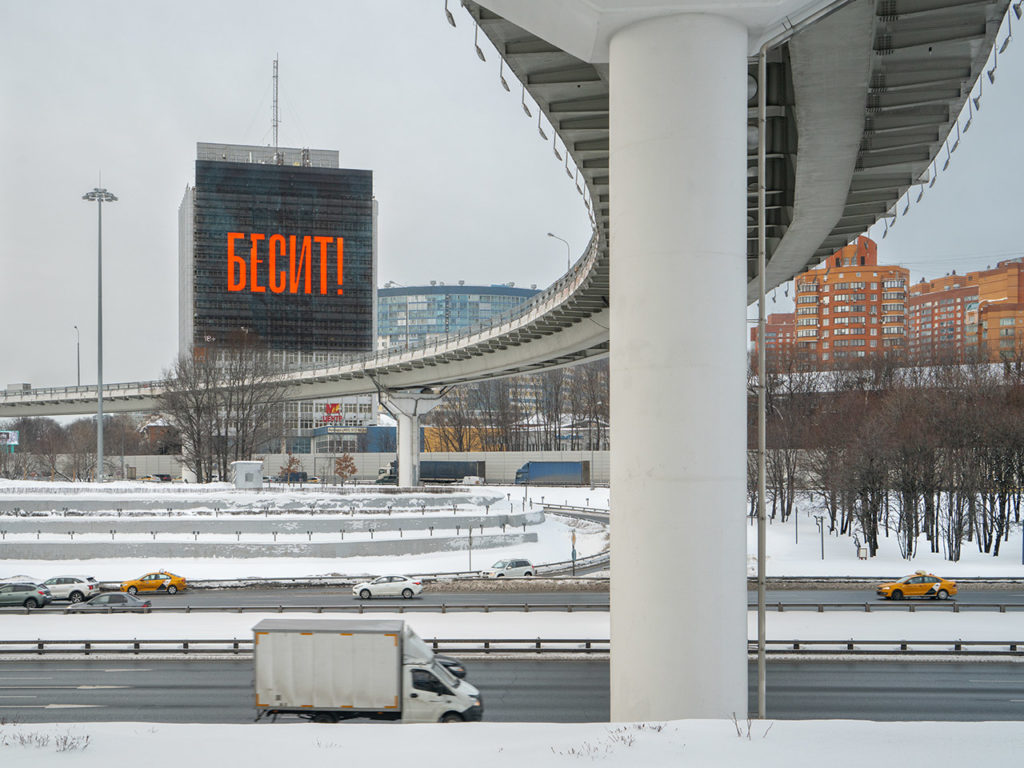
For example, billboards. I was interested in the invasion of a new reality in the landscape - and so I began to shoot these billboards. The very first shot in early March [2022]-then just on Leningradka on large screens among the advertising of TVs, cars and apartments, the inscriptions “ZA Mir” appeared. And literally the day before, I saw how people were screwed with posters on which it was written “for the world”, but without Latin Z. This revolution put me-how the language begins to function differently.
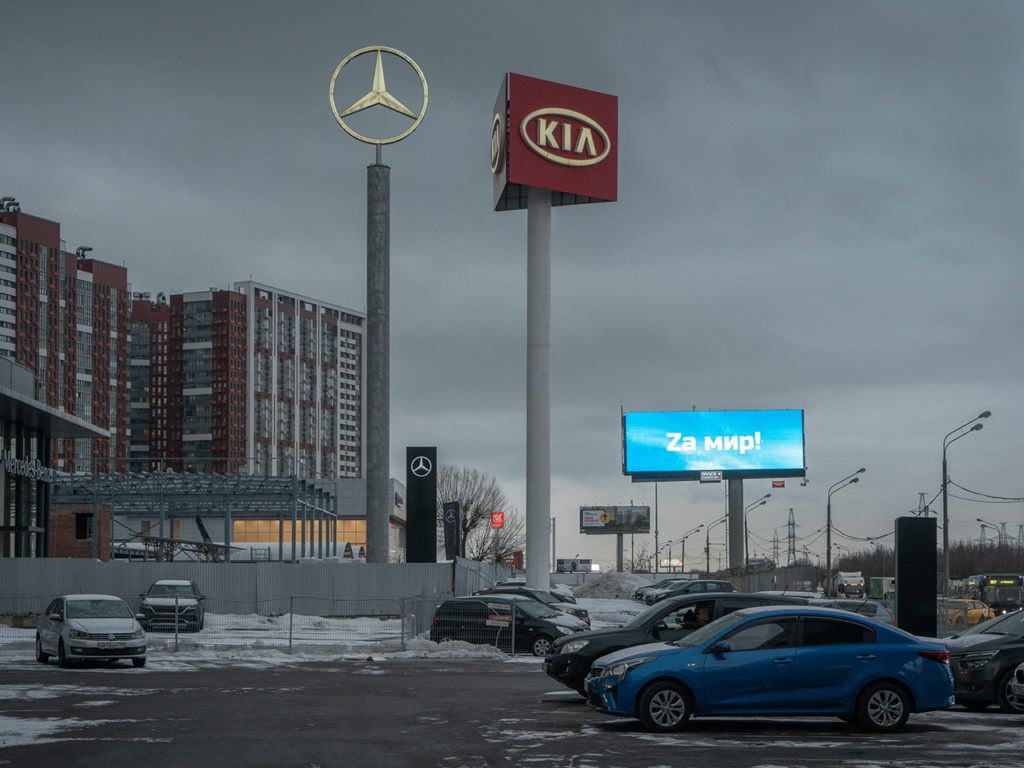
Moreover, before, it seems, there was no text in your photographs.
- Yes, I always radically avoided the inscriptions in the pictures. It seemed to me that the text has a concrete meaning to the photograph and thereby depreciating it: I wanted some incomprehensibility to remain in the photographs, some gap so that they could think differently about them. A professional photojournalist is obliged to write: what, where, when, so that the viewer does not get confused. But I am not a journalist, and I just wanted everyone to get confused, so that ambiguity arises.
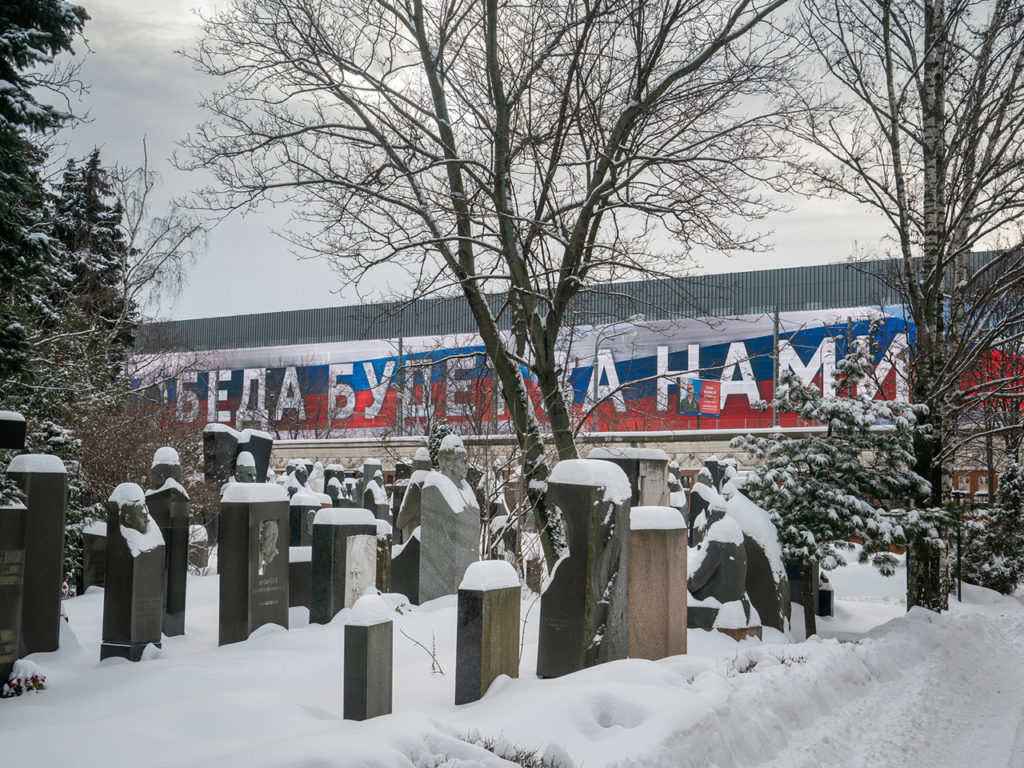
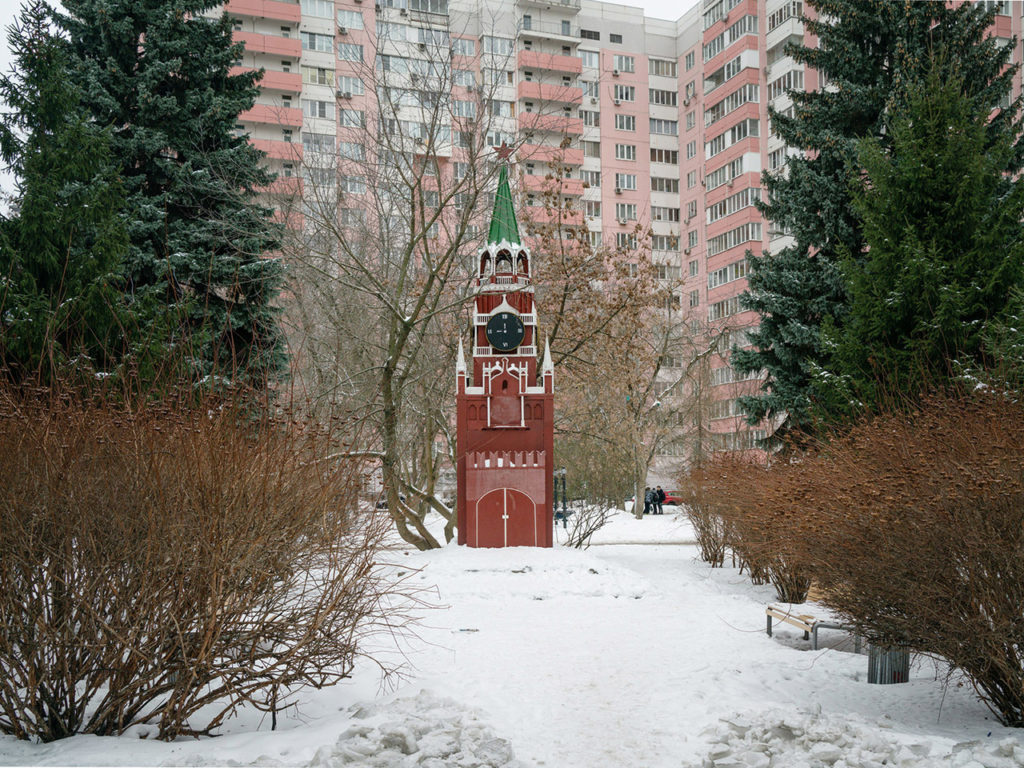
But with these billboards, the text itself has ceased to be unequivocal, it could mean exactly the opposite of what it formally declares. The text has become a picture that can be interpreted radically differently. At the same time, from any text that now appears in Russia in public space, there is a feeling that it is verified, non -accident. Even when it is a refrigerator advertising, it’s as if a big brother is talking to you. The context is completely turned over.
For example?
-On the day of Navalny’s death, I went out into the street-and I just had to catch on something, to make some kind of cast of the city at that moment. And I saw an advertisement for a new elite residential complex with a slogan “no one superfluous”, which immediately sounded in a completely different way. Moreover, the next day this slogan was gone - they shot all the advertisement, changed the site. The territory itself has become very sensitive - not only I notice such things with my engaged look.
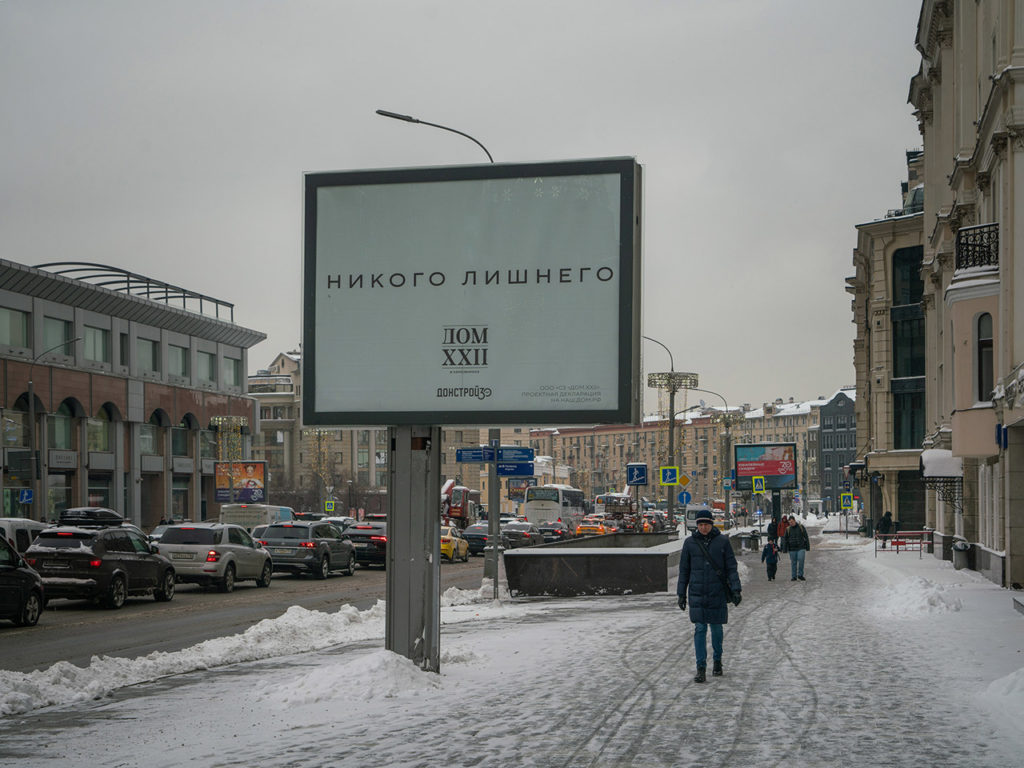
It should be understood that, as a rule, those billboards that I shoot is a video. That is, this is one picture in a row 10-and in this row there is still a sausage, a car, the same refrigerator. In this sense, I in no case take off all the reality of Moscow. I shoot what surprises me: what has changed in it.
I think that those who first encounter your work may have a question: where, in fact, people? You shoot the city, the space of human life, but people in your photographs are not acting faces, but rather part of the landscape.
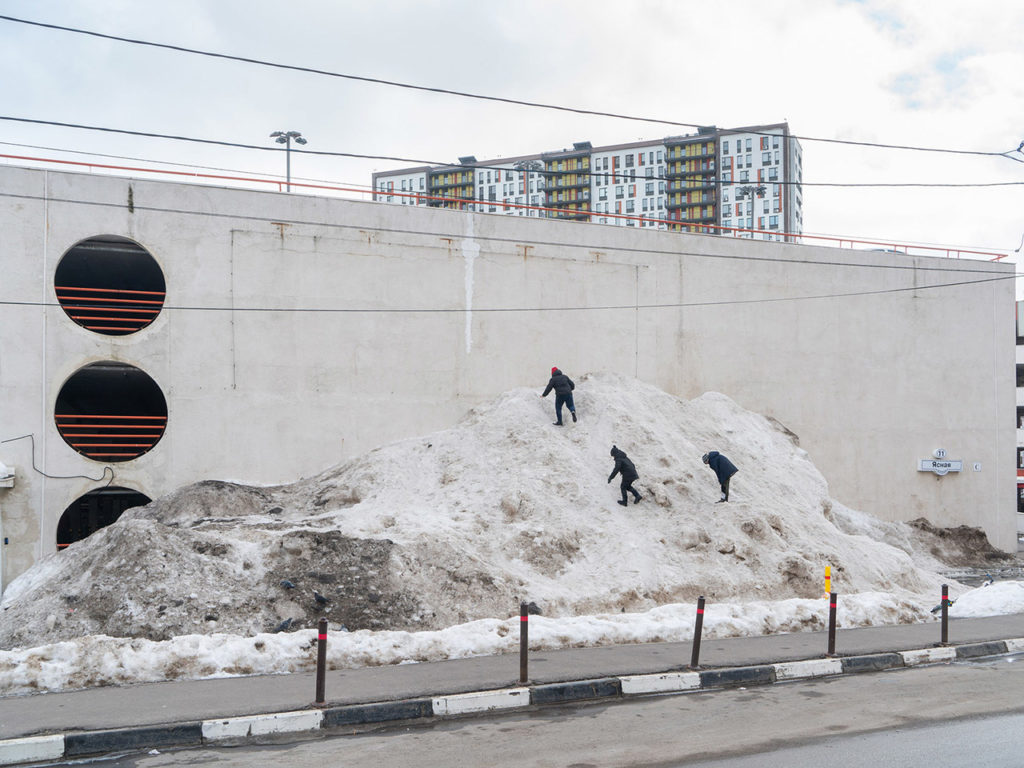
- Well, yes, this is my old tradition. I do not come close to people. I, in general, are shy, I do not like to direct the camera to people so that it becomes embarrassed, it is my most nervous. And on the other hand, when you shoot from a greater distance, more elements fall into the picture-and there is a feeling that you are seizing some complexity.
It is funny that many museum curators tell me all the time: listen, do not need people, remove the clean urban space - like such a sculpture, relatively speaking. And I understand them: an empty city looks much more pathos in the museum, makes a greater impression. And I just want to break this pathos. I really love Chaplin’s quote: a close -up is always a tragedy, and a general plan is always a comedy. So I want the pictures to have an element of human comedy. It seems to me that the figures of people help me accept this landscape myself, bring a human scale into it. If there were no people there, I would have too much rage for him.
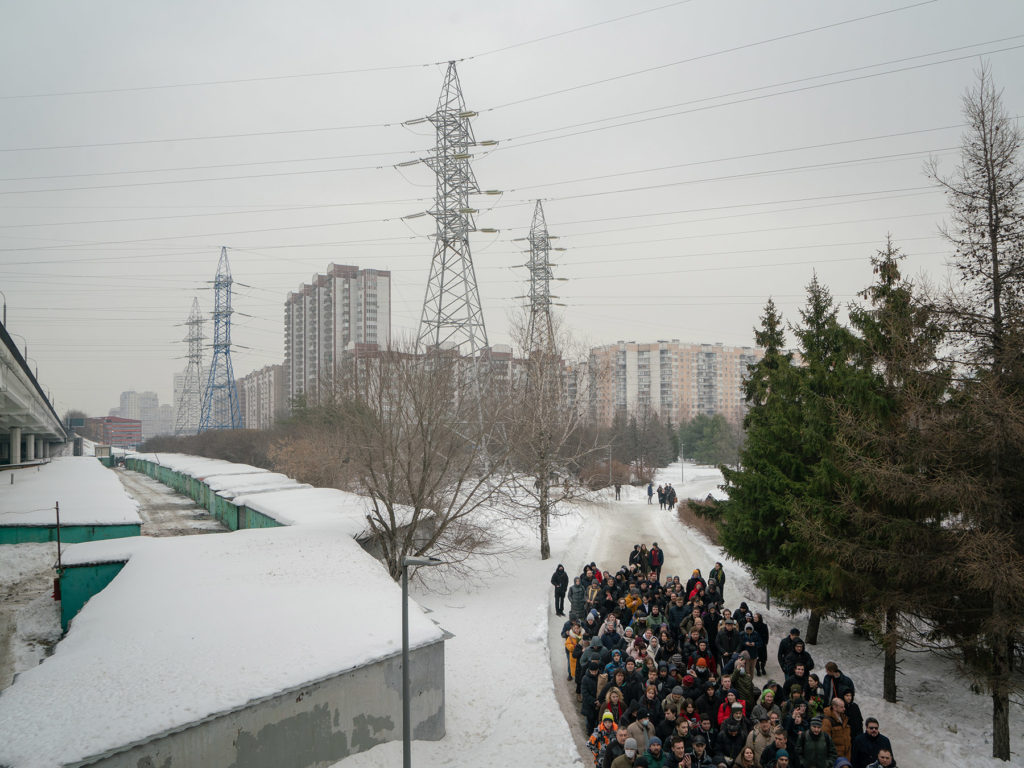
It seems to me that this is very clearly visible in the picture from the funeral of Navalny. This tail of the line against the background of the sleeping area takes the photo very piercing.
- Yes, probably. Moreover, there were many photographs from this angle - there was a bridge with a spiral staircase, and everyone rose to take off the crowd. And when I got up, the crowd was already ending. And it turned out that there seems to be a lot of people-and at the same time they are against the backdrop of some kind of huge emptiness.
How did this series start? In February-March 2022, many of us decided what to do next. How did you decide to shoot these photos?
- The beginning was very confused. By that time, I myself was in some kind of output, failure. And literally for the new 2022th year he gave himself such a promise: you need to take yourself in your hands, every free day stagger around the city, take off what I like, and immediately lay out on Instagram. Fear, if no one will be interested, the main thing is to get the joy of the fact that I pass these 20 thousand steps along the outskirts. Well, I have been engaged in photography all my life and I just don’t know other ways to get together. And when the war began, additional motivation also appeared, let's call it that.
By the end of the summer of 2022, it already seemed to me that I was exhausted and I do not understand what to do next. And then patriotic posters began to appear more and more often - and I ran through the whole of Moscow to catch them. There were few of them at first, and as an optimist I was sure that on any day all this could end and I need to fix the slightest changes in the landscape, because otherwise just no one would believe that everything was like that.
I spent a huge amount of effort on this. But in the last year, these patriotic signs appeared at every intersection, and I no longer think that it will end soon. And the sensations from what you fix is completely different.
How does this work for you in a professional sense? This project is not someone’s order: it turns out that you ordered it to yourself?
- Yes, absolutely. This is Assignment, which I betrayed myself. I can honestly say: over the past two years, no orders come at all. Most of the time I exist stupidly for savings. But this constant work is important to me, she holds me. I was born in Estonia and could go there at any time - from the point of view of documents it is easy to organize. But I have such a high internal tension that if I do not have any point for the application of my strength-but I don’t know anything except photographing-I'm afraid to just crumble. So the decision is not to leave - probably, to a lesser extent about the civil position, and to the larger - about my mental constitution.
How many hours a day do you spend on shooting, how is your work organized at all?
- This is a classic flaer drift. I stagger on average hours for six four days a week - the working day for me is limited by lighting, so less in winter. You just go where you look. Very often I choose the direction, simply guided by the direction in which the first metro train will come - north or south. Moreover, if it is so staggering for many years, Moscow is already not so big-I more or less every intersection already remember visually and think that I wanted to return somewhere because I saw something there, but at that moment there was no light or the necessary mise-en-scene.
You have pictures where your view of some events is recorded-for example, the same funeral of Navalny . Do you set yourself the task of showing how the news is reflected in the city landscape? And how to do this when this event is everywhere, but not localized - like, for example, mobilization?
- This is the right question. For myself, I determined the point with which I try to fix all this, so: this is a persuasion angle. I have no accreditation or press cards, I do not go to get anywhere where there are restrictions. I walk along the sidewalks and see what the layman sees. There are a million photographers who are filmed where it is supposed to shoot - well, let's say, the drone fell, 300 people run and take off. I immediately had an understanding that I would not replay them on this field and I do not want to set such a task for myself. But I will shoot what slip away from these photographers, simply because ... well, because no one needs it now, such photos cannot be sold. Just the views of Moscow, people just go. Well, some posters appear, but nothing more.
And I had the feeling that in this territory I stayed with the eldest. Sensation of orphan, abandonment. The older-generation photographers important to me, I will not name the names, as if they were eliminated-someone left, someone stopped shooting, someone takes off, but does not show anything, someone went to the forest to live. I did not see someone to work with this material and immediately showed it, and thought that then he had to be fiddled, to work with a webcam.
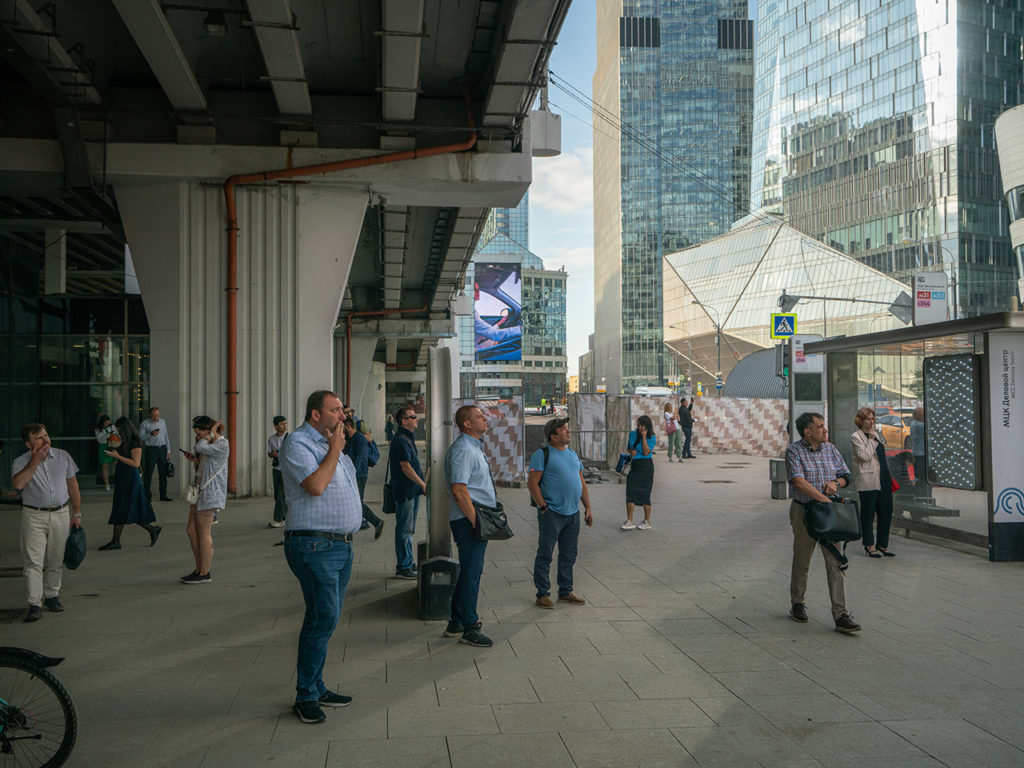
For example, when the drones flew to the City, I went there on the third day. I wanted to remove not an event, but a situation where this event has already become part of everyday life. And this picture turned out: people at the end of the working day go from the City to the subway, and everyone, conditionally, the third, turning their heads, looks somewhere outside the frame. And so you see that the event invaded their world and now they need to live somehow with him.
That is, it seems to me that it is an event photograph that will be taken without me. And I want to find some kind of material for peering. And so that there you can look out something that I myself do not see now. Maybe I will grab something, and in the future this picture will be even more saturated with events than now. Still, the photo image is very limited. This is literally, well, a cast, through it it is difficult to convey some abstract meanings. But sometimes something accidentally or by chance turns out-and there suddenly something invisible manifests itself.
It seems that you have now described how the artist differs from the journalist.
- Yes, probably. These are, in general, some basic thoughts.
How does your process technically work? How many pictures do you shoot per day, for what?
- I take off to the number, very simple, no frills. I shoot a lot - probably 500-1000 frames per day. But it cannot be said that selection is a lot of work. The fact that he chose a drunk and tired in the evening, then laid out. Just a lot of things still go to the archive. I fix the same billboards massively - if I lay them out in such volumes, everyone will unsubscribe, this is boring. So I try to show something interesting, but there is still an invisible part of the archive-this is almost like “Yandex.Mat”. I sometimes want to feel like a machine that drives and takes off everything around. Such a traveling eye.
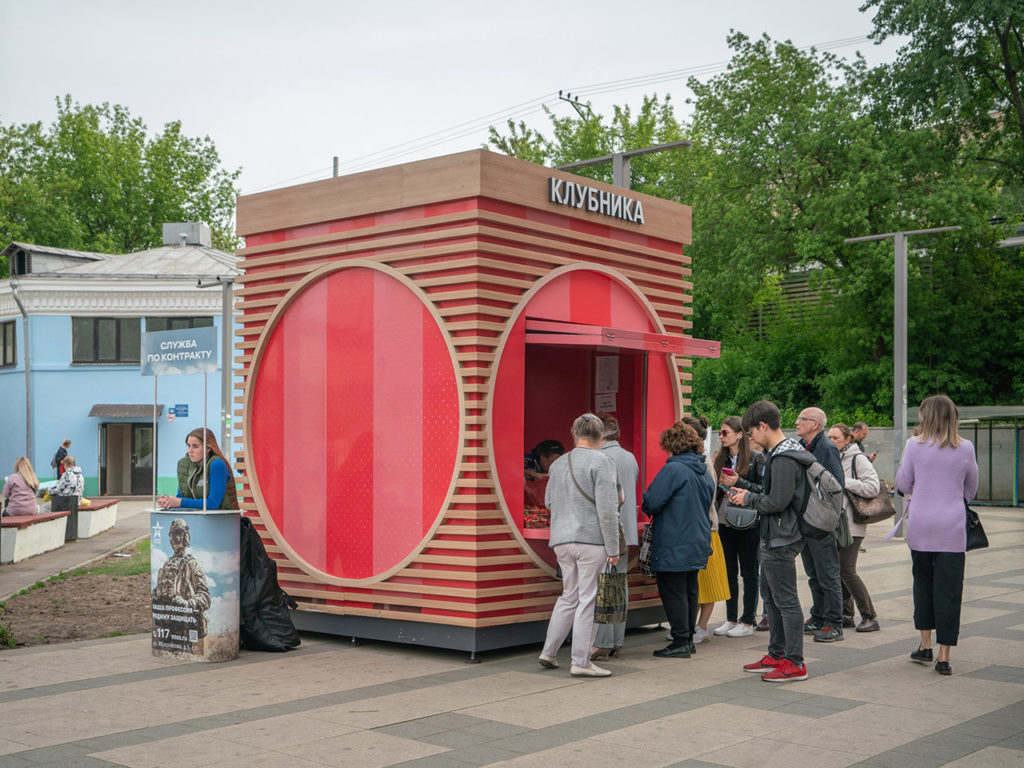
Last summer, a picture was widely dispersed on the Internet, on which there is a turn to a kiosk with strawberries, and next to him - a kiosk with a recording for the contract service, and there is no one there. I thought she was yours, but it turned out that your colleague shot it. That is, you go in groups?
-No, no, it coincided by accident. We separately took off the same frame from each other and hung it on our Facebooks and Instagrams with a difference of several hours. And by the way, I was directly hurt that her frame was dispersed, not mine. Because I understand that now, when I have a lot of text in the frame, I essentially explore the territory of Memas, which spontaneously arises in the city, after all, the signature is already in the picture itself. And of course, I want to make Memas myself.
In general, is there any kind of art community, part of which you feel? Did it once respond to war?
- I have never been a part of any community. I do not get into the art party, because - well, these are just photos. I participated in the [art fair] Sosmoscow in 2022, there was a photograph that I took in February of that year. There was an advertising campaign of the series “Enrages”, and I grabbed such a picture - a huge inscription “Rigs” on a black background, and around - the Leningrad highway, cars, snowdrifts. One collector came up and asked: "Did you organize this inscription yourself?" I say: "No, she was there." And I see that a person immediately loses interest.
For many in an artistic environment, an articulated statement is still important, and not just that a person looked and grabbed a moment. And I did not directly affect reality: I did not write anything, I didn’t start anything. Just a flaer clicks something. And for a professional photojournalist community, I am also not my own-I am not interested in any events and stories, I just go and the streets from afar are frostbite.
Do you think about risks? That is, it is clear that this is a “simple” photo, they do not declare anything illegal. But still understandable.
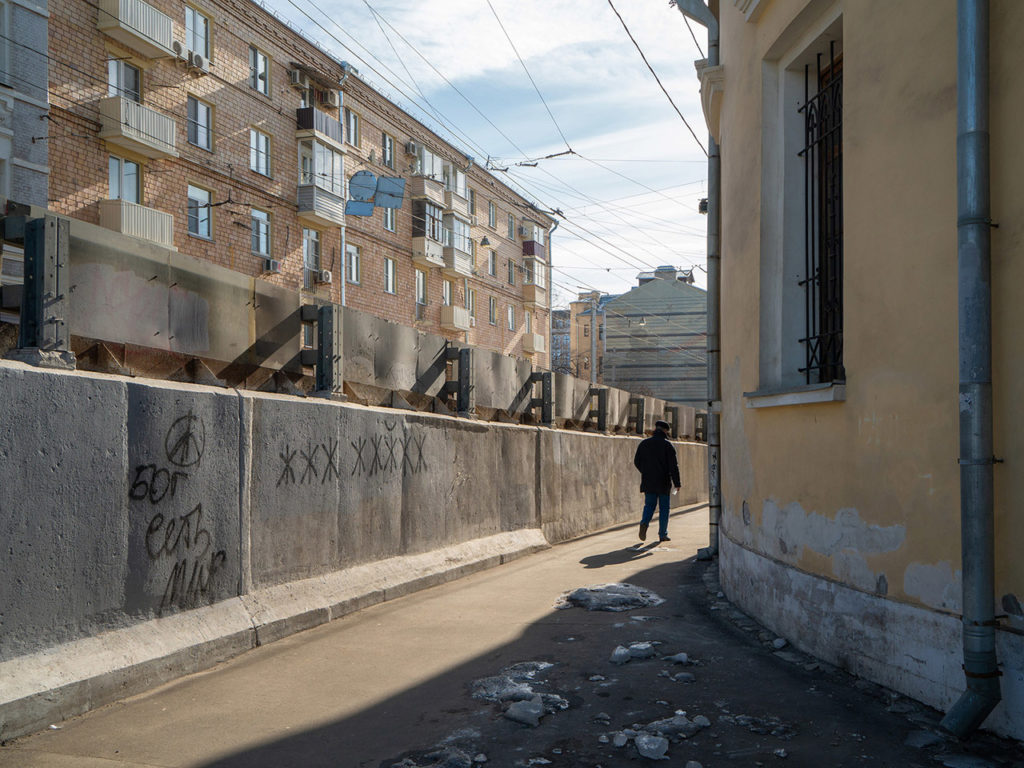
- This is just a very interesting moment. Because in fact there is no, it is not clear. Many foreign friends unsubscribed from me, some wrote to me directly evil letters: you were a normal dude, how could you turn into a Putin propagandist? One Russian collector recently wanted to get a job and through common acquaintances made inquiries what position I take. That is, the Russian collector from photographs was incomprehensible. I also see sometimes some reposts, and under them comments: "Why will you repost this quilted jacket?"
It is clear that this is not the main perception. But by and large, everything depends solely on the context in which the viewer itself is located. What I do is a fixation of reality, and people can interpret the same photos very differently.
Do you have any plan for a rainy day?
- There is no plan B - he fuck and is not needed. The risks are very difficult to evaluate: they also depend on an individual person who will look at this in his context and see a crime. Probably, some investigator in Syktyvkar can suddenly see treason in my picture. But it will be interesting how he motivates it in the documents. Also such an art project: someone will finally try to describe my photo. Because with this often even art historians have problems.