
Translated material
“It is bad when the parties agree on the conditions of forestry at such a late stage”: the expert - on the conflict of the Ministry of Natural Resources and “Segezh Group”
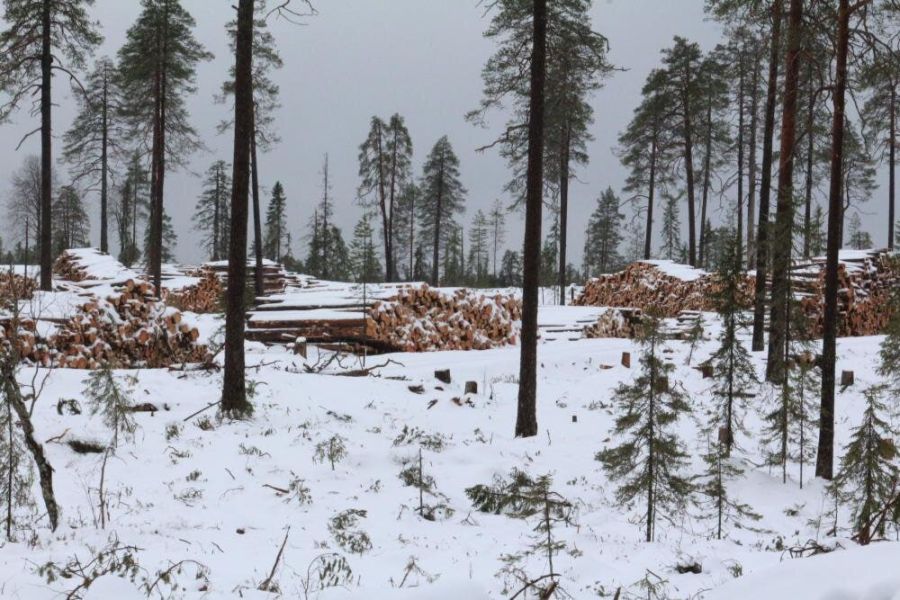
The Ministry of Natural Resources of Karelia appealed to the Arbitration Court due to violations in the work of the Segezh Polululo-Dapal Plant, owned by PJSC Segezha Group. The ministry demands from the plant "to complete the event to promote the natural renewal of the forest." At the same time, what kind of forest area are we talking about, in connection with which the cutting was produced there, and what area they affected is unknown.
The “Segezha Group” itself states that the forestry is under the agreements prescribed in the forest development project - this is a document that the state and land tenant are signed after the conclusion of the lease agreement.
“But this is bad when the parties agree on the conditions of the future forestry at such a late stage. It would be better if this happened before the signing of the lease, and even better-if the specific requirements for the reproduction of forests directly flowed out of the legislation, and did not arise as a result of some agreements, ”explains Alexei Yaroshenko, an expert on forests, sustainable forestry and fires in the Earth’s project.
According to him, now the Russian forest legislation does not determine the measures that the tenant should take to restore forest ecosystems after notes, and does not even leave a place for this in a standard lease - but actually offers the parties to agree on the preparation and examination of the project. “It is clear that this is a potential source of conflict situations - people like this. And no matter what the arbitration court decides in this case - this problem will remain in the legislation, ”says Yaroshenko.
As for the forestry itself, then, according to the expert, it is not so important how a new young forest will appear - as a result of landing or as a result of natural resumption.
“The main thing is that the tenant is responsible for the result of forest reproduction, and can decide within reasonable limits what ways to achieve this result. It is important what the subsequent care of the forest will be: whether the removal of unwanted vegetation and the carriage of trees will be removed to optimal density. If all this is done correctly, then with the assistance of natural resumation, you can get very good results, ”says Yaroshenko.
The expert emphasizes that no renewal of forest after cutting can restore the same forest ecosystem as it was before cutting: it will be a completely different forest, much simpler in its structure and much more poor.
“The environmental meaning of the correct forestry and forest exposure is not to return the lost forest ecosystems directly on the site of the cut down, but to grow wood he needed in the forests already mastered by them and climb into the remaining wild and biologically most valuable,” he says.
In Karelia, Yaroshenko clarifies, the maintenance of the adolescence and the mineralization of the soil in combination with the abandonment of seed trees or curtains of the forest are of the greatest importance. Since October 2022, the SEGEZH GROUP company, owned by billionaire Vladimir Yevtushenkov, cut down about 680 hectares of valuable forests in the republic, including 300-year-old trees in the planned Maximi reserve in the Muzersky district, which is necessary to preserve the Karelian northern deer population. In the spring of 2023, after the appeal of environmental organizations to the Prosecutor General’s Office, the company suspended cutting, but a few months later resumed them.
The court hearing on the lawsuit of the Ministry of Natural Resources against the Segezh Group is scheduled for April 11.