
Translated material
Responsibility for the terrorist attack in Crocus was taken by the ISIS cell - “Khorasan Vilayat”. How did this group arise? And why does she consider Russia one of her main enemies?
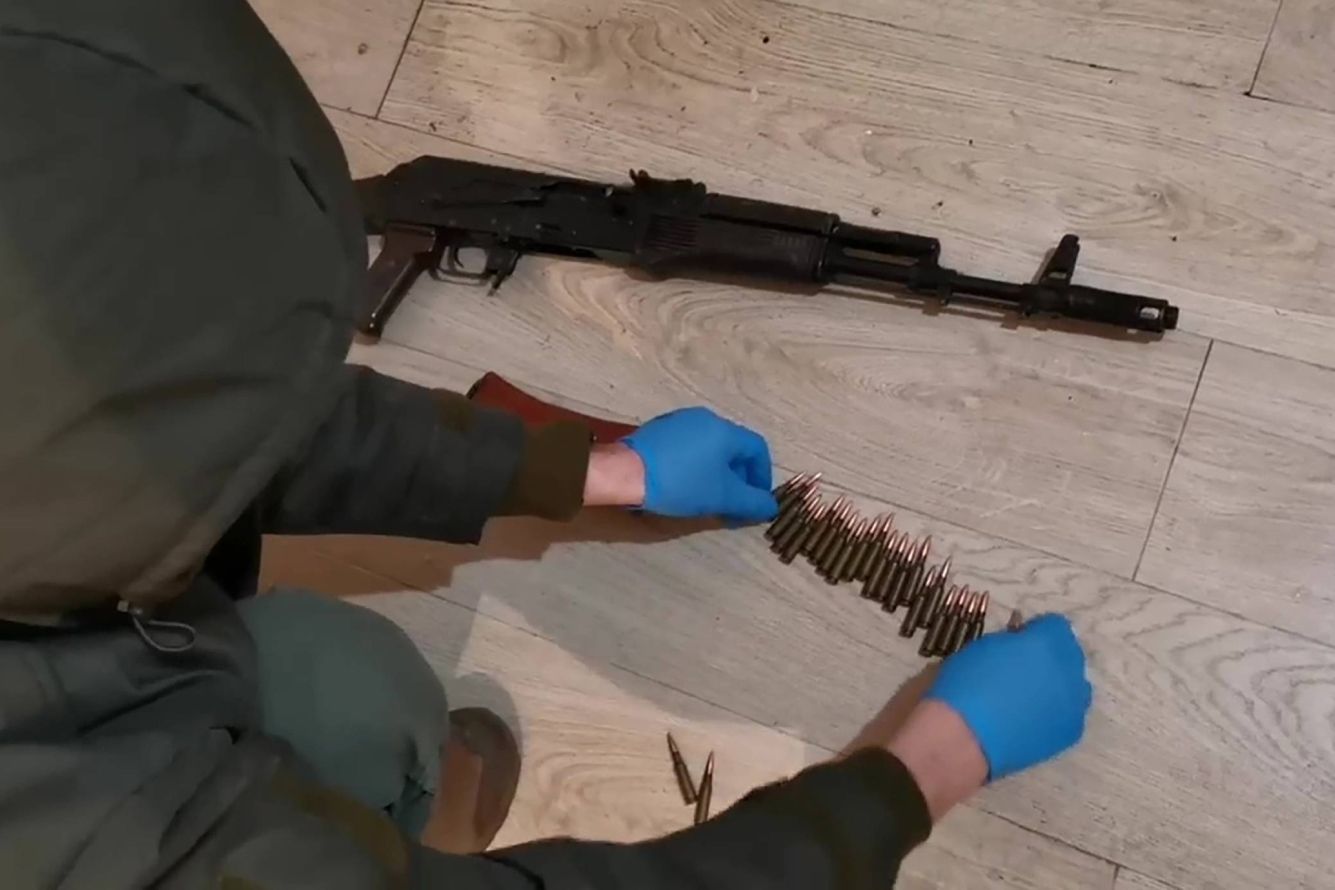
While the Russian authorities are trying to substantiate the connection of the suspects of the terrorist attack in Crocus City Hall with Ukraine, sources in Western intelligenceassure that the attack is the work of supporters of the Islamic state in Vilaya Khorasan (ISKP). This organization, part of the "umbrella" of the "Islamic state", fought in Afghanistan both with the US Army and the enemies of the Americans - the Taliban movement. As a result, the Taliban defeated ISKP, replacing her forces from almost all controlled territories in Afghanistan and Pakistan and depriving a significant part of supporters among the Pashtun population. But ISKP, according to researchers of radical Islamism, changed the strategy: along with an unequal struggle against the new authorities of Afghanistan, the group develops “international activity”. Just as the “head organization” did - ISIS. Experts back in 2022 noted that one of the main external enemies of ISKP chose Russia, along with other "empires" - the USA and China. We tell you that it is important to know about Vilayat Khorasan and why the organization took responsibility for the largest terrorist attack in the Russian Federation since the time of Beslan.
What is ISKP? And how does it differ from the Taliban and ISIS?
Formally, this organization represents the leadership of the province (Vilayata) of the World Islamic State. It submits to Caliph ISIS (now-after the death of four predecessors as a result of US operations, this is a certain Abu Hafs Al-Hamhei).
Since the ideology of ISIS suggests that this “state” should occupy the entire territory of the Earth, it was divided into provinces. At the head of some of them, local Islamic movements stood up, acting before the creation of ISIS (for example, in alliance with Al-Keda). Actually, ISIS itself arose when the leadership of Al-Kedi in Iraq broke off relations with the world guidance of this organization.
That is how in 2015 the Afghan-Pakistani branch of the Islamic State appeared. In Western sources, it is known under the abbreviations of ISIS-K or ISKP, where KP means Khorasan Province, that is, the “Islamic state in the province (Vilayata) Khorasan”.
Initially, the organization consisted of several thousand people from among the opponents of the pro -American authorities of Afghanistan, mostly Pashtunov (the largest ethnic group in the country). ISKP immediately entered the armed struggle with the US army, the government of Afghanistan and - even more fierce - with their opponents from Taliban.
The ideology of the Taliban is fundamentally different from the views of ISIS: the Taliban aims to create a national Islamic state in Afghanistan, and ISIS supporters are the fight against Gentiles until the complete triumph of Islam on the planet. In a single Afghanistan (and neighboring Pakistan), Islamic nationalism won. By 2018, Taliban (with the help of American aviation, which secretly helped in the fight against even more radical than the Taliban, Islamism) practically destroyed the organized ISKP resistance in the eastern provinces. Several leaders of Vilayata were killed by the Americans. According to experts, the number of organization has decreased from several thousand to several hundred people.
Sanaulla Gafari, who came to the ISKP leadership, reoriented the organization from direct clashes to an increasingly merciless terror - against the Taliban, religious minorities and Americans. During the withdrawal of the US troops from Kabul in August 2021, he was believed to organize an explosion at the gates of the airport, into which refugees tried to penetrate, who did not want to fall under the power of the Taliban. 182 people were killed, including 13 American troops.
Then ISKP called new enemies - and among them Russia. On September 5, 2022, an explosion occurred at the Russian Embassy in Kabul, five people were killed, including two diplomatic officers. The Islamic State in Khorasan took responsibility for the attack.
Finally, in January 2024, explosions occurred in the Iranian city of Kemran, more than 90 people died. ISKP declared itself the organizer of the attack. The participation of the organization in explosions was confirmed by the intelligence of the United States.
Gafari in 2023, perhaps, was killed by Taliban agents. It is unknown who is now heading the “Vilayat”, but the strategy, judging by the terrorist attacks in Iran , remains the same.
What does ISKP have against Russia?
There is a formal “accusation”: for radical Islamists, Russia is a state that “depresses Muslims” both within the country and abroad. For example, in Syria, where Moscow has been conducting operations since 2016, including against ISIS. Afghan supporters of the Islamic State have long repeated this formula.
The ISKP management has an example of the initial success of the ISIS leadership, which made political capital in the global struggle with the "empires of the Gentiles" - the USA, Kita, Iran and Russia. The bet on “external operations” can bring much more political and financial (in the form of donations) benefits than working with local resources “Vilayata”.
There are more deep reasons for special hostility to Russia: ISKP has been trying to expand the ethnic base of movement in recent years - both in Afghanistan and beyond. So, in the northern regions of Afghanistan, where ethnic Uzbeks and Tajiks live, the number of supporters of the organization does not decrease, but is growing. ISKP threatens the authorities of Central Asia, calling them "puppets of the Russian Empire." In this sense, for ISKP, the fight against Russia is the struggle for resources, primarily for radical supporters in Uzbekistan, Tajikistan and neighboring countries.
Since there is a reason, it means that ISKP organized the terrorist attack in Crocus?
No, irrefutable evidence of this version has not yet been presented. Although Media ISIS attributes a terrorist attack as a success, and US intelligence assures that ISKP is behind the attack. The fact that Weston is considered to be “Khorasan” responsible for the attack, the sources of The New York Times and CBS Newsreported . And according to the media, the USA "has no reason to doubt these statements."
Ruslan Suleimanov, an orientalist and the author of the Sulyymanov telegram channel , in the Peduza Podcast “What happened” nevertheless doubted that ISKP has sufficient resources to organize such a large terrorist attack on the outskirts of Moscow. However, the attack did not look “high -tech”: the performers clearly had problems with the departure plan, as well as with weapons - on the video from the place of attack it is clear that sparks from the trunk of one of the shooting are firing, which could indicate the poor state of weapons or ammunition.
Suleimanov is also not sure that messages in the telegram channels ISIS are genuine. Islamists are forced to regularly create new media in social networks due to locks, and therefore it is impossible to be sure that this or that channel belongs to them. On a message about the terrorist attack in Moscow from the supposedly main media ISIS (and not ISKP) - the Amath agencies - depicted four "participants in the operation" against the background of the flag of the "Islamic state", but their faces are closed.
Department "Parsing"