
Translated material
"I am happy with every book in Estonian"
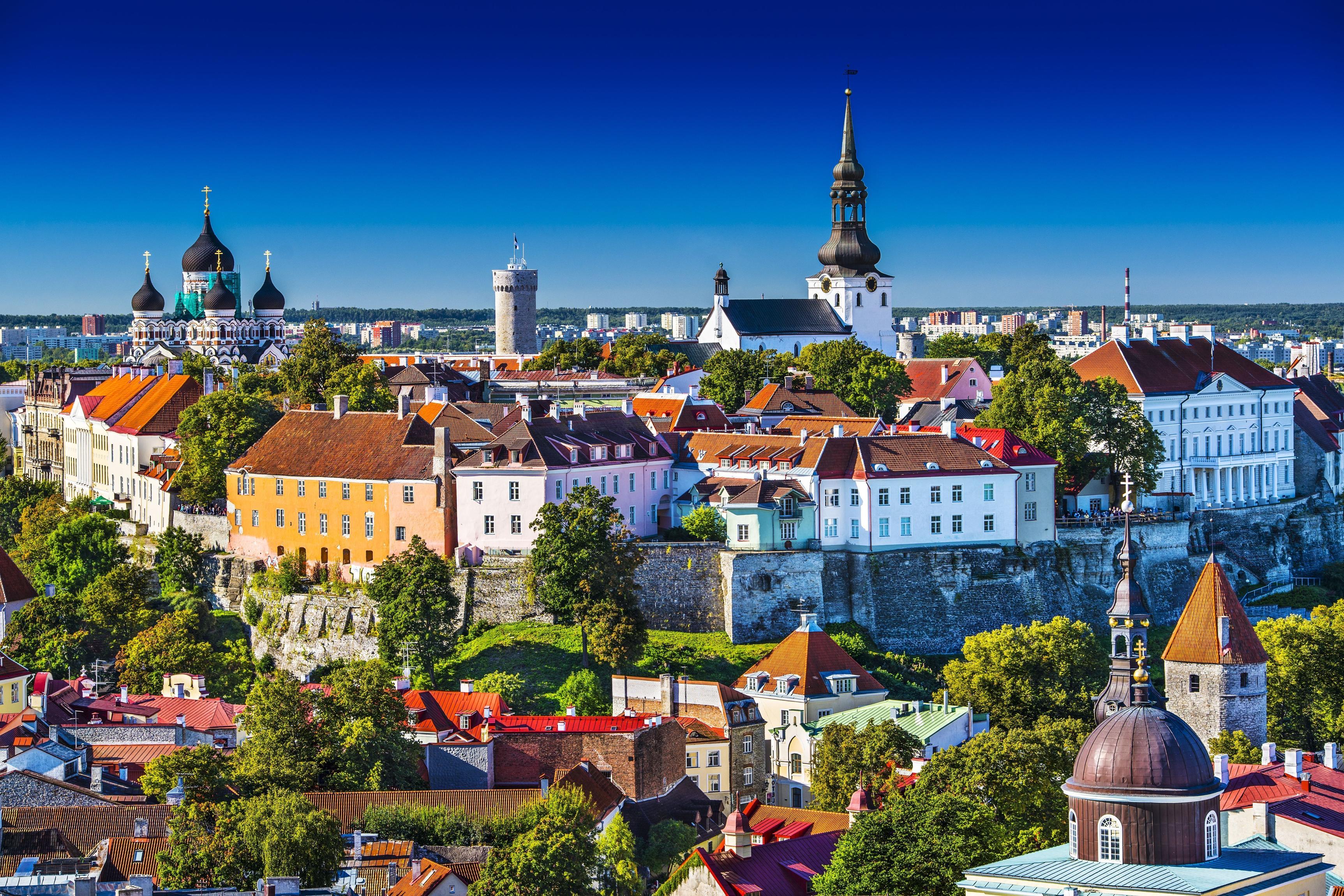
The guest of the program is philologist Grigory Ugof, founder and editor of the Tallinn annual annual Slavica Revalensia

How to get around the lock?
Read>Ivan Tolstoy: In Tallinn, Slavica Revalensia has been released for ten years. (Revel - the ancient name of Tallinn.)
The guest of the program is philologist Grigory Ugof, founder and editor of the Tallinn annual annual Slavica Revalensia
The year year has been released since 2014, its unchanging editor from the very foundation is the philologist Grigory Ugof. Here are articles in a wide humanitarian and philological spectrum-in linguistics, poetics, Russian literature, Slavic languages, and so on. Research, criticism and bibliography are printed in Russian and English.
Since 2014, ten numbers have been released, and this is an obvious reason to talk about the anniversary. My interlocutor is the Doctor of Philosophy, Associate Professor of the University of Tallinn, author of Sintactic Studies, creativity specialist Vladimir Nabokov, founder and editor of the Yearbook Grigory Utgof.
Where did Slavica Revalensia come from? What are its roots?
Grigory Ugof: The idea of publishing a Slavic annual annually in Tallinn appeared at the end of 2009, maybe in early 2010. Why did it happen? At that moment, and this 15 years ago, many in our workshop had the feeling that Russian philology was moving from magazines and from periodicals to the publication not periodic, festivals that were released one after another, which were interesting, but to keep track of which were quite difficult. Then, not only the Tallinns, but also many colleagues living outside Estonia, suddenly arose that a magazine that would be outside Russia, that is, not in the Russian cultural space, would have been dedicated to Russian philology and would be printed more or less regularly. And by a happy coincidence in 2013, it was possible to collect the editorial board, managed to enlist the support of the University of Tallinn. And the very next year, in December 2014, as I remember now, on December 15 (by December 14 they did not have time), the first book of this annual Slavica Revalensia was published.
Ivan Tolstoy: How does this name reflect the state of affairs - cultural, historical and geographical? What is the share of Slavica, and which is Revalensia?
If you rearrange the letters in the word Revalensia, then we will almost get Slavica
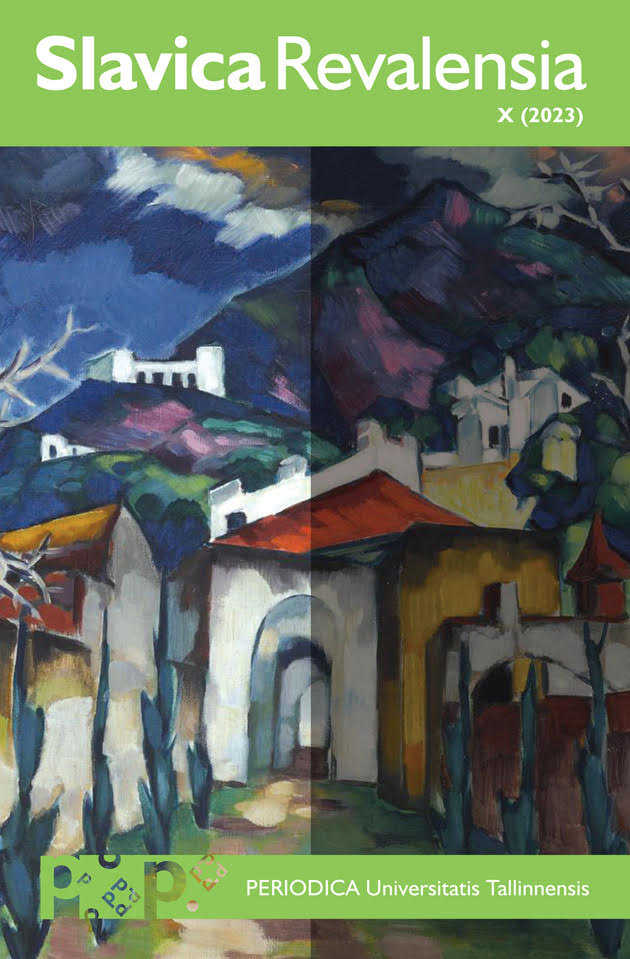
Grigory Ugof: A wonderful question, thank you. In fact, I hesitated for quite some time how to name this magazine. Because he goes to the Publishing House of Tallinn University, where there is a series called Latin Periodica Universitatis tallinnensis . That is, it turns out simultaneously two cities on the cover - no longer existing Revel and the existing Tallinn. For some reason, I didn’t like the Slavica Tallinnsia . And only after my back my mind did I understand why Slavica Revalensia actually sounds. It sounds, because, in fact, in the word Revalensia Slavica is already partially anagramed, that is, these two words are in a state of complementarity, if you like: if you rearrange the letters in the word Revalensia, we will almost get Slavica.
How much that was conceived in 2013-14 was realized? I thought 10 years ago that it would be the Slavic annual, that it would be dedicated not only to Russian literature or the Russian language, but also to Eastern Slavic literature, Western Slavic literature and South Slavic languages, and so on, that there would be a section of diachrony linguistics. In other words, this publication as a general philological publication was conceived, but somehow it turned out that after years this publication became mainly historical and literary, which publishes articles on mainly Russian literature.

Ivan Tolstoy: There are many Slavic magazines in the world, and if you also draw from the past, there are a lot, a whole periodic system of Slavic publications. What is the place of Slavica Revalensia in this system? Is it to heavy metals or, perhaps, to ephemeral air, elven publications?
Grigory Utgof: Slavica Revalensia , as I think, would look good on the shelf next to the Russian Literature magazine, which was published in the 70s-early 80s, the very magazine called Slavic Literatures this year. When I caught up with this idea to create an annual periodical in Tallinn, I focused primarily on those magazines that were inaccessible in Tallinn libraries in Tallinn libraries. This is Scando-Slavica , this is Slavica Hierosolymitana , the Jerusalem annual annual, published in the 70-80s, these are, of course, “Tartuskiy labors”, which were in Tallinn libraries. But I set myself a fairly common task with which, it seems to me, with the help of those authors who are printed in Slavica Revalensia , I managed to cope.
I remember my feeling when for the first time in 2002 I ended up in the National Library of Finland, as it is called now, or in the library of the University of Helsinki, as it was called then. And I remember this feeling: in 2002 I studied at the magistracy, I ended up in a library where very many wonderful special publications, inaccessible in the post -Soviet space, are either in the open access, or are in the vault where you are allowed.
This publication seems to be a little oriented towards what has happened in our science in recent decades
I wanted the future researcher, when he would work with the Slavica Revalensia hem, he would feel such a joy of recognition. And this joy of recognition was due to the fact that the old Mutonian publications of the 70s and early 80s, the publications that went to Ohio at the Slavica publishing house, I wanted the reader that this publication seemed a little oriented to what happened in our science in the last century in the last decades.
Ivan Tolstoy: Let's talk about the human factor. Who are the players and coaches of Slavica Revalensia ?
Grigory Ugof: You know, I would use this metaphor here. As an editor, or the founding editor, or the editor-in-chief (although I really do not like to be the editor-in-chief, I always designate myself just an editor), I consider myself a kind of dispatcher at a very important airport or at a very important airfield. There are aircraft, they are controlled by pilots, they go on a trip, my role is that this aircraft would make a prosperous landing and fly out.
The human factor is such that the magazine, when it was created, quickly attracted the attention of the generation that we now began to call the eldest, that is, those philologists who debut at the turn of the 60-70s, participated in the famous Tartu student conferences, and gradually, these authors began to appear in Slavica Revalensia .
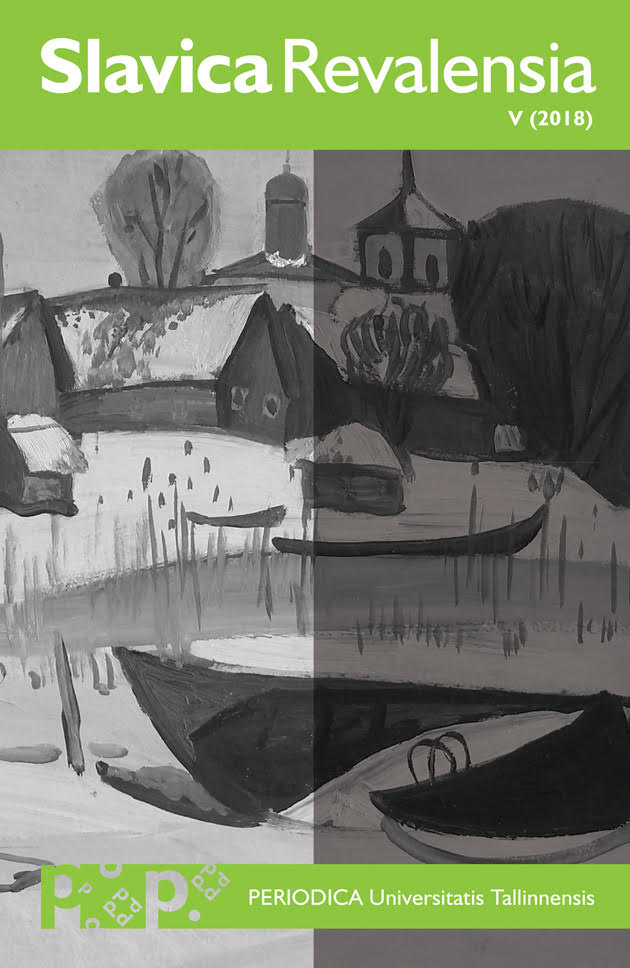
Maybe such a turning point or such a year that Slavica Revalensia defines now, 2018 was when Slavica’s fifth book, Roman Davidovich Timenchik, dedicated to Anna Akhmatova, an article with a sequel. Since Roman Davidovich came, Slavica has been printing, gradually expanding the circle of authors, the same authors, whose names are well known to everyone who, studying a particular issue, studying the bibliography, turned to the old rotary Tartu publications, materials of scientific conferences held at the University of Tartu, or Russian Philology collections.
Ivan Tolstoy: Let's call the most significant publications during the existence of Slavica Revalensia .
Grigory Ugof: You know, it is very difficult for me here, again, continuing the dispatcher’s metaphor at the airfield, it is very difficult for me to highlight some kind of publications that would be strikingly different from others. That is, each number is thought of something finished, with something that has some kind of internal logic, the internal structure. A ticket to life, it seems to me, for Slavica , was the publication of the sign and text in space and time not published during the life of the text of Vladimir Nikolaevich Toporov. This is 2015, the second book of Slavica , the publication prepared by Mikhail Menin and Tatyana Vladimirovna Tsivyan. This is the story of Vladimir Nikolayevich Toporov about himself, he entered the heading, which was thought of as constant, but she did not become constant - conditionally, although it is not called "the history of philological thought."
When the publication of Vladimir Toporov came out, they paid very close attention to Slavica
That is, when the publication of Vladimir Nikolayevich Toporov came out, it seems to me that very serious and close attention was paid to Slavica .
An important point in the history of the publication, probably, was the third book of the magazine, when in 2016 the article by Gabriel Gavrilovich Superfin Barclay and Kutuzov was published. The article is about Stalin's reflection on the dying letter of Bukharin. I really wanted to print Gabriel Gavrilovich Superfin, which is rarely printed, and suddenly he agreed to give an article in the third volume of Slavica . He was in Tallinn, there was a scholarship in the Lotman archive, he worked there, and somehow, I don’t know why, he sent me this manuscript, and went away.
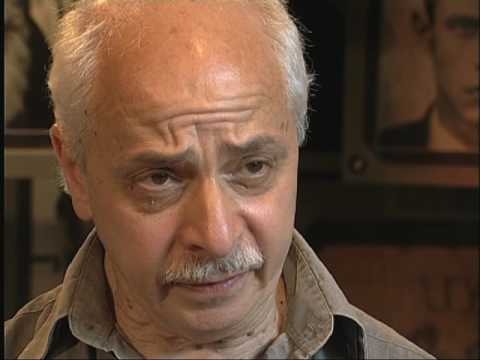
Ivan Tolstoy: Let's move on to the anniversary number: he is not only announced inside the Slavica itself - this is X number - but he also celebrates the anniversary of Gabriel Superfin, a whole section is dedicated to him. Of course, Gabriel Gavrilovich is known for the entire sub -clown civilized world, nevertheless, I think that our young listeners will be curious to listen again and find out about this a wonderful person.
Grigory Utgof: You know, that Festaburnt gathers in honor of Gabriel Gavrilovich Superfin in Frankfurt, in some way it was known at the beginning of last year. The idea of devoting part of the number of Gabriel Gavrilovich Superfin, last in May last year, when a student conference was held in our Tallinn, which we make in alliance with the University of Tartu and with the University of Helsinki.
When we lost Russia, we realized that in both Tallinn and Tartu we need to somehow combine our efforts and our spring conferences of young philologists. Colleagues in Helsinki (where a large group of doctoral students) supported us: let's arrange a wandering conference-in Tallinn in 2023, in Tartu in 2024, this is the cultural capital of Europe, in Helsinki in 2025.
And in May, the long -awaited guest Roman Davidovich Timenchik came to us, he was an honorary guest of this conference. It seems that already on the first day, or maybe on the eve he said: "Grisha, and you know, I have the same idea of Alexander Lvovich - to collect a selection of articles in honor of Gabriel Gavrilovich." And I said: "What a wonderful thought! Let's collect."
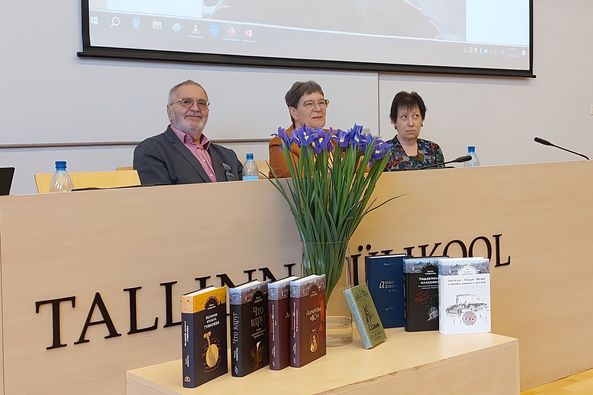
Roman Davidovich wrote to his friends Gabriel Gavrilovich that evening, and, it seems to me, a very good selection gathered. There is Alexander Lvovich Ospopovat, and Alexander Lvovich Sobolev, and, of course, Roman Davidovich Timenchik himself, and Alexander Vasilievich Lavrov, Alexander Alekseevich Dolinin, Irina Zakharovna Belobrovtseva, Fedor Borisovich Polyakov, Georgy Akhilovich Levinton, Galina Vasilyevna Lapina, Boris Anatolyevich Ravadin.
And so it happened that in fact the tenth book is like two volumes in one. The first is 8 articles, those that were prepared or which were written at that moment that were planned, something from the editorial portfolio, and 10 articles that were put into a separate section. That is, Slavica Revalensia , as it turned out, is not a circle magazine, but a magazine of a certain circle of researchers who may either be familiar with each other, or are not familiar, or be in very close friendship. But somehow this selection, it seems to me, looks organic. For example, an article by Tatyana Anatolyevna Pakhareva from Kyiv about Anna Akhmatova’s unfinished poem “From the will of Vasilka”, she rhymes with the article of Roman Davidovich “On the academic commentary on the poetry of modernism (case of Akhmatova)”. I was here as a traffic controller or as a dispatcher, I just had to say: yes, how great. Then everything turned out by itself.
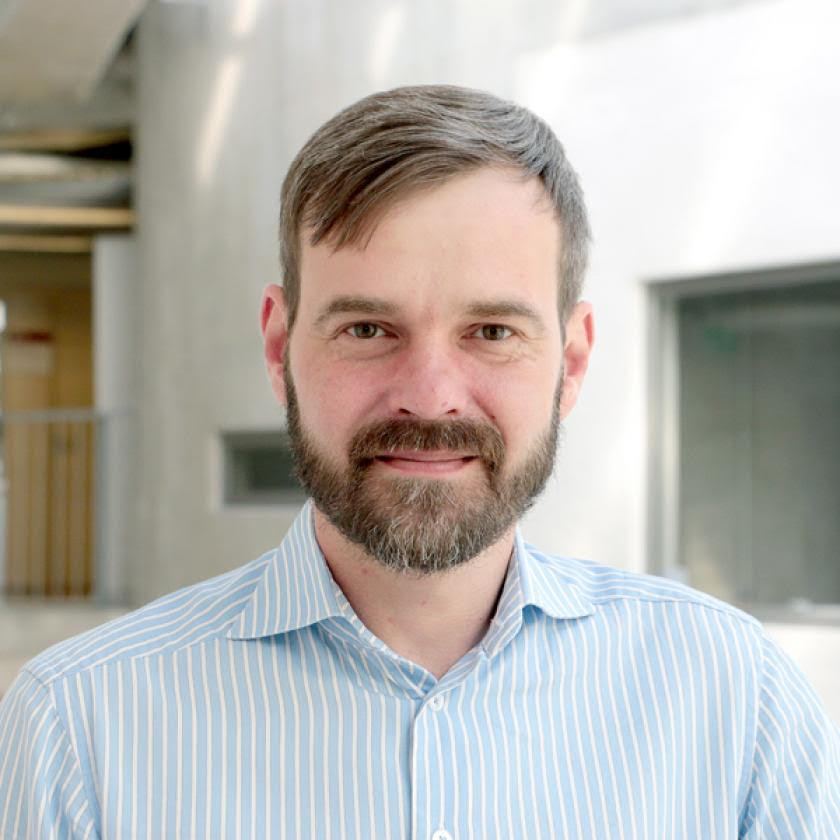
Ivan Tolstoy: It seems to me that Central Europe, with its geopolitical, cultural, geographical, and all kinds of problems of today, gains centripetal significance, accumulates all kinds of forces. Slavica Revalensia could become the flagship of today's Slavicism. Because after the aggressive attack of Russia on Ukraine and a huge wave of emigration, the splash of significant forces of Slavica could catch, unite and give the opportunity to speak out, be realized, not disappear of academic humanitarian forces. Slavica Revalensia made a very large, deep, bright and joyful impression on me.
I want to congratulate you as an editor and ask: what are your plans?
Grigory Ugof: Thank you, Ivan Nikitich, for kind words. Continuing this metaphor related to civil aviation, the airport is good when it is part of a system when it is not the only one on the planet. This is not the cosmodrome from which the air or spaceship with, perhaps, is not the best half of humanity, flying away from this planet forever. Slavica Revalensia , of course, is one of many annuals or one of many periodicals that is published, in particular, in Europe. As an editor, rather, not even as an editor, but just like such a not very good dispatcher, who not only helps to land and land on time, but sometimes he sits down at the helm of the aircraft and writes something like that, I note that this publication also has sustained, close magazines.
I would call the Viennese Slavic Yearbook, the magazine Scando-Slavica and, of course, the annual Acta Slavica Estonica
I would call the Vienna Slavic Yearbook in Vienna ( Wiener Slavistisches Jahrbuch / Vienna Slavic Yearbook ), edited by Fedor Borisovich Polyakov, is, of course, the magazine Scando-Slavica , which has been founded for a long time, is still published, and this is, of course, published in the same way. Tartu annual Acta Slavica Estonica , formerly "Scientific Notes of the Tartu University", a series "Literature." The publication plans are very simple.
So the 10th book was published, in December we chopped on this chopped urbi et orbi. It turned out that it was possible to hide from the hero of the day, from Gabriel Gavrilovich Superfin our trick, our idea, that a selection of articles in his honor is going. And this was very happy that no one spoke of those who managed to send articles or for one reason or another did not manage to send articles in honor of the hero of the day, but no one warned, no one said-it was a kind of New Year's gift.
And the plans are simple: the 11th book of the magazine is gathering, and it will come out, as the books of Slavica Revalensia usually come out, at the end of 2024. Most likely, there will be a heading in it, it will not be signed, I usually do not sign the bibliography that I make up, but there will be a indicator of the content, everything that has come out since 2014 in Tallinn under this green cover.
Ivan Tolstoy: Tell me, if possible, if it doesn’t hurt anyone, about some connections, about the threads that extend between Russian participants Slavica Revalensia, or readers, or admirers and you?
Grigory Ugof: These ties are not interrupted, they are very simple. I often went to Russia, I must admit, after 2014 too. As a rule, my trips at the conference meant that I went to the publisher and asked: "Can I take with me a half -dozen copies of the last issue, I would leave in the bookstore" The Word Order "on the Fontanka?" And of course, the publisher always went to meet me, said: "Of course, yes." This year I have not yet managed to send a copy to the Pushkin house, where there is a full hem of Slavica Revalensia in the library of the Pushkin house. So the mail goes, the magazine appears in libraries.
Until now, there are libraries in the world that are not enough electronic edition
As for Europe, I am very grateful to Leonid Mezhibovsky, who noticed us early, we were not even familiar with him then, made so that many libraries, primarily in Germany, would issue a subscription to this magazine. Despite the fact that it comes out on paper and in electronic form, but so far there are libraries that are not enough electronic edition in the world, they order such books that can be turned over.
Ivan Tolstoy: This is a very pleasant tradition and weakness of libraries and readers. I myself belong to this category. Of course, the paper book can not be compared with any electronic. And one more question. It often happens that the magazine, the periodic publication, which is already standing on his feet, has the idea of creating a certain library of raging, primanashny. Is it possible to expect whether this is included in your plans - the creation of a certain library of Slavica Revalensia ?
Grigory Ugof: This is a wonderful question, thank you. Вы знаете, живя в Эстонии, прожив в Эстонии всю жизнь, живя в то время, в которое мы живем с вами, я чувствую необходимость действительно или такого научного приложения к уже существующему научному изданию, выходящему в странах Балтии, может быть, даже и в Эстонии, или появления новой книжной серии. Но здесь я пока не делаю неосторожных шагов. Все-таки Slavica Revalensia – это издание, выходящее в университетском издательстве, там есть своя структура этих изданий, есть своя иерархия. И о том, что можно было бы издавать книги на русском языке, научную литературу в Таллинне, конечно, моим коллегам известно, но до момента, пока мне не скажут, что, кажется, пора было бы основать библиотеку Slavica Revalensia , я не буду, наверное, настаивать на том, что в Таллинне непременно выходило бы научное приложение к этому изданию.
Все-таки здесь нужно учитывать, помимо прочего, и тот культурный контекст, с которым я тесно связан и в котором я существую. Эстония – маленькая страна, здесь не так много читателей, по-эстонски читает меньше миллиона человек, включая тех, кто еще учится читать. В этом смысле для меня, как работника университета и как редактора этого издания, это очень важно, я радуюсь каждому выходу книги на эстонском языке.
То есть, когда вдруг появляются переводы литературы, которая мне может быть знакома, потому что на русский она была переведена раньше (например, Жак Ле Гофф переводится), когда появляются удивительные книги в Библиотеке восточной литературы или в серии, посвященной Средневековью, я всегда радуюсь. Нужно ли или не нужно сейчас переносить центр тяжести, искать такое издательство или пытаться превратить издательство Таллиннского университета в еще один "Ардис", я не знаю. Пока мой ответ на это скорее отрицательный.
Если возникнет такая инициатива, если будет консенсус, что нам нужны плюс ко всему еще книги, например, или написанные в эмиграции, опять-таки филологические и не только, а может быть, широкого гуманитарного профиля, да, конечно. Но пока что о научном приложении речи не идет.