
Translated material
In Hong Kong adopted a new law on national security. In fact, it allows China to carry out repression in the city - and isolates the local economy
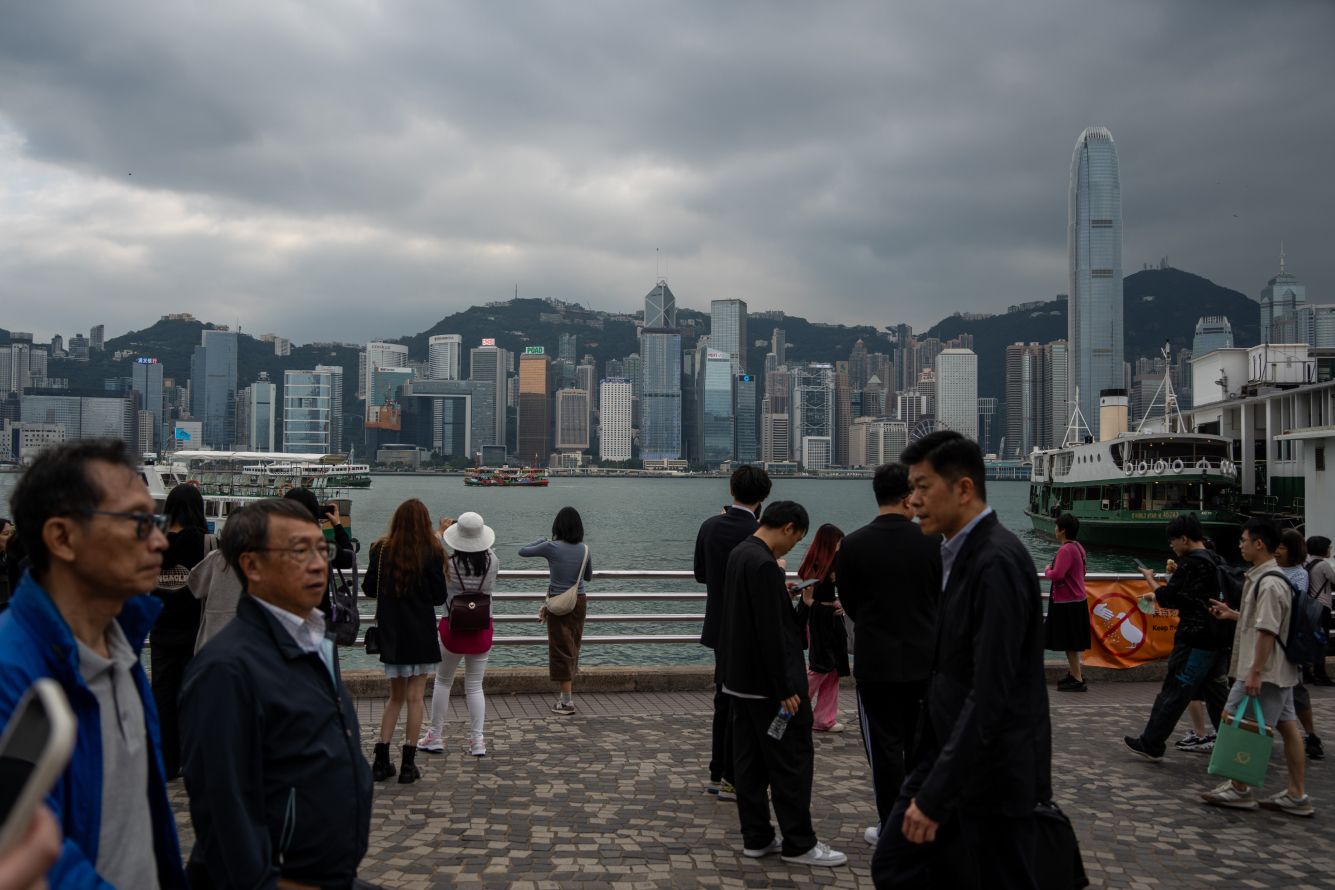
In Hong Kong, a new law on security entered into force, which significantly expands the rights of the local administration, tightens the punishment for some crimes and limits the freedom of citizens. The authorities claim that the changes are not repressive and that most of them repeat similar legal norms in Western countries. However, many local residents and experts fear that economics and civil society will seriously suffer from the new law, and Hong Kong leaders will introduce total control over the population, as in continental China. "Medusa" tells how Beijing is trying to subjugate a special administrative area and what exactly threatens Hong Kong the loss of autonomy.
Since 1997, the domestic policy of China has been determined by the doctrine "One Country - Two Systems." On it, in Hong Kong there are liberal legislation and market economy
The Aisin Gororo dynasty, which the rules of China from 1616 to 1912, transferred Hong Kong to the British Empire in 1841 after the defeat in the first opium war . Since 1842, the island was first considered a crown colony, and then a dependent territory.
According to the terms of the 1898 agreement , China transferred the UK Hong Kong for exactly 99 years, and in 1997 the territory returned to China. The reverse integration of the former British land was supposed to be carried out in accordance with the United Declaration on the issue of Hong Kong, agreed by London and Beijing back in 1984. Under its conditions, China was obliged to provide Hong Kong with a “high degree of autonomy” with legislative, executive and judicial authorities independent of Beijing.
Formally, Hong Kong became part of China, but, unlike other regions, was considered a special administrative area. In addition, Beijing recognized the right to adhere to the “capitalist system and lifestyle” fixed in the basic law (in fact, the Constitution) of Hong Kong until 2047. This period, presumably, should have been enough for a special administrative district to integrate into the PRC. According to the plan, over 50 years in Hong Kong, the same legal, economic and social norms would be established as in the rest of the country.
This concept was called "one country - two systems." It was developed in the early 1980s by a high-ranking Chinese party leader and reformer Deng Xiaopin, who believed that in this way it would be possible to make Hong Kong a part of China after more than 100 years under the rule of Great Britain. The “one system” remained socialism, which determined the political, economic and social processes in continental China, and the “second” was a kind of capitalism, introduced by Europeans in Hong Kong and Macau . In addition, Hong Kong recognized English as one of the official languages along with Canton and Chinese.
From then until recently, a special administrative district remained a zone of relative freedom in a country, which is often criticized for violations of human rights, total control and repression.
Thanks to the autonomy, Hong Kong had noticeable advantages over the rest of China. Many Chinese moved there for the sake of economic benefits and civil freedoms
Hong Kong does not have the right to conduct independent diplomatic activities, but it can, regardless of China, send its representatives to the events of the Asian Development Bank, the International Monetary Fund, the World Health Organization and the World Tourist Organization. Hong Kong is also allowed to maintain free entrepreneurship and conclude international trade agreements on behalf of a special administrative district. Beijing should not affect the financial policy of the region and cannot tax it. In continental China and Hong Kong, there are even different currencies: Yuan and the Hong Kong dollar, respectively.
“The Hong Kong economy is characterized by low tax rates, free trade and a limited state of state,” says Prablin Bajpai, a financial analyst from India. “In 2022, 93.4% of its GDP was provided by tourism, trade, finance and transportation.”
As of February 2022, GDP per capita in Hong Kong amounted to $ 48983.60, while in continental China - $ 12720.20. Bajpai notes that most Chinese companies prefer to place their shares on the Hong Kong Stock Exchange due to serious business restrictions in the rest of the PRC. A high degree of freedom makes the Hong Kong Exchange more attractive for foreign firms.
Analyst from the Institute of World Economy Peterson Tian Lay Juang speaks of the advantages for business in more detail:
Firstly, in Hong Kong there is an IPO system based on registration, which noticeably simplifies the listing . Secondly, the lack of control over the movement of capital on the part of the [local] authorities and international openness allow Hong Kong to act as a reference point for international trade. Thirdly, due to the fact that it is required to report less to the authorities, the costs of passing checks and preparation of documents, as well as waiting time, are reduced. Fourth, an effective regulatory framework is based on transparency and reasonable minimal standards.
The economic device, as well as freedom of speech, presses, meetings and religions, which Hong Kong guaranteed the basic law, motivated many Chinese to move to a special administrative area in search of work and a better life. Since December 2022, when the Hong Kong authorities began to issue “talent visas”, more than 55 thousand people from the continental PRC moved there.
Such visas are valid for two years, but they can be renewed until a person works in a Hong Kong company or is self -employed. To get a visa, it is enough to have a diploma of one of the 185 best world universities or an annual income of at least 320 thousand American dollars. According to March 2024, among those who have submitted applications for the Hong Kong Talent Visa, about 95% are residents of continental China.
Many of those who have received work permit in Hong Kong are engaged in the fields of finance, information technology and commercial services. In a conversation with The New York Times, the Chinese who went into a special administrative district said that they could earn much more, doing the same as in China. In addition, the residents of the PRC go to Hong Kong for the best education and civil freedoms: the situation with the rights of women and representatives of the LGBTK community in Hong Kong is much better than in China (so, the Hong Kong Law recognizes same-sex alliances ).
For the past few years, Beijing has been increasing control of Hong Kong *. * This began in 2019 after massive P * Roanders in Hong Kong * in support of democracy
Despite the high degree of freedom compared to the rest of China, Hong Kong cannot be considered a full -fledged democracy, experts on the problems of democracy in Asia Lindsay Meisland and Clara Fong emphasize .
The head of the Hong Kong Administration is not chosen by the population, but by a rather loyal to Beijing, a college of electors, which is formed from representatives of different companies, local groups and organizations. In 2021, China took advantage of the right to “interpret” the basic law of Hong Kong and reformed the electoral system. Since then, only those whom the Patriots recognized as “patriots” were allowed to participate in local elections. In response to criticism of reform by Western politicians and the media, the leader of the PRC Xi Jinping said that "not a single people in any country of the world will never allow political power to fall into the hands of individuals who do not like and even be ready to sell or betray their homeland."
It got to the point that only one candidate took part in the elections for the post of head of the administration - former security secretary and the head of the power structures of Hong Kong John Lee. His methods of maintaining order were repeatedly criticized by citizens and human rights activists. Whether it was the main supporter of the bill of 2019, which allowed the authorities to send people in the territory with whom Hong Kong did not have an agreement on extradition - in particular, on Taiwan and mainland China. The protests flashed in response lasted from the summer of 2019 to mid-2020. The demonstrators managed to achieve the suspension of the bill, and at that time the head of the administration of Carrie Lam apologized for the unsuccessful reform.
The PRC authorities used the success of the protesters as an occasion to tighten control over the autonomous territory. In mid -2020, the Central Government adopted a law on the safety of Hong Kong, which tightened the punishment for “actions that threaten the social system and security” up to life imprisonment. The formal goal of the reform was to maintain order, and in practice, the destruction of the protest movement. Over the past four years, the authorities arrested at least 290 people, including famous journalists, opposition and activists.
Beijing also limited the freedom of the press in Hong Kong: the employees of publications who have supported democracy began to pursue, many editions dispersed. Media Magnate and founder of NEXT Digital and Apple Daily newspaper Jimmy Lai was arrested in 2020. In 2021, he was sentenced to 13 months for a picket in memory of those who died on Tiananmen Square, as well as by five years and nine months in the fraud case related to the lease of the office of his newspaper. The trial of the bark continues : for the “demolition of national security” and “conspiracy with foreign forces” he is facing a lifelong conclusion.
Beijing and Hong Kong haunt not only journalists and opposition, but also students. Tony Chang participated in the protests of the 2019–2000s. In October 2020, on the way to the US consulate, where he was going to ask for political asylum, he was arrested on suspicion of "insulting the national flag." A year later, Chang was sentenced to three years and seven months of imprisonment for calls for the exit of Hong Kong from China. Given the deadline that he left before the verdict was issued, the former student was released in the summer of 2023. However, the police continued to call him to the station every two weeks, where they asked everything that he did, and about everyone with whom he talked. According to Chang, he reported only “unnecessary” information that could not harm anyone. At the end of 2023, the former student received permission to leave the country and moved first to Japan, and then to the UK.
The authorities pay attention not only to the Chinese, but also to foreigners working in Hong Kong. The Canadian researcher Rowena Hy was a professor at the Chinese University of Hong Kong and studied the consequences of the execution of protesters in Tiananmen Square, but in March 2024 the university terminated the agreement with her, and the administration suspended its work visa. “From the very beginning, people told me not to deal with this topic,” she told reporters. “The end of my academic career in Hong Kong was the payment.” The researcher called the processes of recent years "the decline of intellectual freedom."
Finally, independent bookstores, where open discussions, poetic readings and fairs used to take place for the security forces of Hong Kong (employees and visitors more than once noticed police officers with cameras). One of these stores - Mount Zero - closed in late March after a series of accusations of minor violations by the authorities and anonymous complaints.
In February 2024, on the eve of the adoption of the National Security Law, the economist and former chairman of the Asian Branch of the Morgan Stanley financial conglomerate, Stephen Rouch wrote that “Hong Kong is finished”: “Energy and unbridled optimism, which were once the main characteristics and the largest asset of Gon Kong.”
People have already begun to go from the city. According to official figures, from mid-2019 to the end of 2022 , about 200 thousand Hong Kong emigrated to other countries.
The new law on state security will almost certainly lead Hong Kong to a complete loss of autonomy - and a further deterioration in the situation with civilian freedoms
The Hong Kong Administration first tried to promote article 23 (the name of the new law on state security) back in 2003 - then three months were allocated for consideration by the bill. During this time, about half a million residents of the city reached protests against the reform. The authorities had to abandon the controversial initiative. However, the restrictions on recent years and the systematic destruction of the protest movement allowed the administration to return to the discussion of Article 23 again.
The new version of the law entered into force on March 23. According to the document, the authorities receive the right to carry out closed courts, and the police - to hold suspects for 16 days without charges. The head of the Hong Kong administration can now single -handedly prohibit any organizations and companies to work in Hong Kong if it turns out that they "cooperate with foreign forces."
The head of the Hong Kong administration John Lee said that Article 23 “would allow effectively prevent spying, conspiracies and fraud of intelligence agencies, plans for enemy forces to introduce and damage” and called it a “powerful foundation for prosperity and stability”. At the same time, Hong Kong is already losing attractiveness for foreign enterprises. Many investors and companies began to export assets to Singapore, and those who are still in Hong Kong limited the access of employees to the databases of their companies.
Critics of Article 23 are sure : first of all, he carried out a reform to impress Xi Jinping and intimidate the dissidents. According to the political scientist Steve Tsan, the head of the administration is not worried about the law that residents of Hong Kong and the international community think about the law, because "he primarily acts for an audience from one person."
In addition to the previous version of the 2003 law, which provided for the punishment for separatism, subversive activities, terrorism and secret conspiracy, the updated article 23 noticeably expands the list of “crimes against national security”. Now these include the disclosure of GOSTain and espionage, sabotage, external intervention, rebellion and treason. Those who are found guilty of these crimes can be sentenced to life imprisonment.
Many formulations of Article 23 look intentionally vague and can be used to persecute everyone who dares to criticize power. For example, Gostaine includes “key solutions of police structures”, “information on economic or social development, as well as external affairs of Hong Kong”. One of the explanatory documents to the new law emphasizes that the reason for accusations of “sabotage threatening national security” may be the disclosure of personal data of the police.
Another potentially repressive point of the new law is “incitement to rebellion”. Professor of Law from the University of Hong Kong Simon Young notes that one of the signs of this “incitement” in Article 23 is called “Intention to inspire dissatisfaction with state institutions”. Dissatisfaction, Yang believes, is "an too harmless emotional state to qualify him as a crime."
The head of the Chinese branch of the human rights organization Amnesty International Sarah Brooks has no doubt that Article 23 “will bring repressions to a new level”. And the former chairman of the Democratic Party of Hong Kong and the first woman, elected to the Legislative Council of the city, Emily Lau pays attention to how unhindered her compatriots accepted the situation in 2024-unlike the protest 2019–2020s. Now no one dares to take the streets and fight against repressive legislation. “The atmosphere is not at all the same as it was then,” Lau states . “Hong Kong then and now are two different worlds.”
"Jellyfish"