
Translated material
How to deal with stress during tragedies?
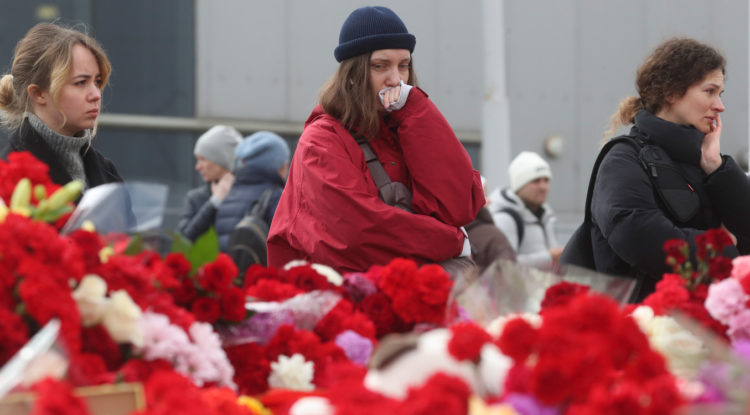
Psychologist's tips in the short instructions "cold"
Acute experiences arise not only among direct participants in tragic events, but also among people who are watching this, even simply reading the news. In such cases, it is impossible to avoid stress and severe feelings, but you can help yourself cope with all this without critical consequences for the psyche. Together with the candidate of psychological sciences, Maria Padun “Kholod” made recommendations for self-help for everyone who feels bad due to a terrorist attack and other tragedies.
In order not to miss the main materials of the "cold", subscribe to our Instagram and telegram .
The experiences of people who see the news about the tragedy are two types: experience because of other people or fear that this can happen to the person himself or his relatives.
- The first is the trauma of the witness-a very strong emotional experience that arises when a person sees that something terrible is happening to someone else. We feel what other people feel because we have empathy (which cannot be turned on and off “by order”). Accordingly, the pain that other people experience is becoming our pain too. In such a situation, a person can experience a range of very severe feelings: mental pain, despair, anger, severe sadness.
A classic trauma of a witness arises when we learned about a certain event, but remained unnecessary ourselves. For example, somewhere an earthquake happened, but we read the news about this from a seismologically safe area, we have no experience about ourselves and the risk of being in a similar situation.
- The second-the experience of the threat-is anxiety due to the fact that a similar event can happen to us. Most often, such feelings arise when a person lives next to the place of tragedy or feels that he is at risk regarding this specific threat. For example, many felt a strong alarm after a fire in the “Winter Cherry” in Kemerovo, because there are similar shopping centers in every city. The same people feel the same now, after the terrorist attack in Crocus City Hall in the Moscow Region. In this case, fear, anxiety, panic may occur.
We tell you how to help ourselves cope with these complex feelings.
1. Draw a border between a tragic event and your life
At first, news about a tragic event is taken away by most of our lives, we are somehow involved in the study of the details of what happened. But it is important to remember that we should draw the border between the event and our personal life. A similar process occurs with grief: when someone is close to leave, at first our life is completely filled with grief. But over time, we switch to other parts of life. The same is here: we leave a place to experience a tragic event, but we must remind ourselves that this is not the only thing that is in our lives.
At this stage, a conscious attitude towards oneself can help. Endless scrolling of news will not only not bring benefits to any of the victims of the tragedy, but also worsen your condition. Remember that you have your personal values: work, family, friends, hobbies. Direct your attention and energy somewhere else, in addition to reading news.
2. Take your feelings, give yourself time to their accommodation
Air captivity - the recognition and adoption of their feelings and thoughts - is very important at the first stage of the experience of a stressful event. It is normal that they are, because it is emotions that make us alive in the psychological sense of the word.
The fright, obsessive thoughts and images scrolling in the head, internal tension - all these are normal feelings that arise in a person who survived difficult events (even if he was only a witness, and not a participant or injured from these events). Allow your feelings to be.
What could be a reason for seeking help?
A person experiencing a tragic event experiences a whole complex of different experiences. This remains the norm until its vital functions are violated.
You need to turn to a psychologist or psychiatrist for help, if for several days in a row you notice the following changes in yourself or your loved ones:
- sleep disturbance (insomnia, nightmares or too strong drowsiness),
- change in appetite (its absence or, conversely, overeating),
- Psychotic symptoms (violation of the perception of reality: hallucinations, illusions).
One of the main criteria that will help you determine that something is going wrong: experiences and their consequences very much limit your life. If you cannot work, you cannot maintain relations with people in the usual form - this is an occasion to seek help.
3. Treat yourself with compassion
Over time, experiences are processed by our psyche. This process takes place without our participation - the intensity of emotions simply decreases. But you can help this process. To do this, treat yourself with compassion and goodwill: after all, you were also injured, even if you were not directly at the scene.
Reduce the requirements for yourself, if possible: at work, in everyday life, in the implementation of some tasks set for yourself.
4. Remember and use universal recommendations that are suitable for any stress
- Take care of the body: Remember that you need a healthy sleep, regular meals (preferably hot), physical activity. Alcohol, when you have stress, it is better to exclude or at least reduce.
- Give yourself the opportunity to express feelings if you have such a need, or not to express them if you do not want it. Each person is unique and the needs during the experience of stress and grief are different. Do not force yourself to do something through power, listen to your desires and needs, respond to them.
- If you feel such a need, do something to help the victims: transfer money to the Assistance Fund, give blood, send a letter with support.
- If any of the creative methods of self-help is suitable for you, use it: it can be listening to your favorite music, drawing, an expressive letter or publishing posts with an expression of feelings, knitting, sewing or something else.
- Use the techniques of awareness and meditation. This helps to reduce emotional excitement.
Remember: you know yourself better than anyone else. Try to remember what brings you pleasure and improves your mood. During a stressful experience, it is especially important to help yourself make up for positive emotions.
5. Use alarm work techniques
If after a tragic event you have not just empathic empathy, but also fear and anxiety due to the fact that this can happen to you or your family, use techniques that help to work with anxiety:
- grounding techniques - practices aimed at the concentration of attention on physical reality (internal and external), that is, to perceive and realize the state of your body and objects around (chair, table, cabinet). The meaning of this technique is to “cling” for physical objects with a look, hearing or other feelings, thereby returning oneself from anxious thoughts at the moment of life;
- See yourself that the alarm is carried out. Maybe for this you will need the help of a loved one who will remind you of this: “Yes, now the alarm is very strong, but it will not always be so. We are able to withstand it, then it will decrease ”;
- In moments of strong anxiety, practice slow deep breathing;
- Remember about the importance of social support: in a stressful situation, you can share anxiety with someone close, share your experiences and thoughts.
Within a month after the tragic event, an acute stress reaction should decrease. If this does not happen and you are still in an excited or extremely anxious state - this is an occasion to seek help from a psychologist or psychiatrist. Remember that the sooner you seek help, the faster you can help yourself cope with the difficulties. And if you start the situation, you will have to work out the consequences for your psyche.
If a month and more after the tragic event you still notice acute manifestations of experience, this may indicate the presence of PTSD (and this is exactly a reason to seek help).