
Translated material
Clinical psychologist about the psychological consequences of the attack
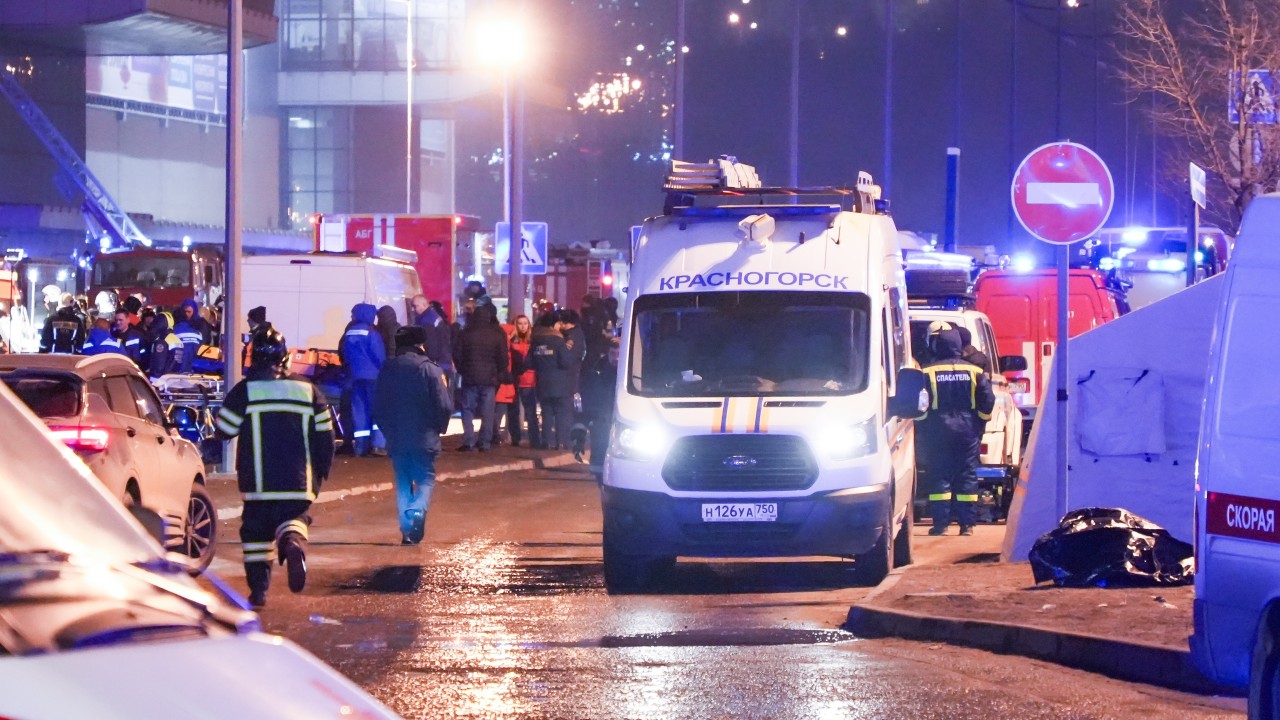
Clinical psychologist Anastasia Afanasyeva talks about the psychological consequences of the attack
Briefly
On Friday, March 22, a terrorist attack occurred in Moscow. 139 people were killed, more than a hundred were injured. At the time of the attack of terrorists in Crocus City Hall, there were more than 700 people. Tens of millions of people watched as unarmed people who came to the concert on Friday evening, terrorists are methodically shooting. About how society and people experience such tragedies, what mental mechanisms protect us and what actions pushing the “trait” talked with a clinical psychologist and psychiatrist Anastasia Afanasyeva.Now many people are very scared. Can you tell us what reaction usually occurs in people immediately after such events? How is it due to? How much does this undermine a sense of safety?
The attacks, like large natural or technological disasters, create a feeling of menacing unpredictability. And unpredictability is that which always causes a very strong feeling of anxiety and unsafe. Then different reactions already arise depending on how a person experiences this tragedy: someone is angry, someone begins to generalize, look for enemies, and radicalize. We can see, for example, we immediately began to discuss the return of the death penalty . Some people right the next day, for example, in Yandex.Taxi began to massively refuse travel if they saw that there was a driver of Tajik origin. Although it is clear that this does not correlate with real security. Someone, on the contrary, is alarming, trying to avoid dangerous situations and public places, does not go anywhere, sits at home.
Then what happens? These different layers begin to collide in one space and the following reaction arises - conflicts and fragmentation. Someone screams about how to worry correctly, how to react correctly, others shout that all other fools. There are always people who are more anxiety. They begin to disperse this anxiety with a very loud and high voice. It doesn’t matter if this happens on the Internet or in public. There were studies that this is precisely this most often starts other people. The higher the level of anxiety, the stronger the acute reaction to stress. And either people directly freeze, or begin to actively do something, run and so on.
There is another option. When a tragedy occurs, someone in a lower, calm, voice, on the contrary, slows down this panic. If you read the stories that took place in Crocus, you can see that the same boys from the wardrobe 15-year-old schoolboy Islam Halilov helped to save about 100 people from the Crocus City City building. The boy worked part -time at the site with a dressing room. , who did not succumb to panic at that moment, took a fairly large number of people. And this is also one of the illustrations of how people are affected by stressful atmospheres.
It turns out that all these conversations about the death penalty, xenophobia - is this also such a protective reaction?
Well, of course, because it is very scary, very unpredictable. It turns out that the most ordinary household actions can lead to the fact that you or your loved ones may die. This is a very, very high degree of uncertainty. And so I would like to somehow remove this uncertainty. When people begin to offer some radical actions, for example, to ban something, to punish someone, to introduce the death penalty-this is just such an illusion that such situations can be controlled in the future and reduce their number. Although, again, in reality, this does not help reduce the number of crimes. Therefore, this is just an attempt to defend yourself and as if to control what will happen in the future.
Does the reaction change over time? How is this eyewitness injury postponed and then lives in the long term?
Firstly, here, as with any injury, there are time periods. They are quite blurry: a month, then for several months, a year, decades. The wound is slowly cut, but in any case, the healing rate of this wound depends on the reaction of the authorities and society to this tragedy, on how to serve it.
The first reaction is always a heightened sense of unsafe and attempts to deal with it. It seems to me that a good example: after 15 years ago there was a series of terrorist attacks associated with Chechnya, for a very long time people of a different nationality, especially women in hijabs, caused a lot of anxiety and fear. Until the fact that people saw a covered woman in the metro, just got up and left this car. Because they were scared. This can last from several months to a year. But there are all sorts of deferred reactions, especially in disturbing people who already feel a high degree of unsafe. Of course, this period is delayed and really causes mental disorders - depressive episodes, anxiety, and avoidance.
I read a study about a large terrorist attack in the Tokyo Metro Zarin attack in the Tokyo metro - a terrorist attack at the Kasumigaseki and Nagatato stations on March 20, 1995. In five coordinated attacks, criminals pierced the bags with Zarin, wrapped in newspapers, in subway cars. According to various sources, from 10 to 12 people (according to other sources, 13 and 27), more than 5,000 (according to other sources, more than 6,300 people) received poisoning of varying severity. , which occurred several decades ago. There was a fairly large number of people who then for a very long time at all avoided trips to the subway, because it was associated just with that tragedy and poisoning by Zarin. And this trend in anxiety and fear still hurts some part of society. And here again, the question is how this part of society begins to act on another part of society. If it begins to actively disperse the alarm, demand prohibitions or restrictions, then this will slow down and increase the trauma of the company. Because in fact, the more restrictions, the more anxiety.
Speaking in a longer term, people who survived the attack can arise in people who have survived. Even without PTSD, when they face a similar situation, their reaction will aggravate, become stronger. Even on my own, I noticed that when there was a terrorist attack, the first thing we remembered with a friend was past terrorist attacks. Moreover, none of us fell under them, but it was still very close. This story with terrorist attacks immediately pulls up similar memories and further enhances the feeling of unsafe. Therefore, if we talk about decades, then, of course, people who are especially close to the terrorist attack will respond to similar situations much more sensitively.
It turns out the media and the reaction news also greatly affects. And the person also “accelerates” from this, as you said, especially if you watch TV and listen to the death penalty.
Certainly. Therefore, the restriction of this incredible stream of information is very, very important. Even if you recall the events of 15 years ago, then there was no such amount of information. Now the TV, and Telegram, and YouTube, and Tik-Tok, in general, everything-wherever you go, you will get a huge portion of information. I just noticed how people just arranged some hellish srachs under absolutely innocent, not at all related posts. It is very important to limit the content, because otherwise you can just get out of the very mind out of the blue.
It is clear that in social networks people try to ventilate and generally somehow live these emotions. But this does not help very much. There are other more working and environmentally friendly skills of regulating emotions. In addition, such srachs very much accelerate other people, because of course I want to connect to this at some point, to drain my anger, anxiety, and resentment.
How much is the peculiarity of this terrorist attack and its context: not an explosion, but a cold -blooded execution of unarmed people affects the psyche? Enhances fear, a feeling of defenselessness?
Here you need to understand that this terrorist attack is generally different from others. Unfortunately, many, especially the older generation, grew up on the experience of terrorist attacks in the 90s and zero, were not ready for this: if you see people in machine guns, most likely you will be taken hostage. And therefore, most people tried to react like that. And the script was completely different, unpredictable. Therefore, this was a rather large surprise and, of course, even more stress in the moment. In addition, really defenseless people are killed here before your eyes, and you do not understand what is happening. This, I think, added a lot of stress simply because it is such a non -standard script for what usually happens. Of course, I think that it is impossible to prepare for this, but anyway, when you have this sewn -in information: what to do with a panic, what to do with a terrorist attack, what to do if you are taken hostage. And here - you are sorting out everything, and everything does not fit.
Now people are massively handing over tickets for concerts, do not go to shopping centers, because the sense of security is lost. How long does it take or what factors affect the restoration of this safety? Or does a person just gradually forget and adapts to this reality?
In general, even when the war began, it was also. The main emotional upsurge associated with the tragedy is from several days to a week or two. That is, in a month, if nothing changes, you already perceive everything more routinely, the brain adapts, the psyche adapts. During the first month there is such an active story, then it slowly begins to fade. As soon as we get confirmation that nothing is repeated, we are ready to go to shopping centers, to concerts. Although, if you look logically, then on the contrary, the first time after the attack is the safest and you can go anywhere. And after some time, when people adapt, when the number of security and safety measures decreases, the probability of tragedy returns to the previous level.