
Translated material
Carnivorous plant as a mosquito repellent
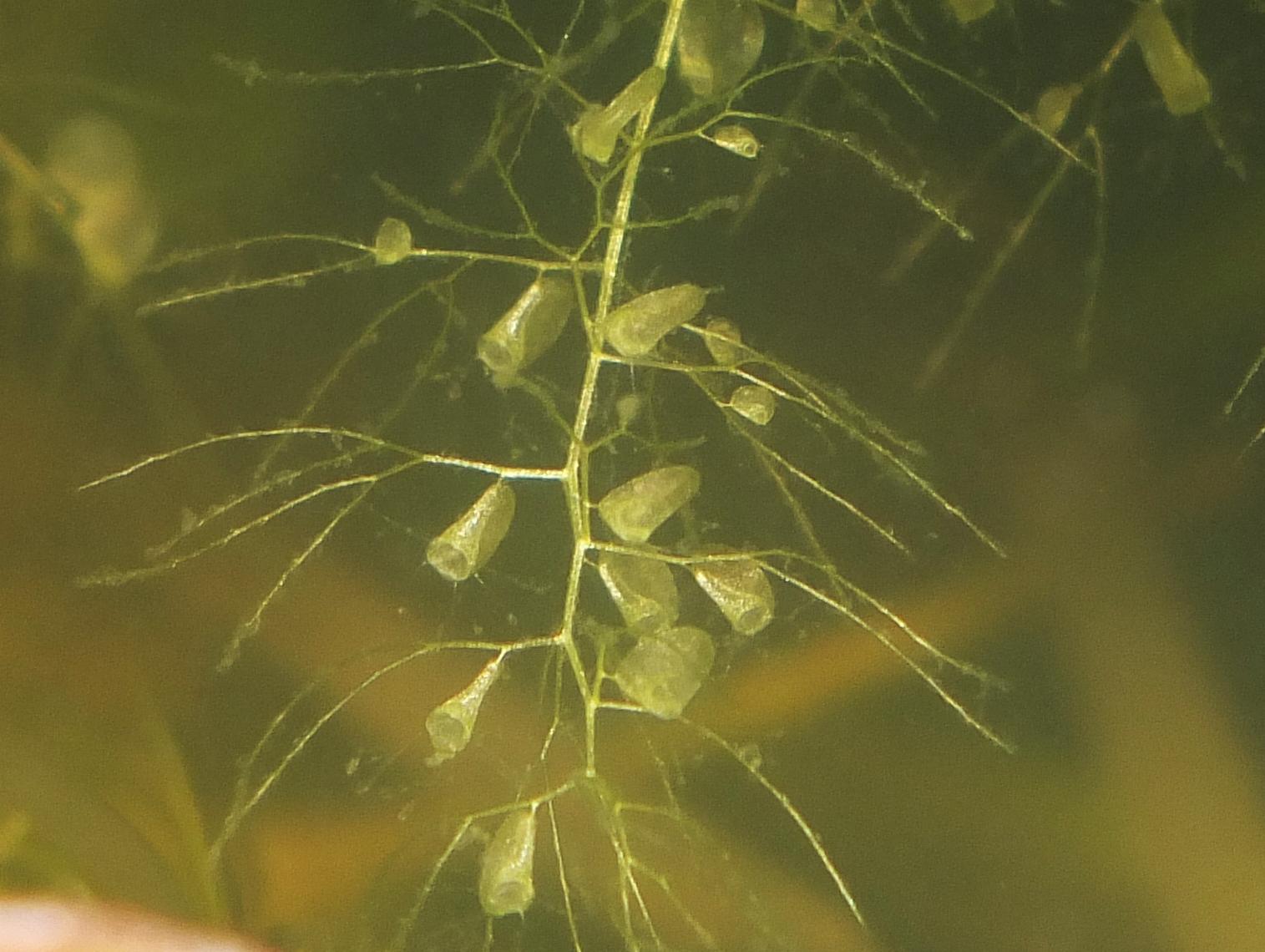
A new study from India has found that golden bladderwort ( Utricularia aurea ) placed in standing water can reduce mosquito larval populations by more than 70%.
The genus bladderwort includes more than two hundred species of plants, distributed on all continents except Antarctica. They all grow in water, have no roots, but have special trapping bubbles. When a small aquatic invertebrate, such as a mosquito larva, swims inside such a bubble, it slams shut, and the animal becomes prey for the bladderwort.
In recent years, there has been interest in using this plant as a biological method to control mosquitoes that spread dangerous diseases. Most often, open water bodies are treated with insecticides to control mosquito larvae, but these chemicals can leach into drinking water and have a negative impact on local ecosystems. “After reading about how pemphigus captures mosquito larvae in the laboratory, I remembered seeing pemphigus here in local lakes,” says lead author of the study Ajit Kumar Mohanty, a field station fellow at the National Malaria Institute in Goa.
In laboratory experiments, the authors of the work offered pemphigus larvae of three species of mosquitoes: Anopheles stephensi , Culex quinquefasciatus and Aedes aegypti . The researchers assessed the proportion of pemphigus larvae eaten depending on their age. It turned out that within twelve hours, 95% of the larvae of the first, second and third instars of all species were caught by bladderwrack. Among the fourth instar larvae, only 60–80% became victims of the predatory plant.
This prompted Mohanty and his team to look at the feasibility of using pemphigus in Goa. In India, construction sites often have large pits filled with standing water, an ideal breeding ground for mosquitoes. “We are working on a study to identify breeding sites of Anopheles s tephensi , the main vector of malaria in Goa, in urban areas,” says Mohanty. “These ponds on construction sites are a preferred breeding site and we have carried out larval counts in them. We then added bladderwrack to these pits and did another count 24 hours later. We found that bladderwort was very active up until day seven, with a 70% catch rate.”
Using bladderwort as a biocontrol tool has several advantages over other methods including fish, dragonflies, copepods and tadpoles. Bladderwort can be propagated cheaply and quickly and grown for permanent use. It does not need to be planted in soil, just place the plant directly in a tank, open water tank or hole. Plants live for about a week, constantly feeding on aquatic invertebrates. In addition, there are many local native species of bladderwort found in different regions of the globe, so there is no need to introduce alien species to new locations. And since bladderwort is highly resistant to insecticides and herbicides, it can be used in parallel with other traditional control methods.
However, there are several disadvantages. Bladderweed is a seasonal plant whose activity and growth do not always coincide with peak mosquito seasons. Additionally, since it only lives for a week outside its natural habitat, plants must be replaced regularly for ongoing control.
The study was published by the Journal of Medical Entomology.