
Translated material
"Forestry should not be the industry of the mining industry and harvest what is growing up." Expert - about the proposal of Russian business to weaken the protection of valuable forests
In Russia, a mismanagement of forest use is common, which depletes forests and forces the business to go deeper into untouched wild forests
This material (information) has been produced and distributed by the Nmola foreign agent, or concerns the activities of the Smola foreign agent. 18+
The organization "Rossiya Russia", uniting entrepreneurs, sent 14 proposals for the support of the industry Victoria Abrumchenko. Two of them suggest a weakening or cancellation of environmental norms.
In particular, business representatives propose to conduct an audit of protected areas “for the advisability of their creation”, since many reserves, reserves and national parks were created “with the participation of various foreign environmental organizations”. According to timber industry, protected areas unreasonably restrain the development of the country's industry and economy.
Their second request is to weaken the legal regulation of the export of the Mongol oak and Manchu ash. Now these species are at risk of disappearance and are subject to the International Convention of the City . According to entrepreneurs, the severity of Rosprirodnadzor and customs scares buyers from China and "creates obstacles to legal business." Therefore, they propose to cancel the CITES certificates.
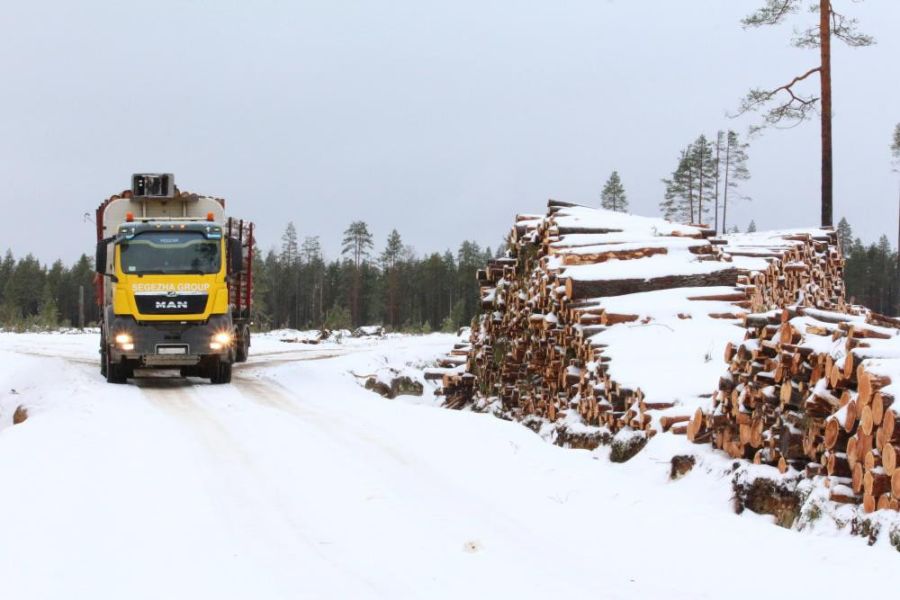
Both ideas are a consequence of an extensive, or mismanagement, a forest use model, which “has been dominated by Russian forests for many decades,” according to the environmental project “Earth concerns everyone”. Its essence is that the forest is used as a logs of logs - wood is simply extracted from natural forests, and is not grown specifically on suitable lands for this. As a result of such “forest development”, affordable (and most valuable) forests are quickly exhausted, and forest producers have to master all new wilds.
“The correct forestry should be the industry of crop production - when what a person needs is grown on the lands suitable for this - and not the industry that harvests that it is growing up,” explains Alexei Yaroshenko, an expert on forests.
As a rule, in the search for new and undeveloped territories, business comes to coniferous forests - they are better suited for the production of lumber.
“Reserves [coniferous trees] are naturally restored, but very slowly. But if you restore and grow the forest on purpose, conducting the correct forestry in it, the period of this recovery can be reduced approximately twice, or even more, ”explains Yaroshenko. - But the right forestry is possible only with a combination of several key conditions: favorable for the growth of climate trees and at least relatively fertile soil, developed road network and the development of the territory, as well as sufficient labor resources. Of the approximately 900 million hectares of Russian forest lands, about a third is suitable for these criteria. ”
It should be noted that the transition from an extensive model of forest development to intensive use and reproduction of forests is spelled out in the development strategy of the Russian forest complex until 2030. But, notes Yaroshenko, for the real effect of the measures proposed in it is not enough.