
Translated material
"Wolf Time" is an important book about the life of post -war Germany
And that a happy private life is impossible without rethinking the past
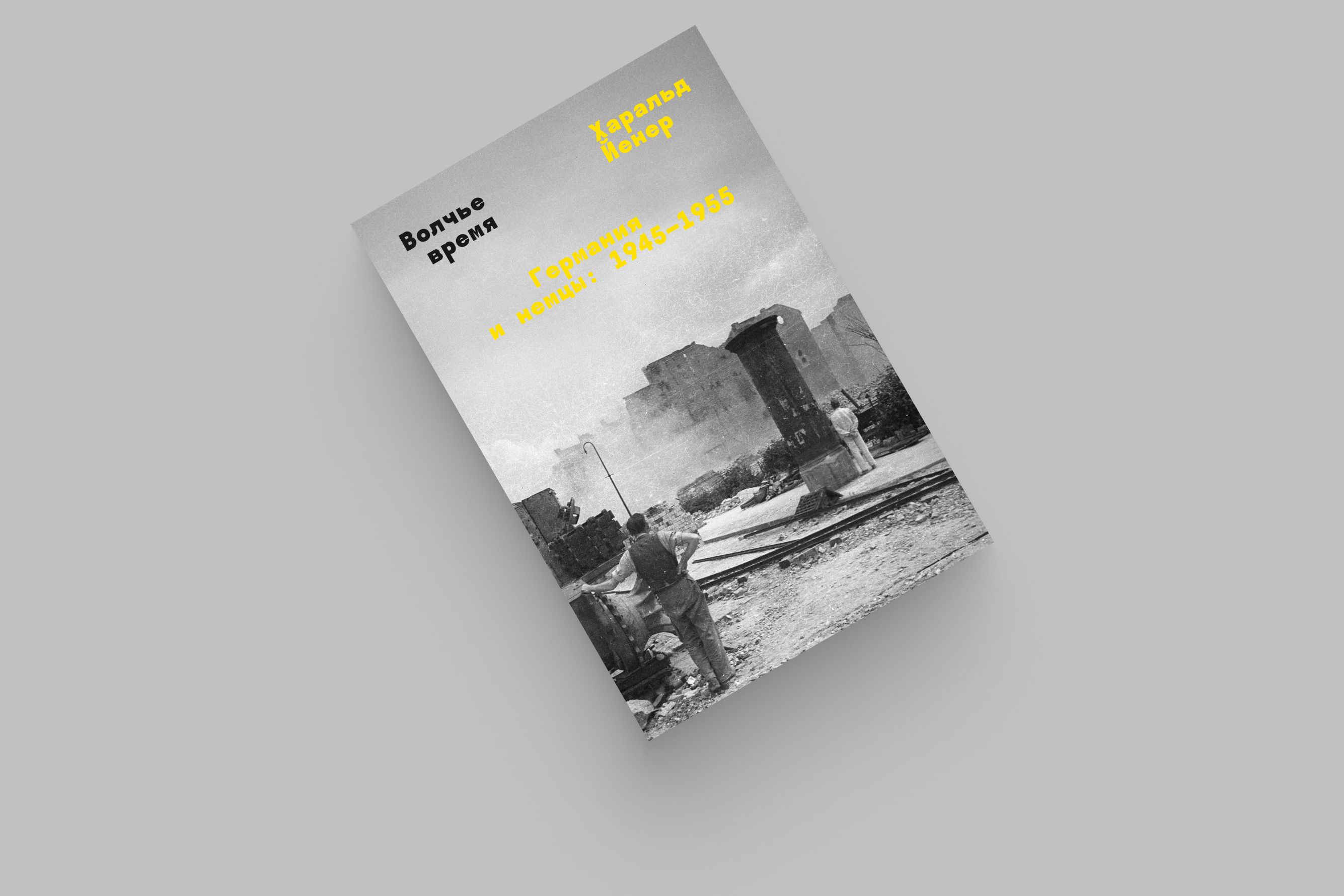
“Wolf Time” is the book of Harald Jeneer, a German journalist and honorary professor of Berlin University of Arts. She was published in 2019 and received the Leipzig Book Fair award in the category of “Best non-fiction”. The English translation was praised by critics . In December last year, Individuum published the Wolf Time in Russian. In his work, Jener describes how the life of the Germans was arranged in the first post -war decade - and this text cannot be perceived outside the context of the modern war. At the request of Medusa, a literary critic Lisa Birger tells about the book.
Among Russian readers, in recent years , literature about the Third Reich has been especially popular (for example, book traders) - and publishers feel it. In the 2020s, several books about Germany were published in Russian after the war: in 2021, Alpina Non-Fikshn released the “ land obsessed with demons ” by American Monica Black-a study of post-war occult practices; In 2023, the "scooter" published the story of the German Kirsten Boyier "Not Revoy, you are still alive" about what the spring of 1945 was for Hamburg teenagers.
Finally, it is worth recalling the report of the reports of the Swedish journalist Steg Dagerman “ German Autumn ” (the translation was published by Ivan Limbach in 2023). In it, the author talks about Germany in 1946, and the picture comes out extremely gloomy: lonely people die from hunger and cold among the ruins. Dagerman seems to be the first to ask his book the question: is this punishment for a whole nation too cruel? After all, "the grief of the German people is collectively, while the brutality of the collective was not collective."
The author of the Wolf Time Harald Yener does not agree with such a rhetoric. He calls this “suppression” - in his opinion, a conversation about the suffering of the Germans leads to the fact that there is no “no place or thoughts” for genuine victims.
In this sense, the story of the former emigrant, the iconic German writer Alfred Delin, who returned to his homeland after the war, is indicative to fight with the remnants of Nazism. In 1945, he discovered the denacification Bureau in Baden-Baden, but in the end he became convinced that "it would be much easier to rebuild the German cities, than to make the Germans understand why this all happened." Disappointed in his idea, Dyblin returned to France.
Jener defines quite delicately the “wolf” era as the time of the “deficiency of legal consciousness”: the time of looting, unprecedented violence, speculative. In one of the brightest scenes of the book, journalist Ruth Andreaas-Friedrich tells how, a few days before the end of the war, the crowd in Berlin literally torn her hands at the same time as wandering on the streets of the White Will: “So, what does it look like for the hour of liberation, which we have been waiting for twelve years?”
Exploring the post -war collective German “we”, Jener, unlike Dagerman, writes his picture with different colors, not only black. Yes, this is the hungry life of tens of millions of people left without home. Yes, these are hundreds of cubic meters of ruins. But the country at that time, the author insists, was rapidly revived, and evidence of the German economic miracle that followed restore. It was in the post-war years that a new morality was born, Jener writes: the main human quality suddenly was the desire of an ordinary German to preserve-at least in some form-decency in conditions of devastation.
In the preface, Iener mentions the article by Kurt Kuzenberg in the newspaper Neue Zeitung entitled "Anthem of the Age of Disruptions." Kuzenberg spoke of the post -war years as a time of collective innocence: let the Germans steal and not ceremony with each other, but their actions had their own “robber honor” , the journalist wrote.
At first, Iener argues with this statement: not the time of innocence, but the time of collective guilt, which the Germans simply refused to accept, then thinking only about their own survival. But later, the author concludes that it was such a focus that the people managed to lead (more precisely, even two people - eastern and western Germans) to denazification - despite the actual inability of citizens to connect their suffering with their own responsibility for what happened.
If you want to buy the books of the Medusa publishing house, follow this link . When buying our books, you help us to pay fees to the authors and support the publishing project, which is created so that the non -certificate literature is even now available to readers in Russia.
Why did the Germans manage to create an “anti -fascist, quite respectable society”? Because, first of all, they built it for themselves, the author is sure - and denazification was a consequence.
“Transforming the surrounding reality, the Germans changed themselves,” says Jener. He devotes a whole chapter to the design: wallpaper with abstract patterns and a “kidney” table on thin legs have become symbols of new lightness. The past, he says, was "disconnected like a click." The only thing that united the post -war Germans was that they forgave themselves Nazi crimes: “Almost as sinister as the infernal past of Germany, it seems that the intuitive confidence with which she later again gained her former well -being.”
So what happened in the end that several decades later a difficult conversation about the Nazi past was still started? Jeneer's answer is a miracle. Perhaps the reason for this miracle was the rapid economic flowering of the post -war years, which the author calls "undeserved." Perhaps - cleansing the suffering of the post -war years. But an honest conversation about the past for the Germans consists in admitting: such a conversation was not held on time - they did not even become a Nuremberg process - and it might not have been at all.
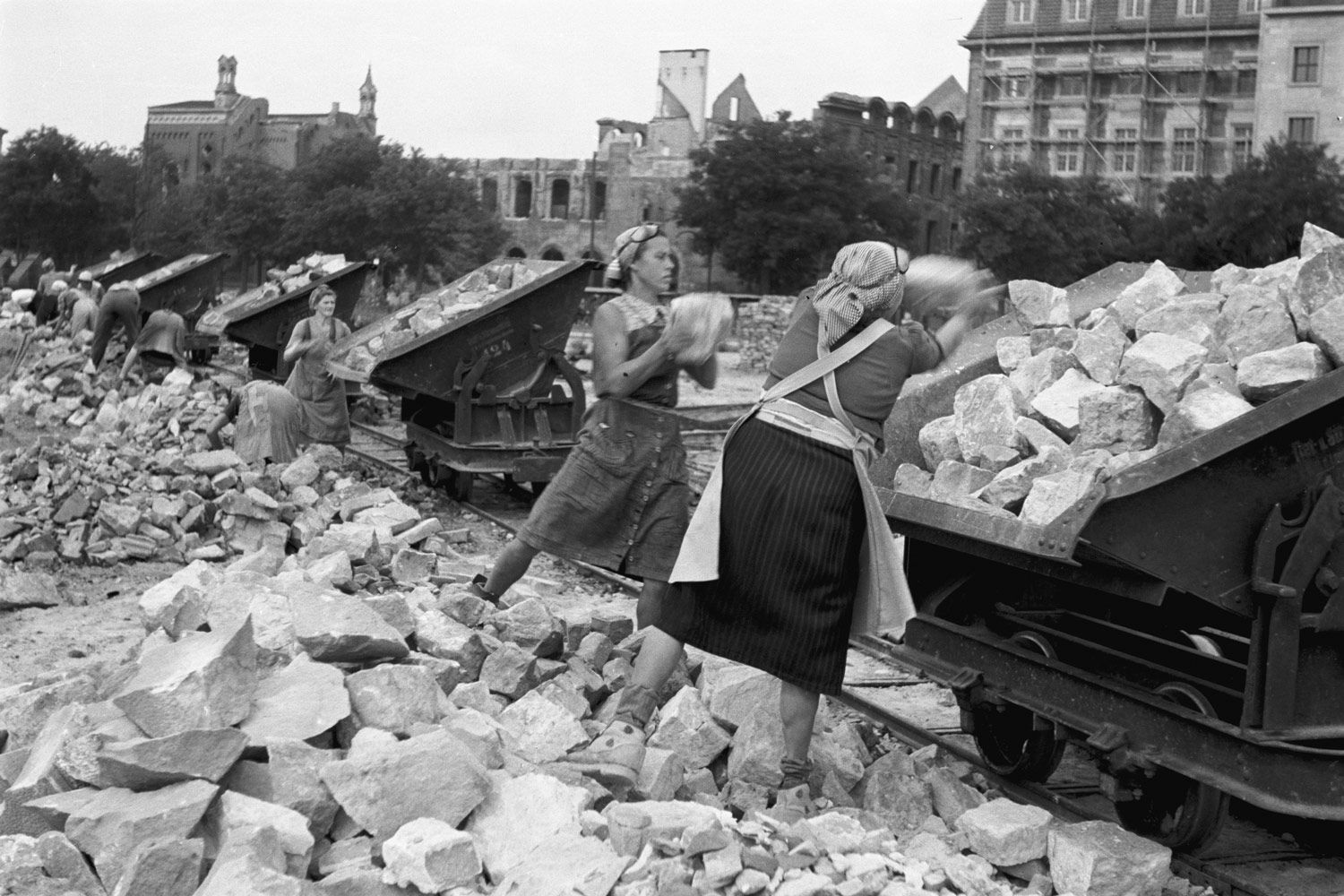
The paradox of the "wolf time" in the book is expressed in private stories. Here the author describes how women disassemble piles of heavy stones on the streets, while other residents of Berlin are watching the process, drinking coffee in the new cafes on Elector (from the first post -war months in Germany, a comfortable burgher life has been revived). Iener immediately tells how the Ruin processing enterprise appeared in new building materials-later this initiative led to the economic prosperity of the city appeared in Frankfurt.
He also writes about how the Germans captured the fashion for dance clubs (then their list in Berlin was a little shorter than today), and about how the carnival was revived in Cologne-the event for local authorities was so important that Thomas Lissem, the owner of the local liquor factories and a devoted national socialist activist, were secretly attracted to his organization.
Iener devotes the whole chapter to sexual enlightenment. Former Luftwaffe pilot Beata Uze made a fortune, publishing a contraceptive and memo for veterans who have lost potency. In 1961, Uze opened the world's first sexshop - and became one of the main porno symbols of Germany. Transforming the surrounding reality, the Germans changed themselves.
Four hundred pages would not have been enough to diagnose the whole nation - and Yener is almost not trying to do this. It is more important for him to show that the post -war time in Germany was different, at the same time tragic and funny, in a word - strange. But it is in it, the researcher believes, that the roots of the modern understanding of Nazism and the Holocaust lie. The main lesson that this book can teach us can be learned by historical lessons only by having achieved well-being in private life and, possibly, after still injured.
Lisa Birger