
Translated material
In Tel Aviv, the largest demonstration from the beginning of the war was held
Families of hostages captured by Hamas terrorists united with an opposition that requires the resignation of the Israeli government
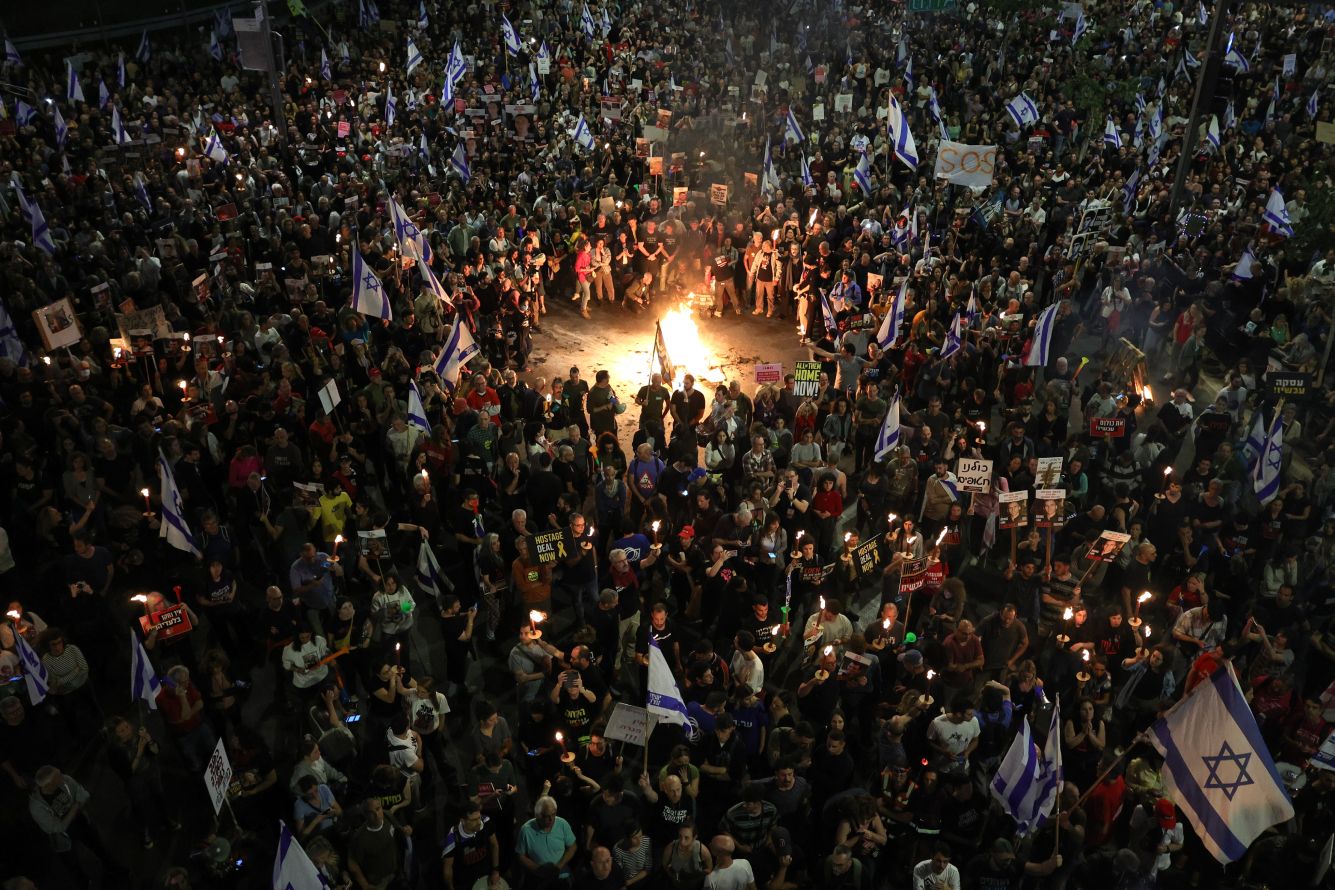
In Tel Aviv, on March 30, one of the largest shares against the government since the beginning of the war in the gas sector took place. Demonstrations of families of stolen Israelis, who are still captured by Hamas, are held in Tel Aviv every Saturday by the Museum of Arts. However, this time representatives of the opposition also took to the streets who require not only the immediate conclusion of a deal to release hostages, but also to hold the early parliamentary elections-and they, as the Washington Post, can become the “biggest threat” for Prime Minister Biniamin Netanyahu.
Relatives of hostages accuse Netanyahu of disrupting the transaction on the release of their loved ones, which have been captured for almost 180 days. One of them, Einav Zangaucker, who has a son Matan in captivity, said that the hostile families were “forced to start a new stage of a fair struggle” and will take measures to “immediate resign” by Biniamin Netanyahu. She accused Netanyahu of “torpedoing” the transaction and called the Prime Minister an obstacle that interferes with the conclusion of an agreement on temporary a truce.
The next round of negotiations on the release of hostages between Israel and Hamas began back in February. The preliminary plan suggested a 40-day ceasefire in the gas sector and the release of hostages in exchange for Palestinian prisoners in Israeli prisons, in the ratio of 1 to 10. US President Joe Biden on February 27, he hoped for a ceasefire “by the next Monday”. However, this never happened, and Netanyahu continues to reject the requirements of Hamas - in particular, about the release of Palestinian prisoners serving terms for the murder.
Representatives of the opposition, who protest along with the families of stolen Israelis, in turn, require the purpose of early elections and the resignation of Netanyahu. They also consider a staggering deal to release hostages by failure of the government. Some of them say that the decision of relatives of hostages to join the protest against the government cannot be called political, but they “do everything possible to return their loved ones home,” and understand that Netanyahu “is an obstacle to this path”.
In addition to Tel Aviv, the rallies also took place in Jerusalem, Haifa, Beer-Shev and at the Netanyahu residence in the city of Keisaria. There, the former head of intelligence, the IDC, Amos Malka, who said that the “every additional day” of the prime minister’s stay at his post is “obvious and direct risk” for the safety of Israel.
After the protests, Netanyahu spoke at a press conference, saying that he was doing everything possible to release hostages, and calls for elections in the midst of war, “a moment before victory”, paralyze Israel “at least six months”. “And the first to celebrate this will be Hamas,” the prime minister added.
At the same time, as The Washington Post notes, the Prime Minister is under pressure not only to protesters, but also by the United States, which criticize his intention to start a military operation in Rafaha-the last city in the south of the gas sector, where the Palestinians living in the enclave were evacuated from the north. The leader of the democratic majority in the US Senate, Chuck Schumer, said that Israel, led by Netanyahu, risks becoming an “outcast” and urged the country to hold new elections. The Israeli Prime Minister replied that his country is not a “banana republic” in order to try to replace the chosen leadership, and most of the Israelites support the policy of his government.
On the eve of the rally, the police chief Tel Aviv sent letters to the most active demonstrators, warning of the overlap of roads and arson of tires. However, clashes began on the shares: the protesters blocked the largest Ayalon highway and bonfires began to burn; The police in response applied waterlets, dispersing the crowd. The police later stated that although the demonstration was mainly “was peaceful”, some of the protesters “violated public order”. 16 people were detained at the protest.