
Translated material
How the propaganda of the “Islamic State” works on the Internet - “Layout”
Vilayat "Telegram"
Abdulla Rinat Mukhametov April 01, 2024 |How does Islamic State propaganda work on the Internet?
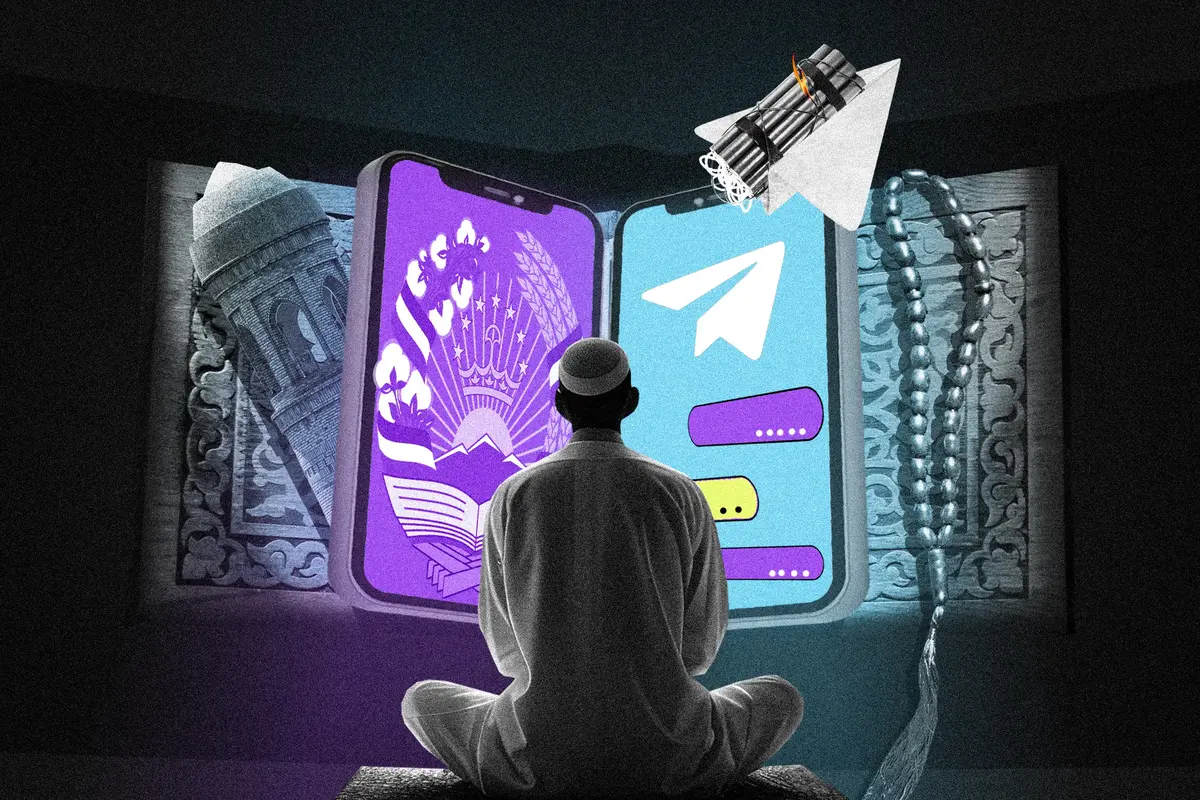
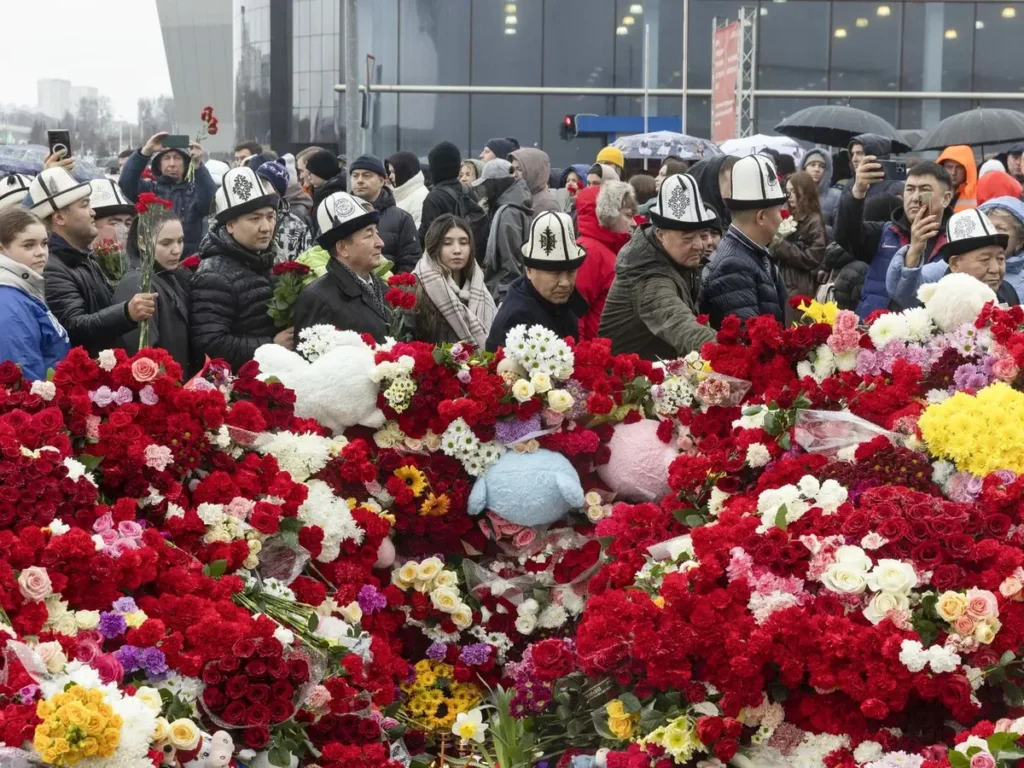
The terrorist attack in Crocus City Hall on March 22, 2024 became one of the largest in modern Russia - according to official data alone, it claimed the lives of at least 144 people. Russian authorities reported the detention of four attackers; FSB director Alexander Bortnikov later said that security forces already “know the organizers” of the attack, but did not name them.
In the media, statements by politicians and at the level of rumors, there are various different versions and explanations of what happened. But in fact, the long-standing and notorious organization “Islamic State” took responsibility for the terrorist attack. Media resources associated with IS released several official statements about this - and published footage of brutal massacres of people, filmed by one of the terrorists. There is one more fact - all 4 attackers were citizens of Tajikistan.
Further explanations of what happened diverge: the Russian authorities and state media are trying to link the attack with the machinations of the Ukrainian special services, the Americans “nod” towards Kabul, Kyiv accuses the Kremlin of provocation. At the same time, a discussion is unfolding about “migrant chats” and “Islamist recruitment networks.” These networks are especially discussed a lot after the words of one of the detainees that he listened to lectures and watched lessons on religion - and then a certain assistant to the preacher contacted him and offered to carry out an attack for half a million rubles.
At the request of “Verstka”, political scientist, Islamic scholar and author of the telegram channel “ NERUSSKY ” Abdulla Rinat Mukhametov and an anonymous expert in oriental studies, collaborating with leading Russian universities, understand what IS propaganda is, how it works - and what is important to understand about the preconditions of the tragedy and possible future threats.
In order not to miss new texts from “Layout”, subscribe to our telegram channel
IS propaganda in “migrant chats”
“How did they do it? We went into migrant chats. One was found in a sermon chat, the other in a job search chat. They were not offered a huge amount of money - half a million. And people like that will slaughter a native village for money!” — RT editor-in-chief Margarita Simonyan said after the terrorist attack.
At the same time, in Vladimir Solovyov’s program , she claimed that she was well acquainted with these chats, that there was a certain level of Russophobia there, and “all of us” (apparently Russians) were called “pig-nosed.” This, of course, cannot but shock - open chats of migrants as a breeding ground for Russophobia and a platform for recruitment into the Islamic State - and the horrific execution of unarmed concertgoers in the end.
But those who have actually been immersed in the activities and propaganda of a terrorist organization for many years note: firstly, most migrants hardly know the word “pig-nosed”, and secondly, although ISIS propaganda is not too hidden in the depths of the Internet, it also rarely comes up in job search chats - if at all. Several people who are in such chats on a regular basis share similar skepticism. The situation is more interesting with more “thematic” chats and Telegram channels.
What is IS propaganda aimed at residents of the post-Soviet space, and how is it shared?
IS disseminates narratives in hundreds of active telegram channels
It is hardly possible to accurately measure the number of chats and channels where IS propaganda materials are distributed. Telegram actively fights against such content, therefore, according to the authors of “Layout”, such communities do not last long: on average from several days to a month, rarely longer.
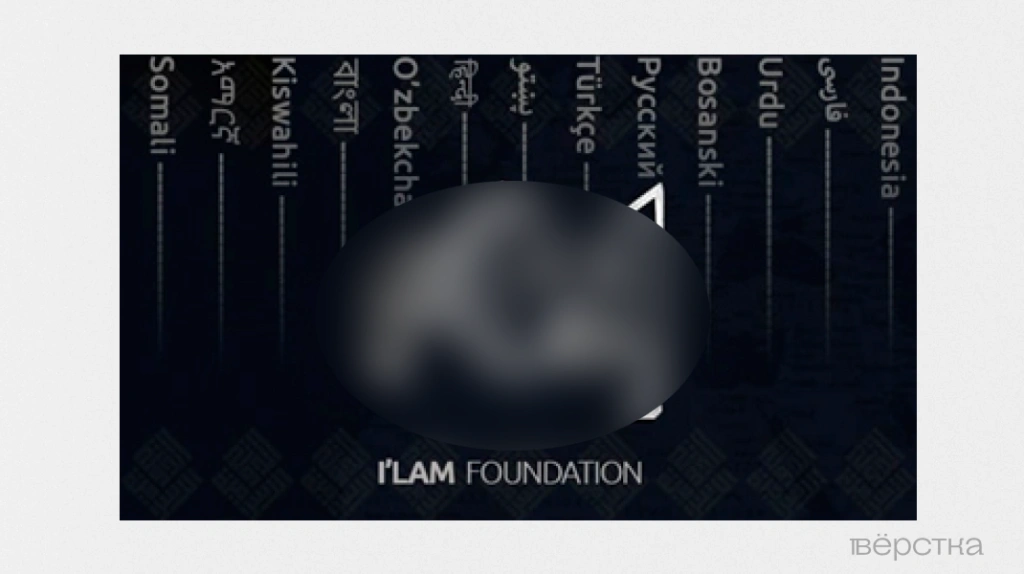
In total, in all broadcast languages, we can talk about several hundred such channels; in the post-Soviet space there are approximately one hundred to two hundred of them. These are very rough measurements made through participant observation for research purposes over the past few years. In addition, the frequent blocking of such channels creates the need to create separate aggregator channels where current thematic channels and chats are collected.
It is important that such projects are usually the result of horizontal cooperation between IS sympathizers. Most often, these channels are created not by professional media activists (as was the case during the heyday of the “caliphate” in Syria and Iraq), but by ordinary users who know where they can get prohibited content.
Where does this content come from on Telegram? The answer is simple - from the darknet. There are at least two active, constantly updated sites on the darknet directly related to IS. Despite the relative simplicity and accessibility, not everyone has yet mastered the skill of using the “darknet”, so most of the Telegram channels are run by people who have more or less mastered this environment. They take the necessary material and, if it has not yet been translated from Arabic into other languages, they adapt it into the language of the target audience of their channel.
The vast majority of these propaganda materials are aimed at very specific readers. These are not random labor migrants looking for work, but people who, if they do not sympathize with the Islamic State, are at least already interested in it. That is, videos or texts distributed online with calls to go blow up something or attack are not aimed at a random “guest worker” who scrolls through chats and ends up on IS content. The ideas of cutting someone, shooting, burning, crushing someone with a truck or exploding “suicide vests” do not come to mind easily and quickly after watching a couple of videos on the Internet - they need good reasons and prerequisites.
The Path to ISIS: Online Preachers
What stage precedes a targeted interest in the Islamic State? Usually people begin to become interested in preachers whose lectures are completely legal and are available on the “clearnet,” including on YouTube. An example here is the currently quietly operating channel in Tajik “Madrasai Muvahiddin” (“ School of Monotheists ”), where sermons of quite radical religious figures are posted - for example, Abu Muhammad Madani. Or the Mowaheedden channel (“Monotheists ”), where you can find videos of Abu Hanzal (aka Zarif Javanmard, a preacher who most likely lives in the EU). These sheikhs are rejected by many other Salafis because of their inherent political radicalism and suspicion of sympathy for the Islamic State.
The Russian-speaking Salafi apologist Abu Ismail ar-Rusi ( Artem Ivanov ), well-known on the Internet, directly accuses Abu Muhammad Madani of sympathizing with IS. Ar-Rusi exposes in public speeches of various sheikhs deviations from the true, in his opinion, Islam. He also sharply criticizes the propaganda of the Islamic State, although he himself was previously accused of sympathizing with the Islamic State.
It is important that public preachers (for example, Madani and Abu Hanzala) never openly declare their affiliation with any terrorist organization. This allows them to avoid blocking.
Particularly popular are lectures in which sheikhs criticize modern governments of Muslim countries and accuse them of betraying the interests of the ummah - the global Islamic community . The thoughts conveyed in these lectures often become a certain “bridge” for the transition to something more radical and frankly forbidden. At least, many Tajik ISIS members started with them.
As far as is known from the testimonies of detainees, including in Afghanistan, the most active listeners and users, who often comment on recordings and write in thematic chats, are usually contacted anonymously through “personal messages.” Only weasel i is known, so it is impossible to say for sure who is on the other side. Gradually, young people are directed to specific actions - but in order not to scare them away, they start small and are immersed in the “discovery and understanding of the truth” gradually. As a result, there were many suicide bombings (“istishhadiyas”) in mosques, markets and hospitals. Often right at the place where new adherents are located - in Afghanistan, for example.
In addition to the usual preaching projects, Telegram has chats and channels in Uzbek and Tajik (most often using Russian), which regularly publish content directly related to IS. These are mostly old videos that the group created at the height of its rise in Iraq and Syria, as well as more recent materials of much less professional quality that are created by the organization's current supporters.
Of particular note are the translations of the most important addresses of the Islamic State and various calls to supporters to help the common cause, in addition to armed actions: to explain to people the “true” beliefs, master graphic design, study programming, debate with opponents of the Islamic State, etc. Previously, there were many such specialists in the media centers of the Islamic State and there were entire staffs of employees, but today there are much fewer of them - this is noticeable, among other things, in the decrease in the number professional content produced by the organization.
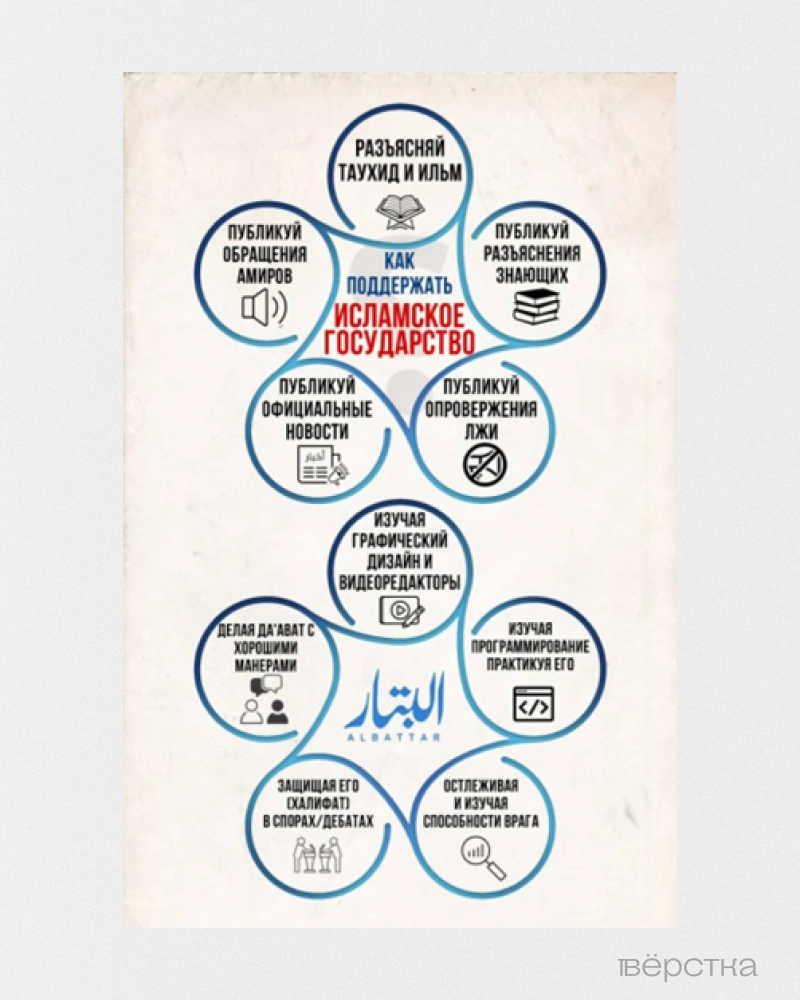
It is difficult to talk about the financial component of such a media industry. As a rule, all this exists due to a network of volunteer activities, donations from sympathizers from among small businessmen (in fact, the same supporters of the trend as everyone else) and, possibly, sporadic crime, which is proudly declared “economic jihad.” In most cases, the latter is expressed in ordinary racketeering, banditry and theft, the proceeds of which are transferred in whole or in part to the organization.
IS: the morals of jihadists
On New Year's Eve 2017, Abdulgadir Masharipov, known as Abu Mohammed Khorasani, opened fire in a nightclub in Istanbul. 39 people were killed. An IS militant got inside dressed as Santa Claus and left the crime scene in a taxi without paying. Local media reported that, in addition to the “act of jihad against the wicked,” a native of Uzbekistan and his associates from other Central Asian countries took an order to kill a specific person who was celebrating a holiday in that place. That is, he combined the “sacred struggle” with the usual service of a killer.
In the apartment where Abdulgadir was arrested by Turkish security forces, they found cash totaling at least 150 thousand dollars. It is believed that this was payment for a terrorist attack on the club. During the investigation, it turned out that Masharipov had recently taken a second wife, a French citizen. Actually, it was possible to get on his trail based on the testimony of his first official wife. Before the attack, the terrorist posted photos on social networks from walks around Istanbul and looked like a man making big plans for the future.

Many are surprised that those detained after the terrorist attack at Crocus show no signs of special ideological commitment or even stable affiliation with the corresponding subculture. For example, in the photo of the IS oath, they raise the index finger of their left hand in a testimony of faith, which is very strange, since the left hand in Islam is intended for hygiene procedures. And the right one is not occupied by anything posing in the photo, that is, there is no need to use the left one.
The terrorists also did not intend to die (like those who explode in mosques), which means they expected to take advantage of the promised fee. But this does not mean that these are “some kind of different ISIS members.” In the consciousness and ideological background of people from this environment, what seems incompatible to ordinary people can easily get along - for example, they easily justify everyday crime with the concepts of “spoils on the battlefield,” “trophies,” and “jihad with property.”
This is an explosive ideological and emotional mixture of pseudo-religious hyperfanatism, migrant despair, stress and poverty, youth maximalism and the desire to solve all one’s problems in one fell swoop, not only in this world, but also in the eternal.
Often, lumpen youth (and even teenagers) who have recently turned to religion or are not at all religious, and who are cut off from their natural environment, fall into the networks of the Islamic State. Often these are migrants or people who have recently moved to the city. Of the entire list of extreme Islamist concepts (including “jihadist”), they are of keen interest, for example, in the “ management of savagery ” (or “management of ferocity”) by Sheikh Abu Bakr al-Naji.
An-Naji's idea is that atrocities are not only permissible, but also necessary, because they throw the enemy into numb fear. In his manifesto, the Sheikh writes the following: “Those who have dealt with jihad know that it is nothing more than violence, cruelty, terrorism, intimidation (of others) and murder. I am talking here about jihad and struggle, but not about Islam, and no one should confuse one with the other... You cannot continue to fight and move from one stage to another unless you go through the initial stage of killing the enemy and depriving him of shelter...”
Let us emphasize once again that this understanding of “jihad” - religious zeal, spiritual and other struggle in the name of religious ideals - is extremely marginal both for ordinary Muslims and even among Islamic political movements.
On the other hand, such phenomena as the “Islamic State” have already occurred several times in history. Even at the dawn of Islam, the Kharijites appeared, the most extreme groups of which actually declared the entire surrounding “world of unbelief” an enemy, and considered only the location of their military camp to be the “abode of faith.” 1300 years before Pol Pot, Nestor Makhno and Charles Manson, they rejected any socio-political and philistine order, including the traditional (Sunni) Islam of the emirs and court ulema (clergy). Just like IS supporters, the Kharijites did not disdain cruelties and raids for loot.
For IS supporters today, the true super-idea is maintaining the existence of a religious-political sect, and not “building a global caliphate,” as was once loudly declared. In the surviving cells they see the core, the matrix of their future “city of Kitezh”, “world communist brotherhood”, “heaven on Earth” or “the thousand-year reign of Christ”, similar utopian ideas in other cultures. Cruelty for the sake of this is not only permissible, but also useful.
In order not to miss new texts from “Layout”, subscribe to our telegram channel
ISIS chats and the role of intelligence services
Although this topic is not at all fun, we will clearly demonstrate it with a meme that is quite popular among Muslims. As we see here, the police officer writes, “Ahi [“my brother” in Arabic], was thinking about going to Sham [Arabic for the geographical area that includes modern-day Syria]?' This refers to participation in hostilities in the civil war that has been going on in the country since 2011.
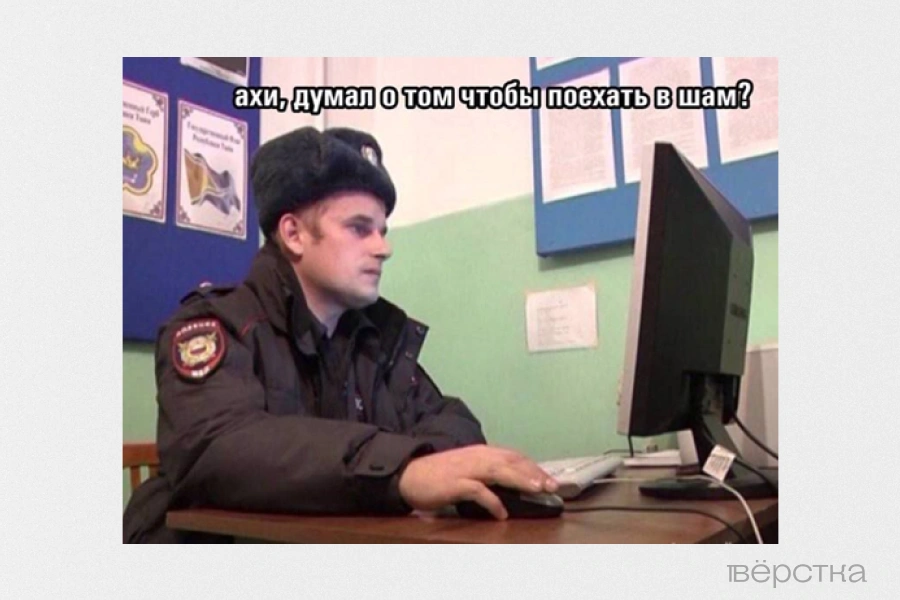
This meme pokes fun at a phenomenon that Muslims face regularly online. There are known cases where intelligence officers themselves administer specialized channels and chats, imitate supporters or even members of the Islamic State, communicating using specific “slang”, write provocative questions and proposals to Muslims, and agitate for the commission of illegal actions. In general, they organize all sorts of provocations, thanks to which they can then increase their performance in the “fight against extremism.” Such characters in any Muslim chats (including ordinary, non-radical ones) are a common occurrence. In fact, administrators of chats of IS supporters regularly try to identify security forces themselves and warn other “colleagues” about them. It is difficult to judge how effective this is.
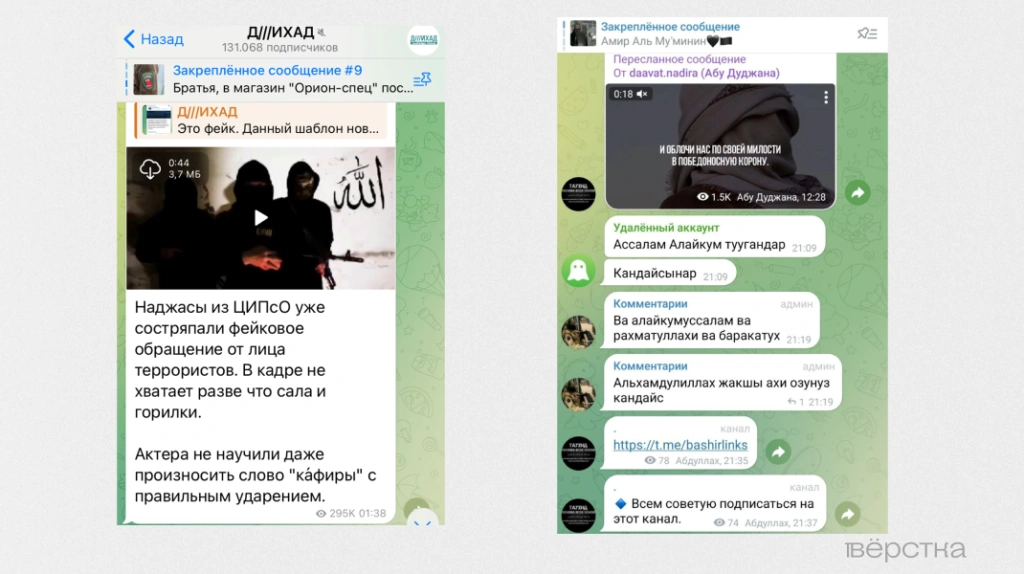
The popular channel “ D///IHAD ” is noteworthy here. It regularly publishes materials relating to IS and other extreme structures, environments and subcultures, and religious issues in general. The content is presented in a satirical manner - sometimes with outright mockery and cartoonish banter, but clearly with a good understanding of the problem and deep personal involvement. Lately, the channel has often played up the theme of the Northern Military District as “jihad.”
Sources of “Vestka” claim that the anonymous channel is run by the very employees who monitor the extremist Internet and “sit” in the corresponding chats on duty, since the heyday of the jihadist underground in the North Caucasus.
However, there is no anti-terrorist effect in provocations like the “ D///IHAD ” channel - rather, on the contrary, such activity arouses the anger of some Muslims who see this as a challenge and blasphemy, including in relation to Islam as such. It is possible that grants are even allocated for such activities through specific funds that support the fight against extremist propaganda on the Internet. Although there is no direct evidence of this, many subject matter experts gave similar assessments in conversations with the authors of “Layout” on condition of anonymity.
What is "Khorasan Province"?
Recently, content in the languages of the peoples of Central Asia has an additional channel of production and distribution - the “Islamic State of Khorasan Province” (hereinafter referred to as ISKP). This name is well known in the context of the terrorist attack in Crocus. The fact is that IS positions itself not as a simple organization, but as a caliphate - a state for all Muslims. Accordingly, it calls its regional branches “provinces” (“wilayats” in Arabic).
ISKH previously controlled certain territories in Afghanistan, but with the Taliban coming to power it was completely defeated and went underground. At the same time, although the ISKH weakened “on the ground,” it paradoxically expanded its capabilities for conducting “external” operations .
We can say that IGPH is now moving from a local orientation to a more global one. The first line of its strategy is a constant propaganda campaign. Unlike other IS affiliates, ISKH has created its own independent media structure through its Al-Azaim Media Foundation, which produces materials in Arabic, English, Farsi, Pashto, Tajik, Urdu and Uzbek.
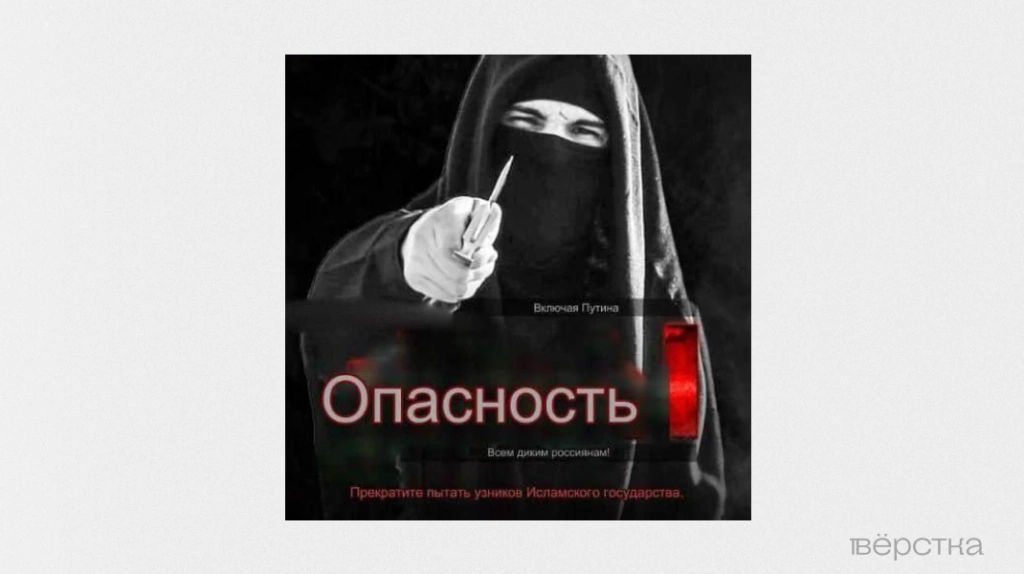
IGPH content is aimed at a wide range of foreign targets, from neighboring countries to international heavyweights. Thus, the foundation published a brochure about the attack in Moscow, as well as a poster threatening revenge for the torture of detained “Mujahideen of the Islamic State.”
The second area of activity of the ISKH is planning and carrying out terrorist attacks abroad. Thus, ISKH militants continue to carry out attacks in Pakistan. Previously, cross-border missile attacks from Afghanistan on Tajikistan and Uzbekistan were also noted. In addition, the group attacked targets in the Maldives (February and April 2020) and Shiraz (Iran). As of September 2023, law enforcement agencies have stopped at least fifteen more ISKP attacks in India (3), Iran (4), Germany (3), the Maldives (1), Qatar (1) and Turkey (4). In addition to preparing terrorist attacks, since 2020, authorities in various countries, including the UK (2), India (3), Turkey (1), Pakistan (1) and the USA (2), have repeatedly arrested ISKH members and supporters for recruitment and fundraising.
The peculiarity of the ISKH terrorist attacks is that citizens of Tajikistan were involved in many of the attack plans, financing and recruitment schemes. Thus, on January 28, 2024, an attack on the Catholic Church of St. Mary in the Sariyer district of Istanbul was carried out, according to law enforcement agencies, by a Tajik and a Russian. One person died, but even then they started saying that there was a threat of continuation of IS actions synchronized in different countries, as was the case in the mid-2010s. By the way, the group took responsibility for the terrorist attack in Sariyer via Telegram. And shortly before the attack, Turkish authorities arrested 25 suspected IS members across the country.
On March 21, 2024 (already during Ramadan and the day before the events in the Moscow region), IGPH took responsibility for the biggest terrorist attack this year in Afghanistan - a line of people waiting for their salaries was blown up, killing 27 people. According to the Taliban, the suicide bomber was Asadbek Madiyarov, again a citizen of Tajikistan.
The information resource Al-Mersaad Media, associated with the Taliban, has long been sounding the alarm about the flow of Tajik citizens into the territory of their country to participate in terrorist acts. So, in August 2023, they even released a series of video interviews with detained Tajiks (young people, and sometimes even teenagers), where they all voiced a surprisingly similar story: they listened to the sermons of jihadist preachers on the Internet, and were in thematic chat rooms . Then a person got in touch (of course, without introducing himself) and offered to help with direct participation in committing one or another action against the new authorities of Afghanistan (remember, the Taliban are considered apostates in IS).
Why Tajikistan
The active participation of citizens of Tajikistan in committing terrorist attacks is explained by the difficult socio-political and economic situation in the country. It is important that religious freedoms are extremely limited in Tajikistan: practicing Muslims face discrimination and often risk actual prison sentences . The regime of President Emomali Rahmon is pursuing an authoritarian policy, suppressing manifestations of public religiosity of people, especially “Salafi Muslims,” both real and simply those whom the authorities have branded with this term at their discretion.
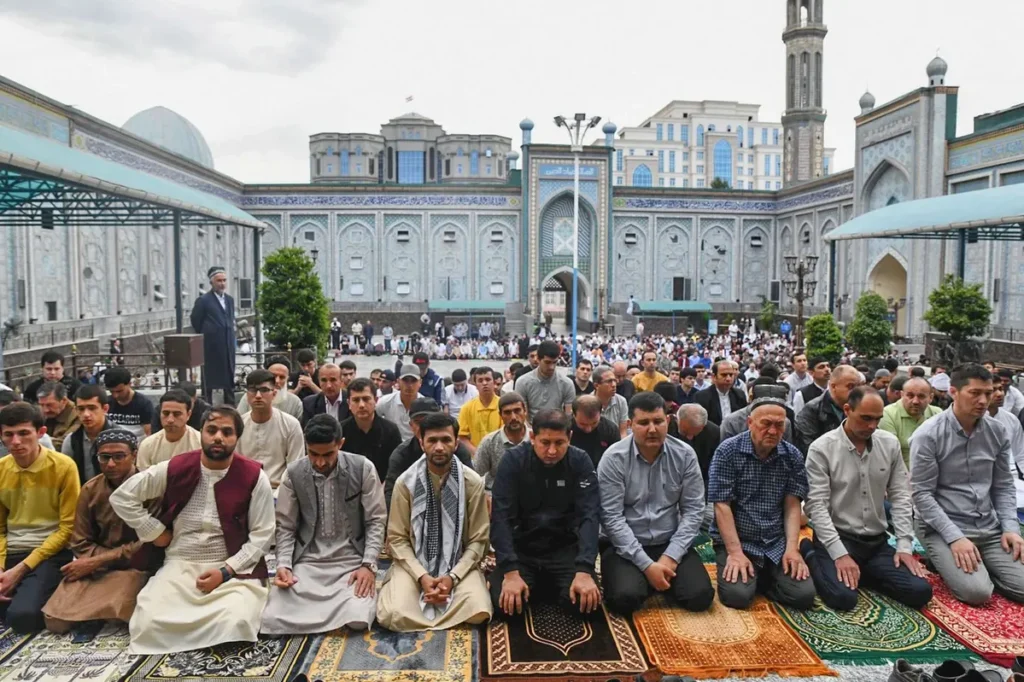
Tajik authorities banned Salafia in 2009, describing it as an “extremist movement of Islam.” We are talking about banning an ideological movement, not a specific organization. It is clear that it is impossible to legally accurately determine membership in “Salafism,” just as it is impossible to name the exact number of people who are currently in the country’s prisons on charges of “Salafism.” At the same time, the US Commission on Religious Freedom has been drawing attention for many years to the “overcrowding” of Tajik places of detention with those convicted under this article.
As a result, even the simple performance of Islamic rituals in forms that authorities consider “alien” or inconsistent with government interpretation is sometimes subject to criminal prosecution. Hence the excesses, such as the detention of all bearded people and forced shaving in police stations.
A recent USCIRF report notes that the current policy of Tajikistan uses the theme of the “Islamist threat” for its own purposes. For example, the so-called “counter-extremism law” does not clearly define this term and allows the arbitrary arrest of anyone who is inconvenient to the regime - without the need to prove whether the person committed acts related to violence or incitement to violence. State bodies of Tajikistan pronounce sentences on extremism in closed hearings, in which preference is given to the prosecution, and independent analysis is not provided for in principle.
The authorities under the leadership of Emomali Rahmon have placed all spheres of religious life in the country under strict control, torture activists, kill, prevent the practice of religion even in everyday life and, moreover, deprive active believers of any opportunity for political participation. All this has become an ideal field for propaganda by terrorist organizations that offer alternative solutions to demands for justice. Young people who do not accept official mullahs in mosques have rushed to the only means of satisfying their interest in religion - the Internet.
But even 10–15 years ago, Tajikistan, according to Vorstka’s interlocutors, differed from its neighbors by a lower level of extremism.
The growth of the influence of IS in Tajikistan was also helped by the removal from public politics of moderate Islamists in the form of the Islamic Renaissance Party, which expressed and channeled the protest of the religious part of the population and the squeezing out of Salafist preachers from among the opponents of IS.
The IRPT, until its ban in 2015, remained the main legal opposition party in the country - and called for the protection of not only religious, but also other freedoms in the country. And large Tajik-speaking Salafi online lecturers, mostly living outside the country, were “zatakfiri” (declared infidels) by the “Islamic State” itself in order to cause rejection among young people towards them. According to the logic of IS, these preachers, with their soft political position, led the Salafi youth astray from the path of armed struggle against the government.
Of course, the transformation of Tajikistan into a classic failed state also plays a huge role in the popularity of IS. A symptom of this is frequent estimates that already about a third of the country’s population has moved to work in Russia on a permanent and temporary basis.
In addition to crushing poverty and unemployment, corruption, clannishness and nepotism, Tajik residents complain of a huge alienation of power from citizens. Official Dushanbe cares little about the fate of compatriots who find themselves abroad and especially those who are faced with some problems. Thus, the authors of “Layout” often hear from Tajiks that “our state has abandoned us.”
In this regard, even more indicative are Rakhmon’s attempts to absolve himself of any responsibility for the events in the Moscow region, getting off with a ritual condemnation of terrorism and a statement that terrorists do not only have “religion and nationality,” but even a “homeland” (!). And this despite the fact that the authors of “Layout” know for sure: Tajik security forces actively interact with their Russian colleagues “in all sensitive issues.”
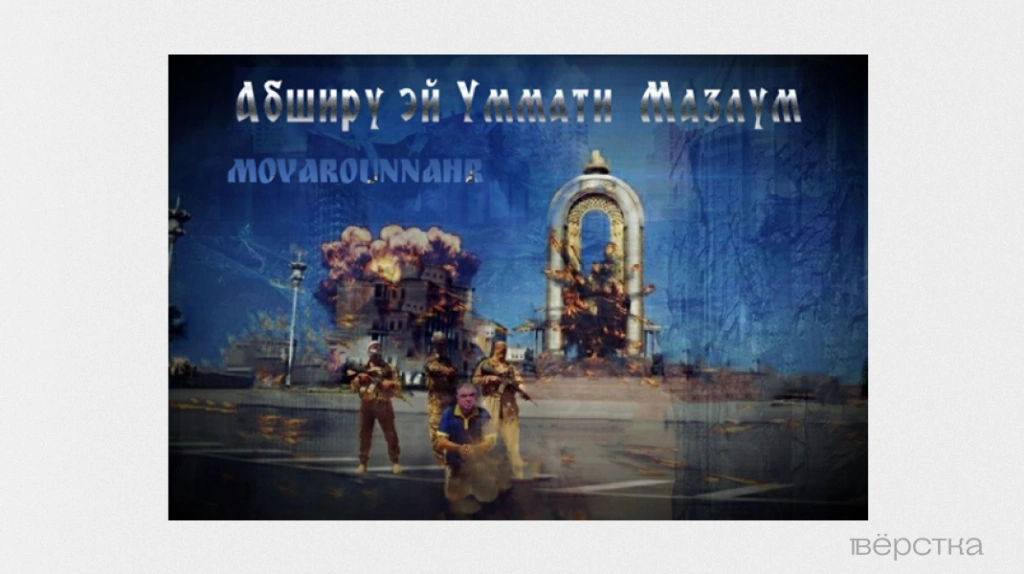
Finally, there is one more factor contributing to the flourishing of IS propaganda in the closed Tajik environment. The fact is that the country has found itself on the periphery not only of international attention, but even in the Islamic world, which is preoccupied with the problems of the Middle East. Tajikistan is not affected by general Turkic trends; access to the country is also limited to Shiite Iran. And at the same time, the Tajiks have a linguistic community with Sunni Afghanistan, where the Islamic State - Khorasan Province is based.
Unexpected opponents of IS
It is interesting that the most active and effective fighters against the propaganda of the Islamic State are supporters of the Taliban and Al-Qaeda! In general, the fact that modern “Islamism” is an extremely heterogeneous phenomenon often escapes the outside observer.
“Islamists” can be very different political forces: for example, such an Islamic-democratic movement as the Tunisian Ennahda, which was the main driver for the democratization of the country and whose policies turned Tunisia for many years into a country with the highest index of political freedoms among Arab countries.
But “Islamists” can also be radical jihadists, inspirers and perpetrators of bloody terrorist attacks, marginal even for the Islamist political scene itself. Even Turkish President Recep Tayyip Erdogan is often classified as “Islamists.” In the end, even the “jihadists” are heterogeneous - one of the bloodiest confrontations is taking place between the Islamic State and al-Qaeda.
According to statistics, the majority of victims of Islamic State-Khorasan Province attacks are other Muslims . The organization carries out the most attacks in Afghanistan—at least five hundred over the past two years! Moreover, these actions are most often carried out by suicide bombings in mosques . Other jihadists, Salafis, not to mention the Taliban, Ikhwan (Muslim Brotherhood), Sufis and Shiites are declared infidels who are allowed to be killed.
What awaits us next
IS propaganda is not some magical way to turn a law-abiding citizen into a terrorist overnight. Its target audience is people who are ready to consume this content, and most often even specifically look for it. It makes you think (and maybe even be horrified!) that there are still no adequate measures in the world to solve the problems that arise here.
The only way to effectively neutralize IS propaganda is to eliminate the reasons why it resonates with people . But this is too difficult, especially in cases where the state needs to “start with itself.” So, in general, there are no other ideas other than prohibitive and ineffective ones in the arsenal of Internet fighters against terrorism.
Unfortunately, in modern Russia, where labor migrants from Central Asian countries are an extremely marginalized social group; and in the states from which they come, the policy in the field of religious freedom is extremely contradictory and includes totalitarian practices, the risk of people being involved in the activities of terrorist structures is extremely high.
Само «Исламское государство», потеряв территориальный контроль практически во всех регионах, кроме Африки, делает ставку именно на проведение громких и резонансных атак. С их помощью ИГ может пробудить пока что ещё спящие ячейки активистов, как в России, так и на Ближнем Востоке и в странах Европы, как это было 10 лет назад. В итоге основная цель подобных терактов — показать потенциальным и действующим сторонникам, что организация все ещё способна на кровавые атаки, устрашение населения и месть за убитых братьев по вере. Хотя успешность этих атак зависит в том числе от того, найдутся ли сторонние структуры, которые в своих целях захотят в этом как-то посодействовать.
Напомним, ранее «Вёрстка» реконструировала хронологию теракта в « Крокус Сити Холле », рассказывала о том, что глава ФСБ обвинил Украину в причастности к теракту в «Крокус Сити Холле », но, как и Путин, не смог назвать заказчика и о том, что в Госдуме всерьёз обсуждают возврат смертной казни в России .
Cover: Lida Kurnosova
You can support “Layout” from any country in the world - it is still safe and very important. We really need your support now. How to help us →