
Translated material
Portrait of the monster
The murder of Vladlen Tatarsky was a landmark for the Kremlin and the Z-community. From the memoirs of the "military commander" it is clear: he is the embodiment of all the most terrible in this war
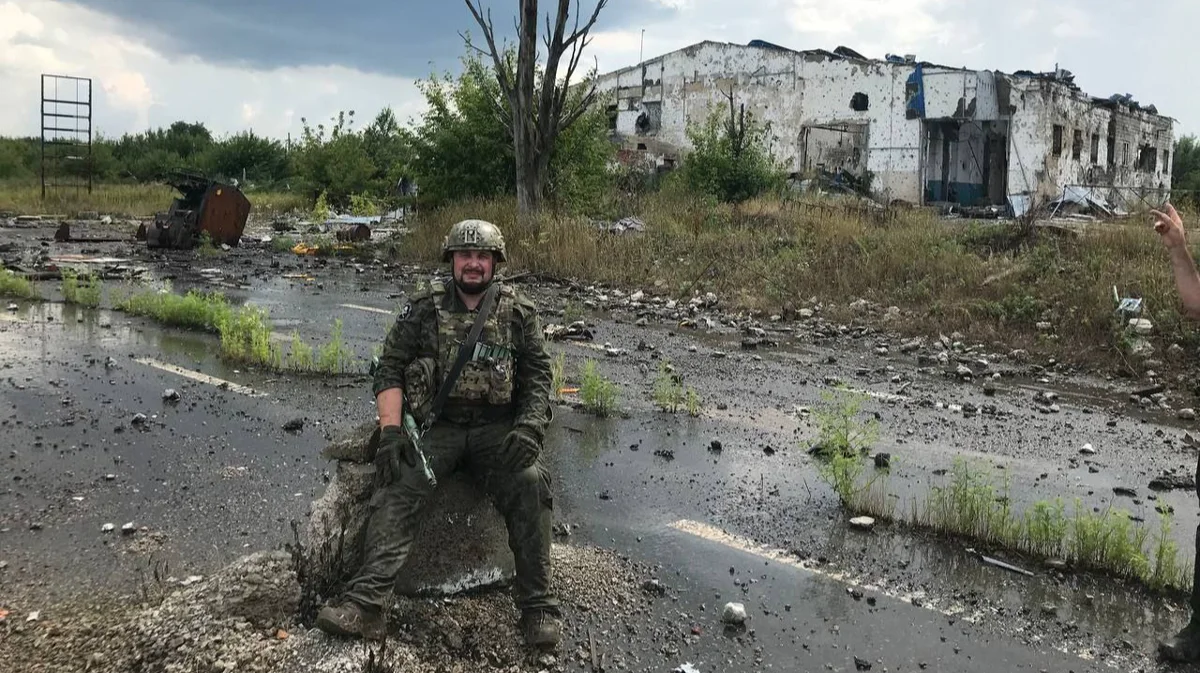
Photo: Vladlen Tatar / Telegram
April 2, 2023 during the explosion in the St. Petersburg cafe
Died
The odious blogger is the “military” Vladlen Tatar, aka Maxim Fomin. For a year
In the environment
Z-propagandists and other supporters of the Russian war against Ukraine has developed a cult around it.
Especially for Novaya Gazeta Europe, political scientist Konstantin Pakalyuk studied the biography and literary work of Fomin-Tatar and represents his portrait. It can be said that this is quite unambiguous, but, moreover, the sign profile of the modern monster: a cynical adventurer, for whom ideology did not mean anything, but the drive of war, murders and light glory - everything.
Memorial, drone, mural
Posthumously Vladlen Tatarsky received the Order of Courage and the medal "For the Liberation of Mariupol." In the captured Bakhmut, the "Wagnerians" named the square in honor of it. Rename the street
They wanted
And the deputies of the Lyubertsy near Moscow, but did not grow together. The "humanitarian" detachment of the wife of the Orthodox businessman Sterligov became
name
"People's team of Vladlen Tatar." In June, the Vladlen Tatarsky Prize was established. Her Board of Trustees included the deputy chairman of the State Duma Peter Tolstoy and the Office of the Moscow Patriarchate Bishop Savva (
Prize Wilan.rf
). The names of the laureates who will answer “questions of humanity, the meaning of life and death” will announce in June 2024 at the Red Square Book Festival.
Shortly after the murder near the Maxim of the Confessor in Zaryadye (Moscow), a memorial appeared: flowers, photographs and flags. In May 2023, students from the Moscow State University, RSUSU and the Diplomatic Academy, copying the activists of the Nemtsov bridge, organized an initiative group to maintain this place of memory. You can read about their successes in the open telegram-chat “Memorial V”: Judging by the photographs, the memorial looked rather modest-either the enthusiasts were not enough, or the “Russophobes” that destroyed it were to blame. Activists arranged stocks here: first “Memory of victims on June 23–24” (
The rebellion of Prigozhin.
-
Approx. Ed.
), then - the leaders of Wagner. But at the end of October 2023 they announced the closure.
Z-community keeps a murdered memory in its manner, releasing
Patches
,
T -shirts
,
Chevrons
and other products. Project "Russian Directorate"
He called it
In honor of him, the drone as part of the project “Sudoplates. Judgment Day ". On the 40th day after the death of the Tatar group of enthusiasts in occupied Melitopol
Created
The impromptu memorial - a little clove with a photograph - at the monument to Alexander Nevsky. Then in the city
appeared
Two murals at once: on the facade of one of the buildings and inside the Ministry of Youth Policy. Another graffiti
"Decorated"
Street in Nizhny Novgorod.
In the Z-community, the promotion of Vladlen Tatarsky was engaged in people, one way or another before associated with him. These are the projects "Russian drone" and Reverse Side of the Medal, propagandist Andrey Medvedev,
Reading
Excerpts from his books on the air of Radio of Russia, writer and journalist Yevgeny Norin, formerly the chief propagandist of Donbass Daniil Bezsonov, as well as the widow of the late Valery Fomin. In the summer of 2023, she released the unwritten book of Tatar about the capture of Mariupol, and then the collection of memory "All all the bright and clear."
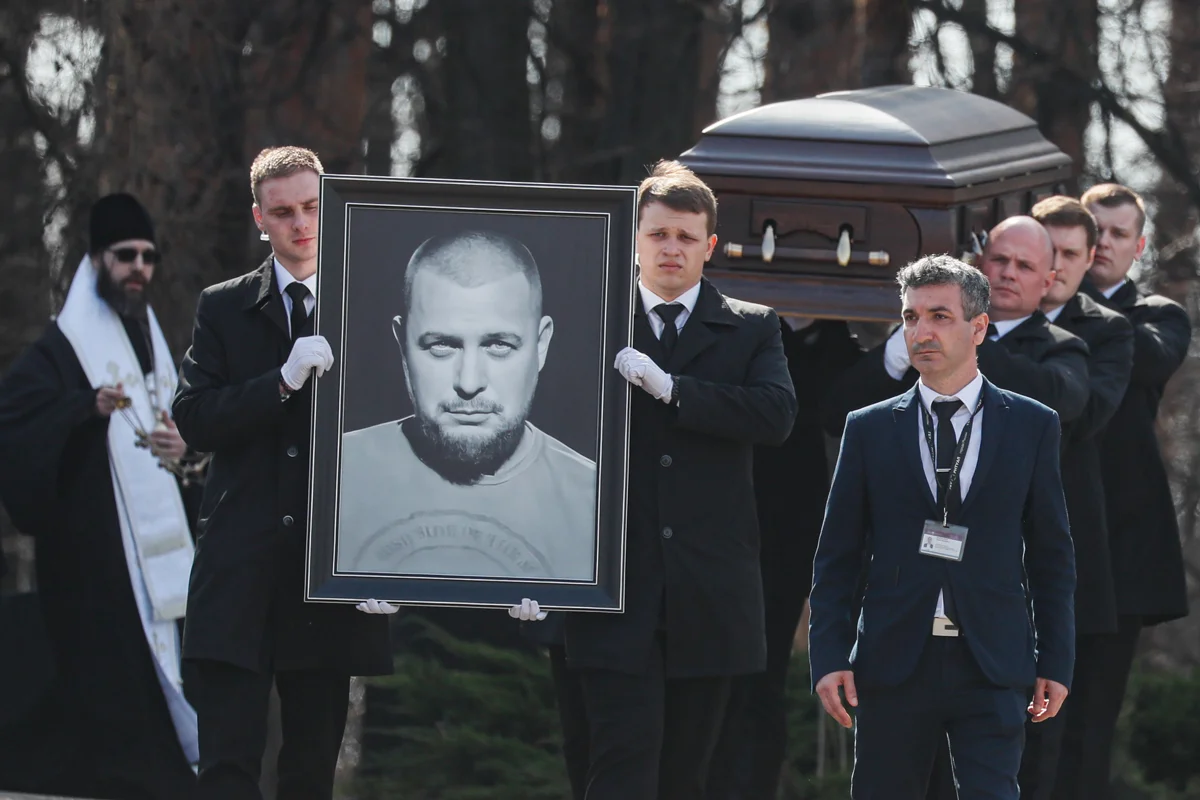
The authors of the collection are 45 people. Among them, we find relatively well -known surnames: philosopher Alexander Dugin, Vladyka Savva (Tutunov), musician Peter Lundstrom, writer German Sadulaev. In this collection of enthusiastic reviews, an absolutely serious attempt attracts attention in Tatar at the same time as a warrior, a writer, a public figure, and a manager.
It is significant that the interest in the name of Tatarsky does not flow into an interest in his work-not in the journalistic and propaganda heritage, full of hatred of Ukrainians, but to the prose series of memories of the Donbass war.
Businessman, bandit, separatist
In general terms, the biography of Tatar is known: born in Makeevka (Ukraine) in 1982. He was a miner and businessman, then - a robber, went to jail. After serving for three years, he fled to the "militia". From August to September 2014, he stood on a meaningless checkpoint in the 5th quarter of Donetsk. Then he got into the reconnaissance group.
In 2015, he moved to the Vostok battalion. It was then, according to him, he first opened fire on the enemy - at the drone.
In the fall of 2015, the deadline for the colony was sent to “sit down”, but four months later received a pardon from the head of the “DPR” Zakharchenko - and again to the front.
Vladlen Tatarsky began writing books after the transition from the militia to military bloggers (2019). Initially, he collaborated with the Reverse Side of the Medal (RSOTM) project. With his leader (known under the pseudonym Admin), he created on YouTube the military blog Grey Zone (not to be confused with the telegram channel close to Wagner), which became popular in his segment. He is also known for the project on the current war of the Terrikons of Donbass.
In 2020, Tatar released fictionalized memories
"Running"
dedicated to pre -war life and the first months in the "militia". Next year appeared
"War"
, describing the experience of the separatists until 2017, that is, before the transition to reconnaissance of the 4th brigade of the LPR People’s Police. By the beginning of 2022, he completed a collection of stories
"Meditation"
who, with the efforts of the Tatar wife, saw the light after the outbreak of a full -scale war against Ukraine.
The critical reader is probably expecting a primitive construction of a biography, where the former robber is “cleaned” with war, Russian patriotism and Orthodox faith. If it were, Tatar would have earned only mentioning a number of other propagandists. But if you use categories dating back to the philosophers Karl Schmitt and Georgio Agamben, then before us is the story of a person falling out of
normal
life and ready to extend the moment
Extraordinary
The provisions as long as possible, preferably - forever. And enjoy.
Childhood, adolescence, racism
Children and youth memories (late 1980s-1990s) give certain “keys” to understand why a person chooses a war, and then calls on citizens of a foreign state (Russia) to death.
Firstly, the imperious figure of his father (engineer at the mine), who brings up his son in the spirit of military discipline. Hence the memories of perestroika as a violation of order, meaningless strikes and parents who supported the State Emergency Committee.
Secondly, the passion for military literature and the current political agenda in neighboring Russia. Hence nationalism, nostalgia for the imaginary past and - the rejection of the country where it lives. In his youth, Pikul’s passion and his composition “Honor I have!” Rompering the imperial army. In the 2000s-militarians-forums and journalism
Maxim Kalashnikov
, criticism of “global capitalism” and the singer of the “industrial world”. Another beloved author, Viktor Pelevin, Tatar seriously took criticism of the “wild capitalism of the 90s” and took as a pseudonym the name of the main character of the novel “Generation“ P ””.Teenage experience is not fully overcome. Despite the hatred of the lessons of the Ukrainian language, in his first marriage he married a Ukrainian teacher, but was alien to this culture. According to his confessions, he overcame the templates of nationalism, which he professed in his youth, but this did not free his books from the racist image of thoughts. Russians are fighting with his heart, “more warriors in spirit”, they are alien to intrigue, brought to virtuosity “among the Caucasians and, of course, Jews” (“War”, p. 158).
The Soviet film “State Border” raised his hatred of Ukrainian nationalists, although at adulthood he admired how the inhabitants of Western Ukraine kept the memory of the dead fellow villagers from the UPA: “The locals buried them on the territory of the then not destroyed church. When the structure was destroyed, the villagers until the perestroika times secretly (!) Cathed the burial place! I can’t imagine that we also looked after the graves of Soviet warriors! ” ("Run", p. 173). But even the awareness of the tragic split of the Ukrainian society of that era for him is only knowledge.
"Just enemies"
Tatarsky readers are rather known as a propagandist calling for the destruction of Ukraine. But this hatred is not in the books of 2020–2021. In the mid-2000s, Tatar worked at the mine and received a good salary, and therefore was quite neutral about politics. Then he went to business and in 2006 became a successful businessman who created a small furniture trade enterprise: “Who tells you that there were poor conditions for doing small businesses in Ukraine, that is a fucking” (“Run”, p. 61).
In February 2014, sitting in prison, the Tatar, in his own way, even supported the Maidan, because it “lived in an idealistic idea that on some barricades, confrontation with a vile system, Russian and Ukrainian patriots will understand each other, sweep away and publicly execute all these underdeveloped creatures” (“Run”, p. 52).
But after a few pages, he talks about the unconditional support of the “Russian Spring” and regrets that he did not participate in Crimean events. Quoting the publicist Dmitry Olshansky, he calls 2014 a time of “absolute happiness”, talking about the numerous humiliations of Russia in the past: Afghan, Chechen wars, terrorism, “predatory” capitalism.
If you collect scattered explanations about the reasons for his departure to the militia, it turns out the following: war is a divine vocation of a warrior and a way to pave the way from a weak to a strong one.
Warrior-robber
From prison and the criminal past, Vladlen brought three principles.
First: hope only for yourself (adventurism).
Second: Society is a caste system where everyone belongs to any group. He considered himself a “warrior”, of which there are few among people, but it is they who change the world: “The nature of the criminal is the nature of the degrading warrior” (“Run”, p. 54).
Third: Orthodoxy. Yes, the gospel was interested in him since childhood. In prison, he went to classes in religious circles. Tatar's texts are replete with references to the Bible, which are designed to give decent to his life path.
In the War, Tatar wrote in detail about how important thieves' concepts had for him, when in the fall of 2015 he was repeatedly sent to the Elena colony to annoy the deadline. Together with other prisoners, he was abused. When acceptance, everyone was beaten and forced to wash the floors - the duty of “goats” and “roosters”. To maintain fidelity to the conventions of the thieves' society for Tatar is to maintain honor, to remain a normal person and even ascend to the cross like Christ. In this world, survival is a war at the front, that the refusal to cooperate with the colony administration, that the refusal to pick up a sex rag is the same preservation of honor.
Anti -war literature
According to Tatar, the Russian special services began work on the annexation of Crimea in the late 2000s. He needs this narrative to contrast the situations in the Donbass: the money for work was supposedly plundered here, and therefore had to bet on youth criminal groups in Kramatorsk and Mariupol, as well as “send“ Putin tourists ”: these were the National Boodles,“ Eurasians ”(Eurasian Youth Union) and nationalists of various kinds. However, without a strong local underground, all this failed ”(“ Run ”, p. 67). For one militia, then, according to him, $ 360-1000 was allocated.
Tatar supposedly skeptical of the mythology of the “Russian Spring”, denying the massive nature of armed resistance. He also argues with Daniel Bezonov, who wrote that then 20 thousand inhabitants of the region were gone into the militia. According to Tatar, half of them rather “ponded” with weapons, and in the detachments 50% were local, 10% - from other regions of Ukraine and 40% - Russians, “in many detachments, Russians accounted for 100% of personnel” (“Run”, p. 87).
Caution - a particularly frank description of what is happening in the war
No sympathy is also caused by the realities of the rebel Donbass, described as the release of demonic energy:
“I was surprised how the miners, taxi drivers and builders from yesterday’s craving for lawlessness, cruelty, the desire to torture other people <...> people drowned, cut their fingers with shockers, beat with current, lashes, simply beat to death; They forced to fuck each other, suck in dogs, put a stick in the ass; They inserted a pipe into the anal, pierced the barbed wire into it, and then pulled sharply; Detonators pushed into the ears and ass; They cut their teeth with a file ”(“ Run ”, p. 108).
In the “war”, Tatar looms the image of the “militia”: in the majority these are alcoholics, who “drink and fuck in the Uvaly! Fights, shooting, commandant’s office - fun of fun ”(“ War ”, p. 45). To this, it is worth adding a constant mess and fascination with rumors about "terrible dill", desertion under the guise of the extraction of the wounded from the battlefield. Many went to the militia not to fight, but to receive a normal salary, hoping to sit in the rear. In “Run,” he tells an anecdotal story about the FeSbashniks who crossed the side of Ukraine, who were nightmare “militias” and the military, and therefore the Tatar detachment was sent to their capture.
In general, such a Tatar work looks like an anti -war work. But there is one “but” - from all this, the author receives sincere pleasure.
Mariupol
After resignation in 2019, he returned to the front. He was already a Russian citizen, a popular “military commander” and drone gunner in the Vostok battalion. This battalion stormed Mariupol.
Tatar wrote a book about these events in early 2023, and compared to previous ones, it is less expressive. However, as evidence of the era - no less significant.
On the Vladlen Tatar channel, the rhetoric of Maxim Fomina emphasized the heroic, full of a thirst for revenge. The book with difficulty hides growing disappointment. In the early days in Donetsk, “people were simply caught on the streets, without explaining anything, driving into different non -residential premises” (p. 27). The army command is incompetent. The training of the army is low (p. 61). Reservists from Russia are not trained, without body armor, helmets, without technology rush to the attack (p. 64).
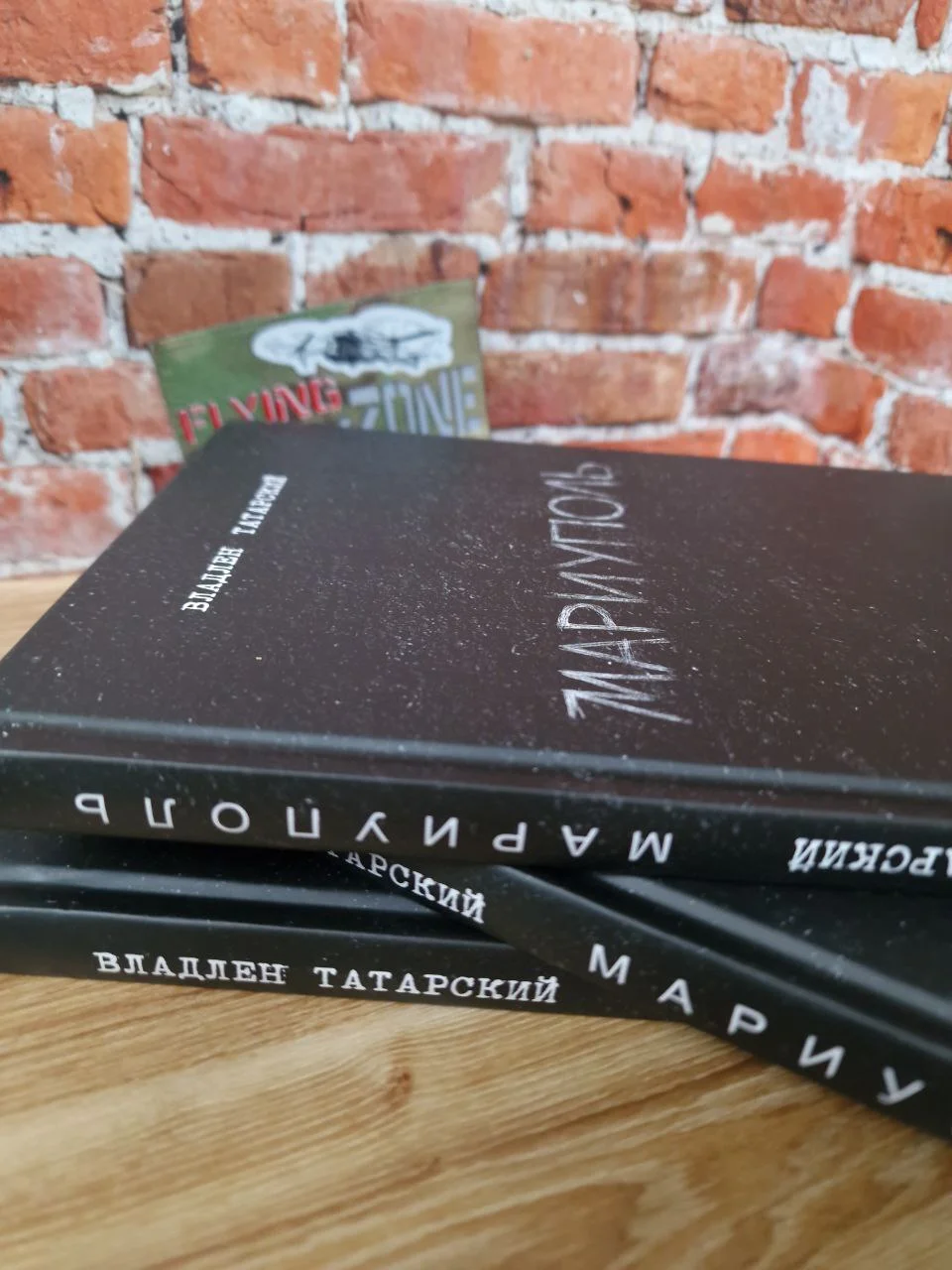
However, compared with previous books, the attitude to the war is changing. The picture of the fighting out of town is fascinating (p. 56), the war is called that it does not allow the soul and body. He writes quite everyday about the methods of storming: “The principle that artillery worked was simple: if some house is suspicious, it is necessary to shoot at it” (p. 72). The conquest of the city is called “hunting for the crests” (p. 92), and the horrors of war are worthy only of statements: “Hungry dogs gnawed at the faces and hands, the bodies represented a terrible sight from the horror film.” But they gradually penetrate personal speech and those propaganda stamps that were not before: “It should be inside you, if you are a man: willingness to fight and die for your homeland!” (p. 105). Ultimately, he is not worried about the situation of civilians: “Most of the population of Mariupol, as, in fact, other cities, was not ready to leave the zone of material comfort in order to defend their spiritual values” (p. 129).
Attitude to war as sex
“War is shit” and “war is fun”: these two views on the war do not just get along in the minds of Tatar, they are inextricably intertwined.
When in the summer of 2014, fights began near the Gorlovskaya colony, he wrote: "The whistle of flying mines and shells dispersed my blood, and even became somehow more fun." And further: “What am I thinking? I think about war and sex. There are no more thoughts. ” Tatar admits that then he did not think about children, nor about his mother, nor about the girl: and even he was scared by the lack of an internal binding to what is considered normal (“running”, p. 104).
“BROW! Yes, we fuck them here! Dick they will smoke. Yesterday I personally knocked out three! Why did I prick before ?? Yes, because there was no war! Bratan, I realized: war is mine. Now I do not want to prick - I want to fight! I don’t even thump ... so, after the fighters is a little ”(“ Run ”, p. 102).
Tatar, he said, is unpleasant to disorder and decomposition. But he himself does not refuse to participate in the chaos of war. For example, in the fall of 2014, he participated in a campaign on Mariupol: “A month flew in booze, saunas, orgies, fights and duels (!) With other detachments, shooting and one single daily intelligence” (“Run”, p. 163).
Here he met one “young Cossack”, who later came to him in Donetsk: “I lived in one place, now I live in another and before that I have already changed six places. I had one woman, now another. Now some people surround, but before others ”(“ Run ”, p. 186). However, this does not create any obligations. In the “war”, Tatar admits: on the eve of the second landing in prison, he promised to come to her, but “then he walked with his friends. The women were with us, of course ... I did not have time to come to her - they landed here again. I am ashamed now somehow ”(“ War ”, p. 144). Позднее он пишет, что, когда от сослуживцев услышал байку про девушку из одной деревни, которая «могла непрерывно делать минет сразу девяти людям одновременно», то это напомнило ему «шахтерскую молодость» («Война», с. 201).
Отсюда и противоречивое отношение к нормальной, мирной жизни. С одной стороны, она мешает стать на путь воина. С другой — уже первая разведка осенью 2014 года вызывает «странные ощущения»: «Встретили огромное количество грибников. Были странные ощущения: крадется группа, а рядом люди целыми семьями собирают грибы» («Бег», с. 148).
В отличие «от разных милитари-ебланов», картины мирной жизни не раздражают Татарского: наоборот, «после разрушенных поселков, небритых лиц сослуживцев, смертельной опасности и окопов хочется хапануть, как свежий воздух, мирной жизни, посмотреть на пьяненьких девушек» («Бег», с. 178). Не меньший восторг вызывал у него просмотр в свободное время сериала «СашаТаня» на ТНТ. Правда, он же и порождал мысли: «Что я тут делаю!? Просто бомжую?» («Война», с. 23). Таким же образом, попав снова в колонию, Татарский вдруг вспоминает, что главная проблема «в нашей стране» — наплевательское отношение к человеку. «Не знаю, как в Америке, не был, но вот сняли же фильм “Спасти рядового Райана”» («Война», с. 113), — заключает он.
***
Попав в тюрьму осенью 2015 года, Татарский сделал горький вывод: «Хочешь добровольно воевать за Россию — это твой личный выбор, и в случае проблем рассчитывать можешь только на Бога, себя и друзей». И продолжал: «В России ты как самурай — должен выполнять свой долг, даже если это никому не нужно. К этому я готов» («Война», с. 98, 111). На тот момент Максим Фомин был гражданином Украины, но в своем воображении он рисовал себя иначе. Лепил героико-авантюрный облик из подручных обломков «традиционных ценностей», скрепляя цементом воровской кастовости. Спустя шесть лет он получил российский паспорт и вскоре стал звать новых сограждан на гибель и убийство. В сущности, это и есть то, чем на самом деле занимался Татарский и каким его запомнят (если запомнят). А всё остальное — циничная постмодернистская игра.