
Translated material
Faculty of Freedom
As former teachers of Shaninki and the RANEPA who emigrated from Russia, create a new education
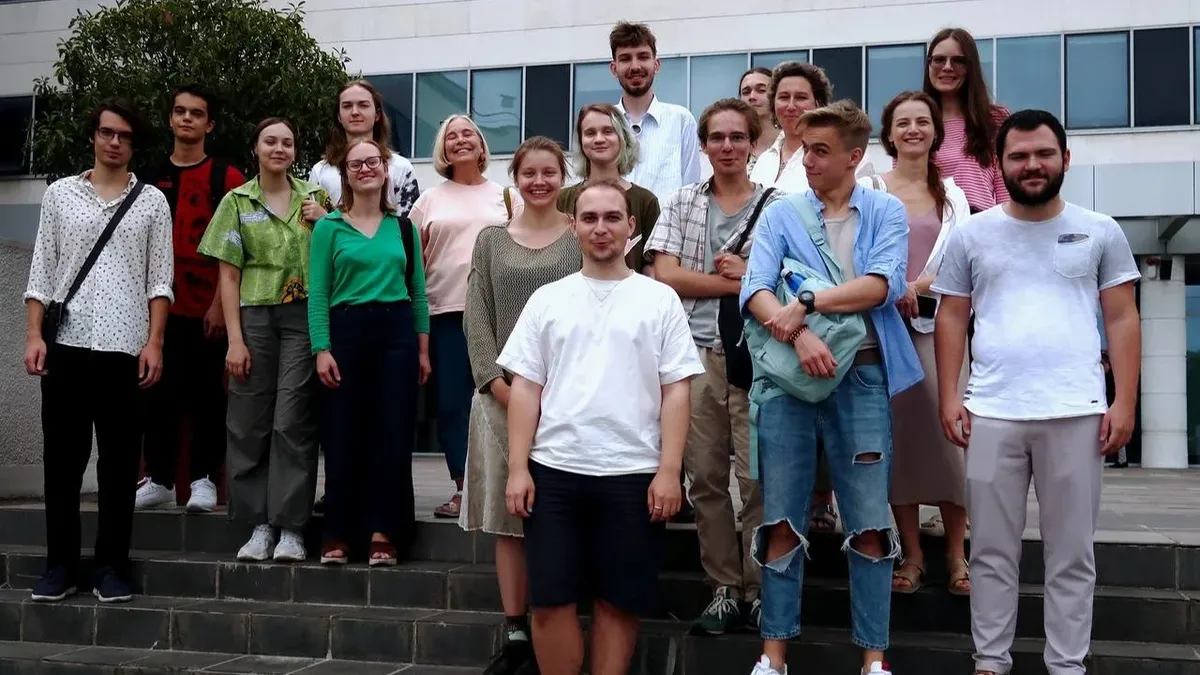
Students of the Faculty of Liberal Arts & Sciences (Flas). Photo: TG channel university Flas
"There would be no happiness, but misfortune helped." So the Russian proverb is evaluated by the creation of a private university in Montenegro Faculty of Liberal Arts & Sciences (FLAS), one of its co -founders, the famous Montenegrin political scientist Lyubomir Filipovich. This is the first university in the Balkans to work according to the standards of the International Liberal Arts program. It is fundamentally different from the traditional educational model adopted in Russia and countries located on the territory of the former socialist Yugoslavia.
The initiators of the creation of the Liberal Arts & Sciences were emigrating from Russia by former teachers of the Moscow Higher School of Social and Economic Sciences (Shanksi) and the RANEPA. They worked under the Liberal Arts program for many years, until the prosecutor’s office in 2022 announced that this Western model of education was aimed at “the destruction of the traditional values of Russian society and the distortion of history” threatens “destructive foreign influence on Russian youth”. The program was closed, and the pedagogical backbone “Shanki” and the RANEPA left Russia to start everything from scratch.
“The decision was made not as long and painfully as it might seem,” says Andrei Fetisov, a former head of the Media Communications School of Media Communications, and now the director and co -founder of FLAS. -It was clear to us that, firstly, in Russia they would not allow us to do what we want, and secondly, that there would be repressions, threats and other charms.
“The iron curtain in the academic environment sank instantly,” says Marina Kalashnikova, the former dean of the Faculty of Free Arts and Sciences “Shaninka”, the dean of FLAS. - For us, the possibility of academic international exchanges is very important. Therefore, when such an opportunity was closed, it became clear that we must get together with the spirit and leave.
According to Andrei Fetisov, he did not hesitate which country to choose for the beginning of a new life. In Montenegro, his friends live and work for a long time, including the founder and director of the network of Russian -language private schools Adriatic Vladimir Shmelev. He became one of the co -founders of Flas. Thanks to him, Andrei Fetisov met Lyubomir Filipovich, who caught fire to the idea of creating a university unique for the Balkans and also became part of the founders.
The founders of FLAS decided not only to create another private university (there are a lot of them in Montenegro), but to offer a fundamentally new model of education, which is widespread in Europe and the USA, but few people are understood in the Balkans.
“In Montenegro, as in Russia, the one who wants to become a sociologist or art critic enters the appropriate faculty,” explains Marina Kalashnikova. - And all European and American Liberal Arts programs are that you first go to the university, and then, after the first or second year, you choose a Major - specialization. For example, sociology, political science or art history. This is what you write the thesis, in a sense, your professional identity. But that's not all. Liberal Arts is important to the breadth of education.
According to the dean,
All students, regardless of specialization, will have to listen to at least one course on the basics of computer programming, art history, social sciences and Balkanistism, where they will study the history and culture of the Balkan countries.
In addition, everyone will have the opportunity to independently choose additional courses that interest him.
“This is a different type of student,” continues Marina Kalashnikova. -He does not have a focus on one thing. We say: if you do not know what to choose - whether the journalism is a history of art, then you do not have to choose. Come to us, and you will receive both. We must not focus on three years ahead, but be prepared for the fact that we will adjust every semester the program. In Montenegro, this is not so. Here, as in Russia: political scientists - to political scientists, sociologists - to sociologists. And we offer generally another model of training. It is not in Montenegro, and before our appearance there was no procedure within which it was possible to act.
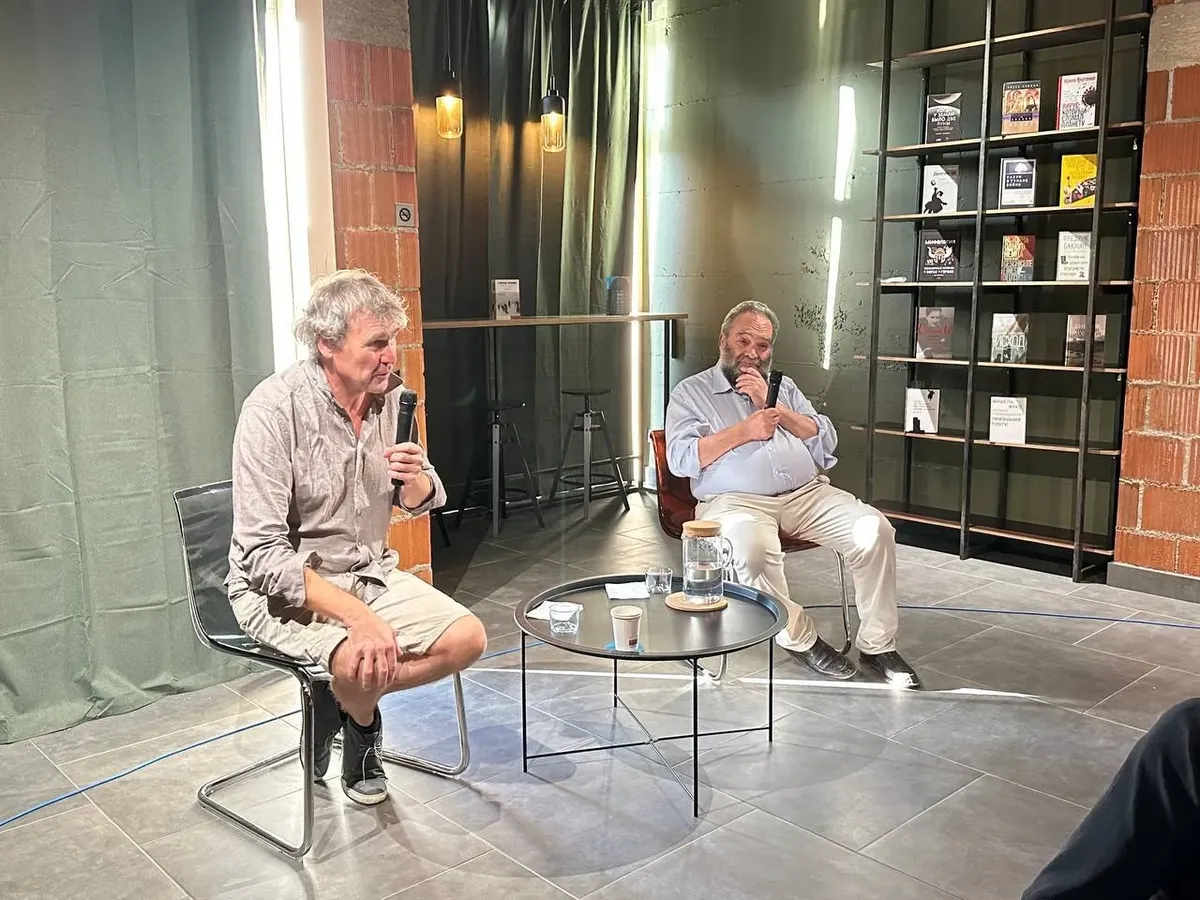
To receive official accreditation, the Liberal Arts & Sciences program had to be protected in the National Council of Higher Education Montenegro and achieve approval in the Ministry of Education. Among the Montenegrin officials, the proposal to make a mini-revolution in this area caused a contradictory reaction. Someone grabbed such an opportunity with enthusiasm, and someone treated his distrust.
- There were those who looked at us and said that they did not believe that we would cope, overcome the system. But the Council has many people who have received education in the West, ”says Lyubomir Filipovich. - They know what Liberal Arts is, and with great enthusiasm we helped us. They lobbied our idea in the Ministry of Education, explained how this will affect the labor market well. In the name of the faculty, the word "art" means not some kind of art, but skill, skill. For example, if you leave the university as a political scientist who knows how to write computer programs, then you are better ready for the labor market. This intrigued people very much.
When developing programs, the founders of FLAS did not copy what was at the faculties of Liberal Arts in Shaninka and the Institute of Public Sciences of the RANEPA. Many courses wrote again. Several teams of teachers working around the world participated in the brainstorming. The result was a curriculum consisting of six Majors. This is the Cross Cultural Linguistic, dedicated to intercultural communications, Digital Humanites (digital methods in the humanities), Media Studies and Journalism (Media Communications and Journalism), New Political Sciences (New Political Sciences),, Sociological Theory and Sociological Research (scientific and practical sociology) and Art History (art history).
Reception of applications for admission to FLAS will begin in April. The training is paid. According to managers, FLAS does not receive funding from any funds. Except for the grant at the startup, the university will contain itself. The university administration already receives requests from potential applicants. Among them there are many former students of the "Shanin" faculty of Liberal Arts, who could not finish their studies due to its disbandment. Students from Russia in the first wave will be the majority.
“People will come to us in emigration, and the Liberal Arts handicap itself makes it possible to adapt,” says Andrei Fetisov. - With the help of a flexible skills system that young people will get here, they will be able to choose where to take the next step.
We have a tutor service that will tell you where to move, to which career. Our task is not to feed, but to give a fishing rod.
The young people of the Balkan countries, who now have the opportunity to get the education of a European model, without leaving far from home, now, Lyubomir Filipovich believes in such a fishing rod.
- In Montenegro, we still have the most important employer - this is the state. Each person tries to sell his skils to the west, where it is more appreciated, and therefore we have an outflow of brain. This is the main problem. Everyone says that it is necessary to develop an entrepreneurial spirit, but no one does this through the education system. Private universities, which we, unfortunately, are opened in us only in the name. This is a system of socialist education that prepares specialists for the state mechanism. In this system, the state is a mom, dad, and an employer. Our mission is to give people answers to the questions that they ask. Liberal Arts is an answer.
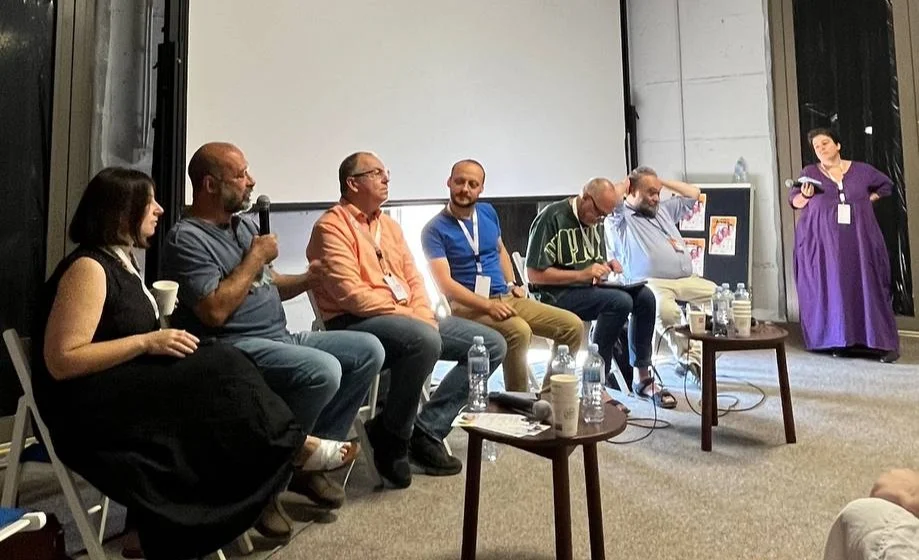
Teaching in FLAS will be mainly in English. Diplomas of the end of undergraduate will be recognized in all countries participating in the Bologna education system, from which Russia came out in 2022.
“The commission, where we went through the defense to obtain accreditation, wrote in my conclusion that she sees this as an opportunity for Montenegro to enter the international context,” says Filipovich. - Now Montenegro is a tourist hub, and it can become a hub for education. In Bulgaria there is a university where they go to study from many European countries. Flas can also have the same role. This is important not only for the training of local students, but also strategically. Teachers of FLAS communication around the world, there will be joint projects with world -class universities. This will be an advertisement for Montenegro.
Flas can become a kind of advertising for the very Russian -speaking community in this country. Local authorities got the opportunity to see that a new wave of emigration brought from Russia to Montenegro not only numerous catering points, car service workshops and beauty salons.
“Thanks to the misfortune in which the Russian society found itself, we received an influx of high -class specialists,” says Lyubomir Filipovich. - Montenegro can become a refuge for academic circles from Russia. The territory of academic freedom, where teachers from Russia will be able to work. This is a high -quality emigration that came here, and Montenegro should find a way to detain these people here. At the state level, this is not yet understood, but in expert circles this is discussed - how many emigrants came here after the October Revolution and how this old emigration positively influenced the Balkans. Now again such an opportunity has appeared.