
Translated material
HSE are free!
The tower of the tower was already proud that he retained "political neutrality." But the times (and the rector) demanded more loyalty - and the Studs council was dismissed
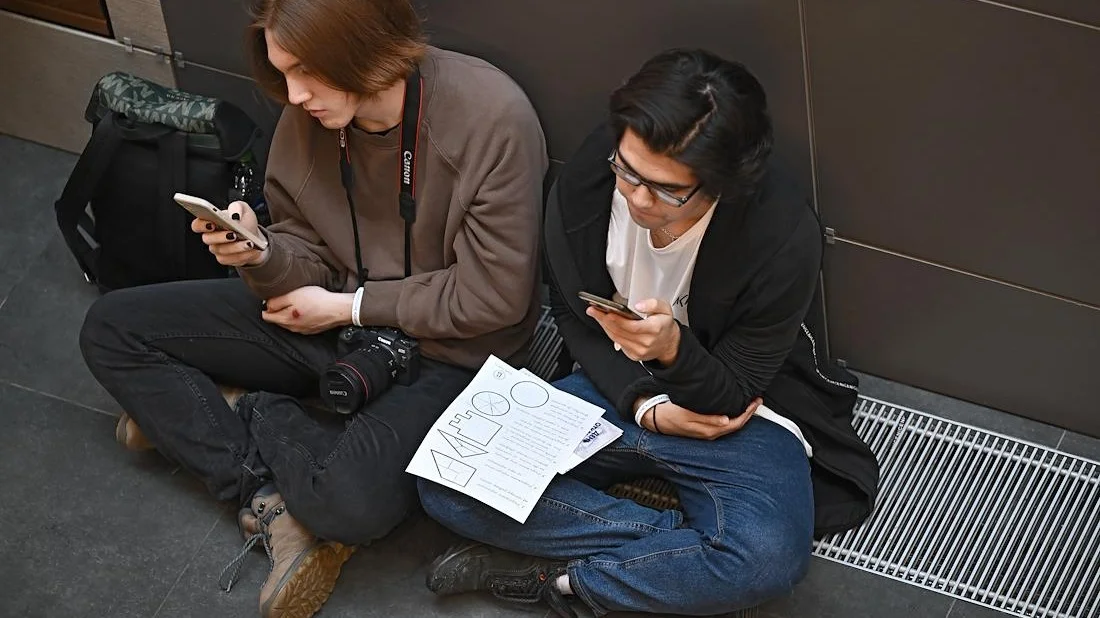
Photo: Alexander Miridonov / Kommersant
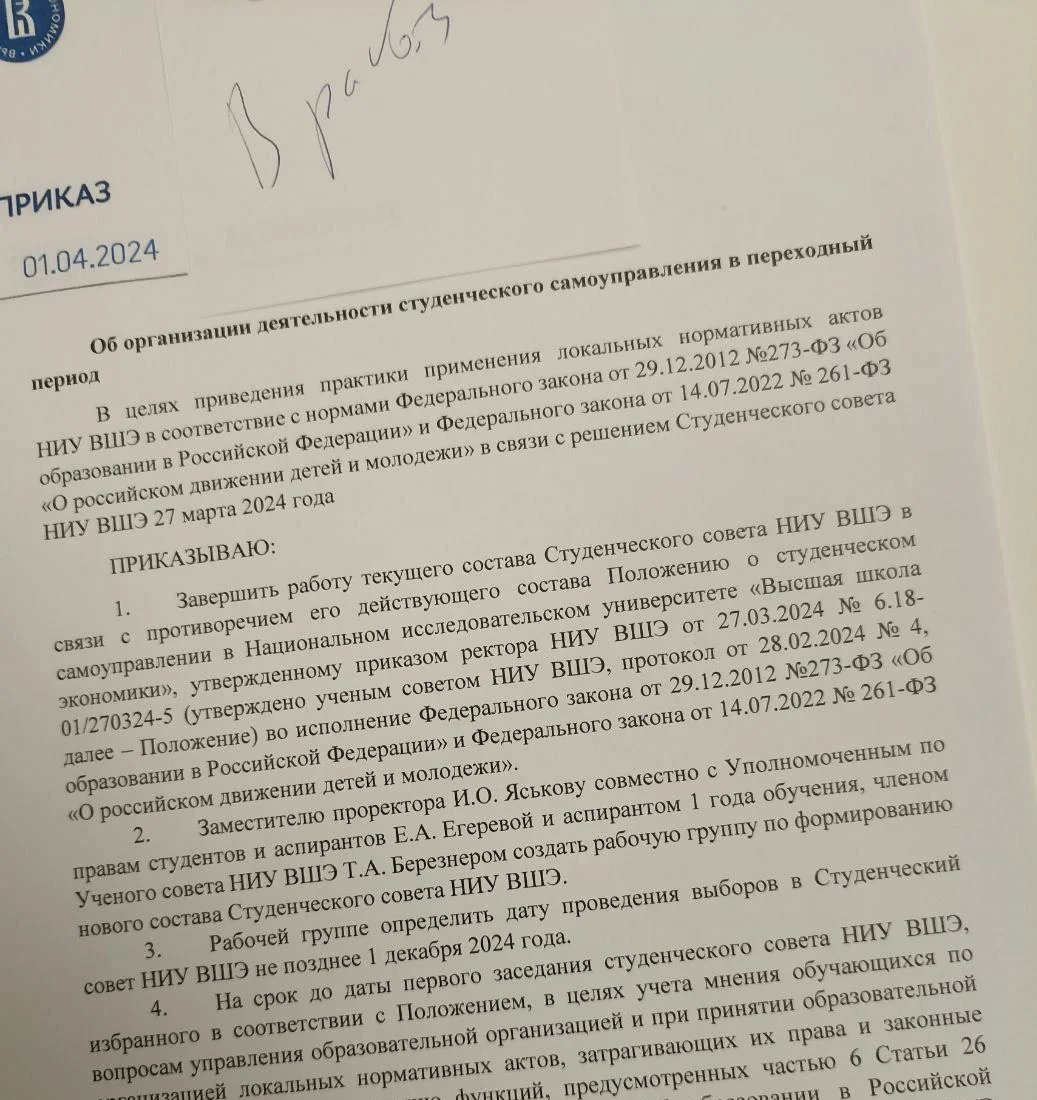
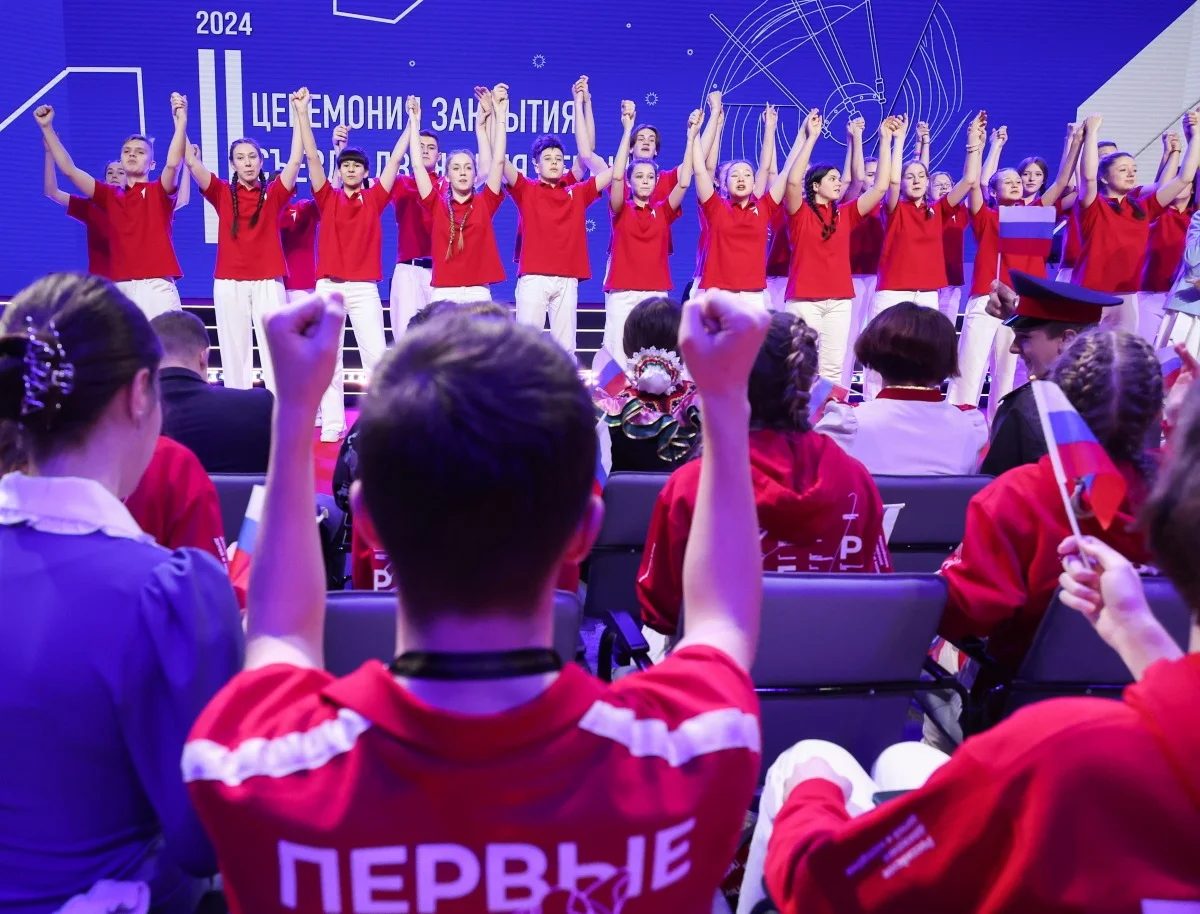
The VSHE Dectorate dismissed the Student Council. This happened after the management of student self -government to include in their ranks of the members of the “Movement of the First” (RDDM) - a state organization engaged in the “patriotic” education of youth. However, it was rather an occasion: the Studs council, in principle, interfered under the feet of the university leadership, conflicts arose more and more often. The order on the completion of the work of the Council was signed by Vice -Rector Dmitry Zemtsov. The document proposes to hold elections to the new student council until December this year. What is happening at the university and what the students themselves think is in the “New” material.
Vladimir, student of the Higher School of Economics:
“The Student Council of the last two convocations actually cooperated very closely with the administration, especially for the executive office and its director [de facto key person in the Studyer], who often held closed meetings with the vice-rector of Zemtsov, the content of which was not known to ordinary delegates.
The conflict because of the RDDM was expressed quite weakly, since the organization itself did not show itself. The primary branch of the “first” was headed by Danila Morozov, the former Ombudsman of the Higher School of Economics and a prominent Studsucker with a good reputation - he guaranteed that he would convince Zemtsov that they did not need the delegate yet. Apparently, in this case he either deceived the SS, or his appeals did not have any effect.
However, conflicts were before.
So, in May-June last year, the administration very sharply reacted in the delegation to one of the university commissions of the SS member with a sharp position on hostilities, which, in addition, was a citizen of Ukraine. In this case, it was not possible to send the delegate, and the SS information committee preferred not to respond to this at all (a sharp statement was originally planned).
A similar situation was with the delegation of a very opposition member of the SS in the dispute commission in October - then the SS also capitulated.
Therefore, we can rather say that relations with the vice-rector deteriorated for quite some time, and talking about the dissolution went on somewhere since May 2023, just then there were no legal grounds for dissolution. And now they have appeared, as a new provision on the Studsis was adopted, in which they included the norm about the representative office from the RDDM.
The initiative adoption of the SS itself about the representative from the RDDM had some good consequences - it was possible to promote the principle of the minimum “weight” of the voice (on the votes, members of the SS have different weights, a proportional turnout and the number of students in the unit - M.S. ). In view of a huge number of members of the RDDM, there was a risk that their delegate would have 40% of the total number. This was avoided.
After that, an informal agreement was concluded with Zemtsov that the SS - in accordance with the principle of the impossibility of changing the number of places until the end of the convocation - would add a delegate from the RDDM only the next convocation. As a result of the Zemtsov, he outplayed everyone: he simply dismissed the convocation ahead of schedule, only slightly forcing events.
The last two convocations of the Studs council interfered with the leadership of the university, but less than the previous ones, they turned out to be the weakest - the convocations of the tenth years would simply not allow themselves to dissolve themselves.
At least they would have raised a scandal, at a maximum - they would have arranged rallies, right now, due to the vague threats from Zemtsov, not only info abandoned the intelligible statement, so the informal chats of the SS were removed, the discs with archives, etc.
The decision on the dissolution was superneoal. It caused serious indignation among graduates and students close to a large Studs council (various volunteers, student councils of faculties and campus, studio, etc.), but most students do not really understand what happened and how this affects their life - especially in conditions when the SS is silent and does not protest in any way. Many even believe that the Student Council has not been an independent body for a long time, it has not been bought by the administration - and does not represent students.
Nevertheless, a large number of independent delegates have always remained in the Studsite: so far, despite all concessions, it was possible to maintain political neutrality and not to participate in pro -government actions. ”
Alexander , a student, was in a large Studio:
“The conflict around the“ Movement of the First ”was the last nail in the lid for a long time standing in sight of the coffin. The last year, the Studs council had many frictions with the administration, starting with the question of the new Punis ( regulations on the organization of intermediate certification and current control of students' performance. - M.S. ) and PVRO ( internal regulations of students. - M.S. ). As a result, both the priest and the PVRO were accepted, although the Studs council was able to make their edits, and some of the undesirable “innovations” were prevented.
With a fundamentally important issue for the administration - the inclusion of the representative of the “Movement of the First” in the council - the Studs council was forced to agree (this is required by Federeal Law), but we agreed that all these changes came into force only the next composition of the Council. Apparently, this became a voltage point.
Many tower students are controversial to the Studs council, especially the general university. Much of what the Student Council does is formal, “closed”, bureaucratic, but necessary work. For example, the provision of opinions on disciplinary cases. Haste students do not think that the council does not have enough to protect the rights of students in contrast to the “arbitrariness” of the administration. He is forced to maneuver between - often very critical - views of students and the position of the administration. Due to the situation with the adoption of the new Plakus, the Studs council in recent months has become the object of mass criticism from the student.
Despite this, the decision of the rector to dissolve the student council became a shock. But, I would say, this paradoxically improved the image of the Studs council in the eyes of the student itself - it was unlikely that the administration would have dismissed us if it had considered us the opposing force.
Of course, students are unlikely to go out with posters for Pokrovka. Now, until a new convocation is collected, the whole severity of the protection of students' rights will fall on them. ”
Grigory, student:
“I was surprised that the rector, in principle, could dissolve the student council, which was elected by students.
But surprise and indignation are associated with talk that the Student Council was soft -bodied, went to the concessions of the administration, did not stand across her. In general, the discontent with a student council with a “radical-liberal” flank is strong, so perhaps they do not experience acute bitterness about this.
Students of the tower have the opportunity to anonymously make claims by clicking on the site on the "expressive button" . In the situation with the dissolution of the Studsovet personally, at least I will register the fact of dissatisfaction with the behavior of the rector.
But usually “red buttons” in such cases are used massively, but now no one offers it. He also talks about something. ”
* * *
The "new" managed to contact one of the members of the dissolved Studsovet. He agreed to talk about the situation, and also on the terms of anonymity.
- Recently, we all expected a “trick”, it had already appeared on the Student Council of various kinds of pressure on the student council. For example, in the fall of 2023, the administration refused to include one of the chosen representatives of the Studs Council in the dispute commission. There was a big inner scandal. As a result, he was accepted, but the negotiations were as closed as possible, and we know little about their course.
Later, the pressure situations on the voting deadlines have repeatedly arose: we were required to make a decision within a day or several hours, that is, we had to violate our own internal regulations and make important decisions even in the night. The last straw, apparently, was indeed a conflict to include a representative from the “first movement” in the Studs council.
- How did the leadership justify the dissolution from a legal point of view?
- A request came from the administration that the representative of the “first movement” must be included in the Studs council. As a result, the person - their representative - gave a small “weight” of the voice, that is, in fact, he would not be able to influence decision -making. And many members of the Studs council generally voted against. By decision of the student council, the delegate from the RDDM will be included in the new composition in the next convocation. A conflict situation arose again.
Photo of the order on the dissolution of the Studs council in connection with the inconsistency of the composition of the Studio Council by the standards of position and legislation was published on April 1 in an informal telegram channel, in which the administration and part of the members of the Studs Council was. This version of the order later spread through the media. We then thought that this was a joke, and did not attach any importance.
However, on April 2, several different members of the Studsovet reported that they were suddenly summoned to a meeting to Prinder Zemtsov. These were not only people who held some leadership positions. They were all not on the network for about 3-4 hours. As soon as they all returned to the network, a message about the full dissolution of the Studsovet was sent to the Studsovet Chat. The following were said about the reasons: “The key reason is the accumulated contradictions between the work of the Student Council and the administration recently and the situation with the RDDM (including the refusal to actually comply with the Federal Law).” After they refused to comment on and answer questions.
- How unexpected was such a decision for advice?
- Seriously, and in this format no one expected this.
- What do you intend to do next? Are the students of the tower left some ways to protect their rights?
-Local students (faculties, campuses, dormitories) and an authorized person on the rights of students remain acting, they can still be contacted. As for the student council itself, no one reports no time and what will happen next. No one understands what to do now. ”
PS
The editors of Novaya also sent requests to the press service of the Higher Superior and the Commissioner for the Rights of Students of the University Ekaterina Egereva.
PSS
Many students preferred not to publish their name in Novaya Gazeta. This is also an indicator of which atmosphere now prevails in recently one of the best universities in the country.