
Translated material
"We replaced the state"
In 2023, the human rights center (PC) "Memorial" turned 30 years old. For our country, this is a legendary organization. The memorials were not only witnesses, but also participants in key events in the history of modern Russia, scrupulously describing and carefully documenting them. For this activity, the state recognized the PC "Memorial" by the foreigner and destroyed. Many of his employees were forced to leave the country. And the long -term head of the center Oleg Orlov is now in a pre -trial detention center on charges of discrediting the army of the Russian Federation. Supporters of the PC in 2022 created the Center for the Protection of Human Rights (ZPC) "Memorial" and continue the case. And to the anniversary they launched the project “30 years B”, within the framework of which independent media publish materials on the difficult and important work of human rights activists. All the project materials can be found on his website . “Such things” chose a difficult topic - about the position of prisoners during the period of both Chechen wars
"It was a time when something could be done"
As a rule, they were called hostages, not prisoners of war. Because officially there was no war. At first it was a “restoration of the constitutional order”, then - “counter -terrorist operation”, stretching for ten years, until 2009. True, then the word “war” was not banned, and independent journalism and human rights movement in conjunction were a force that could affect the state and jointly solve many issues. Actually, civil society played, if not the main, then an important role in the search and liberation of prisoners and hostages.

“This was not part of the state policy,” recalls human rights activist Alexander Cherkasov. - And we sometimes replaced the state there. It was a time when something could be done. ”
Alexander worked at the Memorial human rights center from the date of its founding until the liquidation in 2022. Since 1990, Alexander was looking for missing people and hostages at various hot spots at the first existing, and then former union, helped the wounded in Ostankino in October 93. With the outbreak of the First Chechen War, he, like many other memorials, worked there as part of the observant mission of human rights organizations, better known as the “group of Sergei Kovalev”.
According to Alexander, the fighting in Chechnya had many specific features, but in the main thing they were not much different from any other military conflicts: the same promoting violence spiral and the burning of the parties growing over time - this largely determined the attitude to those who were captured.
Liberation without conditions
Summer 1991. The Soviet government is still alive, and Chechnya is already announcing his withdrawal from the RSFSR. In December, the Soviet Union ceases to exist, and next year the republic leave the federal army units and the forces of the Ministry of Internal Affairs, leaving almost the entire arsenal of weapons, equipment and ammunition in place. Chechnya becomes de facto independent. Internal contradictions eventually lead to clashes between armed groups subordinate to Johar Dudaev, and the opposition to him of the Chechen Republic of Chechen. The second side is actively supported by Moscow, but fighting clashes continue to be considered an internal conflict. His apotheosis becomes the unsuccessful assault on the formidable on November 26, 1994 by a tank column of “opposition”.
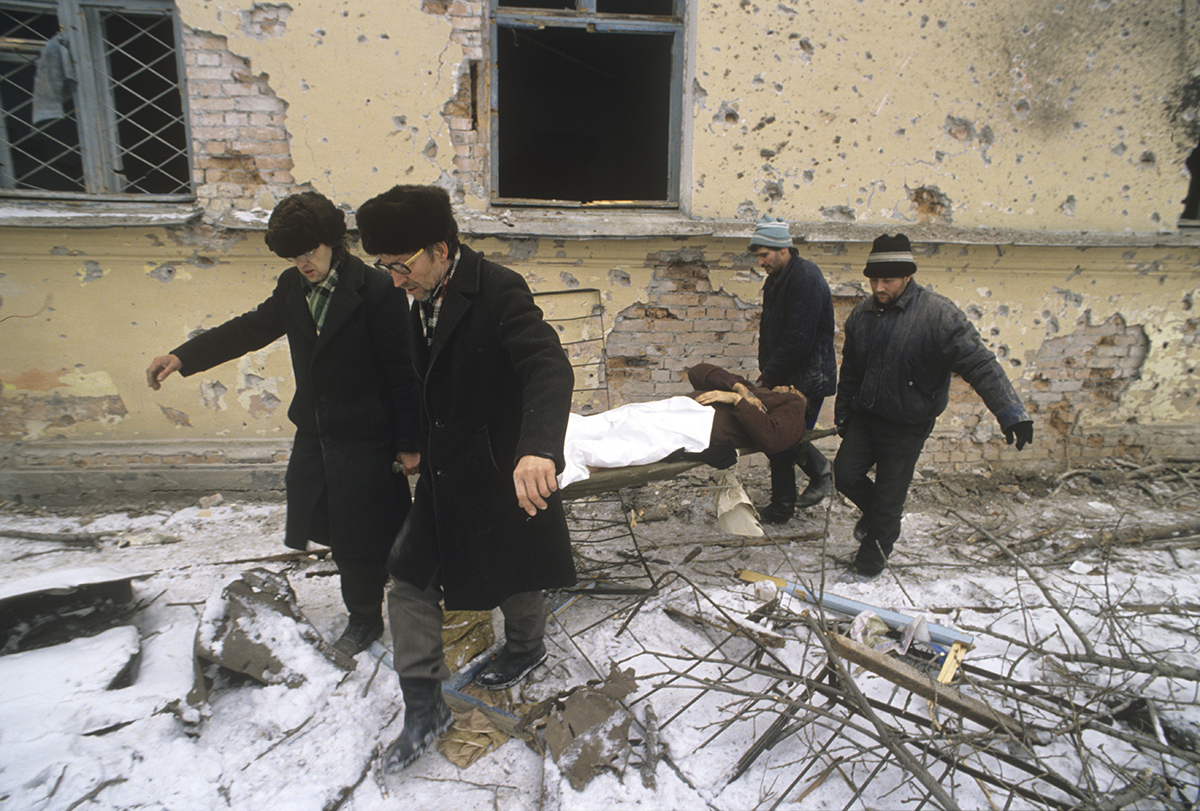 As a result of hostilities in the city, a civilian population is dying, many residential areas of the house have been destroyed: Igor Mikhalev / "RIA Novosti"
“Then the first prisoners appeared,” says Alexander Cherkasov. - It was about dozens of Russian tankers recruited in the garrisons near Moscow by the Federal counterintelligence service, typical of the last ten years of “Ichtamnets”. From the very beginning, the prisoners were not engaged in the authorities and not the military, the Minister of Defense Pavel Grachev generally stated that there were no Russian military in Chechnya. Deputies of democratic factions went to Grozny, who took out the majority of the “ichtamnets”. And then, in fact, the war began. On December 11, the columns of Russian troops from three directions began to move towards Chechnya. The one that was going on from the side of Dagestan was blocked by local residents in the Khasavyurt area, and a whole platoon of fighters of internal troops was captured. After the New Year's assault on the Grozny, the number of prisoners has already become three -digit. ”
At first, the conditions of their content were quite satisfactory, and the Chechen side gave them out without exchange. Cherkasov explains that the Chechens tried to appeal to the fact that they observe the provisions of the Geneva Convention on prisoners of war, thus achieving the recognition of Chechnya by the subject of international law. On the contrary, the federal government tried to avoid this in every possible way, representing military operations not by a bilateral conflict, but exclusively by the internal special operation to “disarm gangs” and “restoration of the constitutional order”. With this difference in the approaches there was no place for contacts at the official level, and therefore most often the role of negotiators was taken by human rights activists, journalists, individual deputies and mother of soldiers, who were captured by captive.
They felt the vulnerability of their position and the prisoners themselves. Cherkasov tells the story of a senior warrant officer named Kerim-Zade from the 131st Maykop separate motorized rifle brigade, captured among many after the New Year's assault of Grozny.
“Having called the name Mashchenko - apparently, not wanting to reveal their Kabardian roots, he suggested that Chechens write an open anti -war letter on behalf of all prisoners. It was a trick, and taking into account the circumstances - a heroic act. It is not so important what was in the letter itself. The main thing is that Mashchenko gathered under him signatures of all captured soldiers - more than a hundred. The letter took Kovalev to Moscow, it fell into the press. As a result, the name of the prisoners became known, and the authorities could no longer ignore this problem. They all managed to return home. ”
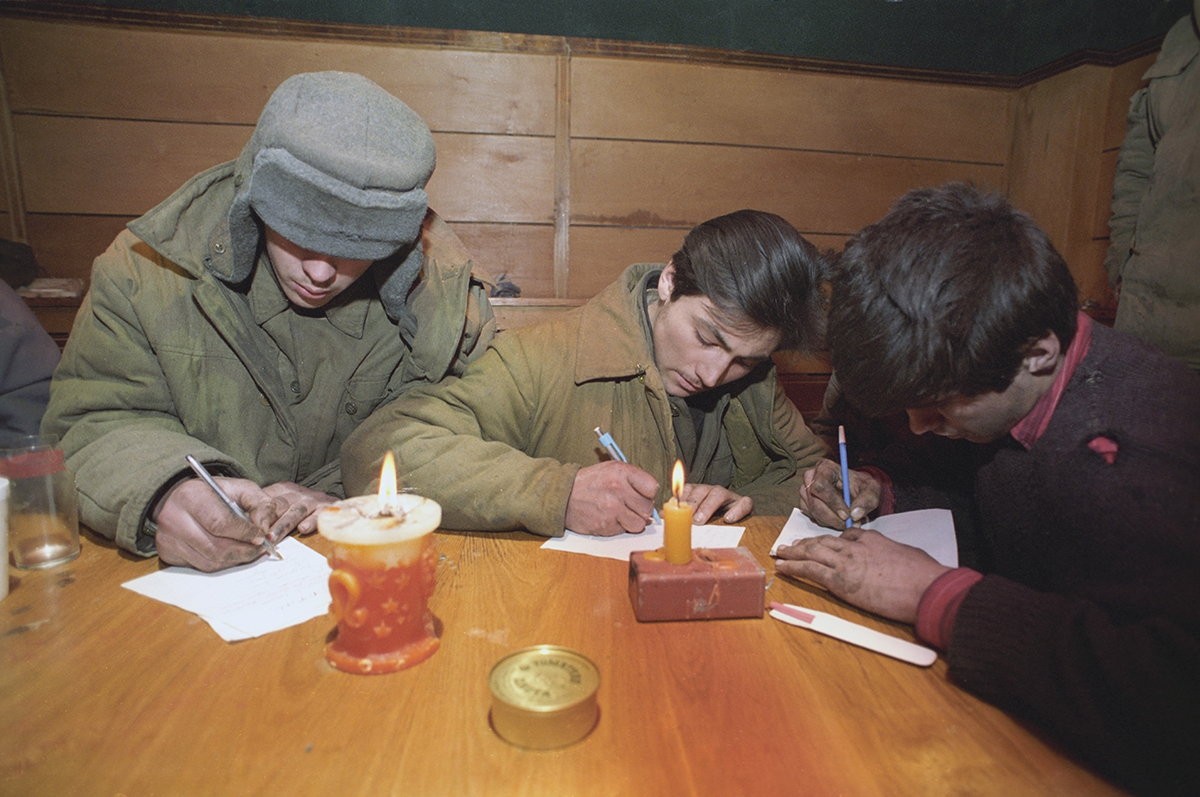 Captive Russian soldiers in the basement of the house write letters to relatives. Chechen conflict 1994-1996: Igor Mikhalev / "RIA Novosti"
“Liberation without conditions” ended very soon: the last six soldiers were taken out on January 26, 1995 Oleg Orlov and Sergey Sirotkin from the Kovalev group. On the same day, the 39 fighters of the 22nd separate team of the GRU special forces captured in the area of the village of Komsomolsky were already changed by 47 residents of Chechnya contained in “filtration points”. And this moment was a turning point.
“Those who were given from filterpunks were monstrously beaten and exhausted. And here the attitude to the prisoners from the Chechens radically changed. To put it mildly, contacts with human rights activists, journalists, and soldiers' mothers were also complicated. Then it was only worse. ”
Exchange of "all for all"
By May 95, the entire flat part of Chechnya passed under the control of the federal forces, and the fighting moved to the mountains. For retreating militants, prisoners were increasingly becoming a burden, it is reliably known about several episodes of the execution of prisoners. Officially, everything went to the successful "destruction of gangs." But against this background, individual separatist detachments almost freely moved not only in Chechnya, but also in neighboring regions. So, on July 14, a group of terrorists, led by Shamil Basayev, entered the city of Budennovsk at Stavropol and captured about one and a half thousand hostages in the district hospital.
Alexander Cherkasov says that one of the conditions for the liberation of hostages was the beginning of peace negotiations on Chechnya under the auspices of the OSCE, where the most important issue was the exchange of prisoners in the format of “all for all”. But very soon it turned out that no one imagines who these are “all”.
“This is where our databases came in handy. We - “Memorial” and “Kovalev Group” - at that time collected information not only about captured soldiers, but also about the missing residents of Chechnya. The main difficulty was in confusion: at that time there were many different lists of prisoners, where often the dead were listed as missing. The problem was that the federal lists of the dead were distributed between the two departments: the Ministry of Defense and the Ministry of Internal Affairs. And if the Ministry of Internal Affairs published its data practically online, then the Ministry of Defense, on the contrary, secured all the information. ”
Cherkasov explains: lists of human rights activists have always been more complete and more precise. From the part of the state, the “formalism of business trips” reigned, which came to Chechnya for a couple of months, did not have time to deal with the chaotic mass of papers, all threw and conveyed affairs to their shifters. And on the part of human rights activists, the involved people who lived by this were engaged in the compilation of lists. They also worked tightly with those who in Grozny engaged in the compilation of the lists of missing local residents.
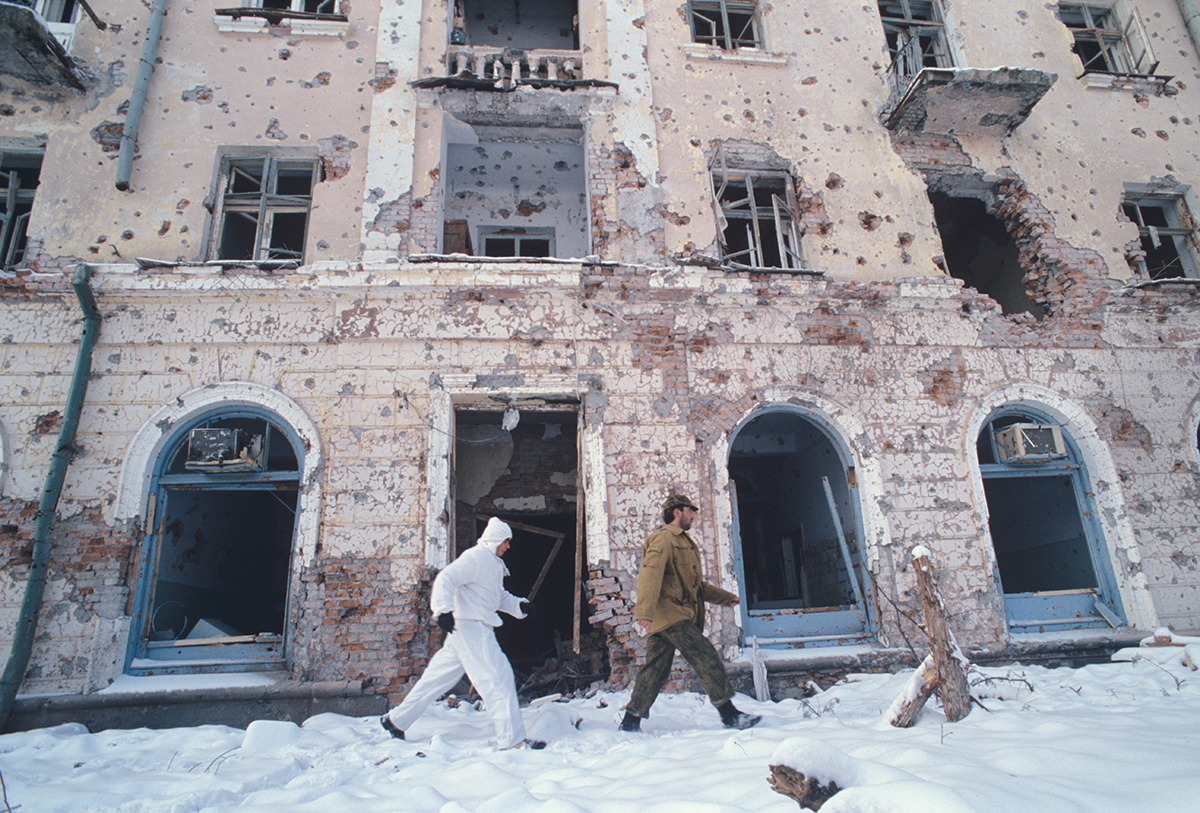 Representatives of the Chechen illegal armed groups in the city center on Leninapoto Street: Igor Mikhalev / "RIA Novosti"
“In the end, we all brought it to a single database. By some miracle, it was possible to find a working laser printer in Grozny. It was difficult with paper, it saved it, so the lists were printed inconceivably in small print. And still, a weighty pile turned out. ”
The lists were awarded to three sides: the Chechen, federal and representative of the OSCE assistance group. But the papers were only part of the matter.
“According to the results of negotiations under the auspices of the OSCE, a special observation commission was created, headed by Aslan Maskhadov, and by the federals-Lieutenant General Anatoly Romanov. Maskhadov ordered to collect “all” prisoners for subsequent exchange, but only 17 people were gained in the end. They flatly refused to give more field commanders: they themselves would come in handy ... In the village of Chiri-Yurt they were kept in relatively good conditions, in the kindergarten.
Meanwhile, in the fall of 1995, Johar Dudaev, trying to stop all separate negotiations between field commanders to exchange prisoners, gave the order to gather them all in one place. To improve the situation, of course. All the captured began to concentrate in the pre -trial detention center of the State Security Department (DGB) of Chechnya in the old Achkhoy - in a sort of field concentration camp. And there, hell began. ”
In December, numerous civil hostages were also added to the military in the camp, in which the separatists for some reason saw the FSB agents. Among them are builders from neighboring regions sent to Chechnya to restore infrastructure, energy and even priests. Many people remember the tragic story of the father of Anatoly (Chistyosov), the rector of the temple of Mikhail Archangel in Grozny, and Sergius (Zhigulin, later - Archpriest Philip). They went to Urus-Martan for negotiations on the release of two captured soldiers-Andrienko and Sorokin, when they themselves were seized and placed in the DGB pre-trial detention center.
“Anatoly’s father was shot there when he stood up for a captive soldier,” says Cherkasov. - They, in fact, lay in the same grave. Father Sergius was released in early July 1996 in exchange for Alla Dudaeva, by that time the widow of the President of Chechnya. ”
According to Cherkasov, more than 250 people were contained in the DGB pre -trial detention center. At least 55 of them died. All 17 soldiers held in Chiri-Yurt were successfully liberated.
Trade of people
In the spring of 1996, Johar Dudaev was killed. Cleaning in the western Chechnya was in full swing. Finally passed under the control of the federal forces of the village of Orekhovo, Old Achha, Bamut. But these military successes were “not enough” to meet the moment - the presidential election was approaching in Russia. In this situation, a truce was once again declared, and negotiations began, gradually began to free hostages from the DGB pre -trial detention center. But there were still many prisoners in the mountains.
“Around then, the federal delegation in the negotiations requested information about individual Chechens who were captured. Are they sitting in Russian prisons? In response, the Chief Informenter of the Ministry of Internal Affairs reports: “No”, “no” and “no” - but in the end it issues a list of all Chechnya natives sitting in prisons and camps of the country. And it was a monstrous managerial decision. ”
This list, of course, came to the Chechen side, and from there to all “people who wish”. And such a leak could be perceived only in one way: the federal side is ready to change prisoners to criminals. Cherkasov explains that in prisons at that time there was not a single captured action movie. They were either in filterpunks, or already in the ground.
On August 31, Khasavyurt agreements were signed, announced the end of hostilities, and the withdrawal of federal troops from Chechnya began. But this event did not particularly affect the situation with the prisoners. Because already in the fall, after the leak of the list, they began to trade them. Single such cases have been known earlier, but now the phenomenon has begun to acquire a mass character. The scheme was like this: at first the prisoners were bought by the field commanders, relatives of convicted criminal criminals, and then a real hunt for people and hostage captures began, including journalists, for whom it was possible to get a good ransom.
“All autumn, when it was slowly, but inevitably went to mass trade in people, it was still possible to use the closing window of opportunities to free prisoners. But there was no political will for this. Colonel Vyacheslav Pilipenko, who previously freed the soldier from the DGB pre-trial detention center, then very emotionally expressed: “There are prisoners of a certain Shamil from the village of Aslanbek-Sheripovo, he demands a“ Ural ”truck for them. And they don’t give me this“ Ural ”! How can I pull out the guys?” ”
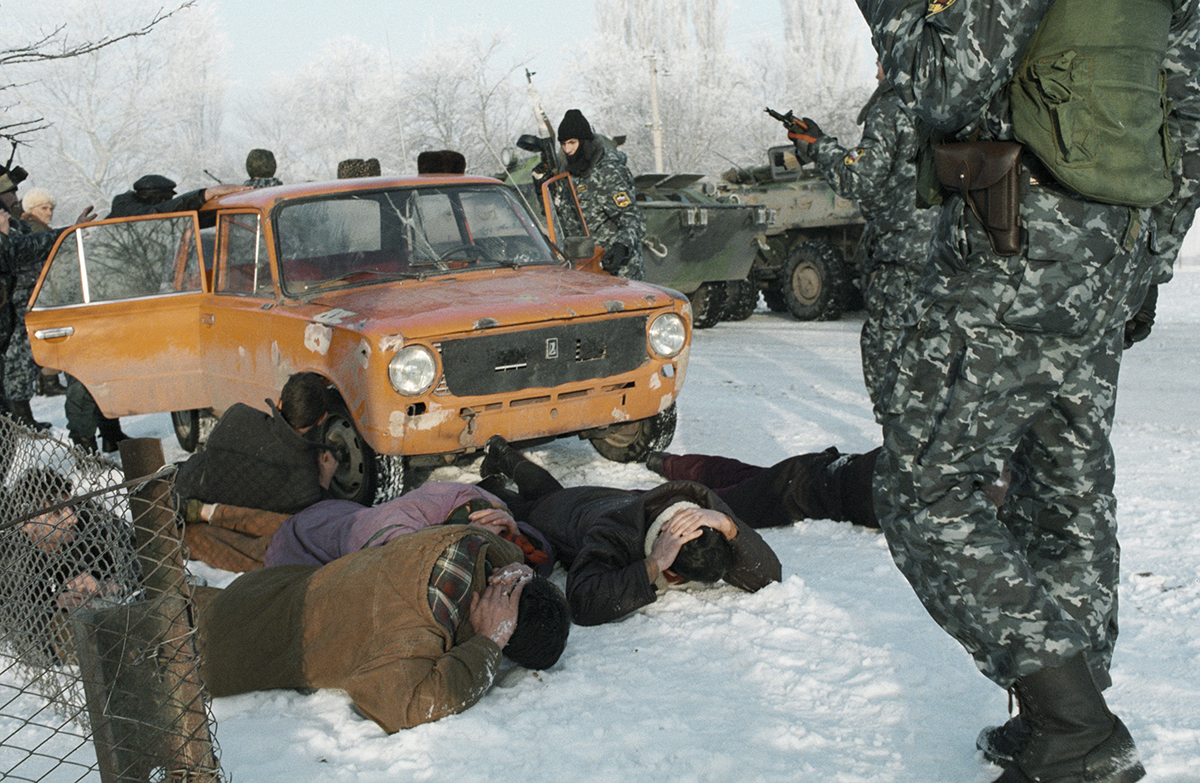 Fighters of the Ministry of Internal Affairs of the Russian Federation inspect the car with Chechens in the village of Ishcherekhleto: Yuri Tutov / "RIA Novosti"
Sometimes there were “target” captures, “under exchange”. The history of Arthur Denisultanov named Dingo is indicative, who will make itself felt as a hired killer in Vienna and Kyiv in the next decades. Alexander says that he was a prominent figure in the gangster Petersburg of the 90s. Somehow Dingo decided to kidnap the director of the meat processing plant to get a ransom. But something went not according to plan, and the director of the director was stolen. The driver’s wife, of course, did not have the required amount, and she went to the police. The abductors were detained. But Denisultanov spent not long: in Ingushetia, soldiers of Brillion was stolen, for whom he was exchanged.
Thus, in the interwar period, human trafficking in Chechnya was put on stream and became almost ordinary. In the actually independent, but hopelessly poor republic, there were practically no opportunities for legal earnings. And it was easy money. Now it was no longer a question of holding prisoners of war, but about the seizure of new hostages, for which they began to demand a ransom. Soldiers and officers here were far from the most tasty goal. Especially "quoted" journalists and foreigners. Hundreds of thousands of dollars could be obtained for them. Sometimes the price reached a million.
Meanwhile, according to the Memorial, in the fall of 1996, prisoners, among the missing or unauthorizedly left, were 1231 soldiers. Human rights activists and journalists have been engaged in their search and liberation for many years.
Model Major Izmailov
“The Russians do not throw their own? In part, this could be said about the special forces of the GRU. At least in the 95th year, the 22nd separate special forces brigade did everything possible to free her forty-online prisoners. During January, when they were captured, it was possible to pull out all the fighters, except for one - Stanislav Dmitrichenko. He was released on April 7 in exchange for 15 detainees, including his brother Johar Dudaev. The sea infantry can also be noted: only one marine died in captivity for all the time of hostilities. But this was rather an exception. With regard to the rest, “we don’t throw our own” - these were empty words. ”
And they met prisoners after liberation not at all as heroes. Cherkasov explains that sometimes they tried to incriminate the loss of weapons and desertion, sometimes it reached criminal cases, but basically everything went down on the brakes. “At the end of the first war, about half of the prisoners and missing were listed as unauthorizedly leaving part. This wording was very convenient for commanders - they thus removed the lion's share of responsibility. ”
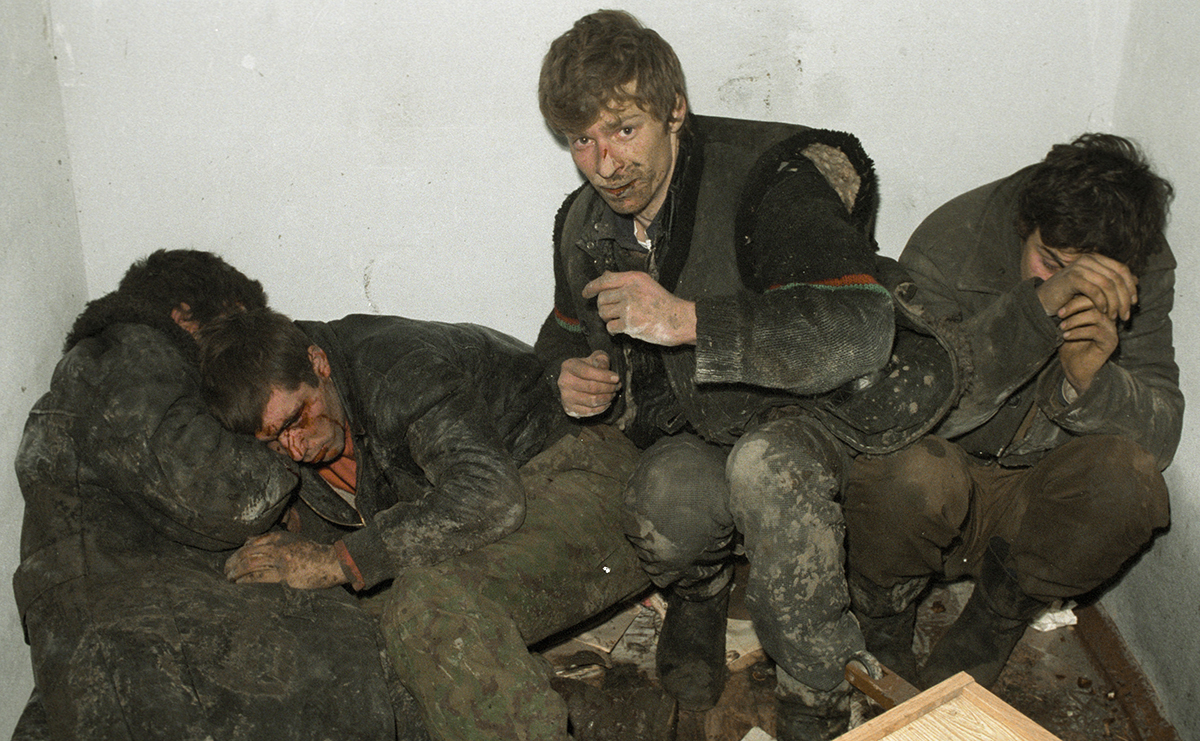 Residents of the city, detained on suspicion of belonging to the Dudaev formations of the MMFOTO: Yuri Tutov / "RIA Novosti"
On behalf of the state, only individual officers, who had their own motivation, tried to solve the problem of prisoners. One of these is Major Izmailov. Alexander talks about him as a man of amazing energy, who did everything possible and impossible to return the soldiers home.
“Glory and I met in Khankala in the search group. This group was then led by two colonels-good people working for conscience, not for a career, but with some reduced clock frequency. I remember that Izmailov flies to them and says: “Now I have freed two prisoners from Bamut today. I need to take them to Moscow tomorrow” - these were the same Andrienko and Sorokin, who were tried to pull out priests of purely asses and Zhigulin. “Well, Glory,” the colonels answer him, “stretching the words,“ you understand that they should still interrogate the FSB. ” As a result, Izmailov squeezes the colonels, they squeeze the FSB, they somehow interrogate the soldiers at night, and in the morning after ten months of nightmare they are in Moscow. How did Glory succeed? У нас с моей коллегой Ольгой Трусевич, которая была главным мотором нашей работы по пленным, были от группы розыска проездные документы. Единственный момент, когда государство для нас что-то сделало, — так один раз выписало бумагу на перелет, якобы для солдатской матери и солдата, которого она вывозит. И вот по этой бумаге Слава умудрился “пробить” места еще семерым человекам, которым просто необходимо было как можно скорее покинуть Чечню».
Перед началом чеченского конфликта Вячеслав Измайлов, пройдя Афганистан и успев послужить в Германии, работал в военкомате подмосковного Жуковского. Когда началась первая война, оставаться на этом месте службы он не мог. «Я понял, что из советского и российского майора превращаюсь в преступника. Я отрываю мальчишек от матерей, отправляю их в армию, а оттуда их посылают на войну в Чечню — и обратно к матерям в цинковых гробах», — пишет он в своей автобиографической книге «Война и война». И тогда он сам поехал в Чечню — офицером управления 205-й мотострелковой бригады. Ехал не воевать, а «учить наших солдат и офицеров уважать жителей этой республики и таким образом сохранять и свои, и чужие жизни».
Читая его воспоминания, понимаешь, что в Чечне тех лет царил абсолютный хаос: маниакальная жестокость, жажда легкой наживы, безнаказанность и ложь давали о себе знать с обеих сторон, вымывая из людей все человеческое. «Свое место в этом хаосе я определил так: тащить из плена и тех и других, тащить всех, кто в этот котел попал не по своей воле. Тащить до тех пор, пока начальники с обеих сторон не перебесятся».
Благодаря выступлениям в программе «Взгляд» Измайлова узнавали в лицо, что значительно снижало риск «исчезнуть бесследно» на территории Чечни и добавляло авторитета, в том числе среди боевиков. Он ездил к ним на переговоры о передаче пленных и тел убитых, помогал местным жителям с поиском пропавших без вести, вывозил раненых и убитых с поля боя, боролся с мародерством в своем подразделении и даже однажды вытаскивал пьяных лидеров боевиков из подвала, куда их посадили их же подчиненные.
Армия, мягко говоря, не оценила его усилия. Когда майор Измайлов был сначала переведен подальше от Чечни в подмосковную часть, а потом и уволен оттуда, он продолжил приезжать в республику уже как журналист «Новой газеты», вызволяя в основном гражданских заложников. В общей сложности благодаря его упорству и таланту переговорщика были освобождены 174 человека.
«Кто проверку не проходил — исчезали»
Чечня середины 90-х была эпицентром непрекращающейся войны без линии фронта, где из законов работали разве что законы физики. Но даже в этом хаосе был шанс найти пропавших людей, если приложить достаточно усилий. Правда, куда проще было исчезнуть самому. Те, кто занимался поиском, работали в надежде на первое и постоянно держа в голове второе.
Суммарно Александр Черкасов провел в Чечне «многие недели или немногие месяцы». Каждая командировка — это нудные сверки списков, встречи со свидетелями, разъезды по разным местам в надежде найти, кого ищешь. Помогали опросы освобожденных, информация от родителей солдат и сведения от местных жителей, которые тоже искали пленных, чтобы обменять их на своих пропавших родных. Передвигаться по территории республики можно было довольно свободно. Но это не означало, что безопасно: и одна, и другая сторона с большим подозрением относилась к гражданским, особенно заезжим.
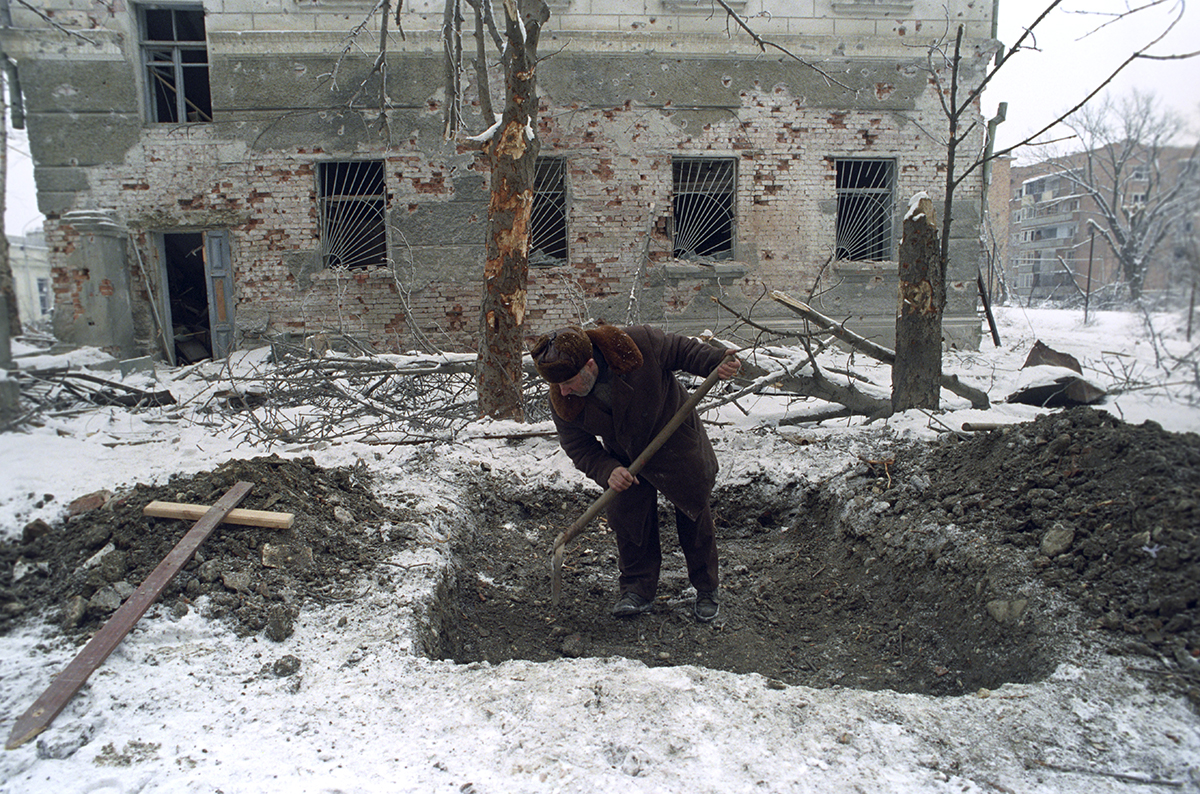 Чеченский конфликт. В результате боевых действий в городе разрушено много домов, гибнут мирные жителиФото: Игорь Михалев / «РИА Новости»
«С лета 95-го по весну 96-го мы много времени проводили в селе Чири-Юрт, где чеченцы держали пленных. А там ты постоянно на виду. На тебя смотрят, оценивают, постоянно проверяют, кто ты такой. С виду это действительно странно и подозрительно: какой-то гражданский занимается военными. Но нам очень повезло с гостеприимными хозяевами. И этим пленным повезло.
А в других местах кто-то такую проверку не проходил — многие мои знакомые исчезли, остались там навсегда. Со мной, с нами, наверное, было просто: я делал свое дело и старался не проявлять какую-то безумную храбрость — в смысле глупость.
Когда главный чеченский тюремщик Усман Фирзаули, начальник департамента исполнения наказаний Ичкерии, после второй нашей встречи в Бамуте сказал: “Увижу тебя здесь еще раз — пойдешь ко мне в подвал”, я там в третий раз не появился. Усмана тоже можно было понять: “работа такая”…
Задерживали нас с Ольгой Трусевич и шамановские десантники. И тоже отпускали. Но в любом случае мой рассказ — рассказ человека, которому повезло, “ошибка выжившего”. А многим не повезло…
Однажды в Грозном меня с коллегами Олегом Орловым и Андреем Мироновым задержал особый отдел ДГБ. До выяснения обстоятельств нас заперли в бывшем доме престарелых. И тут начинается артобстрел. Олег считает снаряды — их со стороны Ханкалы прилетело несколько десятков; Андрей читает лекцию о том, как вести себя под обстрелом. Повыбивало окна, но само здание уцелело, охрана куда-то разбежалась. Мы вышли — пейзаж немножко поменялся, частный сектор разметало, где-то что-то горит, нашли этот особый отдел, прятавшийся в подвале. Те, наверное, поняли, что навряд ли мы чьи-то агенты, и выписали нам документы, по которым мы могли свободно передвигаться по городу. В Грозном в тот момент был полный хаос: чересполосица, где-то федералы, где-то боевики, постоянные перестрелки. Но документы были такие, что мы несколько дней могли спокойно работать. Ну как “спокойно” — обстрелы шли по нарастающей…»
У солдатских родителей было куда меньше опыта жизни и работы в таких условиях. Но было больше решимости, порожденной, прежде всего, отчаянием. Они съезжались со всех концов страны с пониманием того, что судьба их сыновей никого не интересует, кроме них самих. Они ездили по горным селам, попадая под обстрелы с обеих сторон, а порой и под влияние: и российские спецслужбы, и ДГБ пытались использовать матерей пленных как своих агентов. Где-то им даже разрешали жить рядом с пленниками, и это играло сугубо положительную роль: так над захваченными солдатами труднее было издеваться.
Жили они и в том же Чири-Юрте, дожидаясь обмена. Но главным образом они базировались в расположении федеральных войск — в Ханкале. Сначала — где придется: в палатках, разрушенных домах, кого-то располагали у себя местные жители. В январе 96-го им выделили одну из казарм, и к осени там жили уже больше 200 родителей пропавших без вести военнослужащих, в основном матерей. Когда в декабре 96-го российские войска ушли из Чечни, они снова остались на улице.
Измайлов вспоминает, что остававшихся матерей смог приютить в Грозном советник губернатора Приморского края Адам Имадаев. Для этого он специально купил дом и нанял боевиков в качестве охраны. Через полтора года похитили самого Адама, а охранники, оставшись без оплаты, разбежались. Матерям пришлось искать новое жилье. Дом на улице Маяковского для них сняли уже работники российского представительства в Чечне. Но и этот период продлился недолго. Вскоре похитили сотрудника представительства, который был в доме за старшего, — он был астматиком и задохнулся в багажнике «Жигулей», куда его засунули. Женщин взяли в заложники, и освободить их удалось только через полгода, когда уже началась вторая чеченская.
Пленные как исключение из правил
Вторая чеченская, или официально «контртеррористическая операция», началась в 1999 году и была совершенно другого характера. Военнопленных почти не было. Собственно, их число начало резко снижаться еще в первую кампанию — с августа 1996-го, когда сепаратисты в очередной раз штурмовали Грозный. Тогда от Масхадова, руководившего операцией, был спущен инструктаж о гуманном обращении с пленными. Реакция на него предсказуемо была обратной: боевики предпочитали пленных просто не брать. Сказывался и нарастающий уровень ожесточения сторон. Во вторую войну эта тенденция только усилилась.
Говоря о пленных второй чеченской войны, Черкасов вспоминает бойцов пермского ОМОНа, захваченных весной 2000 года в Веденском районе. Все они были расстреляны.
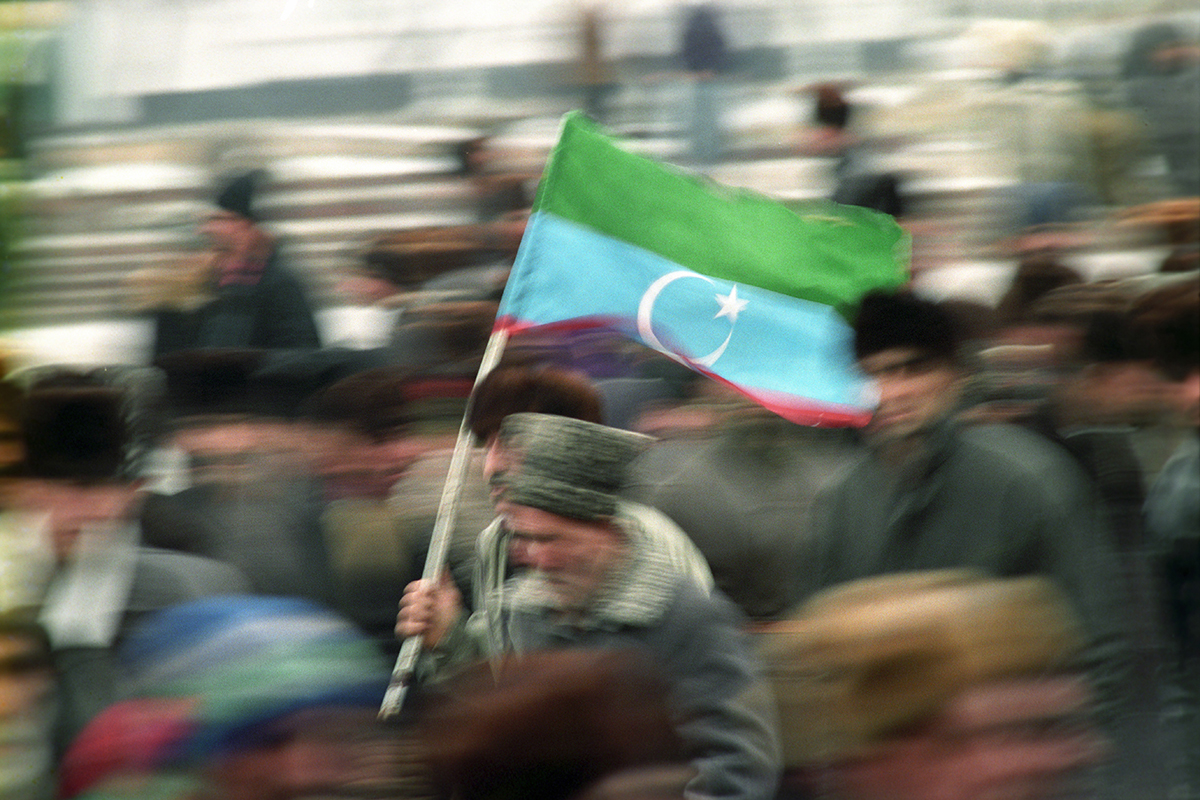 Первая чеченская война (11 декабря 1994 года — 31 августа 1996 года) между российскими федеральными войсками и вооруженными формированиями Чеченской Республики Ичкерии, созданными в нарушение законодательства РФ. Уличное шествие в поддержку президента самопровозглашенной Чеченской Республики Ичкерии Джохара ДудаеваФото: Игорь Михалев / «РИА Новости»
Выживать в плену удавалось единицам. «Как пример — офицер спецназа ГРУ Алексей Галкин, захваченный в начале второй войны на севере Чечни. Его использовали как человека, свидетельствующего, что дома в Москве взрывала ФСБ. Перед этим его долго пытали, морили голодом. А когда все-таки заставили заучить нужные показания, покормили, полили одеколоном голову, чтобы не так смердел, и вывели к журналистам, где он рассказал “всю правду”. Госбезопасность — она везде госбезопасность. Потом с отходом из Грозного боевики увезли его в горы. 29 февраля он был в окрестностях высоты 776, где под дружественным огнем своей артиллерии полегла рота псковских десантников. Галкина вместе с другим пленным офицером, Владимиром Пахомовым, вели по горной тропе, вдоль которой лежали тела убитых, и в какой-то момент им удалось отделиться от толпы боевиков и в итоге выйти к своим. Потом Галкин стал прототипом героя боевика “Личный номер”, такой ненаучной фантастики. Но то, что он выжил, — тоже чудо. Однако как масштабное явление сюжет с пленными во вторую войну, в общем-то, уже не существовал».
* * *
Точное число освобожденных военнопленных за все время чеченского конфликта назвать сложно. Александр говорит, что речь идет о многих сотнях. Но делает акцент на других цифрах. По данным «Мемориала», пропавшими без вести в первую войну числятся около 1200 силовиков и около 1300 местных жителей. А во вторую войну бесследно исчезло от трех до пяти тысяч гражданских. Похожие цифры приводит и Миротворческая миссия имени генерала Лебедя: семь тысяч человек в общей сложности за две войны по всему Северному Кавказу.
Речь идет о тысячах человек, что до сих пор лежат где-то в безымянных могилах. Найти их, идентифицировать и достойно похоронить должно было бы стать важнейшей задачей государства, которое чтит память жертв тех страшных событий. Но задача эта до сих пор не решена и, судя по всему, в ближайшее время решена не будет.
Точки зрения редакции и ЦЗПЧ «Мемориал» могут не совпадать.