
Translated material
50 thousand and you hold
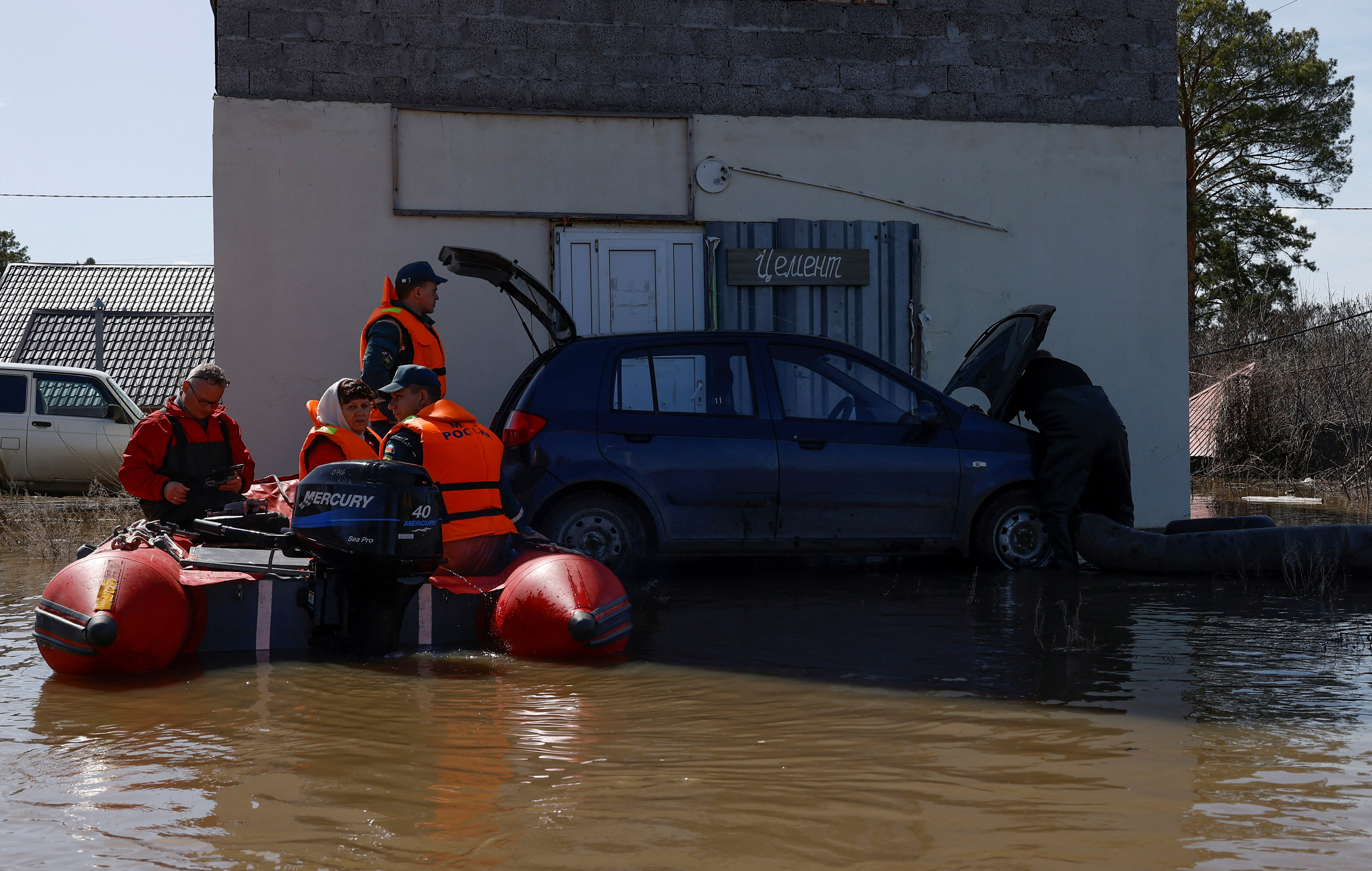
Flood in the Russian regions: not everyone will have enough money
Kuzbass floods. The governor of the Kurgan region called for the evacuation of residents of the right-bank part of the mound due to the threat of flooding. The governor of the Orenburg region asks not to look for the guilty in the breakthrough of the dam in Orsk. The Orenburg region was on the list of regions in which the Ministry of Emergencies predicted flooding. The damage from the floods in the region amounted to 40 billion rubles - this is the second most destructive floods in the modern history of Russia.
The authorities promise meager compensation. However, many victims of floods of past years are still waiting for help. Why is Russia always not ready for floods? We understand the air with the editor -in -chief of Novaya Gazeta Europe Kirill Martynov and political scientist Nikita Savin . Presenter - Artyom Radygin .

Flood in the Russian regions: not everyone will have enough money
The text of the copyWidth PX Height PX
The url has been copied to your clipboard
No Media Source Currently Available
0:00 0:03:13Artyom Radygin: The Ministry of Emergencies last year released a flood forecast. The document has 35 regions, among them both Kemerovo and Orenburg regions. The Ministry of Emergencies warned that the floods come every year, and this year there would also be record a lot of snow and the regions should be prepared for floods. But, as we see, everything is repeated. In Orsk, which is already seven days under water, water recedes, the mayor of the city reports. According to him, in eight hundred houses out of six thousand experts are already assessing the damage.
The authorities promise meager compensation
They counted the damage from the flood of 40 billion rubles. "Under the regional law, in case of loss of housing, compensation is expected to be almost 70 thousand rubles per square meter," Interfax quotes the press service of the Ministry of Construction. Do officials have enough money for compensation and how the state helps (if at all helps) to the victims of natural disasters - see our plot.
Artyom Radygin: “Somewhere the water has not arrived yet, somewhere has not left,” says Putin at a meeting on the floods. Officials report that everything is in order with the peasants, and government agencies work better.
Artyom Radygin: The head of the Ministry of Emergencies Kurenkov a few days ago Gazlaitl residents of Orsk for not predicted the future and did not leave the city before the breakthrough of the dam. According to him, Russia suffers from floods, because people themselves are not ready for them. The way the authorities are opposed by the elements this year will discuss with political scientist Nikita Savin and the editor -in -chief of Novaya Gazeta Europe Kirill Martynov .
The authorities promise compensation of 70 thousand per square meter. If you imagine that a house or two hundred meters or two hundred meters, then this is a rather serious amount. Will they give it at all?
Kirill Martynov: I think some of the people will receive part of the compensation. I am sure that they will have to ask and humiliate themselves for this for a long time. The words of the Minister of Emergency Situations are very indicative that the "public services" work perfectly. It seems to me that “public services” become the main medium for the authorities, all citizens of the Russian Federation should simply be numbers on “public services”, there should be no real human destinies and there should be no problems. The main reason why the path to compensation will be very long is that helping to the victims is not priority for the Russian government.
People will have to ask and humiliate themselves for a long time to get compensation
A peculiar class society is formed in Russia, where there are security forces and especially participants in the war for whom the state is ready to try, it provides it with priority benefits, ranging from training at universities and ending with increased cash payments. All the rest is a burden for the state, from which it would be happy to get rid of, because these people do not bring benefits: they do not produce oil, do not fight in Ukraine, therefore, they do not need to pay much attention to them.
Artyom Radygin: But they pay taxes!
The head of the Orenburg region at the same meeting with Putin said that two thousand people have already received compensation for 20 thousand rubles.
Kirill Martynov: This is precisely the residual principle, something like this will happen further. I think then, unfortunately, we will see the movement of deceived victims of floods, which will record video features for the Russian dictator for a long time and demand that they pay attention to. We know that the tax structure in Russia depends almost exclusively on the export of raw materials, everything else is such a house of culture with an oil refinery. And now we have two plants - oil refining and the one that makes shells and rockets.
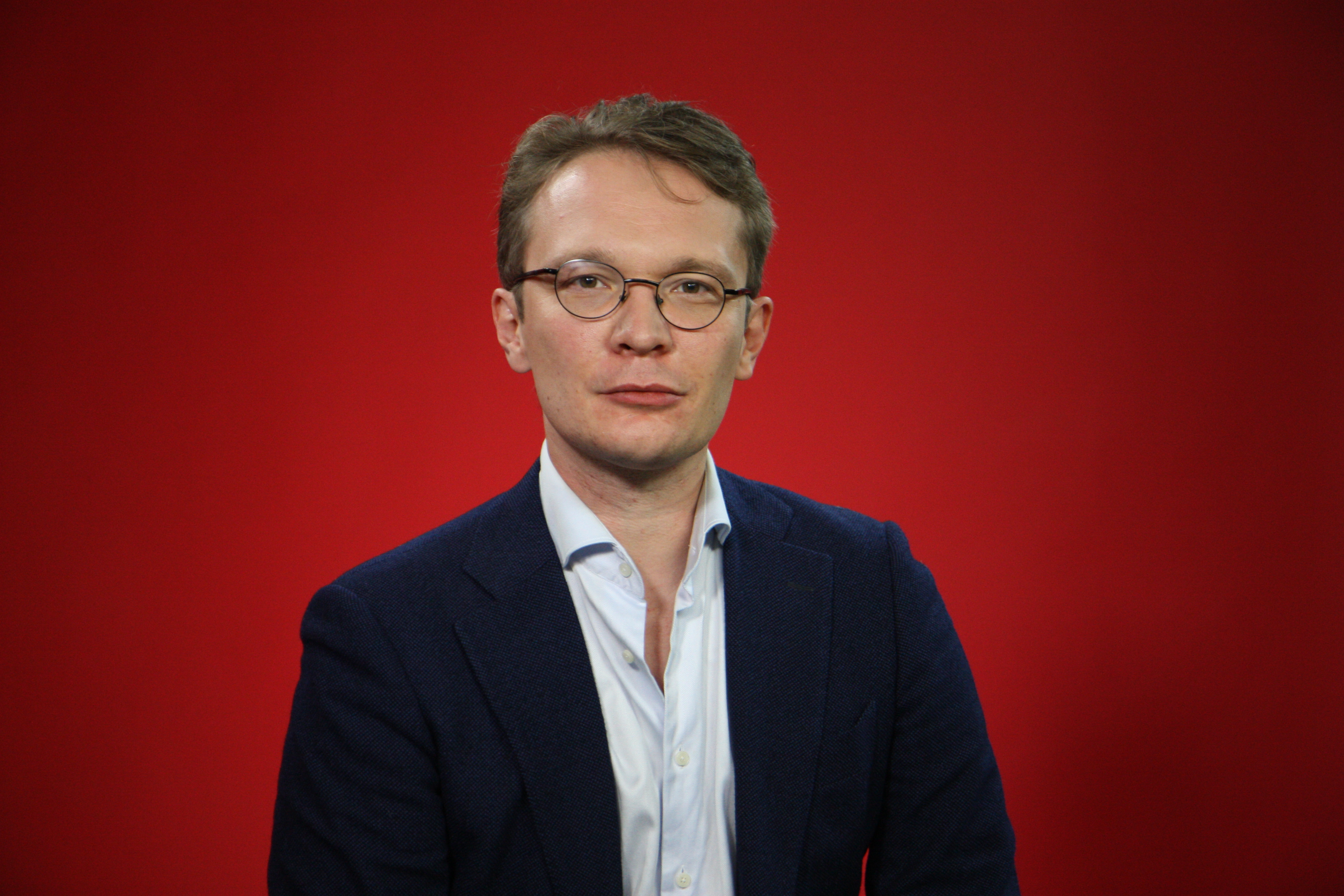
Artyom Radygin: should the state help in such conditions?
Nikita Savin: The authoritarian state has in its arsenal two mechanisms to combat such situations - this is the co -optation mechanism (roughly speaking, bribery) and the mechanism of repression. In the case of emergency, the regime of Vladimir Putin combines these two mechanisms depending on the situation. When it comes to fires, the regime is more addressed to repressions. Repressions are mainly reflected in business, as, for example, was in Perm in 2009, or on local authorities, as in Kirov in 2018. In the case of natural cataclysms, the regime more often uses the coopation strategy, allocates budget funds to help the victims, for restoration.
The state is ready to try only for security forces and participants in the war
Yes, local residents have to face a large number of difficulties associated with obtaining these funds, but the money will most likely be allocated. Local authorities are already reporting on the allocation of additional funds. Probably the most amazing thing in this situation is that the mayor of Orsk already promises money to citizens, which he does not have. Orsk’s budget is seven billion rubles, of which a reserve fund in case of emergency situations is one million rubles. Those figures that have already been sounded in your plot, 20 thousand rubles for two thousand people are 40 million rubles. That is, the Orsk administration does not have this money, she is now distributing the money that they have promised either regional or federal authorities. And this already suggests that, most likely, local authorities in this situation will be withdrawn from the blow.
Artyom Radygin: Probably, some money had to be spent on preventing this disaster. Before the broadcast, we talked with the ecologist Evgeny Simonov , asked: are there any objective prerequisites that Russia for some reason is not ready for floods every year?
Flooding is a sample for everything that happens in Russia
Artyom Radygin: In the last days, there are many videos showing how people themselves are organized, take boats, save animals and so on. Is this not the task of the state? Still, he is paid money for it.
Kirill Martynov: A curious version that people themselves are to blame for the fact that everything happened. Of course, we are all the owners of their own fate, everyone is responsible for their safety. But still, not people built a dam, which was broken, and not people stated that everything would be in order. The day before, there was a strange scene when they tried with the help of a priest to ensure that there was no flood, the dam did not break through.
If you look from a political point of view, then this is about a destroyed society. The dictatorship is always built on the fact that people do not trust each other, cannot act together. If people know how to organize, negotiate with the authorities, then at first they talk about the dam or about the consequences of the flood, and then they have questions about their living conditions, then all kinds of political issues, then they, God forbid, want to change the governor or even the president. In this sense, the dictatorship, which has developed in Russia, is just built on the fact that everyone should live an absolutely isolated and irresponsible life. The state does everything so that people find themselves in a situation where my hut is near the water, in fact from the edge, where everyone is for himself.
It is important to recall that ten years ago a very powerful surge in the civil movement in Russia was connected just with a flood in Krymsk and with how activists went to eliminate it. Many teams were built on this, which were then engaged in private charity.
This is a story about a destroyed society
All this in ten years was practically destroyed, despite the fact that people were ready to independently take the situation in their own hands, not particularly expecting anything from the state. On many other issues, about the same thing happens. Flooding is such a role model, a sample for everything that happens in Russia.
Artyom Radygin: So far, as the Russian authorities say, they are all right, everything is stable, everything works well. Putin spoke little at the meeting, a very boring meeting was very boring, but the most important thing he said: about money, about the margin of safety.
The regime, apparently, is enough
Artyom Radygin: It seems that Russia is in a situation of the perfect storm: in the south she has a war, there was a terrorist attack in Moscow, flooding begins in the east. There is not enough any other fire, God forbid. How, with all these problems, when it is necessary to spend money at once on many fronts, the regime still does not fall apart?
Nikita Savin: Apparently, there is enough money to the regime. You have just shown Anton Siluanov’s report, who claims that there is money in the reserve fund. The peculiarity of the Russian regime is that for 25 years he invested well in his own stability and safety. Indeed, the regime has a margin of strength in the form of a reserve fund, budget funds. During the last message, Vladimir Putin announced the strengthening of the tax burden on citizens. I would not worry about the Russian regime that he will not have enough funds in a short -term or medium term.
Artyom Radygin: 400 thousand rubles is the maximum compensation if a person receives severe damage to the health, and three million rubles - the maximum threshold if a person also receives a severe wound, but in war. We see such priorities now in Russia. How many people should suffer from the floods so that the state somehow changed the priorities?
Nikita Savin: I hope that during this flood will suffer as few people as possible. But no matter how much it suffers, this is unlikely to affect the priorities of the state. The war in Ukraine is an absolute priority for Vladimir Putin, all other tasks are secondary to it. Attention to the Orenburg region, to the flood, takes place in the context of the growing discontent of citizens and the risks of strengthening this discontent. Therefore, the regime will try to achieve some balance, find some optimal amounts sufficient to stop dissatisfaction in Orsk and Orenburg.
Artyom Radygin: Putin usually ignores all problems, but here he seemed to speak about the flood, showed his interest, but only from the video. All officials from the Ministry of Emergencies get in touch with him from Orenburg, and he remained in Novo-Ogarev. What is this talking about?
It seems that Russia is in a situation of perfect storm
Nikita Savin: This is just quite typical for Vladimir Putin. He, as a rule, comes to the places of natural disasters when the intrigue is already fading into the background, the hot phase of the disaster has already been overcome, it is restored, respectively, Putin is visited with an inspector's visit, and elephants and punishment of the perpetrators are underway. Vladimir Putin, as a rule, withstands some time before the visit. After the flood, he arrived in Krymsk a few months later, arrived in Khabarovsk in 2013 after a large flood in Siberia, recorded New Year's appeal from there. Also, Vladimir Putin came to Kemerovo and Perm after some time. I think here we can also expect Putin’s visit to the Orenburg region in some temporary horizon.
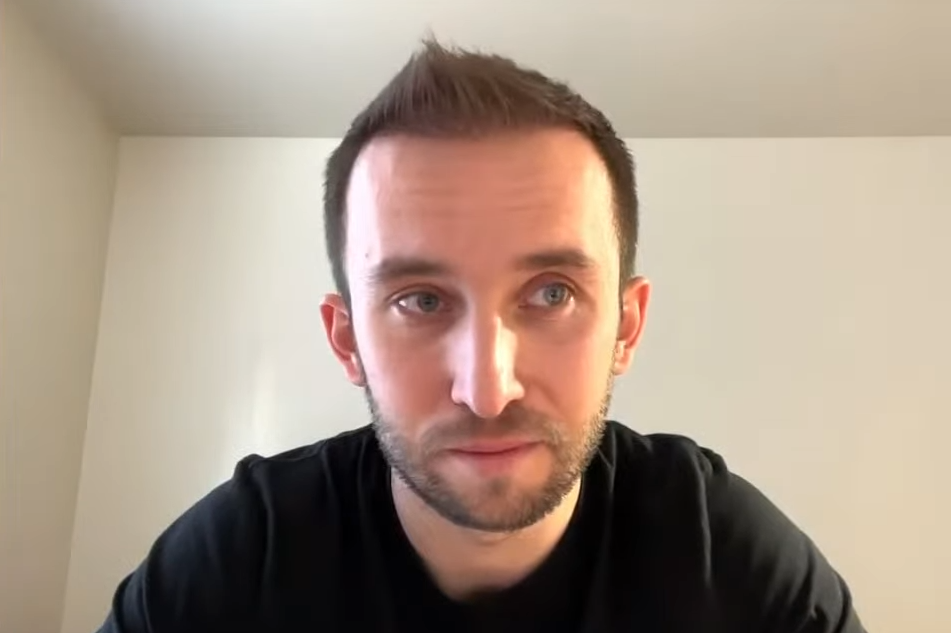
Artyom Radygin: I calculated very rudely: Russia spends 27 billion rubles a day on war. 40 billion damage in Orsk is about two to two and a half day of the war. Will Putin go to such victims: only two days of the war?
Kirill Martynov: For the Russian dictatorship, this is now simply a meaningless formulation of the question. Nikita said that war is the main and only value, everything else does not matter much. This question suggests that it is necessary to stop the war for two days, to postpone it, God forbid, to conclude a truce. Of course, Putin cannot go to this, he has this idea, what he has focused on.
When we saw personnel from his remote meeting, I thought that now there is a certain new canon of recent years or decades of Putin’s power, which will end sooner or later, at least for physical reasons. Putin from time to time will act with threatening speeches, declare war on the whole world, at least rhetorical, to say that we are the greatest, to offer to build very expensive high-speed highways somewhere where it is pleasant. Be sure to build a bridge on Sakhalin for some billion.
And then Putin from time to time will come to such sad meetings, when the country, actually abandoned by this authority, falls apart, the infrastructure falls apart, the dams are collapsed, the heating mains break through, armed terrorists walk around Moscow and no one can stop them. Putin will say: yes, doctors, the Ministry of Emergencies work on the spot, everything is in order, we compensate for everything, payments will be through "public services". And then - "We are again the greatest, we must continue our war to the victorious end."
War is the only value, everything else does not matter
Artyom Radygin: "In love, happiness is an abnormal phenomenon" - so freely I will paraphrase Marseille Proust. In his concept, love leaves relations as soon as emotional swing disappears. Maybe this is the main secret of Putin’s success, how his power is holding? Perhaps the Russians are simply afraid to get out of these toxic relations with an authoritarian state so as not to lose love for the homeland?
Kirill Martynov: You have found a very exalted metaphor and a quote from Proust. I think that in the case of Putin, what is happening is many times easier and worse. Probably, we can talk about a phenomenon close to the collective Stockholm syndrome . People in Russia are more or less kept hostage, even if they themselves do not understand this, even if they like it. For years, they have been proved for years that there is no alternative, they can live only with this government, only with this president and only in such conditions, when a catastrophe first occurs, and then they remember that some people live in this territory.
I'm afraid that Stockholm syndrome is primarily the result of a very severe injury and fear. I think there are few a country (in Europe, at least) as injured as ours, with all these wars, revolutions, repression, events of the twentieth century, a very severe post-Soviet injury of the 90s.