
Translated material
Invudists and escalecies. Documentary Film Festival in Paris
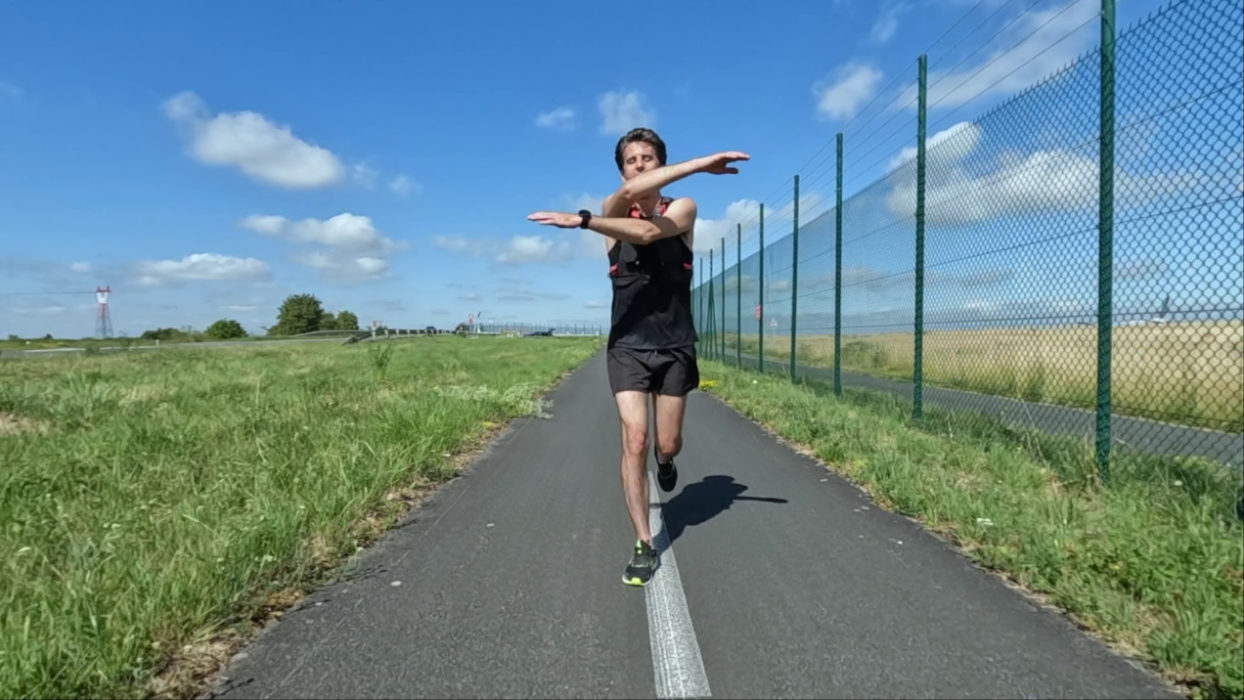
Documentary cinema Cinéma du Réel , Pompidu, who passed in the Paris Center, offered the audience three retrospectives-James Benning, studying the American landscape, feminists of Claudia von Alemann, filming autobiographical films, and Jean-Sharl Hue, a fan of acute sensations. In the film Carne Viva , The HYUC cameras taken in the Mexican Tihuan are not afraid of drug addicts, or dealers, nor prostitutes who piss at a bucket, nor police, shooting either at these drug dealers, then at the dogs, nor a DJ without teeth, cancer, or even the mayor of the city nicknamed Al Capone.
37 films were selected into the competition, of which 18 were French or made in co -products with France, and most of the others were European. The films made on other continents were in the minority - Europe, concerned about right -wing political turn, is hung up on itself and tries to reflect the causes of its anxiety in art.
The shortest film of the competition (6 minutes) was "Where are all my lovers?" Jean-Claude Russo. The director has been pleasing to the festival for several years with its sarcastic minimalism. The sentimental name for his new film is a line from the song Freel, the stars of the Parisian scene of the 30s. The hero (Russo himself), whistling the melody, goes along the path to the forest, and then returns; In this metaging - the primary basis of all actions, as in a simple melody - the primary basis of harmony, and in love - the primary basis of feelings. A wooden boat, what is the same in the forest, in the right side of the static frame - the metaphor of our life - from a romantic dream under a scarlet sail in the beginning to a broken trough at the end.
Researchers - namely, studies for which an interesting art form has been found, the curators of the festival are expected from documentary projects - preferred, not seduced by relevance, to reflect on the events that are in a temporary distance. Perhaps that is why there was no Ukrainian topic at all. And the Israeli-Palestinian conflict closed films that did not find this form, but at the same time lost the grains of meanings. Like "Roller, Life, Flight" - intimate observation of a young enthusiastic Italian for her lover from a gase, experiencing the complexity of adaptation and simultaneously skating on rollers; The Loridan-Ivens Award, most likely received exclusively for considerations of political correctness.
The longest film of the program (216 minutes) was the “ Direct Action” of Guillaume Kayo and Ben Russell - a detailed fresco of the ZAD eco -activists, and he received the main prize.
Invoists occupy lands allotted for large construction
The American Russell and the Frenchman Kayo dipped the viewer into the life of the squat, living a commune of 150 people. Members of the ZAD (Z ONE A Defendre) are famous throughout France with protests against large construction projects; The government calls them eco -terrorists. Graving an anarchist call for direct action, the backcards are occupied by lands allotted for large construction. The most famous action-against the airport at Notre Dam de-de-Land-was held in October 2016, then the police defeated the protesters camp, and arrested some. The film opens with a scene of a police violence, which one of the participants in the movement shows the director. Police destroy the squat and let into gas. “Look at his face,” the activist says, bringing the policeman on the screen, “a real cinematic villain.” In 2016, the Prime Minister announced that the construction of the airport is canceled, the commune returned to a raised place, but the police appeared again.
The four -hour film of Russell/Kayo shows the daily life of Squaters. They knew the dough, plow plow, work on a sawmill and in a forge - the beauty of physical labor is sung in detail, and reality is equal to the screen time. This is a pure and clear world. Good and evil do not mix, but collide. Animals are human friends (they scratch the pig behind the ear, not eat), the state is an enemy. Musical fragments are crushed by the four-hour fresco-the concert of the Belgian pancks of the René Binamé , singing about the Makhnovshchina, the reading of the Marrokan rapper and the piano improvisation of the pianist-nasal.
Meditative immersion in the life of the commune does not just create the effect of presence in the viewer, but encourages action: when you see the final scene of a clash with the police, you want to shout "but Pasaran."
The rhyme to the “direct action” was the film “ Aeropot” -such a term was chosen by a prolific conceptual artist Nicolas Bun for an urban project, reflecting the relationship of the airport with the territory adjacent to it (spoiler: Relations are bad).
Having fixed the Gopro camera on the wheel of a bicycle, the director circled for forty minutes around the Ruassi-Sharl-de Goll airport on the navigator, which was always getting lost, reacting to conflicting signals of either air traffic controls (a visual aid, why it is important to turn off the car in the plane).
The farther to the "zone", the more difficult the stalker and his companions
First, the cyclist goes through the bourgeois suburbs, but the farther to the "zone", the more complicated the stalker and his companions; As the hero of Kaidanovsky said, "the path is made simple, then light, then gets confused to impossibility." For example, a ghost street with an unpleasant name is found burned out-the houses are empty and the windows are laid with stones. And then-the remains of a tent town with broken chairs, broken dishes, a worn boot and a bright pink plastic motorcycle, as if the SOS signals giving the world.
Bypassing tunnels, garbage heaps and impassable segments-the bicycle at some point moves along the chipper in the middle of the highway, and this is very dangerous-the camera drives up to the temporary content center for violators of migration legislation. The environment is excessively aggressive to a person. By the way, there is no person in the frame - only once a runner will appear, dancing under the drum fraction, but this is a director's joke: strangers do not go here, do not drive and do not run.
The quintessence of aggression and an evil funnel becomes an airport, a territory fenced with barbed wire, entangled with wires and hung with surveillance cameras. The balloon is seething with energy, but the grief of a loner who dared to move against the current.
The light on the crimes of the past sheds the " silence of the mind" of Kumyany Novakova, who received the second most important prize. Novakova - director, curator, teacher and sociologist - worked in the archive of the International Tribunal for the Affairs of the former Yugoslavia and designed the film from the materials of the criminal case.
The town of Focha in Bosnia keeps a secret
Photos of the unremarkable landscape and video filming made from a moving machine - that’s, in fact, the whole video. This is the town of Foche in Bosnia. He keeps a secret that the text, typed on top of the picture. First, a message appears about the woman’s body - this is a report of a pathologist. Then the testimonies of the survivors: they have no names, no votes (we read the transcript of their interrogations), but there are only numbers, gender (female), nationality (Bosniyki) and religion (Muslim). And legal status: all of them are victims of rape and sex rabies from the camps that existed during the civil war in the 92nd year.
Soldiers and officers from the Army of the Republic of Serbian, captivating the neighbors (there were many 12-16-year-old girls among the prisoners) and capturing Fochu, arranged sex camps in the gyms of schools and in private houses, where they kept slaves in antisanitarian conditions, raped, and then gave friends or sold. During the war, the UN Security Council created the International Military Crime Tribunal in the former Yugoslavia. The UN experts spoke about the twelve thousand raped during the conflict in Bosnia and Herzegovina, the European Union - about twenty, the Ministry of Internal Affairs of Bosnia and Herzegovina - about fifty. As a result, the tribunal recognized the rape during the war by crimes against humanity for the first time in world history. And he condemned the military: the Dragolyub Kunaraz received 28 years in prison, Radomir Kovach-20 years (he raped a 12-year-old girl), and the police officer Dragan Zelenovich was hiding in Russia for a long time, but was in the end; Thanks to the deal with the investigation, he received only 15 years in prison.
132 certificates of the victims were at the disposal of Novakova. The voices in the film almost do not sound (those that are deliberately distorted), there are only transcripts: the international court was English-speaking, almost none of the women spoke English. Therefore, the film about silence lasts in silence. The text speaks with the viewer, and the landscape under the weight of these words mutates, acquiring apocalyptic features, as the Soviet outskirts mutated under the song of Yuri Loza in the “cargo 200”. An inconspicuous foch cannot be forgotten.
Another film about the return of names, votes and subjectivity: " The clatter that will say once" Rafael Pilloi about the Algerian War.
The film begins with a 1962 film, which has disappeared. In the black and white video, the activists of Algerian resistance, who have just freed from prison in Renna, are talking. Then we find ourselves in the operator’s house, fifty years ago, the meeting of the who shot: Yanna Le Masson is no longer alive, and his wife reads a letter in which he describes the shooting. The sound, Yann believes, probably wiped the brothers in resistance, not wanting to allow the emancipation of combat friends. Going to the Toulouse Cinemat, where Yanna's archives are lying, the director finds the "Sound Lost Forever" and begins his own searches.
Patriarchate turns out to be angry more than a worse colonization
His film is a trip to Algeria and a series of attempts to find and identify the participants in the meeting. This is not easy, but the ball is unraveling. Names are sounded-Aisha Ashur, actress and dancer, known in Algeria in the 60s; Zor Zirari, who wrote a collection of poems in prison; Frenchwoman Jeannmari Francas, who joined Algerian resistance, illustrated this collection; Zhor Sell, a journalist who married Ahmed Ben Bella, the first president of the independent Algeria. The black and white film scrolls again and again while we plunge into the details of fate and biographies. The girls are young and beautiful, there were only 17 in the 62nd year. And they are also a terrorist and killers who threw bombs in French soldiers, and this seems to be heroism. Almost everyone was convicted for life and freed ahead of schedule. Almost everyone is no longer alive. Of the Pillozio, who survived to the filming of the film, is 89-year-old Zhor a drifter who made a political career, which became a lawyer and a senator, and Fatima Uzgen, again arrested in the 80s and once again seized with a new regime. Thus, the context of a black and white meeting is restored: the ally talked about how to do not go straight to the housewives. They knew what they were afraid. The director illustrates this conversation with the chronicle of female protest in Algeria; Demonstrators in white Abays carry banners exclusively permitted by men: Patriarchate turns out to be angry than colonization. In the finale, with the help of a bunch, women will be returned to women - as a sign of respect for those for whom freedom is more important than their own and someone else's life.
Another motive, turning from a film to the film, about the landscape storing a secret, sounds in the Colombian “ Soldier Lagoon ” Pablo Alvareza-Mesa.
While the esceleations bloom, the world has some sense
This is a chance for those who have never been in the Andes, to see Paramos, the highland meadows, where the escalecies grow, the “woolen” flowers of the Astrov family, reaching five meters. Locals called these flowers the messengers of the Sun because they live on the highlands. In Spanish, the name of the flowers sounded like El Dorado, the Spaniards were captivated by the legend that the gold was hidden in the mountain, and began to look for treasures that never existed. In 1810, the movement for independence began, and Bolivar ruined a lot of soldiers on this mountain: he immortalized his name, and they forgot about them. Now the mines are closed here, and people will be left without work. The history of the paramos, which disappears along with the forests of the Amazons, is told by several sunbathing voices, their owners do not appear in the frame, because a person who is infinitely harmful to nature is secondary. His destiny is self-destruction, but while the escelerations are blooming, the world has some sense.
Another competitive film is made contrary to festival canons - here they love smooth and leisurely cinematic reality, and any reporting with interviews in the frame is carefully avoided. An attempt to call the Motherland to answer the murder of Patrice Lumoba is undertaken by the Belgian Johan Grimonsez. " Soundtrack to the coup" - an essay, dashingly mounted from an interview and archival filming in the pulsating rhythm of jazz. The lens has two important years of African history, from gaining by 16 African independence countries in 1960 and the election of Patrice Lumumba Prime Minister Congo before his murder on January 17, 1961. The chronicle is hurricanely emotional: Khrushchev knocks on the table, eggs fly into the door of Belgian embassies, the USSR and the USA lead a proxy-first, Lumumba is friends with Khrushchev, Belgium armes the separatists, Armstrong goes to the Congo at the concert, although in fact a special task is like Roma Beast to Donbass. The same tasks - to distract attention from the operations of the special services - were received by Nina Simon, Dyuk Ellington, Dizzy Gillespi and Melba Liston.
One of the main successes of the film is its virtuoso installation, which allows you to easily absorb a giant information volume.
The main storytellers are four - Nikita Khrushchev (it is believed that he was knocking on the table with a boot at a meeting of the UN, but there were no photos), Andre Bluen, Lumin's ally, Irish diplomat Konor Kruz O'Brin, Jean Bofan, the author of the novel “Algorithm Congo” quoted in the film. And there are still secondary characters - CIA agents, officials and witnesses of crimes. In the end, it is necessary not only to Belgians, but also to jazzmen: the film includes an episode of the disruption of the UN Security Council in protest against the murder of Lumon - the meeting was torn by Abby Lincoln and Max Rouch, the color of the jazz and the conscience of the nation.