
Translated material
Claw’s lawyer
The just adopted amendments to the law on the lawyer is a logical and disappointing result of the long process of degradation of the entire judicial system
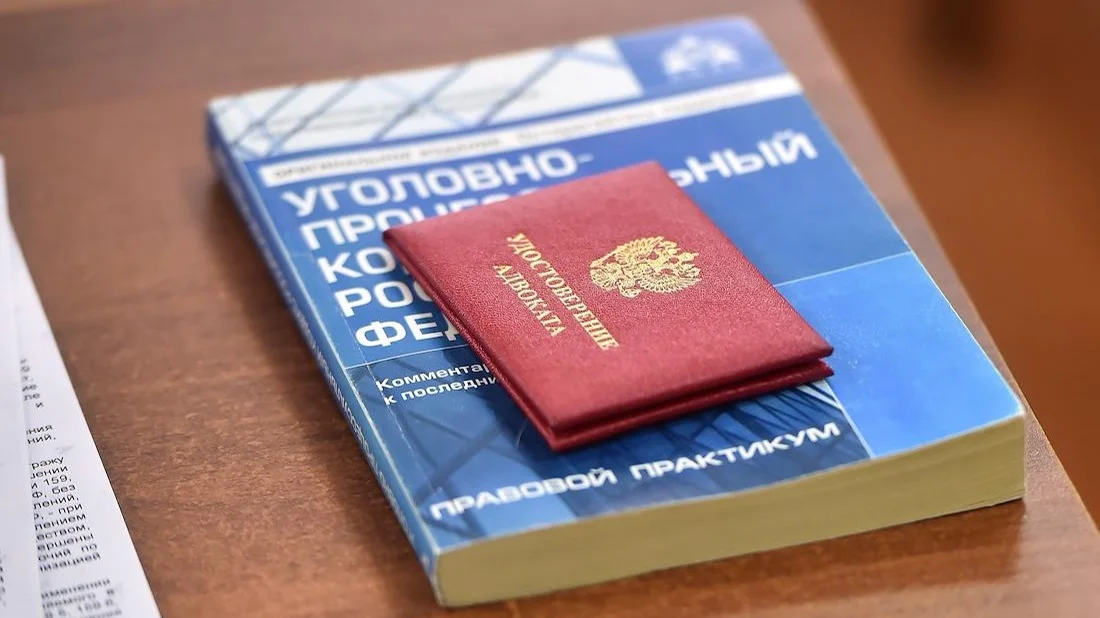
Photo: Vlad Nekrasov / Kommersant
On April 10, the Duma in the third reading finally adopted amendments to the law “On advocacy and advocacy in the Russian Federation” dated 05.31.2002 No. 63-FZ. This is far from the first changes in it - the process of compression of shagren skin and guarantees of lawyers has been developing for the past twenty years, which, of course, has been reflected on their clients and clients.
In the first reading, the adopted amendments were approved on April 12 last year - such a pace of consideration for the current Duma, an ambulance to tighten the nuts, is by no means characteristic. The Ministry of Justice, who initiated this law, was opposed by a very qualified lobby - lawyers in the Duma, and even more in other structures, without the approval of which no law can be adopted, have to prove to colleagues that they are not for nothing to eat their bread with oil.
The Ministry of Justice even pretended that the amendments would provide lawyers with some bonuses. True, they look funny: for example, the right to pass on a lawyer’s certificate and prosecution authorities is fixed. But you can go to court on the passport,
But now it will be even more difficult to penetrate the police with the order: police institutions are not indicated in the amendments, not to mention the FSIN institutions.
Part of the most odious proposals and additions to the law as a result of discussions - most of the Culuar - managed to recapture. So, the amendment was not entered into the law, which proposed granting the right to terminate the status of a lawyer through the head of the relevant regional chamber to the court. So the blooming Duma lawyers, whom everyone knows, can report: "It could be worse ..."
But not in the law as such a matter is, but how and what practices will take shape. After all, it is not practices that follow from the law and follow it, and the Duma catch up with those practices that establish the so -called law enforcement agencies with a clear order. Of these, the main and comprehensive is an accusatory slope. According to the “bias” of practice, they roll further, their mainstream - deprivation or restriction of the right to defense, and then the insecurity of a citizen before the “organs” spills on the sleeves and streams of individual receptions, and the adopted innovations can clearly see some of them.
The lawyers interviewed by us see the greatest danger on the EGR - provided for by the amendments to the Unified State Information Resource on Lawyers. The register will be maintained by the Ministry of Justice, he will also determine the list of information that will be placed in the public domain. The lawyer status, which allows protection in criminal proceedings, will now be valid not from the moment of admission to the lawyer’s chamber after passing the exam, but only from the moment the applicant is included in the register of the Ministry of Justice, and such a certificate will be issued for a period of 15 years (well, not five!).
The need for the EGR is explained by the concern for the interests of those who, understanding this little in this, need qualified legal assistance. In fact, the register will help to cut off the scammers from the advocacy, who still often jumped from one territorial chamber to another. However, information will be available to procedural opponents, and, first of all, the Ministry of Justice and the “security forces” itself. Further - practices in which the advantages are received by the one who controls the monopoly for lawyer services.
It is even theoretically impossible to circumvent this monopoly: the lawyer is endowed with a nearby prerogative that only the state can delegate to him, for example, this is the right to a lawyer request, to which state officials are obliged to answer. But this is a theory, but there is practice - you can answer the request so that there will be no sense from it.
According to the updated law, travel abroad for a period of more than a year will become the basis for depriving the lawyer status, and the lawyer chambers will not be able to evade the consideration of the relevant appeals of the justice bodies.
This threatens with deprivation of the status, for example, Karinne Moskalenko, who created and created for thirty years until the Russian Federation has left the Council of Europe, the mechanism for monitoring the court decisions of Russian courts by the ECHR. Ivan Pavlov, who was forced to leave the country, will lose the status of the “Foreign Agent” after the excitement against him about the disclosure of the data of the preliminary investigation in the case of Ivan Safronov-the Office of the Justice of St. Petersburg has still managed to achieve only the suspension of its status. This is not to mention the “Inoage” by Ilya Novikov, who is not only deprived of the title of lawyer, but also put on the wanted list under the article on state treason.
There are already many “runaways”, although on the sidelines the same lobbyists will object to colleagues: “So what?” In Strasbourg or at the UN, no one will deprive Moskalenko, but on the contrary, they will listen even more. Yes, and no one can forbid the other left to advise customers and colleagues remotely - here it is not a formal status, but qualifications.
However, the exclusion of the “list of these and other fighters”, such as Andrei Ragulin, who wrote a whole epic book about the degradation of the Russian advocacy, will even weaken that wing within the lawyer community, which still understands justice as the arena of the struggle for human rights and freedom-to orphan the rights with you, potential clients. They will still be able to work behind the scenes of ships, but no vote at the assembly of the workshop.
Today, “self-governing” advocacy is a very colorful conglomerate of very different motivated lawyers-they are only called the same, which can confuse the uninitiated. Three main subspecies of carriers of lawyer certificates can be distinguished.
A significant, and in the regions, perhaps, the main part of the lawyer community adjoins the same “law enforcement agencies”: these are resigned, and not always quite voluntarily, former prosecutors and investigators. Among them, of course, there are also lawyers who work, first of all, on the client, but most feed at the expense of the assignment and prefer not to quarrel with former colleagues. In the best case, such a lawyer at least meets with the client in places of imprisonment - this is also very important, but this does not affect the sentence.
There are lawyers who consult large and medium -sized businesses and work mainly in arbitration courts - but this is a special article, and adopted amendments, although they can affect the tangent, are not for them not at them.
Finally, there is a group of human rights work horses, but there are less and less such people today: the clientele that falls under the repressive press is most often solidify, there is no Russian grant support, it is risky to use the “foreign agents” to the “foreign agents” so far, it seems that de jure is not prohibited from engaging in advocacy, but there may be a lot of difficulties, and this can be poorly reflected in the fate of the clients.
Finally, there is another category, intersecting with the three already named - these are functionaries from the advocacy, its frontmen, which create an imposing portrait of a lawyer for society and “solve issues” in those circles in which they can only be solved.
The FZ-63 dated 05/31/2002 was a good law, which absorbed those ideas that were born during a period of short-lived of adversity in the courts in the nineties. It was logical that the compilers and lobbyists of this law headed the federal (FPA) and the main regional lawyer chambers. But the times began to change, the accusatory slope - to intensify, the competitiveness from the courts gradually left, the pressure on the lawyers grew ...
And in those circles where the issues are “resolved” about the fate of corporations, if you have “Volkswagen”, and not “Mercedes” of the latest brand, and better “Maybach”, then you are nobody.
Direct bribes are rarely given there - it went, they invite friends to ski in the Alps, play golf or at least just dine in the La Marée restaurant - but serious money is needed for this.
Money is collected, including in the form of contributions from workhorses - after all, we are talking about protecting common interests. But the authority to make decisions gradually began to shift from open conferences to the closed advice of the lawyer chambers, where the functionaries appointed each other to leading posts. Over the past, from the moment of the adoption of the FZ-63 20 years, the contradictions between the human rights wing and functionaries were repented by Dobel. This is poured, inter alia, into financial scandals, about which, if desired, our readers can find information ourselves, but we will not deliberately climb into these squabbles.
Unlike lawyers, "law enforcement agencies" are a united front. The judges, prosecutors, investigators and police, if not uniform values - God knows them there, what they are - then, in any case, they are subordinated to the solution of the same political task. And today it is not so much the struggle against general crime, which is given less attention (the terrorist attack in Crocus is the most striking example) as maintaining the regime.
Functions from the advocacy for all these twenty years tried to save the corporation through compromises. But a compromise with a stronger, especially with a “security forces” - this is always a parable about a bird and her claw.
The result is generally logical. But are there in other workshops-for example, in journalism or in the church of some other trend? And in the personal composition of the same State Duma - another? But degradation specifically the judicial system beats primarily on the bar.
What can a lawyer do, for example, to protect Liliya Chanysheva, who had just added a couple of years from pure vengeance in the case of the “extremist community of Navalny’s headquarters”? Today is nothing. But qualified protection leaves traces and hooks in such matters that will play a role when these cases will be reviewed later. This means that judges and security forces are thinking about the future, since they are trying to limit the rights of protection more and more. We will not forget about him.