
Translated material
The staff will have to change
Law enforcement agencies completely ceased to comply with their purpose, turning into punitive
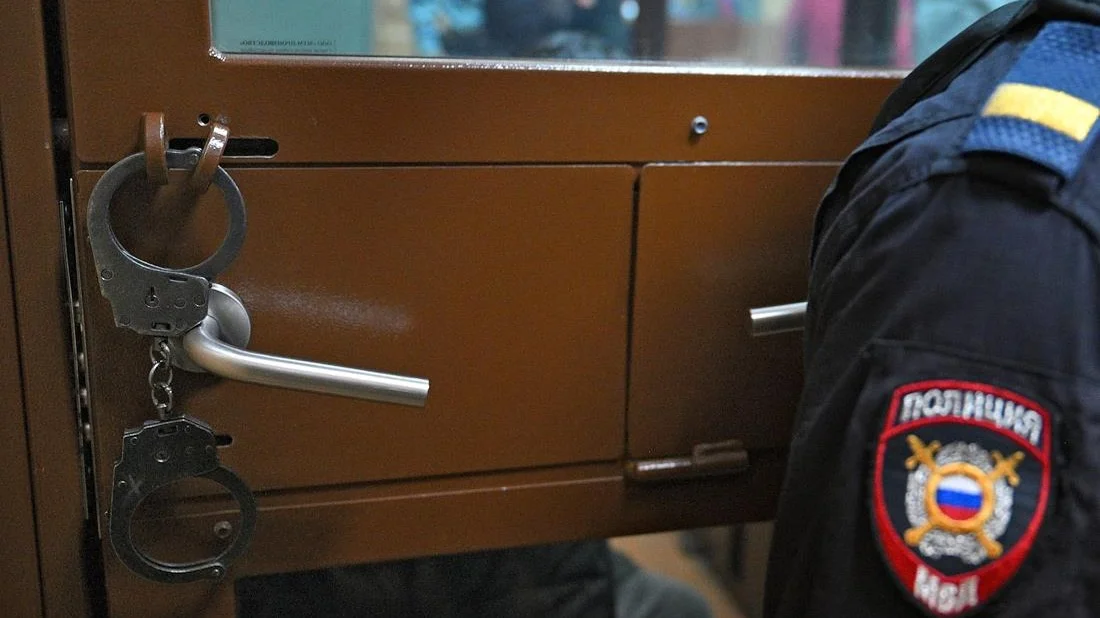
Photo: Evgeny Reasonable / Kommersant
18+. This material (information) was produced, distributed and (or) sent by foreign agent Vishnevsky Boris Lazarevich or concerns the activities of the foreign agent Vishnevsky Boris Lazarevich.
The prosecutor's office appealed a too soft sentence to the driver who hit the pedestrian crossing of the poet Leo Rubinstein (the court gave him a year and eight months conditionally).
The exception when you want to agree with the requirement to tighten the sentence - although you can’t return Lev Semenovich anymore.
An exception - because for other cases the prosecutor's office requires tightening the sentences for those who are not guilty of anyone's death. Not convicted of any violence and did not harm anyone. And he is persecuted only for disagreement with the state and its policy.
The conditional term for the “justification of terrorism” for the sociologist Boris Kagarlitsky* after appeal by the prosecutor turned into real.
The same thing happened with a conditional term for the "discrediting of the armed forces" for human rights activist Oleg Orlov*.
The term of imprisonment for “participation in the extremist community” for the policy of Lilia Chanysheva, after appeal by the prosecutor, increased by two years.
There is an earlier example - and much more tightening: this is the case of the historian Yuri Dmitriev, who explores Stalin’s crimes, the term of imprisonment for him first increased to 13, and then to 15 (!) Years.
All these decisions were made with neglect of any attempts by the accused to call to the norms of the law, with the refusal to hear and take into account the arguments of the defense and arguments of the accused, but with full confidence in the arguments of the prosecution.
And with the complete unity of the investigation, the prosecutor's office and the court, who believe that they ensure the interests of the state.
Expensive - and in no way to correspond to the severity of the “deed” - the deadlines have been characterized recently for many political affairs, the defendants of which were not killed in the same way, they were not raped, not beaten, and no one was harmful to anyone.
This also applies to the artist Sasha Skochilenko, who received six years in prison for the replacement of four price tags in the store.
And the politics of Alexei Gorinov, who received seven years in prison for his speech at the Council of Municipal Deputies.
And the journalist Maria Ponomarenko, who received six years in prison for posts on a social network.
And the architect and political activist Olga Smirnova, who for her posts on the social network received a similar period of six years in prison.
And the “Yablonnik” Mikhail Afanasyev, who received five and a half years in prison for his journalistic publications (this was the first sentence of “fakes about the army” under Article 207.3 of the Criminal Code of the Russian Federation).
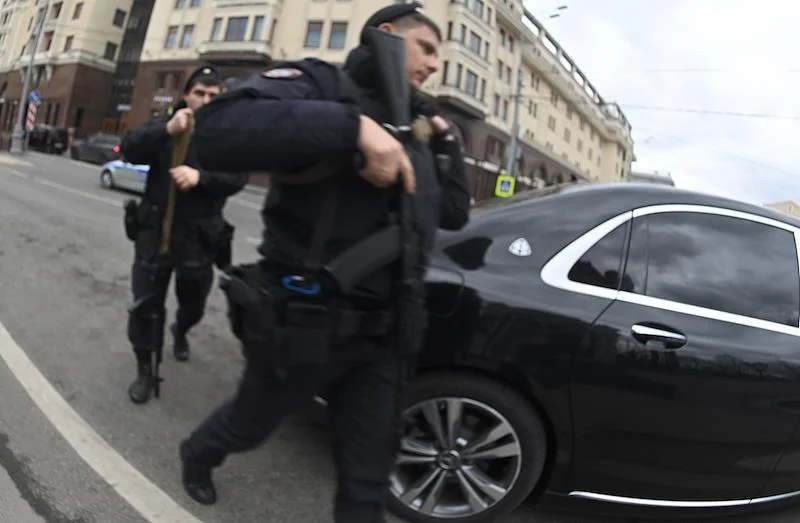
And the politics of Vladimir Kara-Murza*, who received 25 years in prison for his critical in relation to the Russian authorities and its policy.
The indicated terms are quite comparable to those who receive serious crimes against the personality (including those who were then pardoned by the president in connection with participation in his) - with the obvious incomparability of the severity of the condemned logic from the point of view of ordinary logic.
Ordinary - but not the logic of law enforcement agencies requiring the same punishment for murder and a post on the social network, and not the logic of the courts, these punishments establish.
Both others know well (and see in practice) that excessive severity in political affairs, if officially and is not welcome, is certainly not punished.
Never and nobody (in any case, this is not known to me) of the prosecutors was not punished for an excessively severe demand for imprisonment or the requirement to tighten the sentence. And never and none of the judges were punished for satisfying such requirements.
That is why we see in the courts very similar, if not in appearance, then by manners (often young) characters in blue prosecutorial uniforms, which without the slightest fluctuations require many years of imprisonment for expressing an opinion that is ordered to be considered the only true. Or equally, they are equally demanded for months to keep in the pre -trial detention center those who cannot exert any pressure on long -questioned witnesses and cannot interfere with the investigation. At the same time, no mercy knocks on their hearts (however, looking at the “political” processes, in the very presence of individual prosecutors of this organ you begin to doubt) ...
In the same way, precisely because we see very similar, if not in appearance, then by the manners of the characters in the judges of the judges who, without the slightest hesitation, send people for these “sins” to serve the indicated long -term terms. Without the slightest signs of mercy knocking in their hearts ...
What we observe in “political” affairs is not called justice.
It is called political repression - the persecution of citizens for their political position and disagreement with the state (which is still their constitutional law, but is punishable).
This is implemented with the help of government structures, which in 2017 I called the “Ministry of Repression” - uniting the police, the Investigative Committee, the prosecutor's office and the court, consistently solving the common task: to punish the “non -promotional” ones. And guarding are not law, but a political regime.
One of the most difficult tasks of the future - when inevitable changes come - will be the cardinal reform of all these organs.
Perhaps - with a large -scale replacement of staff.