
Translated material
Katyn Conspirology on the march
The FSB showed the "Documents" about the execution of the Poles not by the NKVD employees, but the Nazis. Why are these “data” worth nothing and why Russia to deny the guilt of the USSR? Dismanticization of "New-Europe"
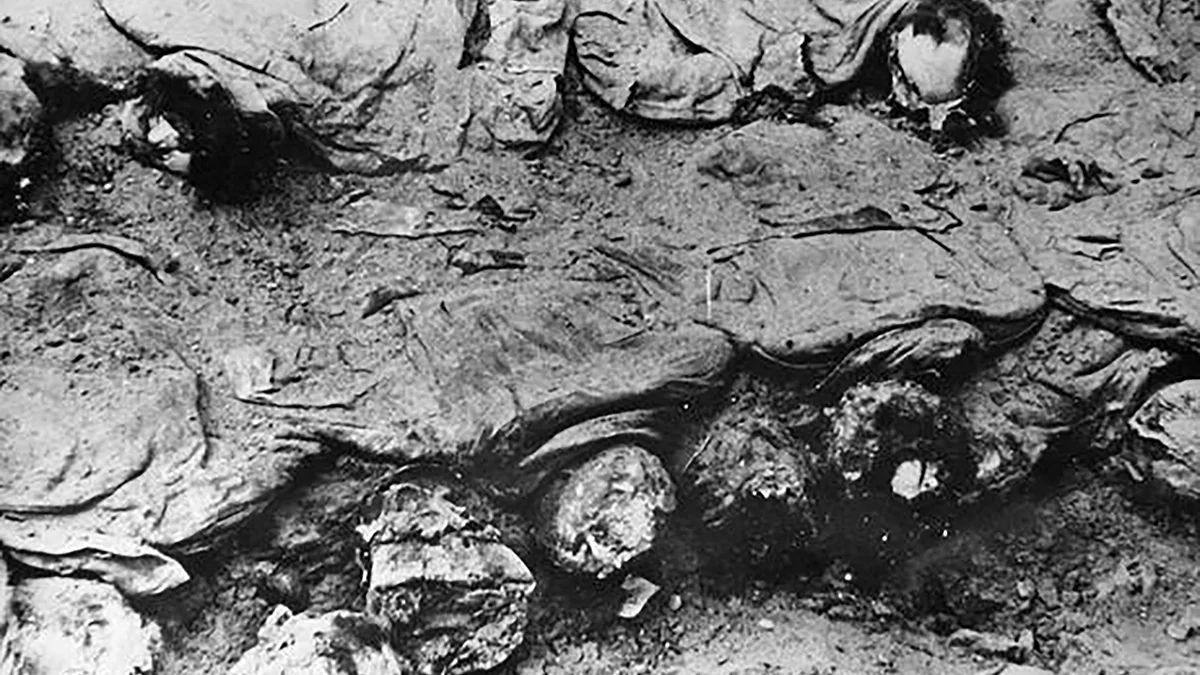
Exhumation of the Katyn grave. Photo: public treasure / wikipedia
On April 11, the FSB published “New Documents”, supposedly indicating that prisoners of war of the Poles in Smolensk Katyn were shot by the Nazis, and not the NKVD bodies. These “papers” appeared exactly by April 13, when the day of memory of the victims of the Katyn crime is celebrated in Poland. For decades, the Soviet authorities have been lying about this crime, shifting responsibility to the Nazis. The truth was recognized only in perestroika. Today in historical science there are no discussions on this subject, but this does not prevent the Russian state from officially supporting the conspiracy the “neglect”.
Especially for Novaya Gazeta Europe, historian Konstantin Pakhalyuk tells why the publication of the FSB is insolvent, and the wines of the USSR in the Katyn execution are undeniable (and scientifically confirmed), and why Russia continues to deny it.
Historical Certificate of Katyn
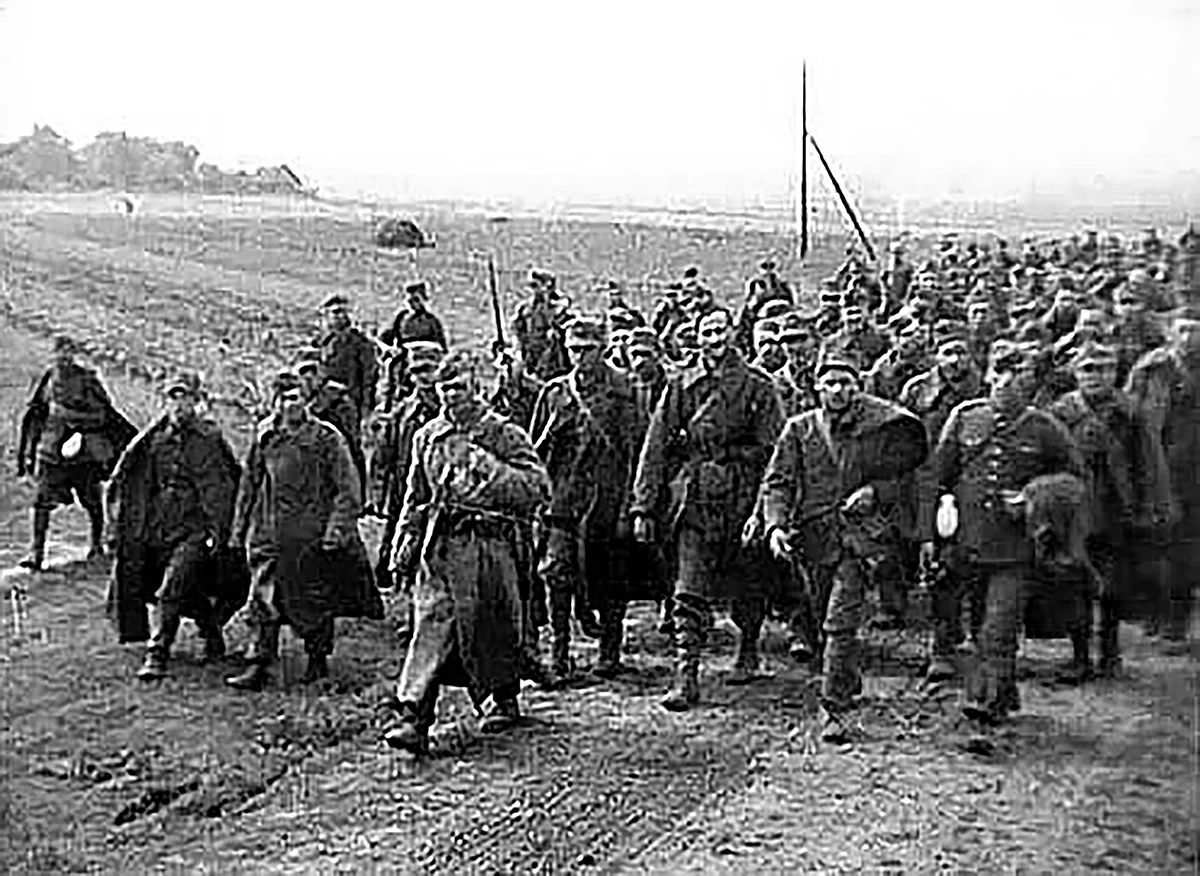
In 1939, after Nazi Germany, the Soviet Union introduced troops to Poland and annexed its eastern regions under the guise of "the return of Western Belarus and Western Ukraine." Most of these territories 25 years before was part of the Russian Empire, but others, such as Lviv, were never. Several hundred thousand Polish soldiers fell into Soviet captivity.
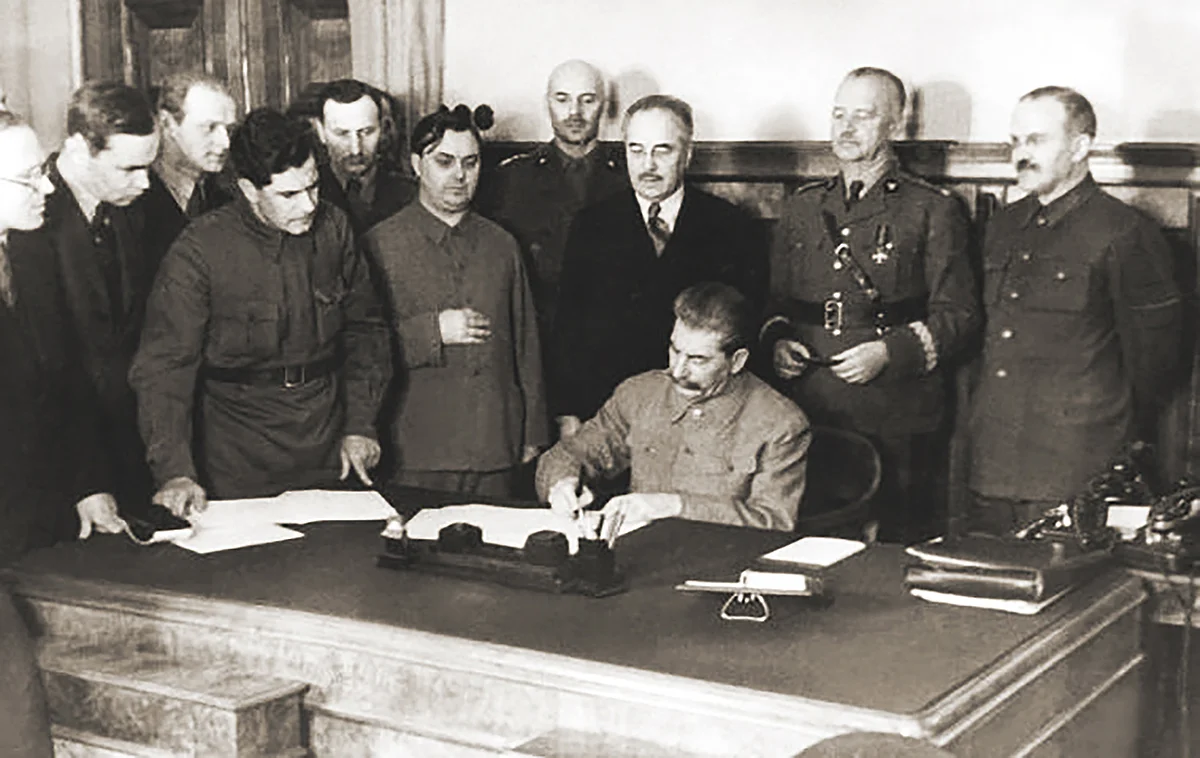
The majority-the correct "worker-peasant" origin-was dismissed home. However, in the camps near Smolensk (near the villages of Katyn and Kozi Gora), Tver (copper), as well as in a number of prisons, more than 22 thousand people remained - officers, police officers and other people who, according to the NKVD, were the most persistent Polish patriots. In early March 1940, at the end of the war with Finland, they "put into expense." Directly in Katyn, 4.4 thousand people were destroyed, and in the same place, where in the 1930s the executions of the Soviet repressed were taking place. Today, Katyn has become the name of a household name (metonymy) for all murders of Polish prisoners of war in the USSR.
In April 1943, the Nazis discovered burials near Katyn, conducted investigations and published the results. The meaning of these actions was clear: to split allies on the Polish question. It didn't work out. Six months later, the Germans were knocked out from these territories, and the Soviet Union organized the work of the commission of Academician Burdenko, who shifted the guilt of the Nazis. Already in the Nuremberg process in 1946, a hearing about Polish officers in Katyn was held with the filing of the Soviet side for several days, but this plot did not enter the verdict for obvious reasons: the Soviet side could not prove anything.
Of course, Katyn is one of the pages of Stalinist crimes. But this, we emphasize, is a war crime committed by the Soviet Union during the Second World War.
Moreover, this is a war crime, alas, very similar to crimes of Nazi Germany. According to racial ideas of the Nazis, Poland was an artificial nation created by a political and cultural elite. Therefore, during the Tannenberg operation, the Nazis began the liquidation of the latter, killing more than 60 thousand people. In the Stalinist optics, the victims of the Poles were “bourgeois nationalists”, in the Nazi-the creators of the nation. The ethnic purges of 1940-1941, during which at least 300 thousand Poles were evicted to the internal regions of the USSR, were also similar to the Nazi policy (which were brought to the Governor-General’s general, and individual regions were attached directly to Germany, driving away the “unnecessary” population).
I
What do FSB documents say about? (spoiler - about nothing)
The FSB "published" documents on Katyn with aplomb: they say, secret materials first saw the light. There is nothing unique in these materials, because, judging by the content and time of creation, all of them relate to the Burdenko commission and the work accompanied by her. And the goal there is clear - to prove the guilt of the Nazis.
The language does not turn to call it a “publication”. Before us are selective scans of certain documents, while historians study exclusively complexes of sources. Where are the archival numbers? From what cases were the documents taken, what lay next to them? The publishers are silent. When and how specific complexes of sources were created, by what principle they got into the archive - unanswered to these questions the value of scans on the Internet is nuser. The scientific approach requires the publisher to insert sources into the context of already known sources and historiography. Only one who refuses to understand the meaning of the work of the historian and seeks to devalue it can be waving these documents from the FSB.
However, let's see what kind of documents we presented to us.
According to TASS, the documents were declassified by the FSB in the Smolensk region and transferred to the state archive of the latest history of the Smolensk region, whose website is silent about this. Journalists took up the publication, which is a gross violation of scientific ethics.
In the first article in TASS of April 11, journalists admit that we are talking about protocols of prisoners of war interrogations, in a different way of allegedly involved in the organization of a German investigation. Here we can recall how scrupulously the Soviet investigative bodies belonged to Katyn: either they falsified the documents of the German burgomaster of Smolensk Menshagin, then sought out the connections between Katyn and the situation in the death camps of the Maidanek and Treblinka.
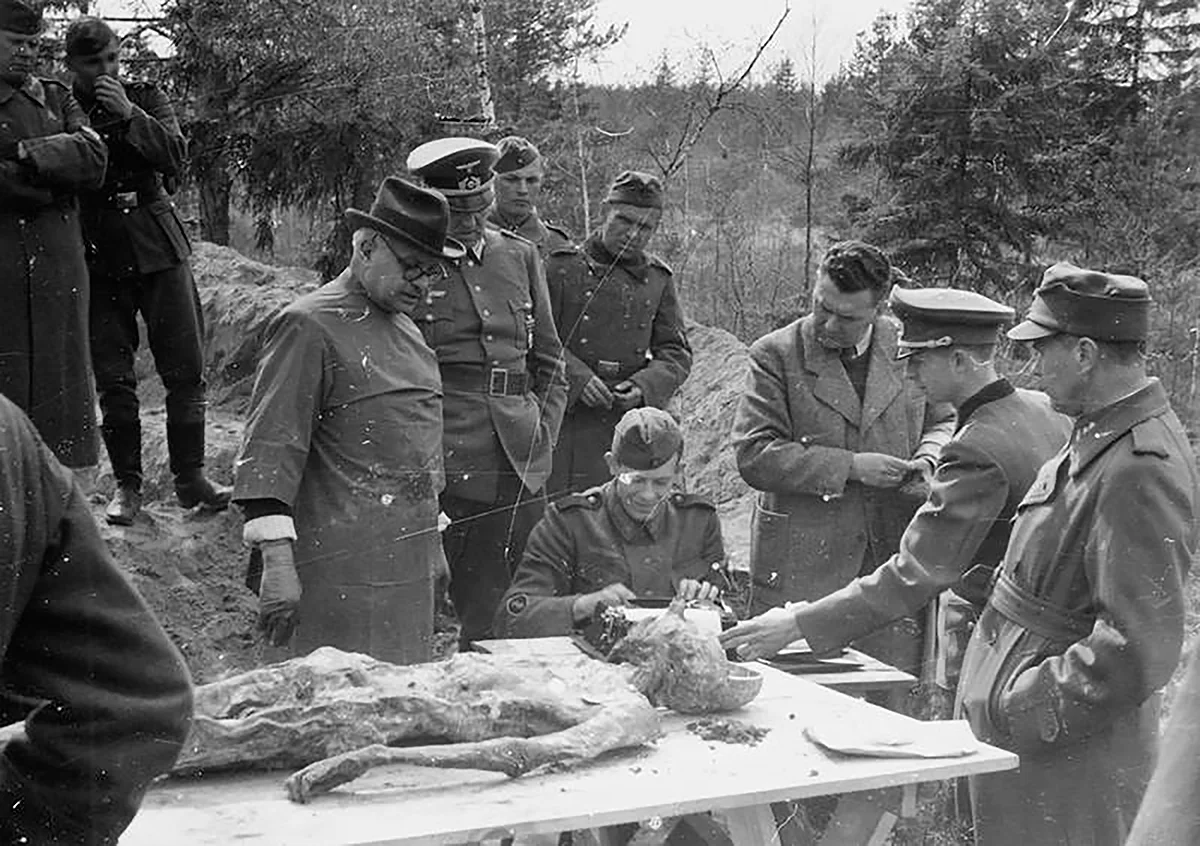
Now it is required to specifically prove at least two things: why did the prisoners of war, dependent on the NKVD did not try to please Soviet investigators, but told the truth, and why should we trust these documents from the Burdenko commission?
What kind of scans are represented in this first article by TASS? A certificate of capture of collaborators not related to the case; Scans of the first pages of interrogations of the Poles of Boleslav Smectals and E. Potkansky, the first page of a certain certificate-output from the testimony of Potkansky, as well as the first page of special community (it is not clear who, where and when compiled), from which is revealed that Smersh was very interested in Professor Orshos, who was allegedly involved in the German investigation. In a word, nothing on the merits of the issue.
The journalist TASS quotes the testimony of Potkansky in more detail, which served with the Germans in the working battalion in the Smolensk region in the summer of 1943. Of these, it is only that the Germans deliberately showed the graves of compatriots, and the witness drew attention to the allegedly well-preserved personal belongings. That is, he was not a participant in potential German executions or investigations. Another prisoner of war Kovalsky testifies that "by most corpses of the executed [it was] it is clear that these are very recent victims." That is, it seemed to a person that the corpses look wrong.
On the morning of April 12, TASS published the following news , which talked about the fact that the Nazis in April 1943 accompanied the opening of the Katyn graves with a propaganda campaign. Right, this is a well -known fact even for Wikipedia.
In the accompanying scan of documents, it is written that prisoners of war of the Germans allegedly dug up the graves of German soldiers and sent them to the Katinsky forest in order to pass "for non -existent corpses of Polish officers."
That is, unexpectedly, either hearing or one of the first versions worked out by Soviet investigators and discarded due to obvious absurdity fell into the publication.
After a couple of hours, TASS illuminated another document: the testimonies of the prisoner of war chief-clinter Walter Eber, who allegedly transported prisoners of Polish officers from the camp near Minsk to the forest near Smolensk, where they were shot and shot. Before us is a retelling and not even a translation of testimony. Moreover, the text of the document reports that Eber came to the conclusion that “Polish officers transported from Minsk” (in January 1942) and “killed Polish officers in the Katyn forest” (there he visited in May 1943) are the same people “from the conversation of German soldiers”. What are these German soldiers who were in one place for a year and a half? What kind of Polish prisoners of war were near Minsk? What specifically Eber said and what did the translators/investigators add to his words?
The journalist also quotes an unpublished scan: “During the inspection of corpses [in the Katyn forest], I saw such Polish soldiers whom we drove.” Amazing memory!
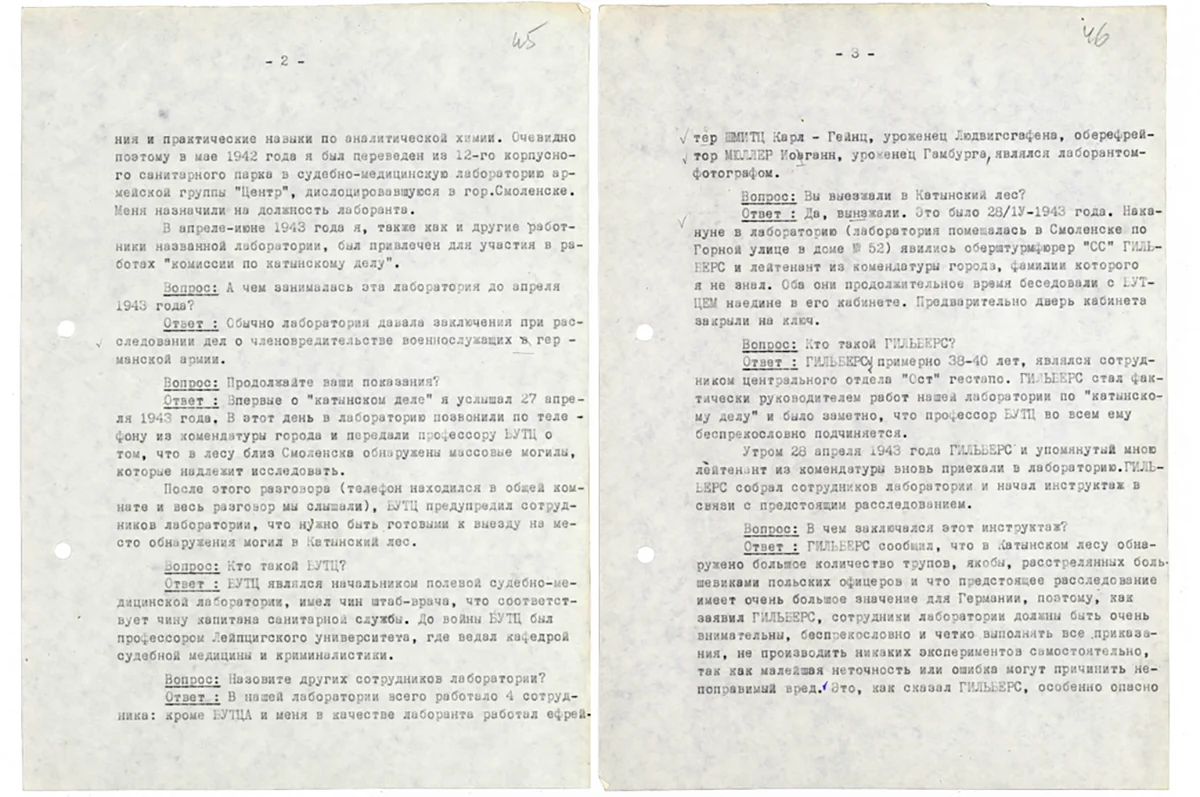
In the afternoon, TASS “published” the testimony of the prisoner of war chief-clinter Ludwig Schneider, or rather, several pages of them, leaving only that he studied at the chemical faculty in his youth, and in 1943 participated in the work of the German commission, testifying that not all international participants agreed with Nazi conclusions. Actually, it is strange to expect that the Nazis really comprehensively considered all the details, and representatives of the occupied countries wanted to help them. But what does this have to do with the essence of the issue? Where are the documents proving that the Nazis shot, and the prisoners of the Poles calmly lived here until the summer of 1941?
On the morning of April 13, TASS posted four more pages of Schneider’s testimony, focusing on the fact that the work of German investigators was accompanied by Gestapo officers (someone could have suggested a different development of events?). It is noteworthy that on these pages the prisoner of war spoke about some details of the commission, as well as the requirement to behave honestly. The published fragments, in fact, do not say anything about how the Germans falsified the data - only about things that seemed strange to him.
II
Correctly comment!
“Secret archives of the special services storing historical truth” are only one part of the propaganda metaphysics of the Russian authorities. The second is a correctly selected interpreter from a scientific environment. They suddenly acted by the Scientific Director of the Russian Military Historical Society (RVIO), Doctor of Historical Sciences Mikhail Softkov. TASS divided his comment into three parts.
At first, Tom, tried to equalize Katyn and Buch: they say, in both cases it was an enemy “provocation” against Russia. Here, the Scientific Director literally repeated the words of the Katyn “negative” RVIO, who said similar things in April 2023 for RIA Novosti.
A few hours later, another comment appeared, consisting of three logical parts.
Did the Germans deliberately used the topic of Katyni against the USSR? But no one had ever argued with this. True - the best propaganda.
Then soft remembered that Stalin had no reason to kill the Poles in the spring of 1940. And this, we note, is also a long -debting question in the science of the internal logic of the crime. The content of these debates, the doctor of sciences, apparently is not known. That is, two of the three theses are not related to business at all, but they create a semantic entourage desired to the manipulator.
And after that, for some reason, softly suggested that the Germans could shoot the Poles who worked on the construction of the Moscow-Minsk highway. But this argument has long been disassembled : in the surviving documents of Vyazemla, there is no data that in the spring of 1940, when “Katyn was disbanded”, there was a kind of prisoner. In the spring of 1941, the builders of these highways were generally massively transferred to strengthening military facilities, and after the German invasion in the summer of 1941, almost all the remaining prisoners were dissolved.
On the evening of April 12, TASS prepared the third comment of soft, where he spoke out unambiguously (according to the retelling of the journalist): “The version that Polish soldiers and officers were shot in 1940 in the Katyn forest by decision of the Soviet authorities cannot be unequivocally adopted in the Russian historical community.” True, subsequent “arguments” are not at all related to the documents published by the FSB. Probably, the scientific director of RVIO did not even read them.
Myagkov claims: “The Poles were killed from German pistols. And there are no documents that we allegedly bought these pistols somewhere in Germany. ” But the documents just exist : German pistols were even service in the NKVD, and in 1939 the Soviet side seized a lot of Polish trophy weapons, including German production.
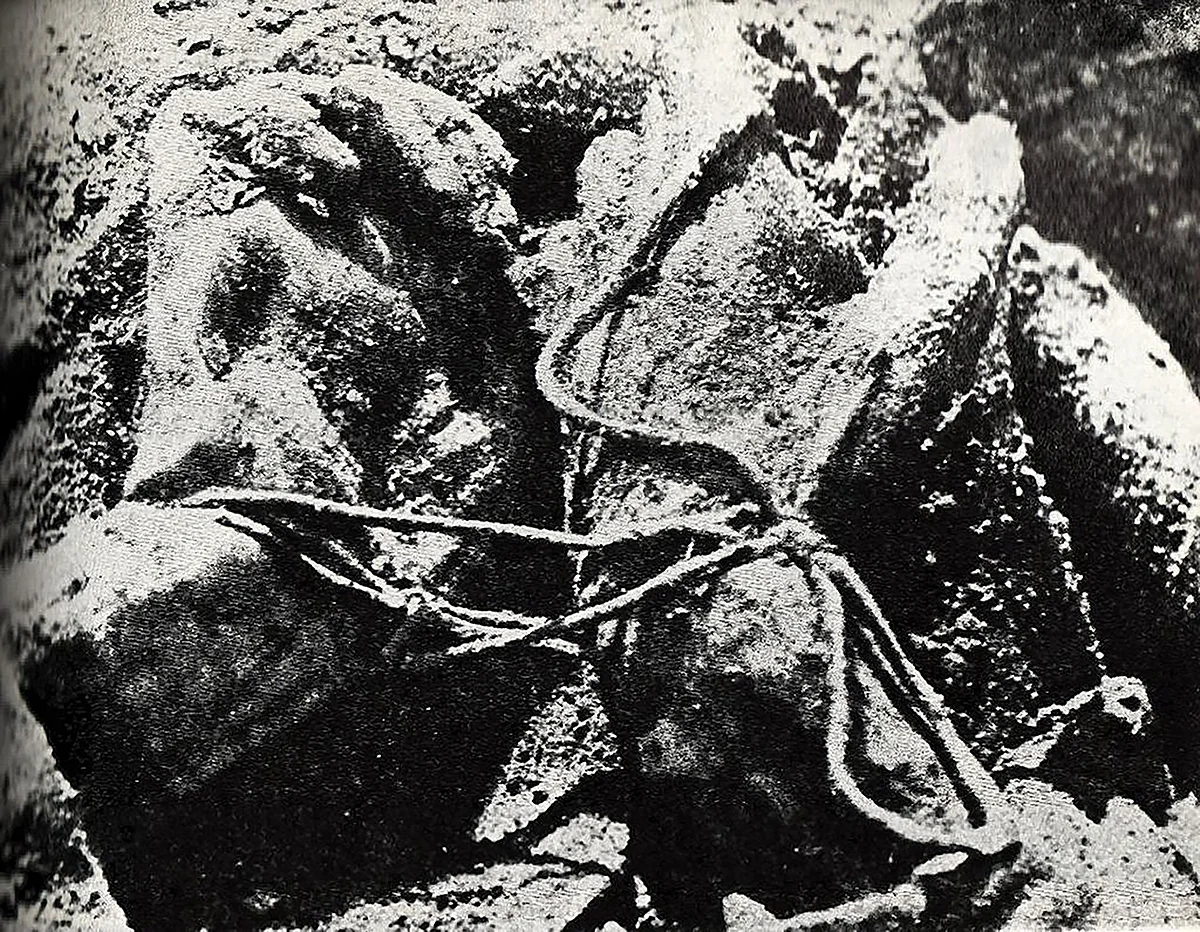
Then, soft, remembered another thesis of the negators: “The hands of the shot Polish officers were connected by a paper twine, which was not produced in the USSR and was of foreign origin. Data on this was presented <...> by the commission of Nikolai Burdenko. " But the Burdenko commission did not have such an argument, and the “negatics” reproduced one of the accompanying documents: it seemed to one of the participants that the executed were connected by the German twine, but even the Soviet investigators did not agree with this. Also, Mostkov recalled the allegedly atypical execution and too good condition of the bodies, which also repeatedly versed in special publications, including under the auspices of the RVIO. Unfortunately, the scientific director was weakly familiar with the scientific products of his own organization.
And what documents confirm the guilt of the USSR?
The supporters of the “prostalin” version have not a single publication, where the history of the Polish prisoners of war of 1939-1941 were sequentially and documented consistently and documented. So in essence and there is nothing to argue with. While a real story is based on a solid foundation of different complex sources.
Firstly, the complexes of documents from the Russian State Military Archive and other storage facilities that allow you to trace the fate of these prisoners of war until the spring of 1940. And then "people are lost."
Secondly, the decision of the Politburo of March 5, 1940 on the execution of prisoners of war, as well as a note by the chairman of the KGB Shelepin 1959, where he summarized the information on the issue of information on the issue of information, was preserved and published. They should add the memories of employees of the general department of the CPSU Central Committee. Actually, this allows you to trace how, at the level of the leadership of the USSR, after the war, they worked with the theme of Katyn.
Thirdly, there areindications of individual participants in executions, of which, of course, the memoirs of D. Tokarev, the former chief of the Kalinin UNKVD, are distinguished. Note that the exiled relatives of the Polish prisoners of war ceased to receive information about them just from 1940. In the 1990s, both Katyn and Mednaya took place large-scale excavations, which also added a lot of new information regarding these crimes of the NKVD.
The Katyn "denial" is based only on speculation, torn documents or frank lies. At one time, Enthusiast Sergei Romanov on the website of Katyn Materials took on the work of systematizing the work of academic historians, as well as based on the existing source base to demonstrate the failure of all the arguments of the “negative”. The brief version was generalized by him in a separate article and, by the way, published under the auspices of the RVIO.
III
A brief history of denial
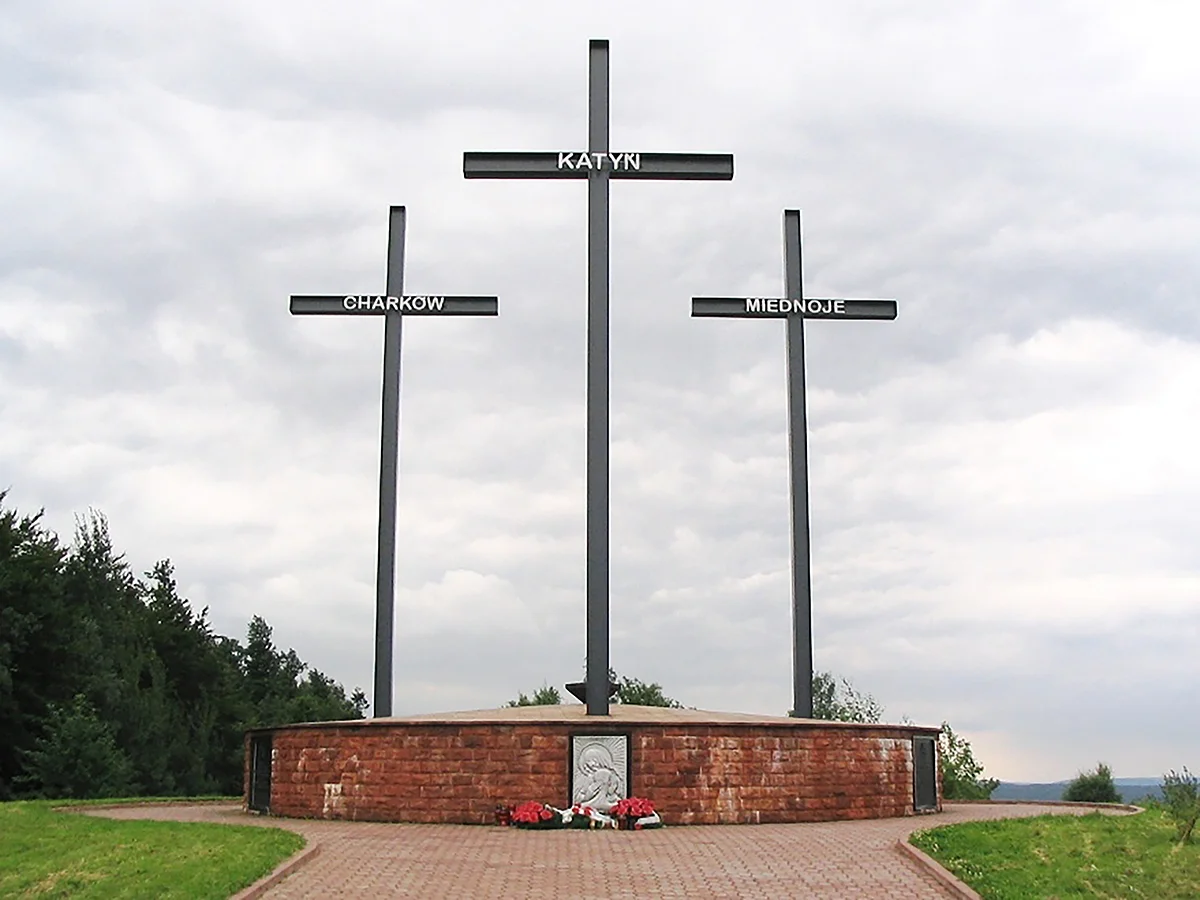
In 1990, the Soviet Union officially recognized the responsibility for the Katynsky execution. In the early 2000s, two state memorials were created in Katyn and Mednaya. In 2010, the State Duma accepted a statement where she also recognized the responsibility of the Soviet side. It would seem that the question should be closed.
Supporters of the “prostalin” version also existed, but they were more likely a marginal phenomenon and had limited support except perhaps in the Communist Party in the person of the notorious deputy Viktor Ilyukhin.
The situation began to change in the 2010s as the state policy of memory and developing a more stringent and “patriotic” approach to history becomes.
In 2012, memorials in Katyn and Medny subordinated to the State Central Museum of Modern History, and soon the political appointment of Irina Velikanova became its director.
Together with the chief, Minister of Culture Vladimir Medinsky, and RVIO by 2018, she converted the Katynsky memorial: a monument was added to the Soviet victims of the Stalinist repressions (which is right), a bench exposition about the tragic fate of the Soviet prisoners of war in Polish captivity was located near the tag-and-tank (which is not related to the memorial), and Pavilion with a pavilion appeared. The exhibition of good Polish-Soviet relations in the 20th century (there is nothing criminal in the content, but the Katynsky memorial has no place for such an exposition). The main message is simple: Katyn is only an insignificant episode in Russian-Polish history, but in general the Poles themselves are to blame for “us”.
С середины 2010-х годов началась интеграция «отрицателей» Катыни. Поначалу речь шла об отдельных мероприятиях в Медном и Смоленске. Участники — патриотическая общественность (например, НОД) и отдельные представители науки. Среди последних выделим докторов исторических наук, которые официальным статусом придают «отрицателям» блеск научности: Олег Назаров из журнала «Историк», Алексей Плотников из МГЛУ, а также Владимир Кикнадзе, в прошлом сотрудник Института военной истории Академии Генштаба, а сегодня замглавреда «Военно-исторического журнала» (издается Минобороны). К ним добавилась и Оксана Корнилова, которая долгое время работала в Катынском музее, была известным специалистом по Вяземлагу, а затем возглавила один из музеев РВИО в Смоленске. В качестве «иностранного специалиста» стал привлекаться американский публицист Гловер Ферр, чью книгу перевели на русский язык.
Уже в 2020 году РВИО взялось патронировать один из круглых столов «отрицателей» в Медном, где участниками были депутат Госдумы Алексей Чепа и Анатолий Вассерман, также депутат с 2021 года. В это же время упомянутые выше три доктора наук стали членами Научного совета РВИО. К продвижению «точки зрения» «отрицателей» стали подключаться и центральные СМИ: телеканал НТВ и « РИА Новости ».
После начала полномасштабной агрессии против Украины в феврале 2022 года некоторые «отрицатели» Катыни призывали к сносу мемориала под Смоленском, поэтому РВИО дало откат по этой теме, заявляя, что мы не воюем с памятниками. Вероятно, эти силы были нужны на другом направлении. Так, в августе 2022 года в Минске прошел круглый стол со звучным названием «Отрицание геноцида советского народа нацистской Германией и панской Польшей как инструмент разрушения самосознания народов Союзного государства». Среди организаторов мы также видим РВИО, а среди участников — Кикнадзе и Корнилову, последняя выступила редактором сборника по итогам мероприятия. В резолюции круглого стола мы, помимо прочего, читаем пассаж: «“Куропаты” — “Катынь” — “Пакт Молотова — Риббентропа” — это элементы целенаправленной деятельности коллективного Запада при поддержке коллаборационистов сегодняшнего дня по разрушению СССР».
Но по мере затягивания войны степень поддержки отрицания Катыни усиливалась. Так, в апреле 2023 и 2024 годов ФСБ публиковала фальсифицированные документы из комиссии Бурденко под видом «архивных открытий».
В «едином учебнике» Мединского — Торкунова для десятого класса тема получила обтекаемый вид: польские военнослужащие в нем называются не жертвами политических репрессий, а просто погребенными здесь; акцент сделан на том, что большинство польских пленных распустили, а некоторых перевели «в тюрьмы и лагеря». Завершается всё это тезисом, близким «отрицателям»: «Документы, опубликованные в начале 1990-х годов, указывают на то, что часть из них была расстреляна органами НКВД» (с. 287). О количестве убитых не говорится. В октябре 2023 года в мемориале в Медном появились бюсты Сталину, Дзержинскому и другим государственным лидерам того времени.
Спустя месяц в Госдуме прозвучала инициатива по отмене заявления 2010 года. В ответ председатель Госдумы Вячеслав Володин поручил создать специальную комиссию во главе с Петром Толстым для изучения этого вопроса. И уже в довесок к этому в апреле 2024 года научный директор РВИО кардинально поменял убеждения, публично поддержав катынских отрицателей.
IV
Катынь и Буча
Так зачем государству нужно отрицать Катынь?
Вероятно, изначально это было увлечением отдельных начальников или публичных политиков, которые пытались вызвать к себе симпатию у сталинистов. Затем, с конца 2010-х годов, — одним из механизмов провокации против либералов из «Мемориала» и поляков. Тема Катыни, безусловно, связана с «советской ностальгией»: в этой извращенной логике признание государственных преступлений является причиной развала СССР.
Однако предлагаем обратить внимание на два параллельных процесса: рост поддержки «катынского отрицания» и становление тезиса «о геноциде советского народа».
Последний стал продвигаться с 2020 года с тем, чтобы сказать россиянам: «Мы были и главными победителями нацизма, и главной жертвой». Под удар прежде всего попала та память о Холокосте (геноциде евреев), которая в течение десятилетий развивалась вокруг этой темы в зарубежной Европе, чтобы люди смогли осмыслить вопросы вины и ответственности граждан за преступления своих правительств, измерить меру сопричастности и молчаливого одобрения. В отличие от памяти о Холокосте в зарубежной Европе, память о сталинских преступлениях никогда не развивалась в России через разговор о преступниках. И тем более — о коллективной моральной ответственности советских граждан за то, что несколько миллионов их же сограждан были репрессированы. Естественно, тема Катыни вызывала особое раздражение: ведь перед своими можно и не извиняться, а вот перед другими, поляками, приходится.
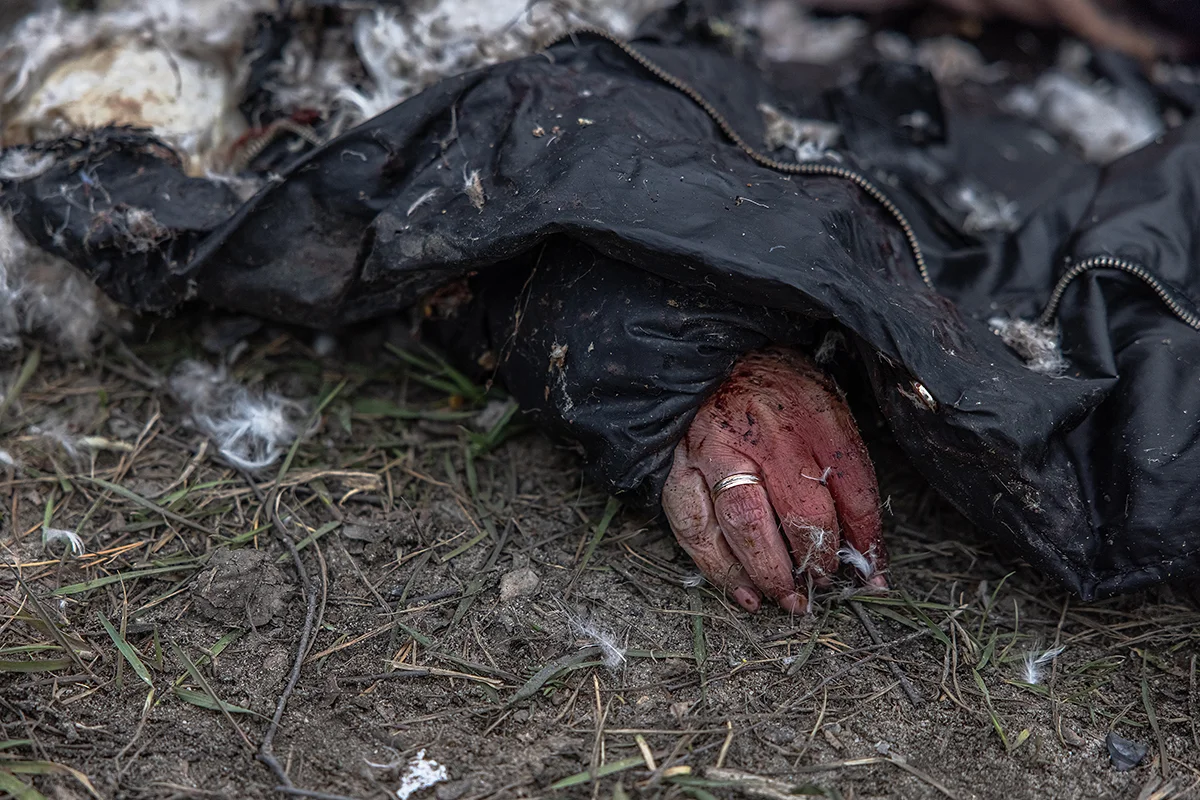
Конечно, все эти игры в историю наносят непоправимый удар российской науке: зачем заниматься добросовестными исследованиями, если завтра придет начальник и расскажет, кто убивал в Катыни или какие геноциды существовали. Эти игры формируют конспирологическое мышление. Но их смысл не просто в борьбе против музеев, монументов и памяти. Задача иная: заставить россиян думать, что в истории — то есть «всегда» — российское государство было право, оно ничего плохого не совершало, а всё остальное — наветы и поклеп. В общем, эту мысль и выразил прямолинейно Мягков, когда сравнивал Катынь и Бучу.