
Translated material
"We are star dust." Interview with an astronomer
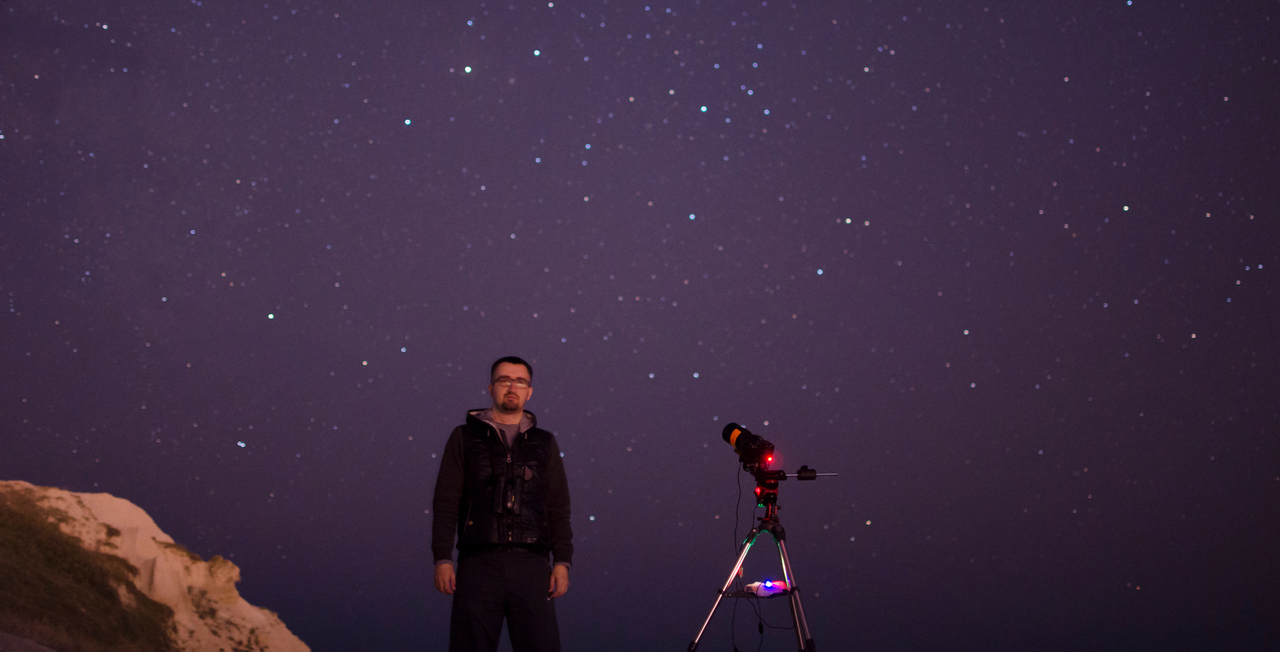
Interviews with anapa astronomer, which shows people cosmos from street telescopes
Briefly
Ruslan Ilnitsky has been engaged in astronomy for more than 30 years. He teaches in schools, lectures, makes amateur shooting of planets, stars and galaxies. In his free time, he goes to the streets of Anapa with a telescope and offers everyone to watch the stars. Ruslan does all this only with one goal - to popularize astronomy in Russia and show as many people as possible, which is closer to space than it seems.Why is astronomy among all sciences so attracted you?
I have been fond of astronomy for more than 30 years, since childhood. As a child, at 5-6 years old, I have already begun to show interest in various sciences. My parents, engineers, could answer any technical question, plus, kept a lot of specialized literature at home - and I read it.
We lived in the village, and there were not many lovers of astronomy, but there was a very beautiful dark sky. And even then I wanted to make a home -made telescope. The first, simple, I gathered somewhere in the age of 6, and then the mirror. Of course, they were not very in quality, but I understood the principle of operation of optics.
At school, I also read out books about the Earth and the Universe, participated in the Olympiads in astronomy - first in the city, then the district, then the regional in Krasnodar. He took the third or fourth place there and a year later he reached the international one.
There I managed to talk with like-minded people, astronomers scientists, visit various observatories and compare them with the state in which our science is in. And, frankly, we had a deplorable condition of the telescopes, many of them were simply abandoned. We have not financed astronomy! Including, therefore, in the end I became a radio engineer by profession, although I learned to the astronomer later. But I carried the love of space through my whole life.
You say that you are conducting " paving observations . " What does this mean and how did you come to this?
Porcelain astronomy is a whole movement of observers, mainly amateur astronomers who take their telescopes, come to crowded places and show everyone various celestial bodies. There are such “sidewalks” free, there are paid ones. I myself, while still a schoolboy, used such - in Anapa was a man who placed telescopes in various crowded places and sold viewing for a symbolic amount. I got a job to work for him: most of the time we [with passers -by] watched the moon, or the planet [of our solar system], and when there were no people, I pointed the telescope on other objects, studied them. In the future, when I began to organize my [paving] observations, I conducted them for free, precisely with the aim of popularization.
I have been doing this for 20 years, and I can say for sure - the level of astronomical literacy among the population is falling. On the one hand, it is growing, due to the fact that various media appeared, the Internet has appeared, the information has become more accessible. On the other hand, the quality of this information has become much worse, many pseudo -scientists appeared. It even comes to the point that people come to me on the street and demand to prove that the earth is round. That is, people begin to doubt it! Moreover, people are aged, with technical education. And this, of course, scares.
Sometimes such people are also quite aggressive, begin to yell on the street that all astronomy is pseudoscience, that it must be prohibited that all these objects cannot be actually observed. Sometimes, when people through the telescope see planets, they literally do not believe in their eyes. They could see this planet in pictures, in books, on the Internet, but when they see it live, it is a huge shock for them.
There was a case when a woman came up and said that this was all a hologram. I ask her: “Do you know what a hologram is?”, She replies: “No.” I’m not saying that everyone needs to teach astronomy, physics, to be educated, but it seems to me to have any basic knowledge in science, because all this is tolerated by children. What generation awaits us? Plane -landmakers?
What other questions are you asking you on paving observations?
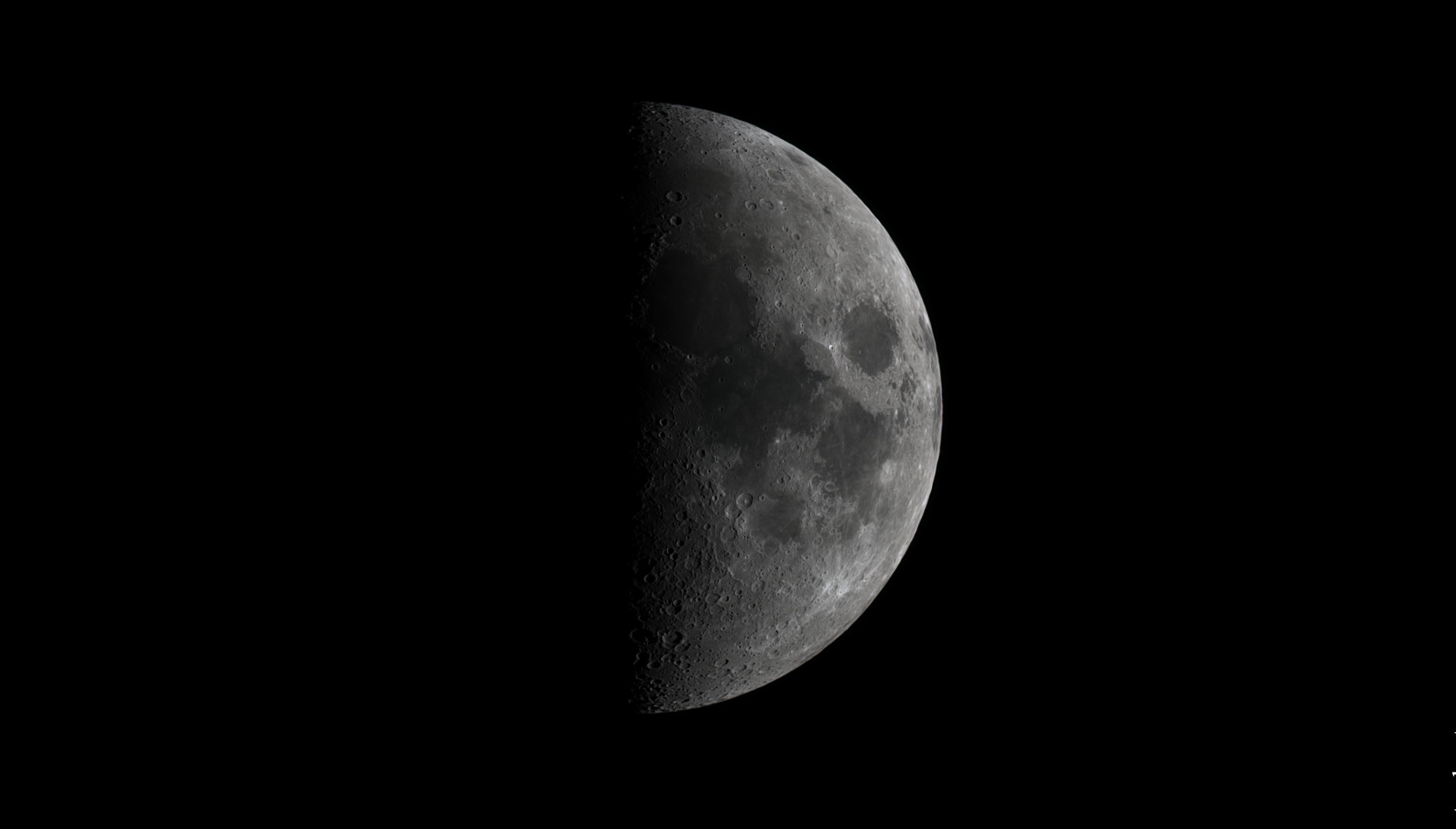
One of the most common questions is why the American flag is not visible on the moon. The second most popular question is whether the Americans were on the moon. Many people doubt. For example, in one of the lectures I even have an explanation why the flag surrounding the Earth is not visible greatly distorting the image in the telescope - I have to explain. They also ask about the phases of the moon, “why the moon is a serpic”, “why round”, and so on. Oddly enough, many people still think that the phase of the moon is changing due to the fact that it is closed by the shadow of the earth, that is, people think that a lunar eclipse is happening every month. But in fact, the moon is different due to the mutual location of the moon, earth and sun, that is, it is differently lit by the sun, and we see it from different sides. They often ask about aliens - plates, green men, all that. They even asked: "Have you seen angels?" Of course, this question was also shocked. Communicating this is how you find out on the street what is the real level of astronomical knowledge in modern people.
And how do you make observations, just go out and put a telescope or somehow announce, collect the group?
I try to spend them spontaneously, often the weather is not very good for observation. And if you officially announce everything everywhere, people will come, but there is no sky, then what to do? Therefore, if I have time, mood and desire, I take a telescope, I go out in a crowded place and show people the moon and planet. Of course, the administration, the police have questions, those who “roof” these places. In Anapa, every square meter is someone's business. If you are standing a telescope, then you probably cut grandmas - questions immediately arise. In this case, I made a special sign that viewing is free. The administration also likes to see the telescop, police officers. All people are interested, even those who at first glance are official, serious.
If paving observations are free, then how do you earn?
Astronomy is generally difficult to monetize. There are several options - either you are a professional astronomer that works in the observatory, or you open your business, for example, on the sale of telescopes. I also have such an experience, however, sad - Covid began, the Chinese had all the factories, and there was nothing to sell. Then I realized that I had to completely go into teaching. This is always in demand, and there are not so many specialists who would have great observant experience and the ability to work with novice lovers.
In addition, I test various astronomical equipment. I am sent to me samples of telescopes, binoculars, eyepieces, filters, and I check them, I keep feedback with manufacturers. It is very successful to work with the Chinese, they do everything very quickly and quickly correct everything. My technical meticulousness in this case came in handy. I also travel a lot in Russia as a lecturer-as an ambassador of an American company producing telescopes, for 3-4 years now.
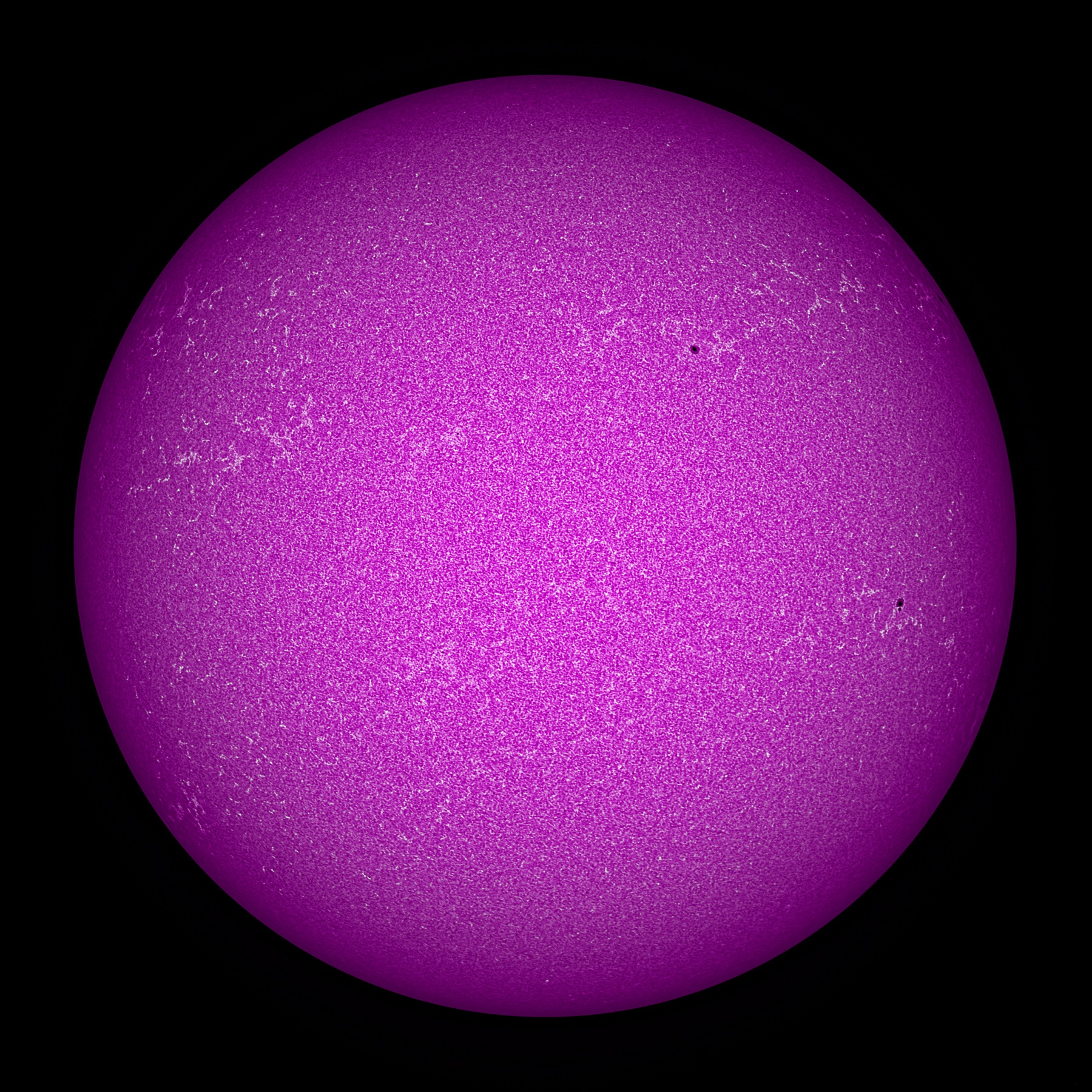
Basically [in my work] I specialize in the theme of the Sun. I remove the sun almost every day, even today, just an hour ago, I managed to shoot the sun in three ranges. Then I process these pictures and post the Internet. They often ask me for what purpose all this is done. Again - this is popularization. A picture of the sun received by an amateur allows other people to understand that in general, anyone can get carried away with this, even with a fairly small budget.
How do you talk about astronomy to children? Are they interested in this science?
As a child, I understood that children are interested in everything serious. It is one thing when they talk about astronomy in a playful way, about "stars." I try with children, even in elementary grades, to communicate seriously, like a scientist. If it is interesting for children to talk about astronomy at just such a scientific level, I maintain contact with my parents, I help somehow, you can say, I oversaw. Last year, one father came to me, his child is fond of astronomy. They bought him a telescope, but they don’t know what to do, how to do it. I help this dad, prompt, advise. Everyone is happy, everyone is happy. And the guy himself began to get carried away more, because he understood the approximate direction. I explained everything to him, told him, and now he himself takes pictures of heavenly bodies, will take part in festivals.
My main task is to show people that all this is available for absolutely everyone, you have a telescope or not. A lot of people, in fact, are interested in space, love films about space, pictures about space, various news. But how to come to this cosmos, they either do not know or are embarrassed to ask. For so many people, astronomy seems to be some kind of strange, deprived of the meaning of a hobby. But this is science, and, one might say, fundamental! Many achievements and devices that we use in everyday life are obtained thanks to astronomical sciences, observations. Even the same Helium gas, which was originally discovered in the spectrum of the Sun, first found it in the sun and therefore called helium in Greek mythology Helios - the god of the Sun.
In our country, they really love space, celebrate the first flight of a person into space. What then is such a low level of knowledge about him, what do you think?
In my opinion, the problem is in the education system itself. Firstly, we have very few teachers of astronomy, there is simply no one to lead it. Any item should be conducted by a person who fan from him, only then he will be able to share his knowledge excitingly. The second reason is the absence of some non-mandatory circles for those who are fond of. I, it happens, is lectures in various schools and watching the audience-who is as interesting-and I see that of the entire group, 5-10 people can really be interested in [the subject]. The third reason is that school telescopes often stand idle, they don’t look at them. Of course, astronomical observations are most often held at night, and children at such a time are no longer at school. But you can observe the sun using a special filter, this is also quite interesting and useful.
The school curriculum generally more involves working with physics, with formulas, with tasks, and the observation workshop itself is minimal. I can say a course of amateur astronomy. Whoever wants to engage in formulas, calculations - please, here is a school textbook, study. I have a slightly different specificity, and I think my program is just doing well.
In addition to lectures, I show how to assemble a home -made telescope, that is, the child can twist, see, understand how it works, and this will pass on it. The participation of parents is very important. If I, for example, are consulted at the choice of a telescope, I will definitely say to my parents: conduct observation with the child, warm up interest, help, teach.
It is written on your site that your dream is to remove the fall of an asteroid on Jupiter. Why? Is this a very rare phenomenon?
Yes, to shoot it, you need a lot of material. In our solar system there are giant planets, one of these planets of Jupiter, and also there are comets, asteroids, various pebbles, blocks. And sometimes there is a collision of planets with such objects - this, one might say, is a cataclysm of a planetary scale. If even a small asteroid falls on the ground, we have all our lives here in general. Therefore, it is very important to fix such phenomena at least on other planets in order to understand what destruction can take place, what is the energy of the explosion. For example, by the brightness of the outbreak of asteroid falling on Jupiter, how much the energy is about, make some forecasts or calculations.
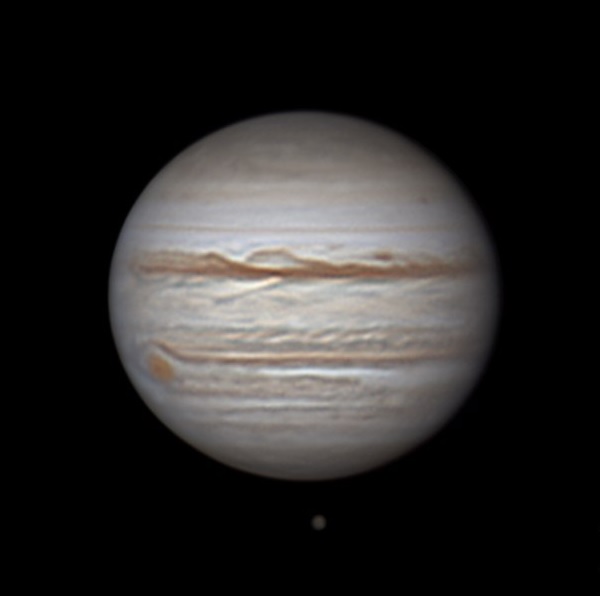
The very process of shooting the planets does not go in solitary shots, but in a series, that is, videos, I can take pictures of Jupiter for two hours in the evening. Then, from these frames, I choose the most clear ones, I put it, it turns out a clear picture, which is uninhabited by the earth's atmosphere. Then this material, which I shot in the video, I pass through a special program that is looking for short flashes lasting about 1 second. When a point lights up on the planet for a second, this means that there was a fall.
Unfortunately, so far I have not been able to fix this, the phenomenon is really quite rare. But for me it is the most affordable dream that, I hope, will someday come true. Such observations can have real benefits for science, and in principle, amateurs can also engage in various scientific projects. The same Jupiter is very dynamic, he literally has some new vortices every day, some new atmospheric phenomena, and it is very interesting to follow his weather. And in a professional observatory they do not always look at the planets, they have enough of their affairs-supernova, gamma-ray gamma, spectra, and so on. And for an amateur, now, there was a scope.
Do you follow space discoveries, for example, with the same Ilon Mask? What do you think about space tourism?
Yes, of course, I follow the news. Progress in private cosmonautics is impressive. Now, even having a small amount of money, you can launch your research satellite. Prices fell, microsatellites appeared, very, indeed, small and working in orbit for a short time. As for the flights to other planets, I believe that, for example, it is pointless to fly to Mars, this is necessary for a certain “Achivka” - we flew to Mars. It is much easier to start [there] the robot, he does not get sick, he does not need food, doctors, and so on. In my opinion, now you need to return to the moon, take the first step to the construction of a permanent lunar base. It seems to me that a very important turn in the history of mankind will be the creation of an international lunar city. I would like to have more science and less war in the world.
What important astronomical discoveries impressed you in recent years?
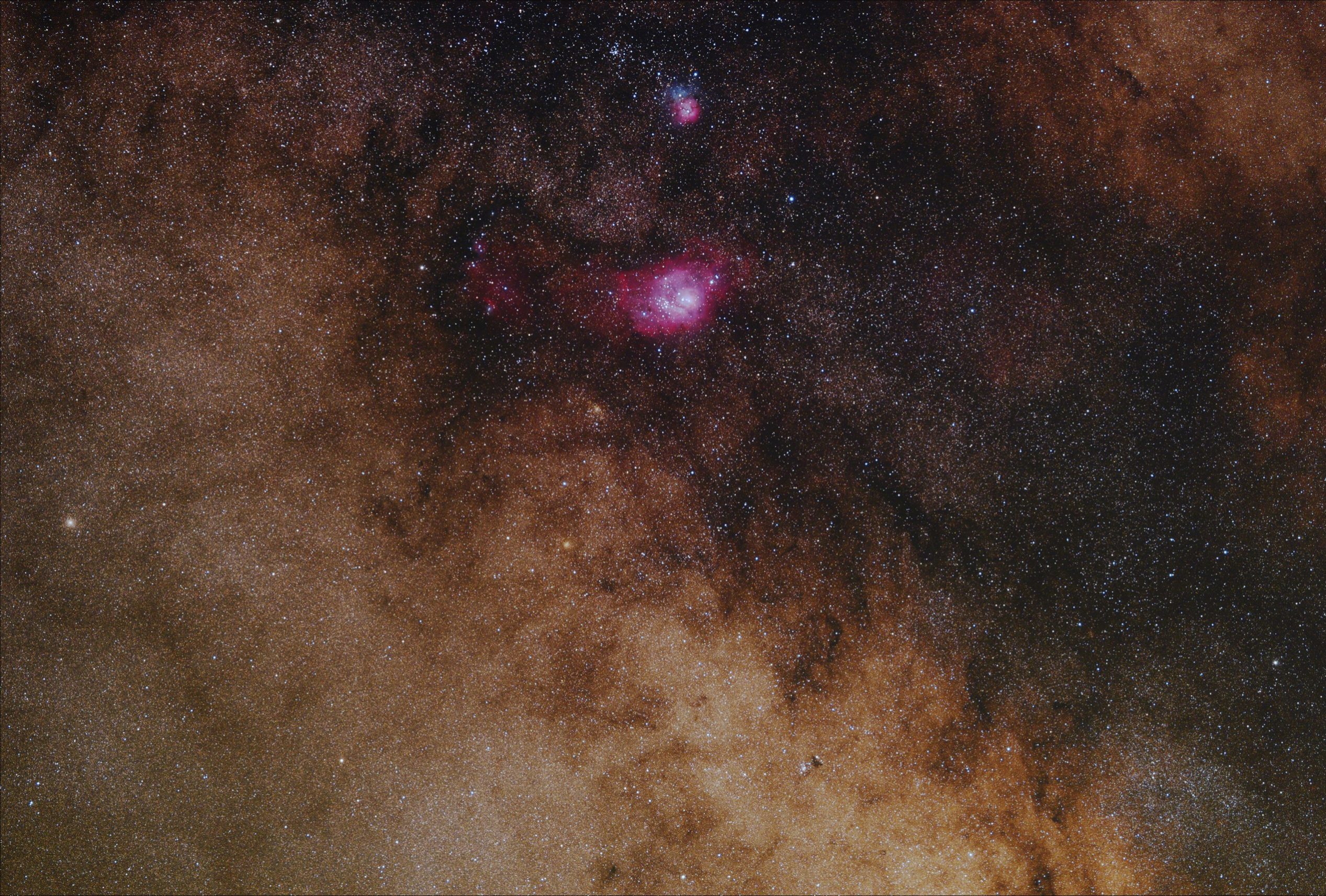
Perhaps it was a photograph of a black hole, even two pictures, one picture from the M-87 galaxy , the constellation Virgo, and the second picture- the Sagittarius object , in the center of our galaxy.
New discoveries are still taking place in technology, in particular, the James Webb telescope , which was launched relatively recently. This is a large infrared telescope, which will allow you to look further into space, since the boundaries of our Universe are very far away, and due to the huge speed of expansion, the range goes into infrared. As far as I know, now one of the youngest shot galaxies is about 400-800 million years old. I think James Webb will allow you to look much deeper.
As for other exoplanets (a planet outside the solar system - the “line” ), at the moment they have been discovered more than 4 thousand, and there is also an opportunity for amateur means to conduct such discoveries. You can also take pictures of the same star during the year and watch how its brilliance changes. A lot of variables of stars have been discovered and found - these are stars, which periodically change shine for one reason or another. And amateur astronomers open these variable stars. On the one hand, this does not bear any great scientific importance, and on the other hand, it turned out that many stars just have such pulsations of shine, and perhaps this would allow to see some general patterns on the basis of an array of data.
What are these discoveries changing globally?
See, for example, there are double stars - these are several gravitational stars. Accordingly, in the process of the life cycle, one star can increase when its fuel ends, and the second star remains the same size. And when the star begins to increase, part of the substance begins to flow into another star, and only the core remains from a more chubby star, and this core then begins to pull the substance from that star and a very hot disk is formed around the nucleus, which is heated and can explode at a certain moment.
Thus, the so -called supernova explosion can occur, in which heavier chemical elements are formed, like the same helium gas that I spoke about. Studying space, we can observe such processes that cannot be modeled on Earth.
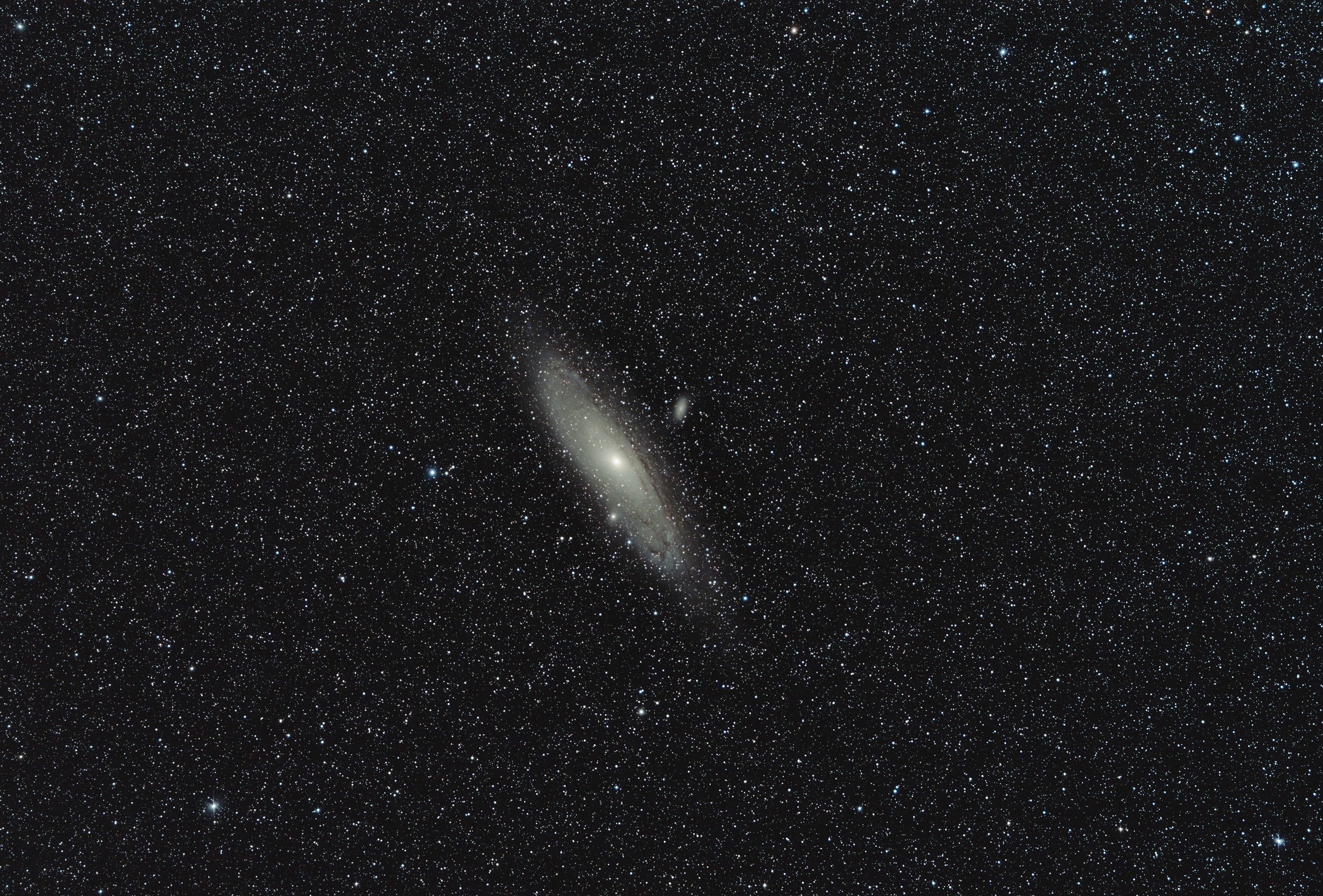
For example, one of the options for an explosion of a supernova is the formation of a neutron star, that is, it is a very small hot star, the size of about 10 kilometers of the maximum, which rotates at a speed of about 30 revolutions per second. It turns out that a very hot star rotates very quickly, and it is still very dense. And a system of two such neutron stars was discovered. When they rotated, the time on their surface was slowed. For us, their rotation period was one, and for them a completely different one. So scientists can check the theory of relativity with high accuracy. On Earth, such experiments are simply impossible to conduct.
Более того, если, например, происходит открытие какой-то звезды нового типа или какой-то необычной звезды, конечно, она притягивает внимание многих ученых, так как часто приходится пересматривать всю теорию эволюции звезд. В космосе вообще происходят постоянные изменения. Самый простейший пример — это то, что Плутон перестал быть планетой. Дело в том, что за его орбитой обнаружили такие же планеты схожего размера и для них выделили отдельную категорию. При этом в Солнечной системе есть крупный астероид Церера, диаметром 600 километров, и его повысили до карликовой планеты. Получается, планет стало меньше, но в тоже время и больше. И то, что у нас планет в Солнечной системе сейчас не 8, а гораздо больше, 12 или 15, тоже знают далеко не все.
А что астрономия может дать людям в повседневной жизни?
I will give my example. Во-первых, телескоп позволяет увидеть собственными глазами то, что происходит в космосе, а именно рождение звезд и их смерть. Когда ты видишь это своими глазами, ты совершенно иначе видишь сам процесс мироздания, понимаешь, что это не является чем-то уникальным или рукотворным, что это нормальное явление. Более того, все, что есть на Земле гораздо тяжелее гелия и водорода, а все, что тяжелее гелия и водорода образуется при взрыве сверхновых звезд, в том числе и мы с вами. Углерод, азот, кислород формируется в процессе горения звезд. Мы, по сути дела, звездная пыль, которая через очень много миллиардов лет опять станет звездами.
Я веду занятие в «Транснефти», у них там нефтегазовая промышленность, спектры [минералов], все дела. И когда задаешь людям простейший вопрос: «Откуда на Земле взялись минералы?», все отвечают: «Ну, из земли достали, выкопали». Поэтому, опять же, изучая космос, вы, во-первых, расширяете свой кругозор, а во-вторых, понимаете, где вы вообще живете. Астрономические наблюдения позволяют мне почувствовать себя не просто человеком, а гражданином Вселенной, а не просто Земли или какой-то конкретной страны. Потому что мы с вами, по сути дела, живем на космическом корабле, который летит со скоростью в несколько сотен километров в секунду вокруг центра галактики. И наблюдения в телескоп позволяют, можно сказать, преисполниться своим местом во Вселенной.