
Translated material
Year of mobilization in Russia: stories and experience of people
How mobilization forced Russians to completely rebuild their lives and what this experience taught them
Briefly
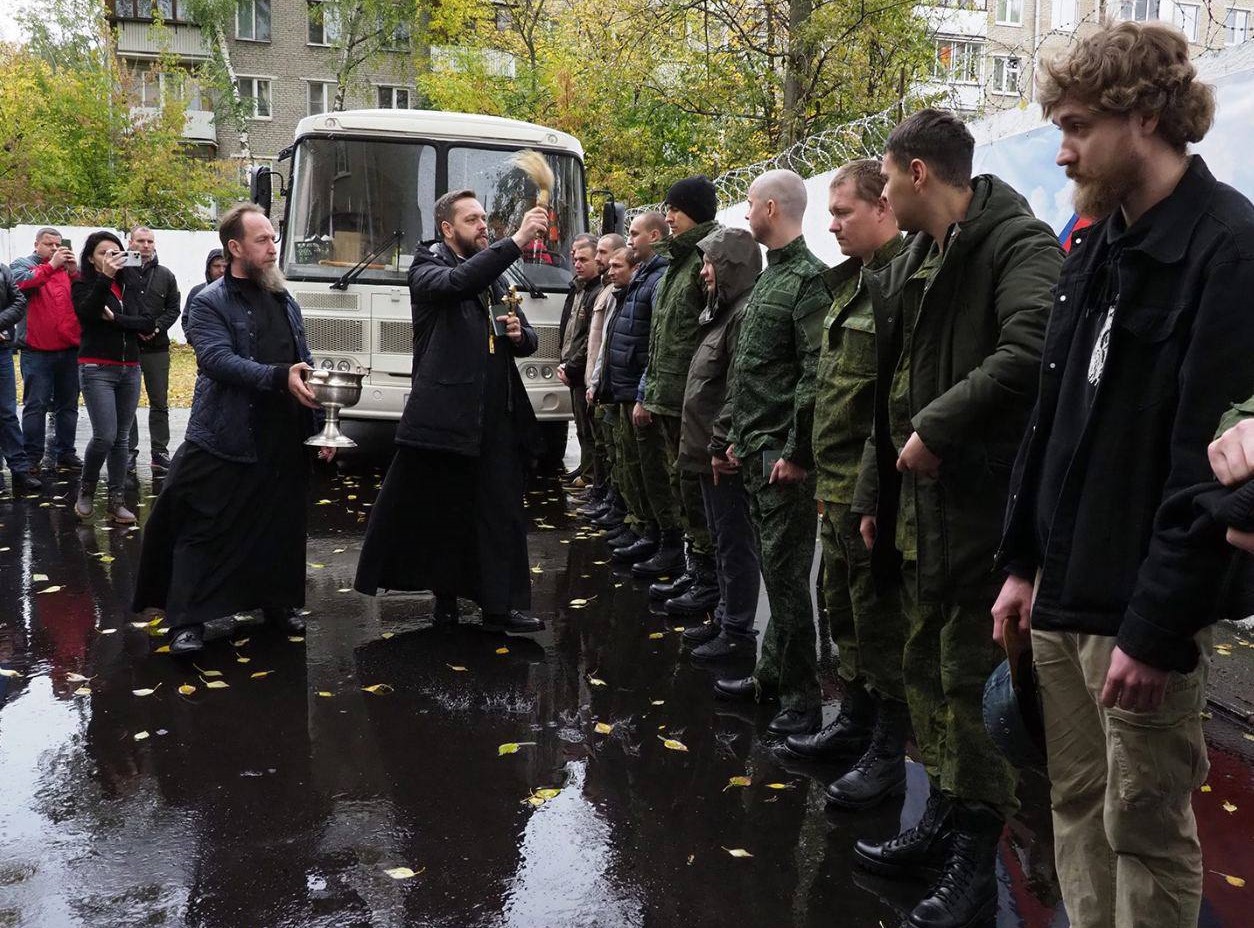
September 21, the life of many Russians has changed dramatically. On this day exactly a year ago, Russian President Vladimir Putin announced the beginning of a “partial” mobilization. Men who did not want to go to fight were forced to leave the country, hide from the military registration and enlistment offices and live in constant fear. Most of them were not ready for such news and made decisions in seconds. Today, the "line" tells their stories. As a flight from mobilization influenced the life of Russians and what they think about this experience a year later."Back - not return, forward - no one needs"
Evgeny* together with the wife of Tatyana* began to prepare for departure from Russia after the outbreak of war. They lived in a small Ural city, and all this time they saved money for emigration. Eugene admits that he did not expect a mobilization announcement, and this news took him by surprise on the train until Pyatigorsk on September 21. From there, the family planned to go along the land border across the Upper Lars to Georgia.
“We had a terrible panic. The stress was such that I could not sleep at night. Friends who were not going to move, and said that they were running to Kazakhstan, ”Eugene recalls.
On September 23, the couple was in Pyatigorsk, there was no way back, since they were afraid of the closure of borders. Several taxi drivers refused to carry them to the border with Georgia, and the cost of transportation increased several times. As a result, they agreed with one of the drivers and paid him 26 thousand rubles - for Eugene and Tatyana it was a lot of money.
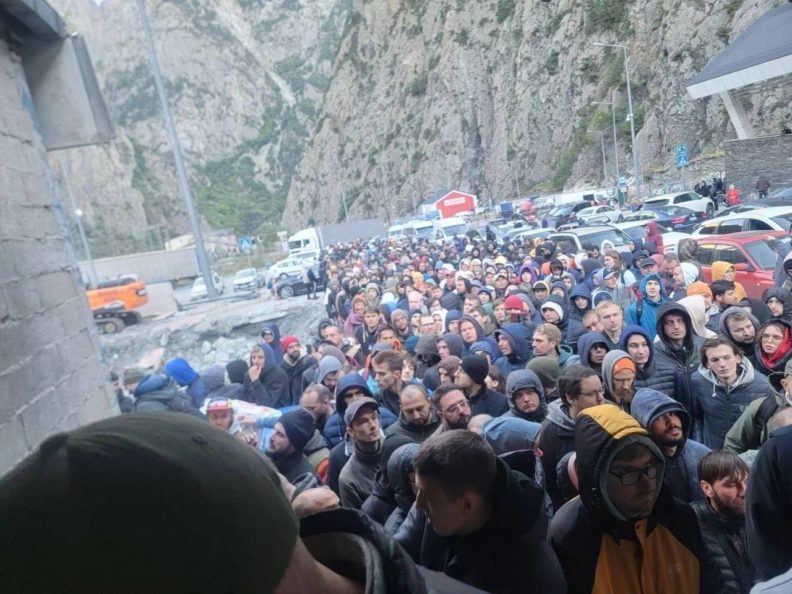
By that time, at the entrance to North Ossetia and Vladikavkaz, they put a checkpoint, all the cars checked the traffic police, they watched their passports, and people went around with machine guns and in body armor. ” At the exit from Vladikavkaz, they stood in a multi -kilometer cork.
“I saw a huge number of people who really fled,” recalls Eugene. - It really hurts me when Russian propaganda laughs at those events. These people are not underpants, but refugees. They rode on children's greats, on scooters in the rain, dragged suitcases behind them. Someone and his family, someone with animals ... They gathered the smallest that they had and ran from a country that wants to kill and tear them away. A very terrible sight. "
All the time in traffic, the family was very panicked and afraid that they would not be released, and at the checkpoint they would be awarded the agenda. This was done with some guys, and Eugene saw how their girls were sitting at the checkpoint and crying. The couple were extremely exhausted. Many passengers got out of cars and walked. At some point, the driver refused to take the family and dropped them out with all the things. They moved to his partner, but the cork did not move.
As a result, the family also got out of the car and reached the very fence at the checkpoint, where they tried to get hooked on someone in the car. Basically there were local people who offered to transport the family across the border for another 10 thousand per person. Many of them mocked the running, laughed and said that they would not go anywhere. For several hours, the couple walked around the cars, but everyone refused.
“We constantly thought that in Tbilisi we would need to rent an apartment, for everything about everything we had 60 thousand rubles and $ 600. We are ordinary people from a small city, this money was the last. At some point, we sat on the sidelines, took out the icon and began to pray. There was no hope. Then the guy came up to us, saw that we were upset and said that he would help. And we just burst out, ”explains Eugene.
The stranger transferred 16 thousand rubles to the spouses to the card and said that they continue to look for a car. The family spent the night in a cafe and slept on the floor. In the morning they were kicked out, it was very cold outside. At some point, Eugene had a hysteria. He said that it was better to die than staying on the Upper Lars.
With great difficulty, two days later they found a car for 35 thousand rubles per person. They had to use a credit card, give literally all dollars and rubles that were. Eugene and Tatyana entered Georgia with $ 75 in his pocket - they were all their savings.
When an armored personnel carrier with the military drove up to the checkpoint, they were afraid that they would begin to shoot at them. Everything seemed so unrealistic. Border guards interrogated men, Eugene missed.
“On the neutral territory, the border guard approached us and said that we are all scum and traitors of the Motherland. He gave our passports and turned to the driver: “Try to make sure that these underpants never return to Russia.” In these words, the country spent us, ”says the man.
For a year, the family has been living in Tbilisi in Shelter , which was founded for journalists, activists and human rights defenders. In the beginning, Eugene and Tatyana were very difficult, they lived at 50-70 Lari (2000 rubles) per week, 20 of them were given for a communal apartment. The neighbors helped them, fed them. The man began working as a dishwasher in a cafe, his wife in children's centers. But they paid very little there. Now he gives private lessons in the game of the guitar. After the New Year, the man had thoughts about suicide, and for the first time in his life he began to receive antidepressants: “Once I opened the Upper Lars on Google cards, and I had a strong attack of anxiety. The wife, when he finds himself in a traffic jam, catches flashbacks, as if she was still there. ”
All the money that Eugene and Tatyana earn, go to food, they cannot afford even renting a small room. At this moment they have a lot of debts, Eugene fell ill, and he does not have medical insurance. The man admits that “a thousand times” thought about returning to Russia: there is at least free medicine. But every time he stopped himself, because the country is unsafe. “Back - not to return, nobody needs it forward,” the man concludes.
"They will not find me there"
A few days before the start of mobilization, Boris* discussed with his mother possible ways of departure in the event of a general draft, but the family did not believe in such an outcome until the last. Then he laughed and said that he would leave for the village far from Moscow - they will definitely not find him there. When the mobilization nevertheless began, “there was nothing in my head except the mat,” the man admits. On the morning of September 21, he realized that hiding in the Russian outback is not such a bad idea. To get to the nearest abroad - Yerevan or Tbilisi - he would simply not have enough money.
Parents dissuaded Boris from moving to the village: there is no cellular connection, the house is old, and the man did not have experience in a long life in such conditions. And he decided to hide in the summer cottage. Boris lived with the old SIM card for the first couple of weeks, then he started a new one, he did not observe any more precautions.
A few weeks later, the “guys from the military registration and enlistment office” came to the house where the man was registered. In total, they came five times over two weeks. Boris's family did not open the door and turned off the intercom in the apartment. Then the employees began to call the neighbors, but since they had good relations with Boris's parents, the inhabitants of the house did not give up a man.
“In the country, I was not particularly worried that they would capture me, rather, it was anxious to look at my parents - they were very nervous and badly sleeping,” Boris admits.
Outside the city, he lived all winter, did not work and was dependent with his parents. The only entertainment was a trip to the store 20 minutes from the house and a walk in the garden partnership. In order not to go crazy with boredom, Boris came up with a daily ritual: “Strictly at nine o’clock in the evening you go out for a walk, you come up with a physical education. Most of the rest of the time was occupied by things: to beat firewood, to train water, to clean the snow, to sink the stove. And just in the evening, when it becomes bored, you go for a walk, turn on the podcast to find out what is happening in the world. ”
If a new wave of mobilization begins, Boris thinks to do the same and leave Zagorod. If the call is announced abruptly, they still do not let abroad. At the same time, in August, the head of the State Duma Committee, Andrei Kartapolov, said that the failure to appear on the agenda in the military registration and enlistment office will be considered evasion of military service and punished with a criminal fine of up to 500 thousand rubles or imprisonment of up to 5 years. Officials plan to adopt such a bill in the fall. But Boris hopes that if the mobilization is nevertheless announced, there will be too many things to evade, and vice versa, new people will appear to go to war, and he will be able to avoid responsibility.
" What next is unknown"
On the eve of the mobilization announcement of Nikolai* and Elena* entered their own apartment in Moscow, in which they had just made repairs, and all savings went to this. After September 21, they decided to urgently move to Georgia, but the prices for plane tickets rose so much that they could not buy them. Then they decided to wait until November, while it would become calmer. The whole month Nikolai tried not to leave the house, and if he still had to - "he constantly turned around and looked around." He was signed by Moscow chats in a telegram, where photos and videos were published, how men are massively taken around the metro or stopped on the highway, and regularly monitored the updates.
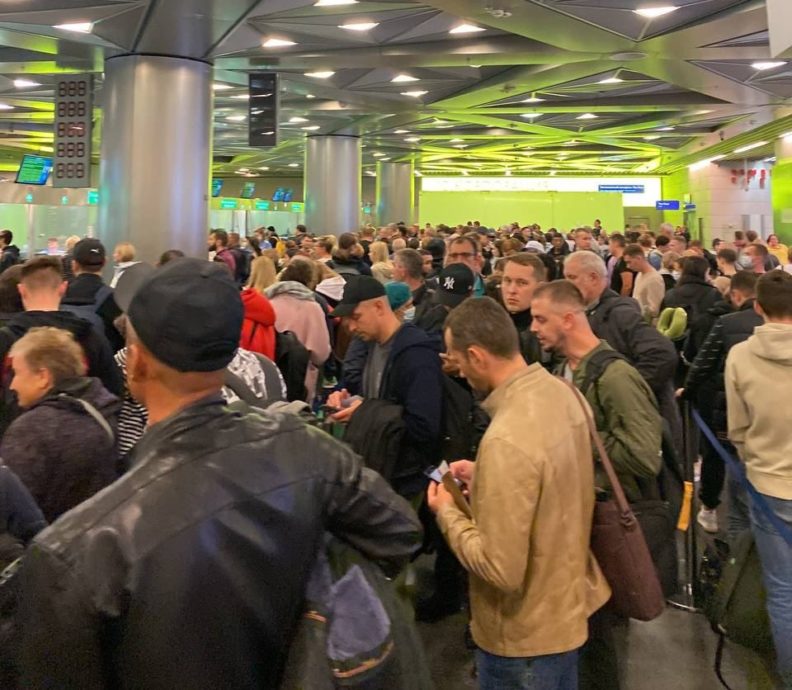
The couple planned to fly to Armenia first, and only then to get to Tbilisi along the land border. However, Nikolai was not allowed by the border guards.
“ The border guard was already evil. I was in a panic, there was no face. I wanted to cry. We told the driver about this, [who was driving us to the checkpoint]. He was the only island, an anchor of calm so that Kukukha would not go. As a result, we decided to take a chance and go to Georgia through another checkpoint ... ”, says Elena.
But there, Nikolai was also not allowed. After two days of the road and a day without sleep, they decided to stay in Yerevan, where at that time "housing was twice as expensive and the conditions are worse." Finding an apartment even a month after the start of mobilization was difficult. As a result, they settled in a small private house for 120 thousand dramas (30 thousand rubles). In winter, the room temperature did not rise above +12 degrees - before going to bed, they put on several layers of clothing, and during the day they walked around the house in winter jackets.
Elena is an illustrator and works on freelance. After the start of the war, most of the international freelancer sites became unavailable for Russians, and it was almost impossible to withdraw money from there. Even after emigration, the services blocked her account several times, which is why the girl had orders. Sometimes her salary was no more than 20 thousand rubles. Nikolai worked in a Russian company, which allowed him not to appear in the office for six months from the date of move, so in April 2023 they returned to Russia.
“In Armenia, we realized that it was pointless to leave for another country without money and the opportunity to legalize. You just live in terrible conditions, spend more money, and what is next is unknown, ”Elena admits.
When they again found themselves in their apartment in Moscow, they exhaled with relief and decided that the best option for them to leave the country temporarily, for example, for wintering, especially since they are afraid of a new wave of mobilization at this time.
Now Nikolai and Elena live in Bali, in two months - just as much there you can legally be tourists - they will go to Malaysia, and then to Thailand. Traveling in Asia - was their long -standing dream.
"The concept of the house is blurry"
Alina* and Vadim* moved from St. Petersburg to the city of Cholpon-Ata (Kyrgyzstan) a week after the announcement of mobilization. Until September 21, 2022, they did not think about moving seriously, although from the very beginning they did not support the war. Vadim used to serve, so he had a high risk of getting to the front. In addition, a passport was expired from him, and they decided to go to Kyrgyzstan - there, as in Kazakhstan and Armenia, you can go with a Russian passport.
Alina and Vadim retained work on the remote, but due to changes in tax status, their taxes increased to 30% of the wages, which significantly cut their budget. In Kyrgyzstan, it was difficult to find housing with good conditions and for acceptable money. At first, a couple lived in a private house with minimal amenities and big problems with the Internet. To work, sometimes they had to go to a neighboring city in coworking with Wi-Fay. Moreover, in October it was already cold in Kyrgyzstan, they went to bed “and literally trembled”, the water was periodically disconnected, and at the end of their residence in the house, sewage broke out, which no one could fix it.
In winter, the could reign in the city, because of which Alina and Vadim were worried about health. They monitored the state of air in the application and saw that in Kyrgyzstan it was very bad. As a result, due to poor ecology, young people decided to go to Albania: there was a visa-free regime for Russians from May 1 to September 30, and it was also possible to easily get a residence permit. They booked housing, paid insurance and plane tickets. But 10 days before the move, Albania canceled these rules, and they had to urgently look for other options for moving. It was important for them that in exile there was an opportunity to at least somehow legalize, "did not finish and everything was legal"
“The best option, as it seems to us, has a job in the country in which you live, because in this case you are given a residence permit for a longer period, and your salary is immediately in local currency, and it is immediately adapted to the local environment. But for this you still need to work on knowledge of the language. It is better to choose a country that is somehow close in culture, where it will be easier to adapt, ”says Alina.
She poorly knew English before moving, and this imposed certain difficulties in the same way as salary in rubles, also reduced due to grown taxes. Now the couple lives in Serbia, this country in the language environment is close to Russia, and there are conditions for obtaining a residence permit. They overcame all the difficulties together, but Alina was more alarming. Vadim, on the contrary, reacted more calmly to the forced emigration, although for the whole year he never returned to Russia - he fears a call.
“Of course, we would like to return to Russia, but under current circumstances, you discard these thoughts and gradually adapt to a new environment. And when I come to Russia to visit Russia, the local environment seems to me some kind of alien. Therefore, the concept of a house is blurring, ”says Alina.
Now they communicate mainly with their long -standing friends, who either stayed in Russia or left for other countries. With others emigrated, they manage to talk only in chats where Russians exchange useful information:
“The most important difficulty [emigration] is that the family is in Russia, and you are in another country. My mother got to the hospital, and I urgently needed to fly to her. I began to urgently look for tickets and flew from Serbia to Istanbul, and from there took a ticket to Moscow. And from Moscow by train to its city. The road took more than a day. When we lived in St. Petersburg, we could quickly get to parents and help. ”
*names changed at the request of the heroes