
Translated material
Dolce visa
Italy has launched the program of "digital nomadicism". We tell you how to get into the number of Italian nomads and start working with a view of Lake Como
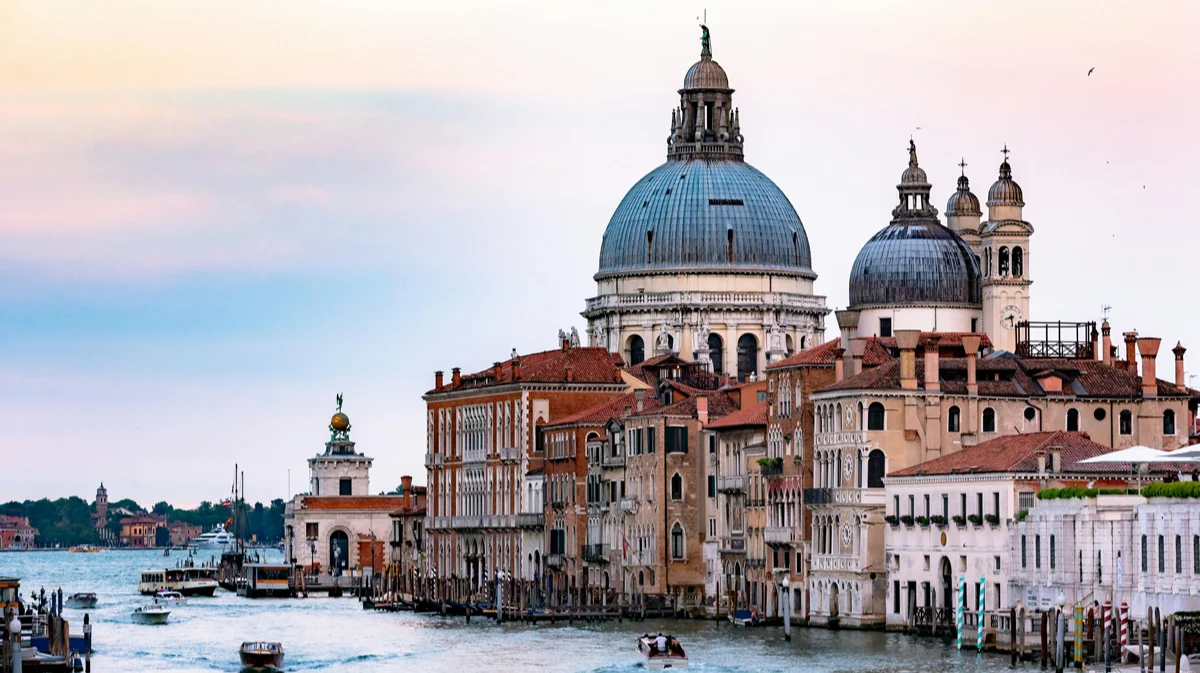
Photo: Wolfgang / Pexels
In April, the Italian government finally adopted a decree developed for two years on the rules for obtaining the Italian Digital Nomad Visa. Such programs exist in more than 50 countries of the world, 18 of which are in Europe.
After the start of Russia's full -scale invasion of Ukraine and toughening for the owners of Russian passports of the EU migration rules, the visa of the digital nomad remained one of the few options available to Russians of the conditional middle class - from the IT spheres, advertising, and small businesses. The key condition for nomad is the willingness to work remotely and not for the company in the country where he moved. Now such nomads can become in Italy - the tourist Mecca of Russians before the war. Novyevropa tells how to legally settle down in this country under the Digital Nomad Visa program and what difficulties can theoretically encounter.
Since April 4 in Italy, it became possible to get a visa of digital nomads. The decree expected by many was signed by the Ministry of Internal Affairs, Labor, Tourism and Foreign Affairs and established requirements for the entry and stay of citizens of states that are not part of the EU and work remotely.
Formally, the Italian government introduced -IL%20Decreto%2DLEGGE%20n., Dei%20prezzi%20NEL%20Settore%20ELETRICO.) Visa for digital nomads and remote workers back in January 2022 along with a package of measures that suffered from Covid -19 pandemia. However, the work and requirements for obtaining such a visa in Rome were able to clarify only two years later.
Why did Italian visas for nomads linger?
Serena Kironna, co -founder of the community of remote employees of Kino Italy, noted that such a delay can be explained both by the leisureness of the Italian bureaucracy and the change in political priorities. So, in September 2022, nine months after the emergence of digital nomads, the government changed in Italy, and the head of the ultra -right party of the Italian Brothers, George Melony, became the prime minister of the country. Meloni's movement consistently advocates tightening migration rules.
One of the main lobbyists of the introduction of “digital nomadicism” was a deputy of the Italian liberal pro -European party “Action” by Julia Pastorell. In 2021, she published the book “Only the way out. Why Italy is faced with the problem of brain leaks ” , in which she offers the government several measures to reduce the outflow of qualified personnel from the country.
According to Pastorella, Digital Nomad Visa could significantly increase the attractiveness of Italy for foreign talents, as well as attract Italian explosions back to their homeland.
Nevertheless, the initiative to create Digital Nomad Visa for a long time was in the shadow of the Debats constantly leading in Italy in a common migration policy . Just like other countries of Southern Europe, since 2015 Italy has encountered a large number of refugees who have arrived in the EU, primarily from the countries of Africa and the Middle East. For eight years, more than 800 thousand people arrived in the country, only according to official figures. During the same period, Italy approved almost 226 thousands of petitions about the shelter.
The migration crisis does not subside today: in 2023, more than half (157 thousand) of all migrants arriving in the EU arrived in the EU entered into Italy. Of the 59-million population of Italy , more than 5 million are foreigners . Of these, about 2.5 million are representatives of different European states, another 1.1 million are natives of Africa and Asia.
To reduce the migration load, Rome under the leadership of the right -wing parties goes to extreme measures. One of the latest innovations is an agreement with Albania, according to which migrants who arrived in Italy will be located in refugee centers specially built on the territory of the Balkan country. In exchange for this, Italy, according to plans, should support Albania to join the EU.
Against the backdrop of such decisions of the Italian government, the question of introducing visas of digital nomads was always pushed to the background. But in the end, in April, the decree was nevertheless adopted.
What is Digital Nomad Visa and where is it still?
As the New European Europe wrote , many EU countries began to implement Digital Nomad programs with the beginning of the pandemic in 2020, when remote work became the norm in many areas. Now the migration legislation on the relocation of digital nomads exists in 58 countries of the world, and 18 of them, including Italy, are in Europe. Among them are Spain, Portugal, Malta, Greece, Germany, Hungary, Estonia, Latvia, Croatia and others.
The visa of the digital nomad is, in fact, a temporary residence permit that allows you to legally stay in the country for a certain period of time and work remotely. These visas are usually issued to employees who can demonstrate a fairly high income by working for foreign companies and thus not claiming positions in the domestic labor market.
The President of the Italian Association of Digital Nomads Alberto Mattei told ANSA that
The introduction of such visas is a great opportunity for the social and economic development of Italy itself: it provides an opportunity to attract specialists who will not compete with local workers, but at the same time will spend money in the country and work on its economy.
“Most digital nomads are united by the need for flexibility, the ability to independently manage their time and choose where to live and work. Also, all digital nomads are united by the desire for greater personal and professional well -being and the balance between private life and work, ”added Mattea.
How to become a digital nomad in Italy?
In order to apply for a visa to enter Italy, the digital nomad must apply to the Italian consular institution in the country of stay, presenting the declaration signed by its employer and a copy of the passport.
In this declaration, the employee must also confirm that over the past five years he was not convicted of crimes related to the assistance of illegal migration, recruiting people, involving minors in illegal activities and labor operation.
In addition, it is necessary:
To prove that your annual income is equal to at least 28,000 euros before deduction of taxes (that is, three times higher than the minimum wage level in Italy). At the same time, the law does not require the applicant to prove that such income was received at the expense of his freelance or remote work. Thus, it can be income from any source, including rental income;
submit an employment contract or cooperation agreement from a company that will pay you regularly;
have comprehensive medical insurance operating throughout the country for the entire period of stay in Italy;
have experience at least six months in the area in which you will work as a digital nomad in Italy;
have housing in Italy (for example, you can provide a certified copy of your real estate purchase and sale agreement or lease agreement).
By the way, the town of Ollolai, located in the mountainous areas on the island of Sardinia, suggested digital nomads to rent urban housing for 1 euro per month. In order to take part in the competition, you need to fill out an application on the site .
The proposal is originally designed for one month, but a preferential stay can be extended.
Within eight working days from the date of entry into Italy, a digital nomad needs to request a residence permit in the local police department. The document will be issued with the wording of the “digital nomad - remote employee” and will be valid within one year with the possibility of extension, if the conditions and requirements that allowed him to issue are preserved.
In addition, the digital nomad, who entered Italy and received a residence permit, has the right to reunite a family whose members will also be issued a residence permit for family reasons.
Digital nomads and remote employees, together with a residence permit, will be assigned a tax code. In addition, digital nomads will also have to open the number of the VAT payer.

How many taxes will have to pay the Italian nomad?
The taxation and social security regime is regulated by bilateral agreements existing between Italy and the country of the origin of the employee. In the absence of such agreements, Italian rules are applied.
In 2023, Russia suspended certain points of such agreements with “unfriendly countries”, including Italy. However, changes in the rules are arranged in such a way that they apply primarily not to individuals, but to the companies and their owners themselves, and most potential nomads are unlikely to affect. However, for example, you will not be able to test in Russia taxes paid in Italy from renting real estate from any other “unfriendly” country.
In Italy itself is a progressive income tax scale. According to the rules that have entered into force from 2024, if you earn up to 28 thousand euros per year, then the rate is 23%, from 28 to 50 thousand euros per year - 35%, and from 50 thousand euros per year - 43%.
At the same time, there is a special simplified tax regime for entrepreneurs and self -employed, in which personal income tax is replaced by a tax rate at a rate of 15% for the first five years of work.
The Italian nomad visa allows you to become such an entrepreneur or self -employed and pay 15% tax from your income.
What problems in the regulation will be faced with?
With all possible advantages, experts doubt that the position of digital nomad Visa will work impeccably in Italian realities, especially the first few years.
The lawyer of the Italian Association of Digital Nomads Sergio Antonelli emphasizes that the law still needs additional explanatory acts with more detailed information. The general director of the startup from Milan Whitelibra Nikolo Boggian agrees with him: he notes that the current labor legislation of Italy does not regulate the forms of remote work.
Other lawyers of the Association - Luke Furfaro and Georgio Corton - note the risks of double taxation, despite the existing agreements: “The lack of tax residency [in Italy] will lead to the digital nomads will pay double tax, which will probably lead to attempts to evade their payment,” said Cortona.
In his opinion, it is necessary to clearly register the rules of taxation in the law on nomads itself in order to exclude the likelihood of confusion and not to scare away potential nomads with a possible duty to pay taxes in two countries.