
Translated material
Talking about "traitors"
The Navalny team in the series about the 90s criticized Yeltsin and oligarchs. The participants in the events accused the authors of falsifications
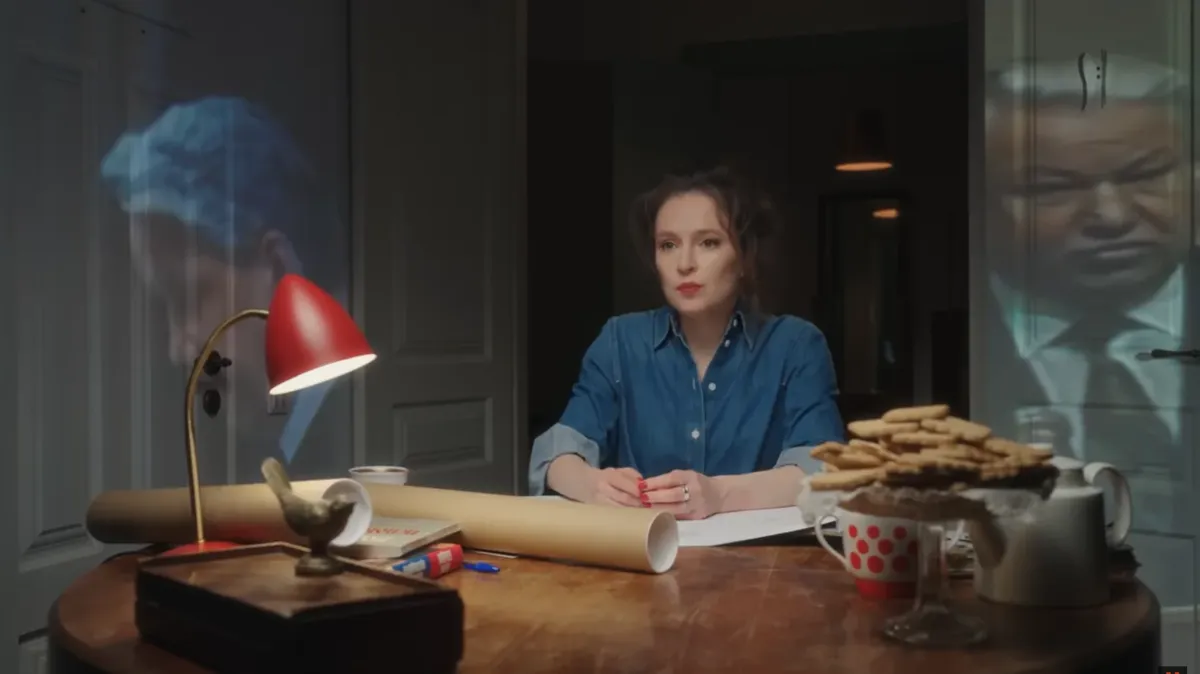
Maria singers, head of the International “Foundation for Combating Corruption”. Screenshot of the movie "Traitors"
The associates of Alexei Navalny launched the documentary project “Traitors” about how Vladimir Putin came to power, and about who is responsible for the state of Russia today.
The first episode was released on YouTube on April 16 and in a few days caused many different reactions. Some support the desire of the Navalny team to resume the discussion about the 1990s, while others criticize work for a “propaganda” look at historical events. What exactly they say about the documentary and how the authors themselves react to criticism of criticism - in the brief retelling of Novaya Gazeta Europe.
The first series of "traitors" is a detailed criticism of the environment of Yeltsin and Berezovsky
In the first episode, the head of the International Fund for Corruption, Maria Pevchiki, tells how the first president of Russia Boris Yeltsin moved to a house specially built for him in Krylatsky, how Boris Berezovsky sought to take possession of the authorities through the ORT channel and how Roman Abramovich paid for all the expenses of the entrepreneur in exchange for help with the privatization of Sibneft.
Read more about the content of the series
At first, singers talk about how Yeltsin moved with his family to a house built for him on the autumn street in the Moscow district of Krylatskoye and settled relatives and friends next to him. The head of the investigation department of the FBC accuses the former president of hypocrisy: “Yeltsin gained his popular fame thanks to the fierce struggle against party privileges.” At the same time, as Pevchiki notes, in 1989 he lived in the center of the capital on the 2nd Tverskaya-Yamskaya street, in a five-room apartment, which was issued to him by the party.
Also, the authors of the series pay attention to the friendship of Yeltsin with Valentin Yumashev, which began with the complimentary film “Boris Yeltsin. Portrait against the background of the struggle ”(1989). The singers also say that Yumashev helped Yeltsin write memoirs, after which he received an apartment on the same autumn street as a gift. And together they began writing a second book, which was published in 1994. The singers notes that Yeltsin decided to earn money on it, so they do not sell the book to the publisher, but decide to print themselves: “Valentin Yumashev will find money with Berezovsky. And their person will introduce their undeservedly deprived of attention when it comes to oligarchs and the 90s, Peter Aven. ”
The authors believe that it is important to examine Berezovsky’s influence on politics in Russia in detail. And they emphasize that after an attempt on a businessman in June 1994, "the history of our country begins to move at a frantic pace." “Before the capture of the main state television channel ORT - five months. To the scam with collateral auctions - a year. Before the elections of Yeltsin in 1996-two years. Before Yumashev’s invitation to Putin in AP - three years, ”says Pevchikh.
Further, the singers tells how Berezovsky tried to build a plant and offered to throw himself on it to ordinary people, but stopped at the stage of the layout: “It was an ordinary financial pyramid, designed to be a poor population that has no experience and does not understand the investment, will give in to the temptation to easily get rich.”
The story of Berezovsky’s shares occurred against the backdrop of a year earlier than state voucher privatization. “In August 1992, Chubais begins an unprecedented campaign: everyone has a piece of state property. Plants, enterprises - a significant part of the economy is composed, appreciated and divided into 148 million parts, ”says singers, stating that in the end the scheme turned out to be fraudulent and vouchers from people took away, but they did not pay the money.
Separately, the series tells how Berezovsky decided to engage in politics and for this aimed at the country's main television channel. In November 1994, Yeltsin signed a decree on broadcasting ORT on the first button, but the government only appointed a new owner in the form of a consortium of ten companies. Soon they sold the shares of Berezovsky. The singers calls what happened and cites an example of an interview with Mikhail Khodorkovsky, whose Menatep bank in this scheme owned five percent of the shares of the channel.
"Yes. Boris Abramovich approached us. Like, I want to take ORT, do you help, will you take a bag? Support, this is for me, it is mine. All the money that will be required to finance ORT will be my problem, you owe nothing. Then he came, said: “You supported, thank you very much. Give it off.” We gave. It was clean, as they say, a friendly service, ”the team of Navalny’s interview with Khodorkovsky 2019 quotes.
Then the singers read out excerpts from the transcript of the trial of Berezovsky and Abramovich in London. She drew attention to confirmation that Berezovsky convinced Yeltsin to give him ORT in exchange for ensuring full support in the presidential election. For the channel and all expenses of Berezovsky, Abramovich paid, says singers. In return, Berezovsky promised to agree with Yeltsin and the government on the creation of Sibneft and transferring it to Abramovich.
“The main opponent of the creation and privatization of Sibneft was the director of the Omsk Oil Refinery Ivan Leskevich. But on August 19, 1995, he died a mysterious death, ”the singers draws the attention of the attention. A week after that, Yeltsin signed a decree on the creation of Sibneft, and in December, control over it passed to Abramovich and Berezovsky.
The full version of the series in text format is published on the website of the Navalny team.
“To share people because of the past than unite them for the future.” Criticism
Journalist Elena Kostyuchenko thanked the head of the international FBK for work and said that she would like to see an episode about the elections: “I really look forward to the next series about the conspiracy-96. Everyone should be named by names. ”
However, some political scientists, journalists and direct participants in the described events of the 1990s accused the authors of “traitors” of a superficial view of that era.
So, Mikhail Khodorkovsky noted that
Conceptually in the film there is no "feeling of time."
“Of course, the 90s rethought during this time many times and many people. And those who say that during this time no one asked for forgiveness for their role in the 90s is wrong. Even Boris Nikolaevich asked in 1999, ”the businessman recalled. Khodorkovsky suggests that eyewitnesses of those events could tell the authors some nuances that they lost sight.
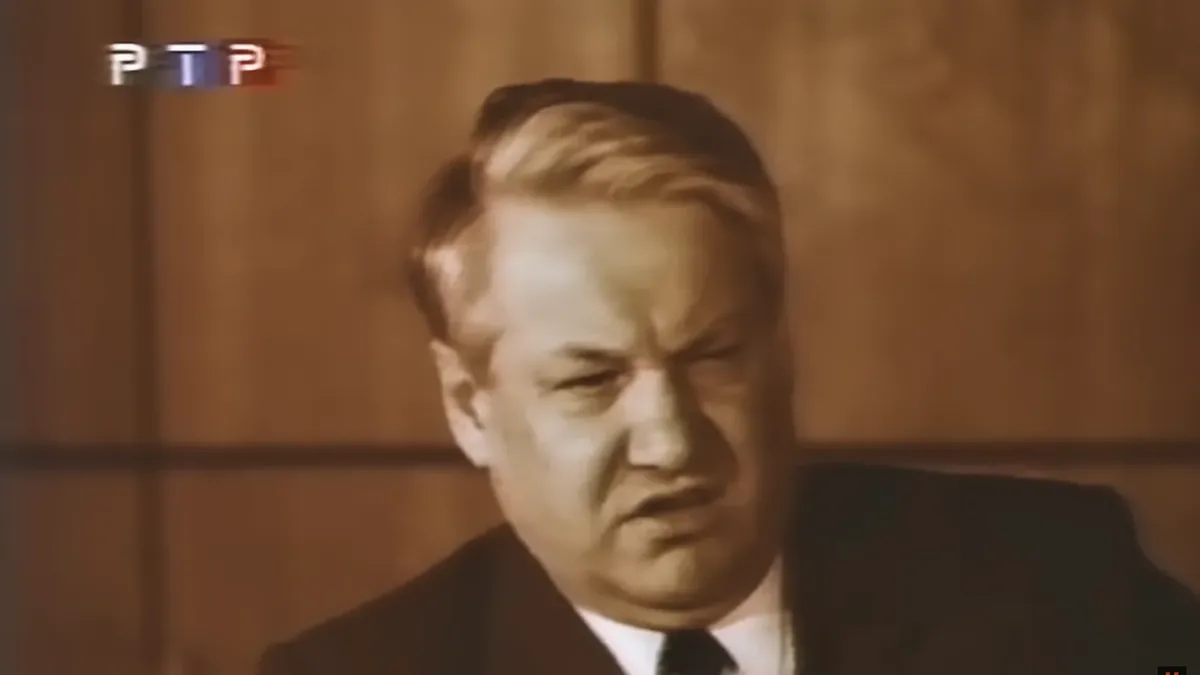
Political scientist Alexander Morozov praised the idea of the story about those events based on the materials of the London Court of Berezovsky with Abramovich, because the Russian viewer is practically not familiar with them, but criticized the presentation of the material. “Since the text of her [singers] is very weak, when multiplying on“ evilness ”, a narrative is obtained about the 90s, which is no different from the“ Zyuganovsky ”. This is no longer the FBK film, but the film “Regional Committee of the Communist Party”, ”Morozov believes.
Under the same post on Facebook , the former chief of the Echo of Moscow, Alexei Venediktov, quoted Putin, who said in 2010: “At one time they had a lot, in the 90s, they dragged a lot of billions in places of imprisonment and those who are now in places of imprisonment.”
Journalist Alexander Plyushchev on the air of The Breakfast Show suggested that the Navalny team prefers to "share people because of the past than unite them for the sake of the future."
The presenter also asked the singers how her film “Figes from Putin’s propaganda”.
The investigator noticed that she was “often asked unpleasant questions, but stupid - rarely”, but nevertheless explained that her work contains the “truth based on documents”, interviews and other primary sources, the links to which she leaves for general familiarization.
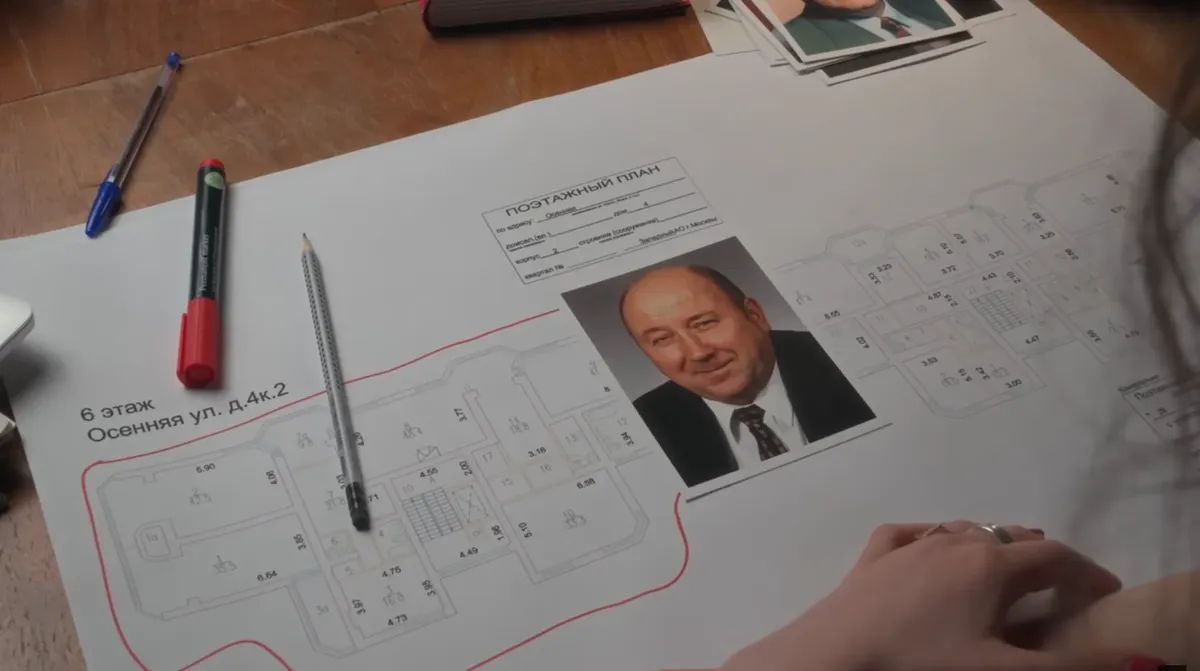
Some criticize the artistic component of the work. For example, the film critic of Zinaida Pronchenko wrote : “Most of all, in“ traitors ”I liked the moment when Maria of the singers tries to put on earrings and one falls into a sink, right into a siphon, like Russia under Yeltsin. In general, the main question is that no one ruined the homeland, and who is the artist-prostate this nostalgic television program, who would look appropriately on the “Culture” channel (only autumn leaves and old royal are missing)? ”
The film of the singers, according to political scientist Kirill Rogov , "It seems intonation to some clone of NTV films about the opposition." “This is a pure party falsification of history, a propaganda narrative that does not tolerate doubts and objections. And this is bad, ”he writes.
According to the political scientist, such a presentation of the material contributes to the marginalization of the Russian opposition.
The politician Maxim Katz also called the release “The NTV-agitated film about the dashing 90s, where the accusations are mixed with a small number of well-known facts, where only the information that confirms the position and is completely ignored by the rest.” At the same time, Katz believes that the film "Beautifully shot and spectacularly made."
“Navalny had one approach to media materials, Mary of the other singers. Evidence investigative journalism was replaced by public prosecutors and an explanation of who is the traitor and who is not. But why it was impossible to open the “Maria singers” channel and upload it there? I don't understand this, ”he writes.
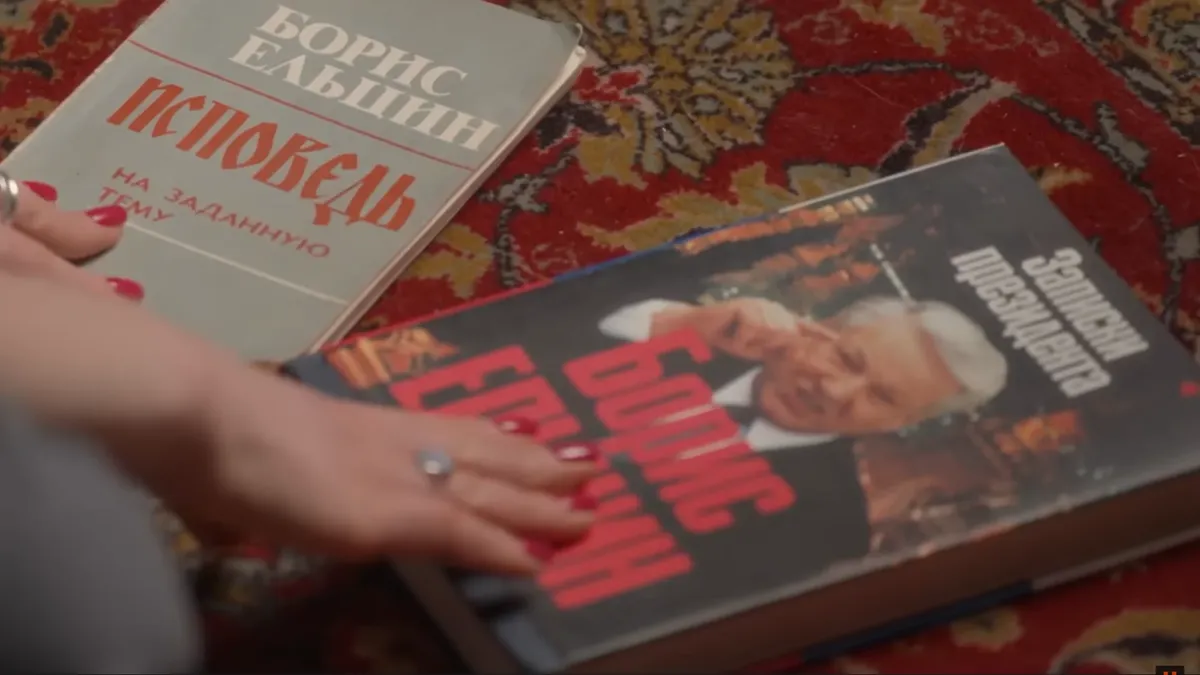
The need for an open discussion about the 90s was stated by political analyst Fedor Krasheninnikov . At the same time, he found that the series of the Navalny team did not correspond to the declared genre of the investigation on the historical theme and resembles the “Manifesto”. In his opinion, the authors should at the very beginning say: "We want to speak out, we have a vision about this."
Politics and associate of Navalny Vladimir Milov did not like the reaction of Maria Pevyers and her colleagues to criticism: “They immediately accuse [those who criticize the film] of justifying Berezovsky, Tanya with Valya, and collateral auctions. No, colleagues, distance [huge] between criticism of this film and justification. ” “Do you understand what the trick of the 90s is? In the 90s, this is all [the events described by the singers] was discussed in the prime time on TV every day. In the 90s, the parliament was an opposition to Yeltsin, ”he says.
At the same time, Milov and singers agreed to publicly discuss the film after all the planned series are released.
Journalist Mikhail Fishman , author of the book “Continurator. The story of Boris Nemtsov and the country in which he did not become the president ”found the actual defects in the work of Navalny’s team:“ There is a rather large piece, entry, which says that Yeltsin is generally a thief and hypocrite: when he went to the clinic, but actually used all the benefits, he advocated the people, but in fact lived in some good apartment somewhere in Tverskaya and so on.
And, frankly, Yeltsin does not describe it so much, it is simply not true. It is not true that Yeltsin is a thief, and it is not true that he is a hypocrite.
At least if we are talking about the beginning of the 90s and the late 80s, when Yeltsin took off. And this is an important prologue in the sense that he ideologically shows us that they all, starting with Yeltsin, starting from the very beginning, no matter what happened later - they all always lied, always deceived and always stole. This is wrong".
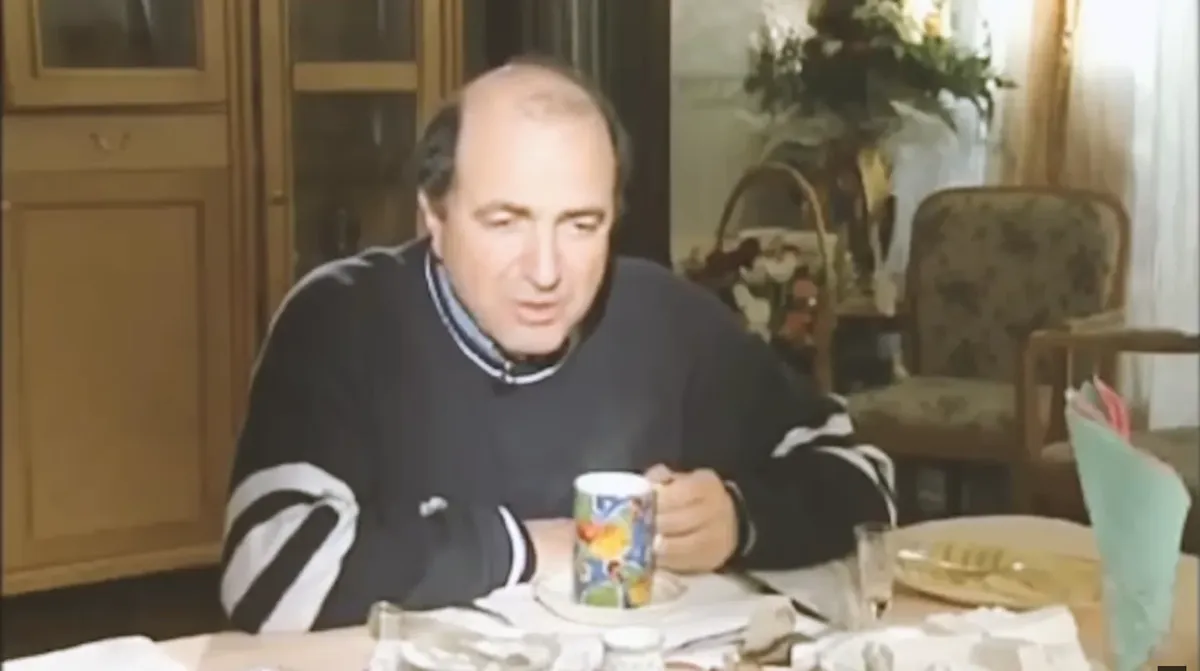
The political strategist and friend of Boris Berezovsky Stanislav Belkovsky also emphasized that Yeltsin “of course, was not a corrupt official”: “He simply did not need money, because all the needs - not the most grandiose, I must say - were completely covered by the state. Since the 1970s, he did not understand and did not value money. ”
In addition, Belkovsky insists that Berezovsky “practically did not have” direct access to Yeltsin. “As a criterion, political and media technologist, he played, undoubtedly, a significant role in 1995-1999. But when the family wanted to get rid of him (the decision was made at the end of 1999 and was implemented in 2000), he could not contrast anything, ”he argues.
Meanwhile, Belkovsky considered it “rather true than not” the main idea of the series of singers-to show that “the Putin era stands on the shoulders of Yeltsin”, and “Putinism was built on the foundation laid down in the 1990s”.
"System impunity is a solid foundation for terrible things." Singers respond to criticism
When answering criticism of singers and other ally of Navalny, they note that the position of the murdered politician does not contradict anything. In particular, they recall an interview that the opposition gave Mikhail Zygarya in 2015.
Among other things, Navalny said that over time he changed his attitude towards the first president of Russia: he was originally a “fan of Yeltsin”, but then he “exchanged the hopes of millions of people who wanted changes to guarantee their insignificant crooks.”
Now the singers also calls the series “Traitors” by the adaptation of the Navalny about the 1990s published in August 2023. That publication was the first after the next sentence - he was given 19 years in a special regime colony in the case of "creating an extremist community." In a letter, Navalny criticized the “democratic public” of the 90s and the current leaders of public opinion-including Alexei Venediktov, Maxim Katz, Kirill Martynov and Ksenia Sobchak, who allegedly justify the defendants of the FBK investigations.
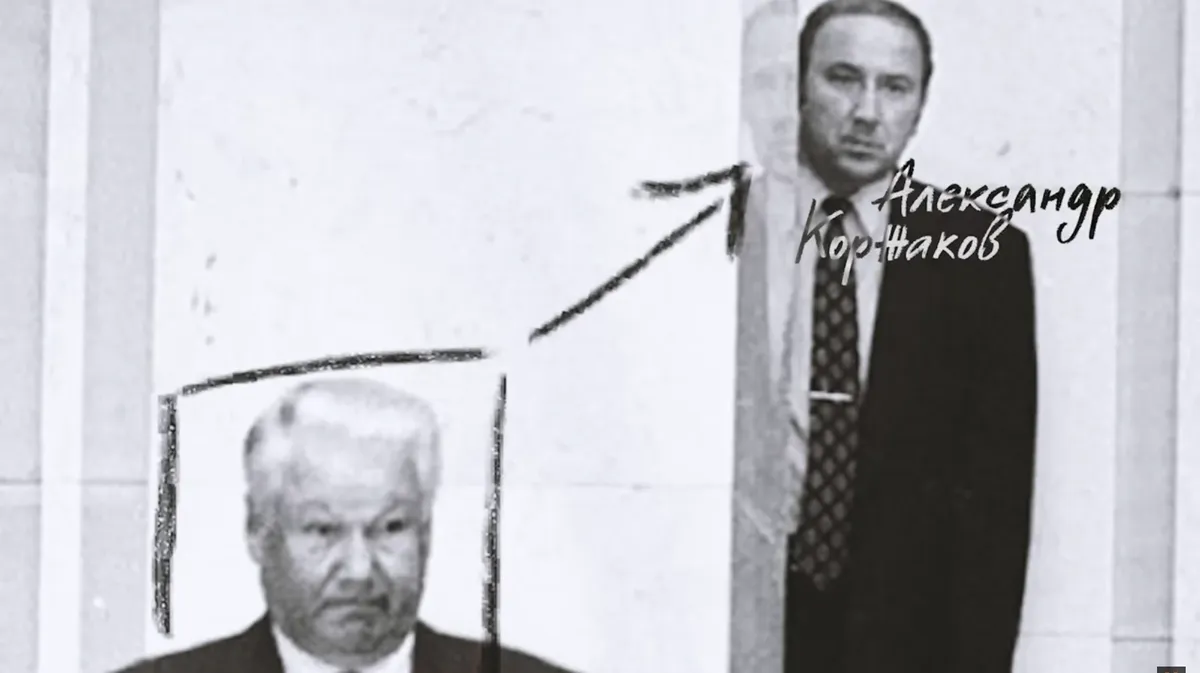
“I hate Yeltsin with Tanya and Valya, Chubais and the rest of the sales family who put Putin in power. I hate scammers, whom we for some reason called reformers [...] I especially hate everyone for not even a serious attempt to remove the basics of lawlessness-to carry out a judicial reform, without which all other reforms are doomed to failure. [...] I hate the “independent media” and the “democratic community”, which ensured the full support of one of the most dramatic turning events of our new history-fake the presidential election of the 96th year. I repeat, I was then an active supporter of all this. I wouldn’t like it not to falsify the elections, of course, I wouldn’t like it then - but I did everything so as not to notice it, and the general injustice of the elections did not bother me.
Now we pay for the fact that in the 96th we calculated that the fake of the election results is not always bad. The end justified the funds.
[...] This is not with Putin in 2011, but with Yeltsin, Chubais, oligarchs and the entire Komsomol-party gang, who called himself “democrats”, in 1994, we went not to Europe, but to Central Asia, ”the politician wrote.
According to the singers, by reaction to that publication, the Navalny team realized that many were not aware of the events of that time and their participants properly. After discussing with Alexei, his associates decided to “close the hole” and explain the audience why it is so important to reflect the 1990s.
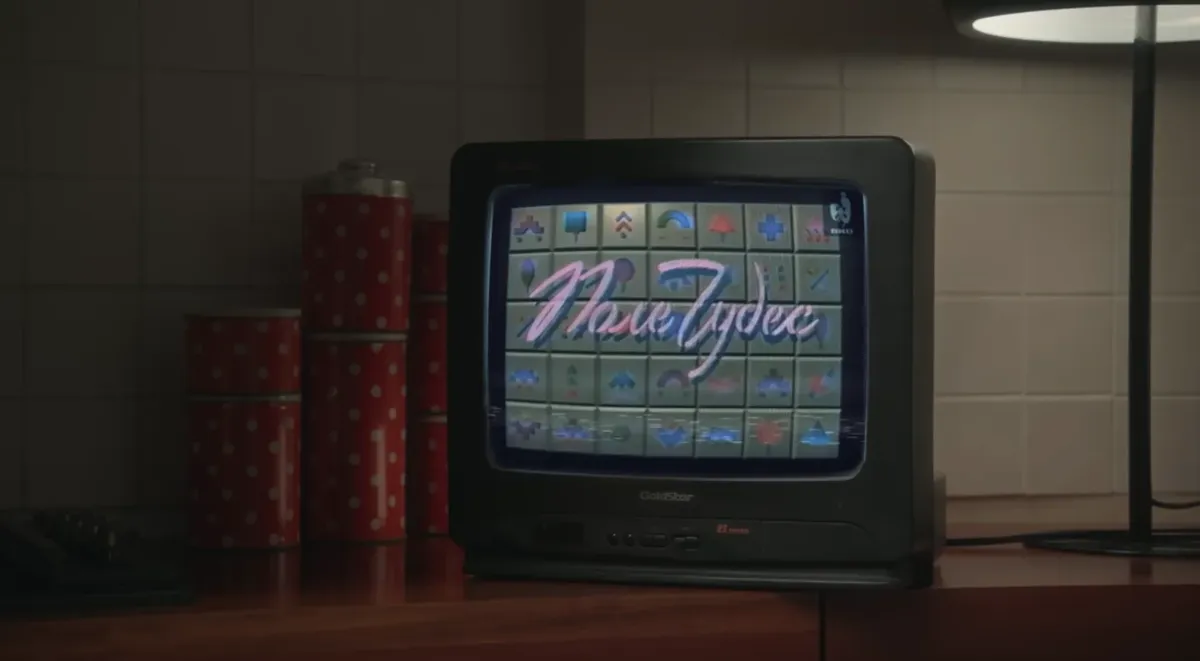
Responding to criticism, the investigator, in particular, explained : “Small corruption gives rise to the average, the average gives rise to a large one. Big - huge. Corruption, which robs, kills, poles with a “newcomer” and begins war. Systemic impunity and the absence of any consequences, because “well, what is it, the house is frail,” is a solid foundation for much more terrible things. ”
The claims about the “disconnection” of singers notes that with the help of the series they hope to avoid repeating the mistakes of the past and make it impossible to go to “disgusting compromises that many participants in those events went to”.