
Translated material
Inhuman efforts
Pigs are quite close to us in the structure of DNA, so theoretically they can become donors of organs. But there are serious risks and ethical problems
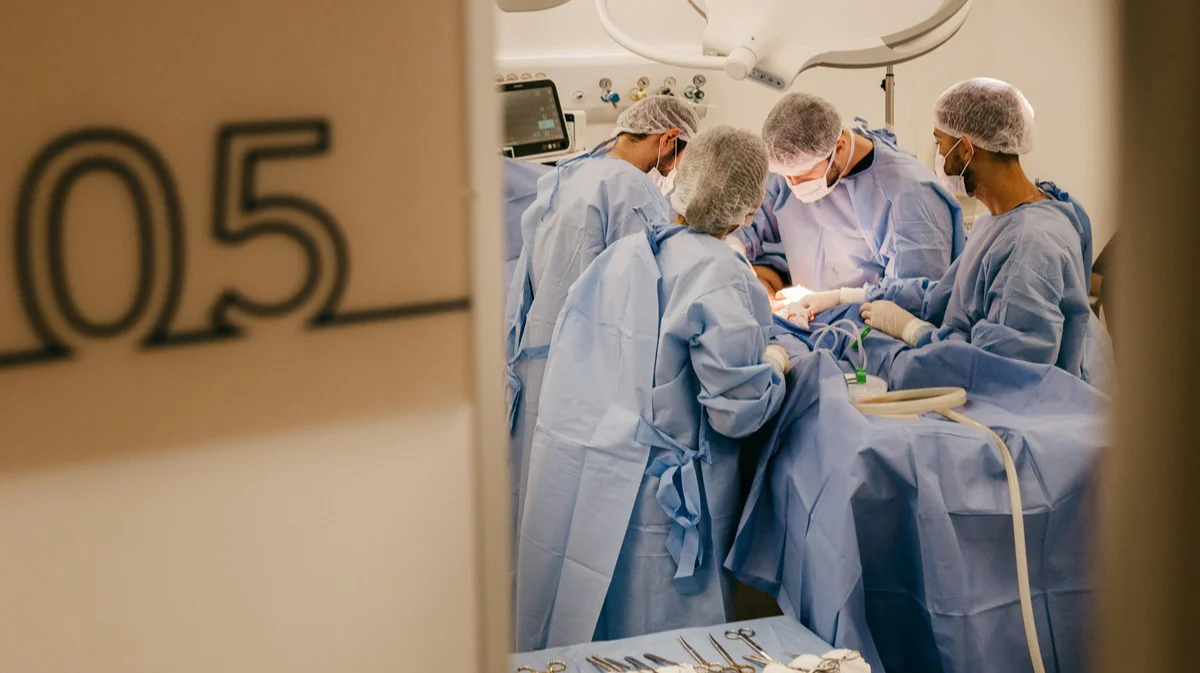
Photo: Jonathan Borba / Pexels
For the first time in history, doctors transplanted a pork bud to a person, with which he already safely discharged from the hospital. Does this mean the beginning of a new era in which xenotransplantation - a transplant of animal organs - will become a routine clinical practice?
Interpilish transplantation (xenotransplantation) began to actively develop in the middle of the last century, when the doctors learned to transplant the organs, but they began to not be desperately not enough. The expectations of donor organs are huge throughout the world, and the kidney in them is the most popular position. For example, in the USA, 90 thousand people expect a donor kidney. In Russia, only according to the transplantological society, about 6.5 thousand people in the expectation sheet , more than 60 thousand people live on hemodialysis - this is an renal replacement therapy, due to which the artificial filtration of life products in the body occurs and the excretion of excess fluid from the blood.
With non -working kidneys that cannot fulfill their function, this procedure is the only salvation. An alternative to her is a transplant of a donor organ. But he is waiting for him, alas, not everyone.
So 62-year-old Richard Slamen, suffering from renal failure, can be said, lucky. Five years ago, he had already transferred the kidney transplant from the deceased donor, but last year the rejection of this organ began. Since then, Slamen lived on hemodialysis, while his attending neufrologist, together with specialists of the Massachusetts Hospital of the General Profile, briggs have not been offered an experimental operation. For transplantation, a genetically edited pork kidney was used - 69 amendments were introduced in its genome, which should prevent the rejection of the transplanted body and reduce the risk of virus transfer. The operation itself lasted four hours. A few days later, the surgeons stated that the organ took root, and a couple of weeks later the patient was discharged.
The operation carried out by researchers of the Massachusetts Hospital has become the first transplantation of the pork kidney to a living recipient in history and today is the most successful. Previous studies on the transplantation of pork buds and liver were carried out with dead recipients. There were two more attempts by xenotransplantation of the heart of genetically modified pig. Unfortunately, both recipients died a few weeks after surgery.
Why a pig?
In general, scientists turned to a pig as the main donor relatively recently. At first it seemed that the animals most suitable for these purposes are primates, which, from the point of view of evolution, are closest to a person.
The first attempt to xenotransplantation was made back in 1963, when a surgeon from the University of Tulein, Keith of Rimtsm, transplanted a man of chimpanzees. But the researchers expected failure. Of the more than a dozen Rimt operations, only one was more or less successful, after which the recipient lived about nine months. In other cases, recipients died for five to eight weeks.
Then there were experimental operations of scientists from the University of Colorado for transplanting a man of Babuin, an ambitious attempt by the surgeon Leonard Bailey to transplant the heart of a little girl, known as Baby Fei. In all cases, the organ and the development of infection occurred.
And then scientists drew attention to another animal - a pig. Despite the fact that the evolutionary paths of man and pigs were divided millions of years ago, it turned out that we have something in common. The organs of the pig are quite comparable to human both in size and in weight, we have similar blood, the structure of internal organs and even DNA. The last moment is important: the more coincidences in DNA, the lower the risk of rejection of the transplanted body.
At the same time, on the evolutionary scale, the pig and man are located as far as possible from each other - this significantly reduces the risk of the transfer of pork viruses to a person.
In addition, pigs breed well in captivity and inexpensive in content - certainly cheaper than primates. In addition, the use of the latter caused a number of ethical questions: nevertheless, primates are too close to a person to easily take organs from them for transplantation. Pigs have long been served by humanity as food, so their breeding for donation should not cause any moral torment.
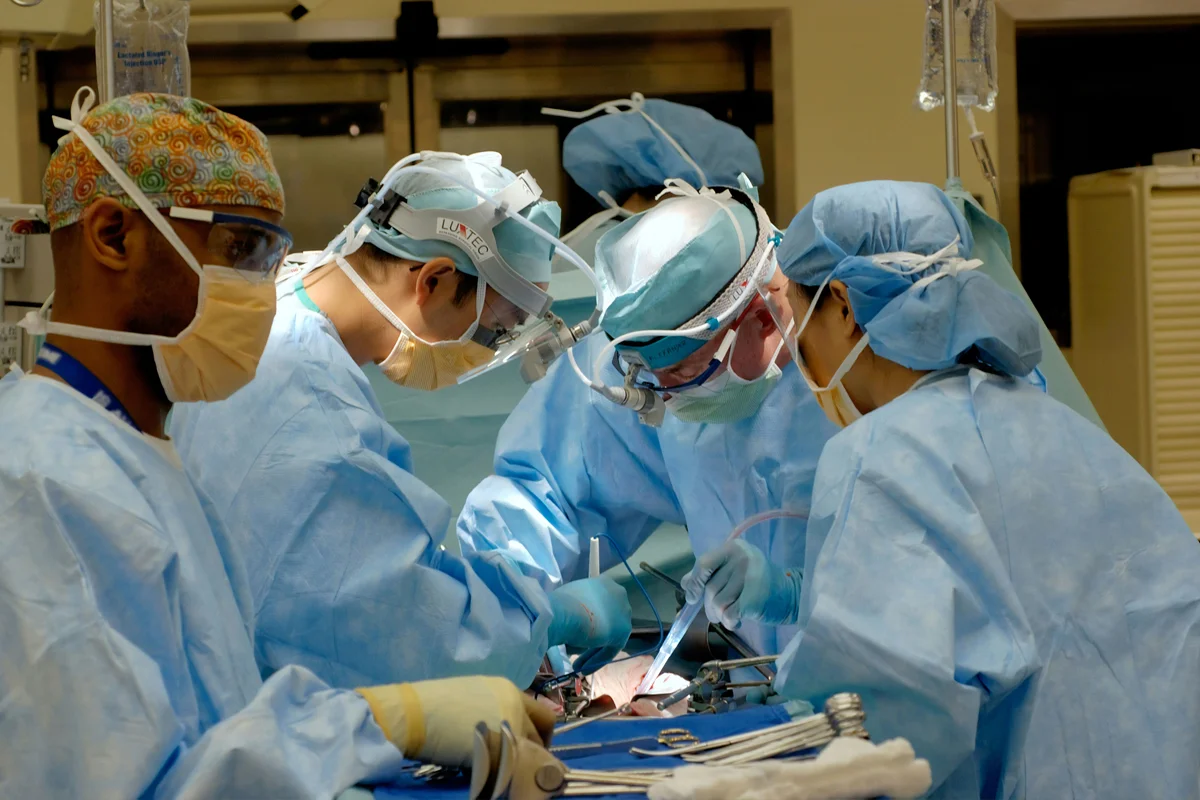
As a result, today there are entire laboratories to grow pigs intended for donor organs. And they are tested just on animals related to humans - monkeys, since for successful xenotransplantation, two main obstacles must be overcome.
Closer to people
The first obstacle is an infection that in the process of transplantation can get from the animal’s body to a person. If the causative agent receives a new owner, the consequences are difficult to predict.
It was because of the infection that the world's first person who was transplanted pork heart died. After his death, a thorough study was conducted, which showed that the causative agent was present in the transplant - pork cytomegalovirus. It belongs to the family of herpesviruses, but its human analogue exists. The problem is that no one knows how to treat pork cytomegalovirus in humans. As a result of infection, the recipient began, inflammation began, heart edema developed, which led to irreversible heart failure.
“Since the domestication of pigs have been a source of viruses that“ jump ”on a person,” explains Biologist Victoria Doronina, assistant at the Department of Education of the Faculty of Education of the Manchester University (Manchester Metropolitan University). - For example, according to one of the hypotheses, the flu virus is to blame for the Spanish epidemic at the beginning of the twentieth century. He circulates in wild ducks, but it was precisely the pigs living on farms next to infected birds who were handed over to the man.
Of course, Donora pigs are grown in sterile conditions to exclude the transmission of infection from the outside. But there is another problem.
“These are endogenous retroviruses of pigs (Perv-Porcine Endogenous Retrovirus), which once built into the genome, they are transmitted along with DNA of the genome of pigs,” explains Victoria Doronina. - Theoretically, during transplantation, they can “jump” into the human genome, integrate into it and launch oncological processes. It is in order to avoid such a development of events that xenotransplantation can only be done by people of post -productive age so that they do not transfer retroviruses to the descendants.
The second problem that needs to be solved with interspecific transplantation is immunological incompatibility. Despite the high similarity of DNA in humans and pigs, it is still not one hundred percent, so the proteins that the donor organ contains, the human immune system perceives as something alien and begins to attack them.
- Immunological incompatibility also exists between people, therefore, the most immunologically similar donor and the recipient are selected for transplants,
- explains Victoria Doronina. - But even with an ideal combination of circumstances, the person who was transplanted by the organ has to take medicines that suppress the immune system until the end of his life. And even they do not always allow you to prevent rejection. And the pig from the point of view of immunological compatibility is quite far from a person, which, of course, only complicates the survival of the donor organ. Partly the problem can be solved using the genetic modification of animals, making them immunologically closer to people.
Something human
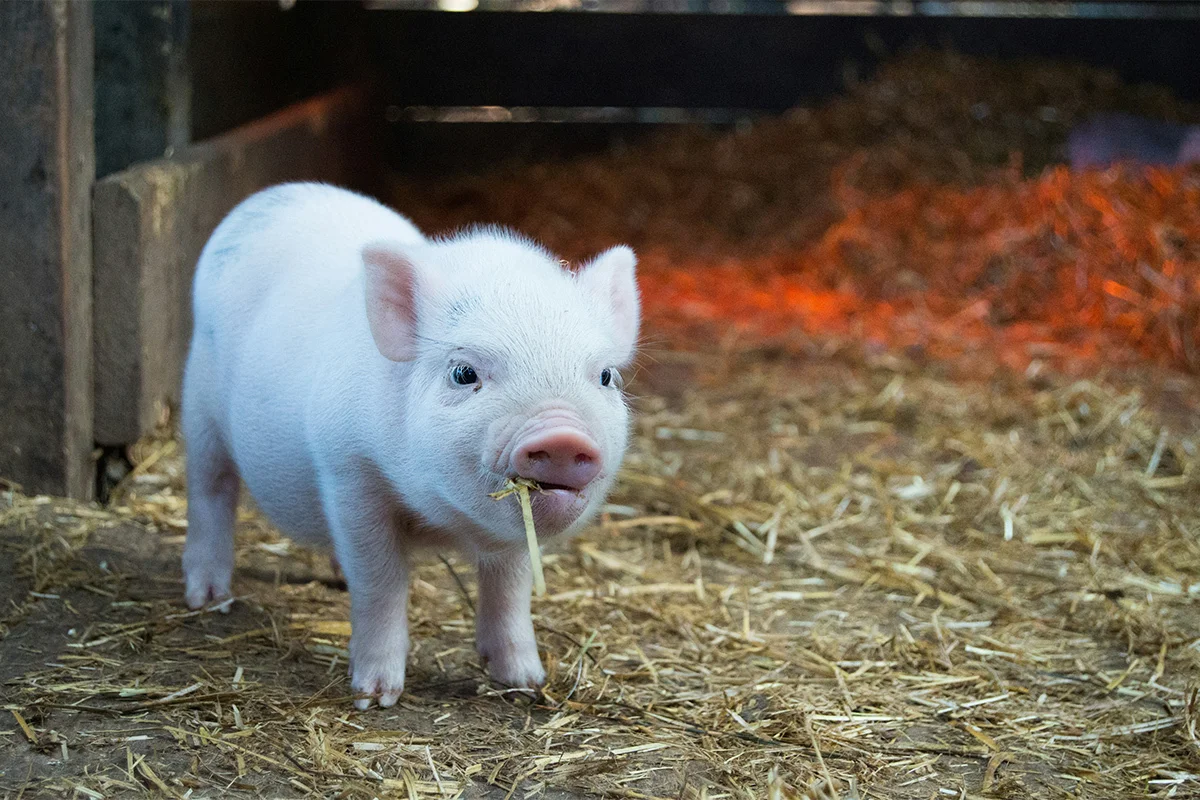
Thus, with the help of geneticist and technology of genomic editing CRISPR/CAS, they began to grow humanized pigs, which for the human immune system should be biologically become “their own”. For this, animals were disconnected by genes, which humans do not have in principle.
For example, when transplanting a transgenic heart, a dozen gene modifications were made in the Pig genome: several pork genes were removed and several human ones were added.
Last year, researchers of New York University transplanted a transgenic kidney to the deceased man who bequeathed his body to science. In the donor organ obtained from the pig, one single gene was turned off, which encodes α-Gal protein.
With xenotransplantation conducted by researchers of the Massachusetts Hospital, 69 genetic amendments were already introduced in the Pig genome - this is a record number of modifications that were aimed at preventing the rejection of the donor body.
Another 59 genetic changes should “turn off” pork viruses in order to prevent their transfer to the human body. And this is possible with a weakened immune system.
- at least in the short term, these bodies are safe and function properly,
-says Luhan Young, one of the founders of the Egenesis biotechnological company in Cambridge (Massachusetts), who provided the doctors with genetically modified pork bud.
As for the long-term perspective, something is more difficult to say. It is not clear how long the donor body can last. In addition, researchers have fears that excessive modifications can lead to the development of anomalies in the organs of donor animal. It is also well known that CRISPR/CAS technology has an unpleasant “side effect” - when editing the genome, unintentional changes in another part can occur, which can lead to a variety of consequences.
“We must be careful and not change the genes more than necessary in order to avoid unknown risks,” warns Muhammad Mojuddin, a surgeon of the University of Maryland, who made the first transplant of a pig heart.
Ethical barriers
Having overcome biological barriers, science will inevitably encounter other obstacles - legal and ethical. But if the legal aspects - consent to life -long medical surveillance, informing your immediate environment about the undergoing xenotransplantation, age -related restrictions, the inability to be a donor - are still related to a distant future, then ethical discussions are now going on.
Is it possible to grow animals and use them for their own benefit? And if possible, to what extent? According to the zoo defenders , there are no logical grounds to refuse animals in the same rights that protect individual people from sacrifice for the sake of the common good.
-If ideally, a human donor gives an informed consent to a transplant of an organ, then neither a pig nor chimpanzees can do this, although they are highly developed animals. Even the use of tools by pigs is recorded,
- says Victoria Doronina. “But, I think, few people would agree to transplants of the organ from chimpanzees.” Judaism and Islam are generally considered pigs to be unclean animals. Vegetarians and vegans, who are more and more in the West, will also not agree to kill the animal.
However, ethical problems in transplantology will always be. According to a researcher of the Russian Medical University, even if the kidneys or heart learn to grow on trees, this will cause contradictions in a separate group of people.
“So psychology is arranged,” he says. - Of course, representatives of Islamic culture may have internal contradictions. And, perhaps, over time, they can replace the pig with other animals. But if the vegans are ready to die as a result of a serious illness, this is certainly their right. And those who want to survive, extend a healthy longevity using biotechnology, let them go with us. Any surgical manipulation is always a voluntary consent. No one forcibly forces anyone to live!
However, science is trying to solve the problem of the shortage of donor organs from different sides. Today there are already developments that allow you to print organs on a 3D printer, research is underway to grow them in the body of the animal, but using human stem cells.
“This is a good direction,” my interlocutor agrees, “but still there is no alternative to the biomashin, which is a living organism.” Not to mention the fact that xenotransplantation is economically more appropriate than the creation of artificial organs. If humanity in fifty years will still exist, an animal organs transplant will become just a line in the textbook.
Biologist Victoria Doronina has a different opinion:
- Experiments on the cultivation of organs from stem cells are at the very beginning of the development of technology, and we are not talking about clinical use for a couple of decades. But I hope that the use of Xenotransplants is a temporary measure, and more perfect and human, more than one sense, technology will be replaced.