
Translated material
My life is in 302 chamber
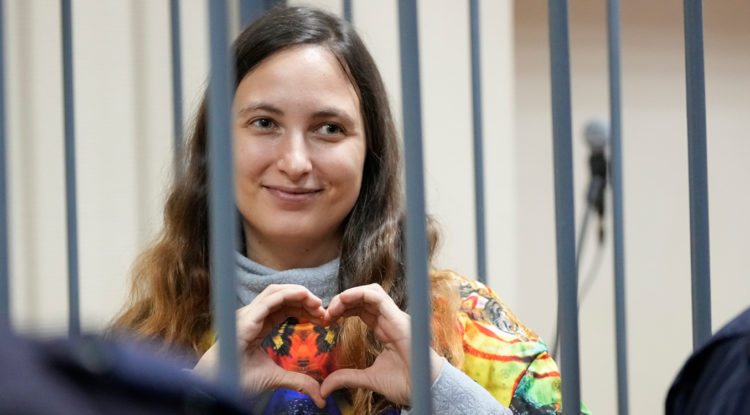
Artist Sasha Skochilenko, sentenced to seven years for anti -war price tags, talks about how she copes with PTSD in prison
Petersburg artist Sasha Skochilenko is one of the most famous defendants about the “fakes” about the army. In April 2022, Skochilenko was detained after denunciation and accused of replacing the price tags in a grocery store with Anti -war leaflets. In November 2023, she was sentenced to seven years in colony. Skochilenko diagnosed several diseases: celiac disease, congenital heart disease, bipolar disorder, and already in a pre -trial detention center, the doctor diagnosed her with post -traumatic stress disorder (PTSD). How to live with this and how to cope in a conclusion, Skochilenko wrote for the "cold".
In order not to miss the main materials of the "cold", subscribe to our Instagram and telegram .
After the detention, I became infected with post -traumatic stress disorder. Why am I saying "infected"? Yes, because the PTSR is infected through violence - physical or psychological - and then this violence, like a virus, begins to reproduce itself. Either the person who has become the victim of Abuez himself becomes an abuser, or he begins to direct aggression to himself and unconsciously fall into retraining situations, where violence again and again.
I know a lot about PTSD, since I have come across with violence or life -threatening situations throughout my life. For many years I went to psychotherapy and I managed to cope with some injuries (however, in order to work out all of them, I may not be enough for my whole life). So after the detention, I knew that certain psychological processes would occur in me.
The symptoms of PTSR were not long in coming. Already in the first week of my stay in the pre -trial detention center, nightmares began to dream. I dreamed of how investigators drowned me in a basin: they dipped my head in a basin and detected the time, then took out again, I barely had time to breathe - and everything was repeated again. This also echoed with the fact that in the 27th cell, where I was kept then, every day I was forced to cross all my things into the basin, including voluminous sweaters and a warm robe.
When I moved to 302 camera, where I still live, I dreamed that I was jumping out of a parachute plane. And as soon as I touch the earth with my feet after a long and terrible flight, I again find myself in the plane and I need to jump again. I open my backpack and begin to frantically remove things from it: some book, notebook, flute-but there is no parachute there.
I also dreamed of a backpack for a reason: when there was a search in my apartment, I just took things out of my backpack. I dreamed, how I went down, like a climbing, down a steep wall without insurance. I dreamed of painful deaths of animals, blood, intestines, dismemberment, corpses. Snakes, a lot of snakes. I walk around the field, and snakes swirl under my feet (and snakes are my main fear). I dreamed of endless labyrinths, on which I run headlong and some gloomy faceless evil chased after me. I dreamed that I was pursued by the police. I dreamed like my friends and my friends on the promenade and the atomic bomb falls right next to us.
In a dream, I fought with a neighbor who weighs twice as much as me. I studied at school again (and this is a nightmare in itself) and at some point understood that for the whole year I have never been in a mathematics lesson and I have to write a control right now. I spoke on stage in front of a huge audience and suddenly discovered that there were no pants on me, or I just forgot the words of my role.
And this is only a small part of the nightmarish plots that I dream every night during these two years - and every time I go to bed, I know that nothing good is waiting for me there. This is very exhausting, and in a dream I hardly rest. The neighbors complain that I cry, scream or speak loudly almost all night. As I understand it, so my psyche is trying to survive traumatic events - and cannot.
Some people with PTSR see flashbacks - this is when obsessive pictures of an injured event arise before their eyes. I have this flashback metaphors-in the form of nightmares or visions in reality. At such moments in my head there are pictures about the deaths of animals that I was witness. EMDR psychologist (EMDR or EYEE Movement Desentization and Reprocessing is a method of psychological trauma therapy to reduce the sensitivity to frightening memories.-Approx. "Cold") told me that the brain can associate any other painful experience. KPT specialist (psychologist working in a cognitive-behavioral approach. -Approx. "Cold") , with whom I also worked, prompted me the technique of stopping flashbacks:
Describe how you feel now.
Describe where and how it is felt in the body.
Describe how this was caused.
They explained to me that flashbacks do not appear just like that. The flashback is called by the trigger-it can be a situation or even some kind of word. For me, for example, the trigger always turns out to be the moment when handcuffs are put on me (during the detention, my hands were greatly injured for me). Or when people mention hunger - I experienced a strong hunger in the temporary detention center (IVS). Or when they touched me by the hand without warning (the operative suddenly grabbed my hand, without even introducing myself). And even, for example, when I see that my nails had grown up (the operative, after the detention, complained that I was very scratched - a poor, poor operative).
Next, you need to remember what is the number today, what year, and even, maybe, what time is it.
Then - list as many objects that surround you as possible.
And of course, to breathe deeply - a short breath and a very long exhale.
Frankly, this technique did not help me very much. The flashbacks ended, but when I listed something like: a grille, an iron door, an iron table ... The kapets became sad. I think this technique is more designed for a person who has experienced an injuring event in the past. So he sits in a soft chair in a warm cozy house, and next to him are relatives or just a ball of fluffy cat. I am deprived of all this and, moreover, I am in an atmosphere where I am surrounded by triggers.
My trauma has not ended: while I'm in prison, I continue to experience the traumatic experience. In this regard, the EMDR therapist with which I worked, suggested that I improve the technique of stopping flashbacks a little. At the very end, instead of listing objects, list positive physical sensations, for example: “I am warm”, “I am comfortable”, “I'm fed”, “nothing hurts me” ... It helps.

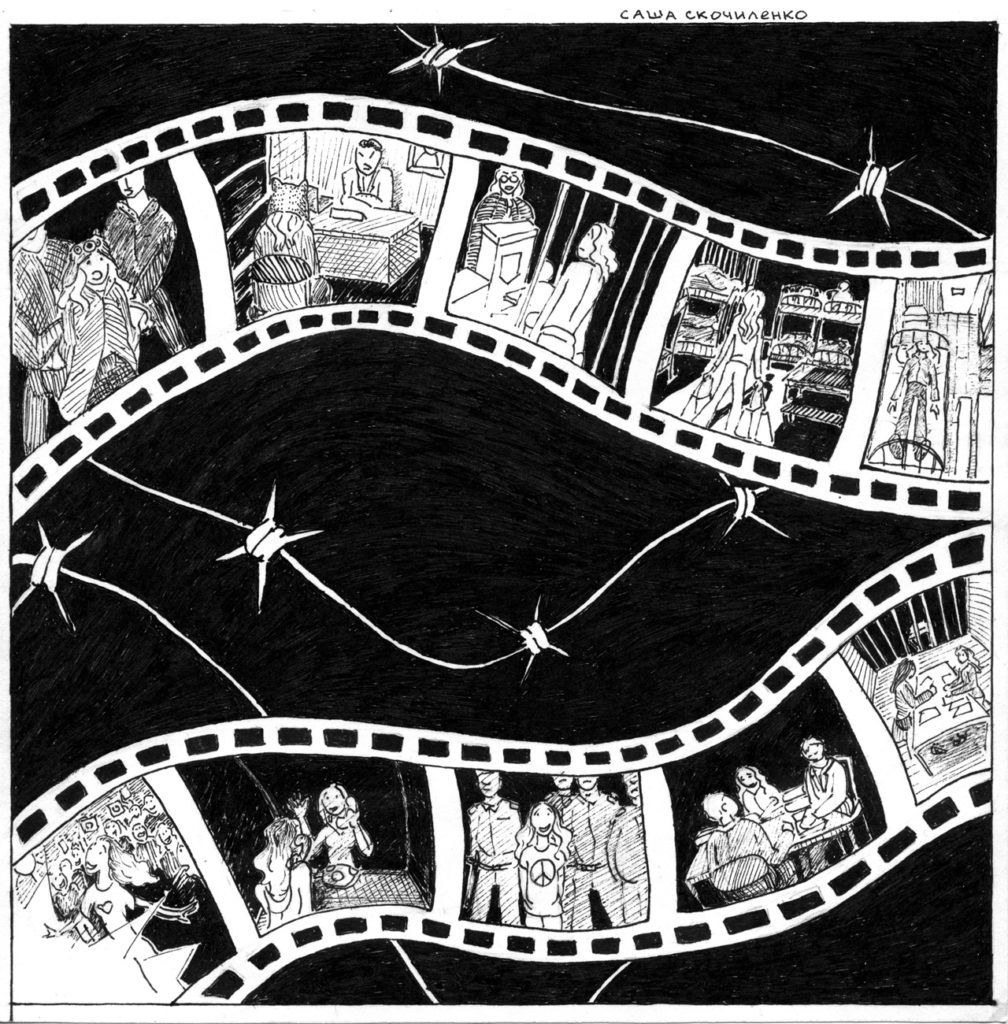
Another consequence of PTSD is depersonalization. For me, this is not a painful sensation at all, just strange - you can’t confuse it with anything. It is expressed like this: sometimes I see myself as if from the side, as if I were watching a movie or reading a comic book about myself. And the feeling is this: is it happening to me? Am I in prison? The most eloquent illustration of this depersonalization of the prisoner was and remains the inscription left in our court of one of the prisoners: “Fuck, we are in prison!”
As you understand, PTSR is not alone here. Many signs of this disorder are often felt in communication with prisoners. I also learned that the person suffering from PTSR is inclined to hide on the situation that had injured him and feels his guilt in what happened.
The prisoners often recall the circumstances of their detention and endlessly discuss at what moment they could do otherwise so that the detention did not happen. Some argue that on the days preceding the detention, they experienced a premonition or “saw prophetic dreams” - and it seems to them that if they listened to their feelings, they would not have happened to them what happened to them, and everything would be as before.
At first, these thoughts also constantly pursued me, but after some time I realized that everything in my life organically led to this moment. Everything turned out as it should have been. As before, it will never be, but it will be somehow in a new way. In other words: the minced meat do not turn back (for example, minced chickpe), but you can make a delicious cutlet out of it.
Another common place in the worldview of prisoners, among whom I am, is a feeling of my own badness. Immediately after the detention, they begin to worry about the fact that they will be sure to abandon the partner. Frankly, even I began to think about the same thing. I immediately began to disorder food behavior (RPP), I gained 15 kilograms, and it constantly seems to me that I look bad. I blame myself if I eat at least a little sweet.
Some prisoners have the feeling that they are some kind of dirty: they endlessly translate things and washed the body several times a day, pouring from the bottle over the toilet. There are people who rub the floors with denture brushes (and some of them claim that they like to do this). They add every thing that they have in a small bag or container, which, in turn, are placed in a divine order inside the bag. What to talk about? People here put empty bags in small triangles !
This is also a consequence of PTSD-deprived of control over their own life, they are trying to control at least something. Sometimes, due to injury, human life, on the contrary, is immersed in complete chaos. I'm all about that. In Baulah I have a total mess. Remove do not remove it, after a search of them, it’s still full of trash.
Another symptom of PTSR is derealization. I can little to tell about her, because I experienced derealization only a couple of times in my life, and then not in connection with an injury of arrest. People describe this state very differently: someone at such moments sees everything as if plasticine, for someone the surrounding space begins to look “some kind of plastic”, for someone everything becomes gray and lubricated ... But basically no one can really describe anything, because the essence of this state is complete loss of reality: reality of feelings, reflection, meaning and material world. They say that it can last minutes, hours or even days. I am just glad that this does not happen to me now.
What happens to me very often is irritability. Sometimes literally everything can annoy me: for example, that my neighbor washes her hands for a long time, or the way the duty officer looked at me, or the fact that the water is too hot, or the fact that my book will end soon.
This irritability is like a sudden huge tsunami. Only normotimic helps me not to break into others ( a group of drugs that help stabilize the mood. - approx. “Cold”) that the doctor prescribed to me. Thanks to him, the wave of irritation, which will sharply cover me, will subside calmly at the same second, and I will not have time to harm or others at such moments. Unfortunately, the rest of the prisoners are deprived of such drug support and are often aggressive, and they are suddenly aggressive, and break down on each other in trifles.
I also know that a person with PTSR generally often experiences jumps in emotions: he can sharply cover despair or, conversely, agitation. Some people are trying to escape from these emotions in different dependence. And sometimes this leads to emotional numbness, because experiencing such emotional differences is simply unbearable. I had such a condition in the last months of ships. It seemed to me that I couldn’t feel anything else, and it became easier for me only after the sentence, when the retraining factors in my life became less .
I read that a person with PTSR lives with a sense of constant threat. This is so. You know, this is when it seems to you that someone will jump out sharply around the corner. We are often scared by loud sudden sounds or when someone unexpectedly approaches from the back (it is better for people with PTSR to arrange such surprises). Here it is for everyone. All my neighbors constantly shudder and are very scared when the key turns in the steel door. At such a moment, the heart seems to jump out of the chest. At the same time, you understand that nothing terrible can happen: the employee will simply go into the camera, someone will be called to the investigator or (like us, for example) will be called for verification.
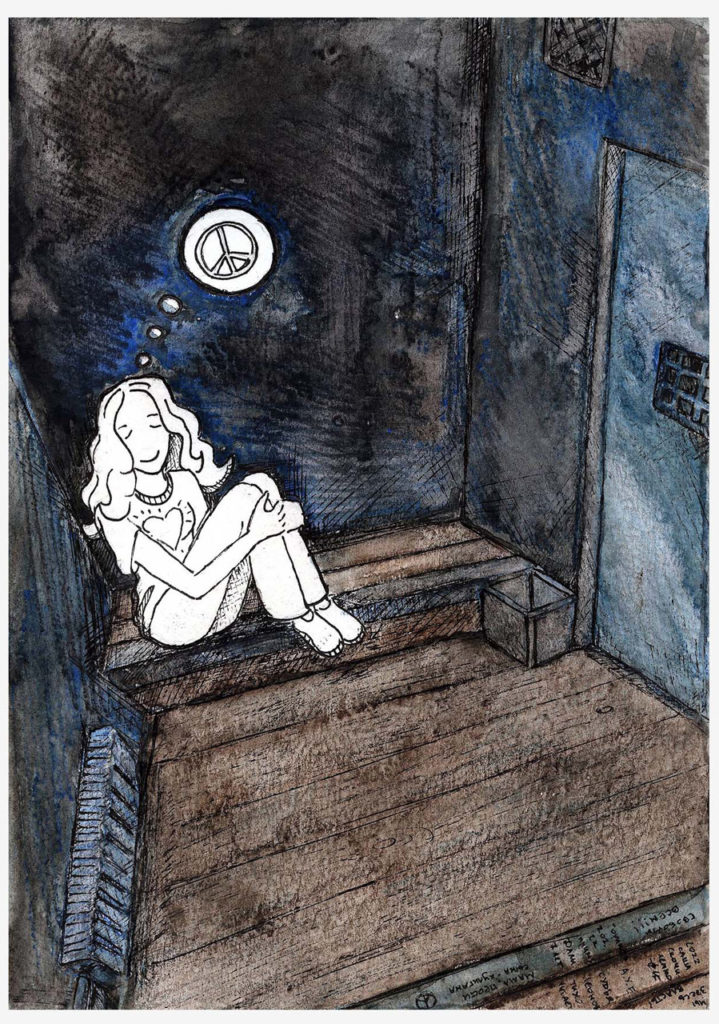
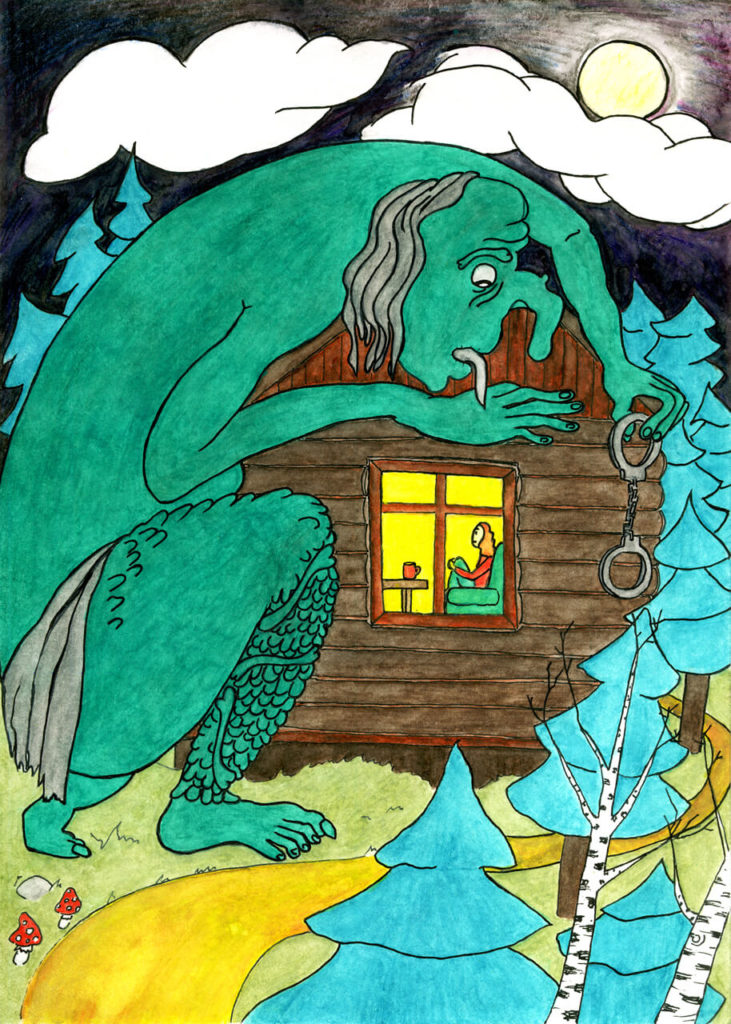
But more than this, the feeling of existential horror, which spreads from the chest and as if crushing me to the ground, exhaust me. This is not about the fact that someone can abruptly jump out of the corner-this is rather as if a gigantic monster was moving on you, and you are standing in a daze in the face of your fear. At such moments, it helps me to do something meditative-for example, respiratory gymnastics, or stretching, or a drawing with a huge number of small details-you are simply distracted from this sensation, and you can wait until it passes. Sometimes you have to wait all day.
Probably common to all the injured, whom I had to meet, is that they understand the meaning of their injury and think that there are events that injure people stronger. As I understand it, the very first step towards cure is the recognition of the problem. What happened to you is actually terrible. Injuries cannot be compared. And no matter what happens, this does not make you a bad or unworthy of treatment.
For almost two years to me, despite the fact that I watched all the symptoms of PTSR and even began to treat it, it stubbornly seemed that nothing terrible had happened. During the detention, no one broke the limbs, I was not tortured with a hot iron during interrogation, my cellmates never beat me, no one stuck my sharpening in the side. I just live in the cell, and if I am serious and suffered, then separation from loved ones, and people write to me: “I can’t imagine how hard it is for you now” or “You are there now, in this hell.” And I often do not understand why they write it at all.
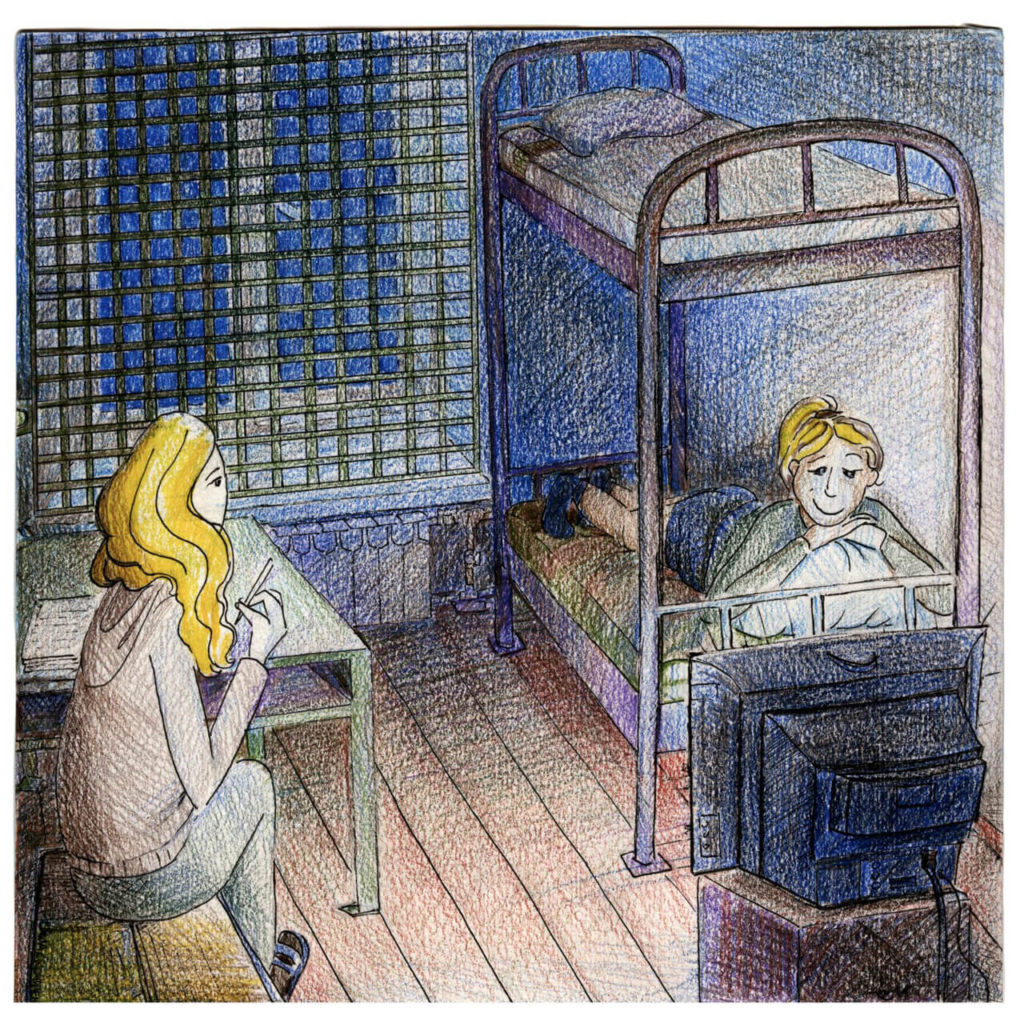
But recently I thought: but, probably, the prison is scary. When I was in the wild, I myself was very afraid of prison, just panic. Administrative arrest in March 2022 for seven days seemed to me something unimaginably terrible. What to talk about? Most people in Russia are afraid of prisons than war.
I thought about it and came to the conclusion that the prison is so terrible precisely because it embodies a whole complex of human fears. The prison is terrible not only in that it is connected with violence (and the fact that you are locked several times a day or do not provide proper medical care is already violence). The prison is also associated with a large number of social fears: fear of loss of privacy (when they read your letters, when you live under the cameras, when the toilet is covered only with a partition), the fear of plunging into the marginal environment, the fear of getting the status of a former convict, which relatives are not hired and relaxed.
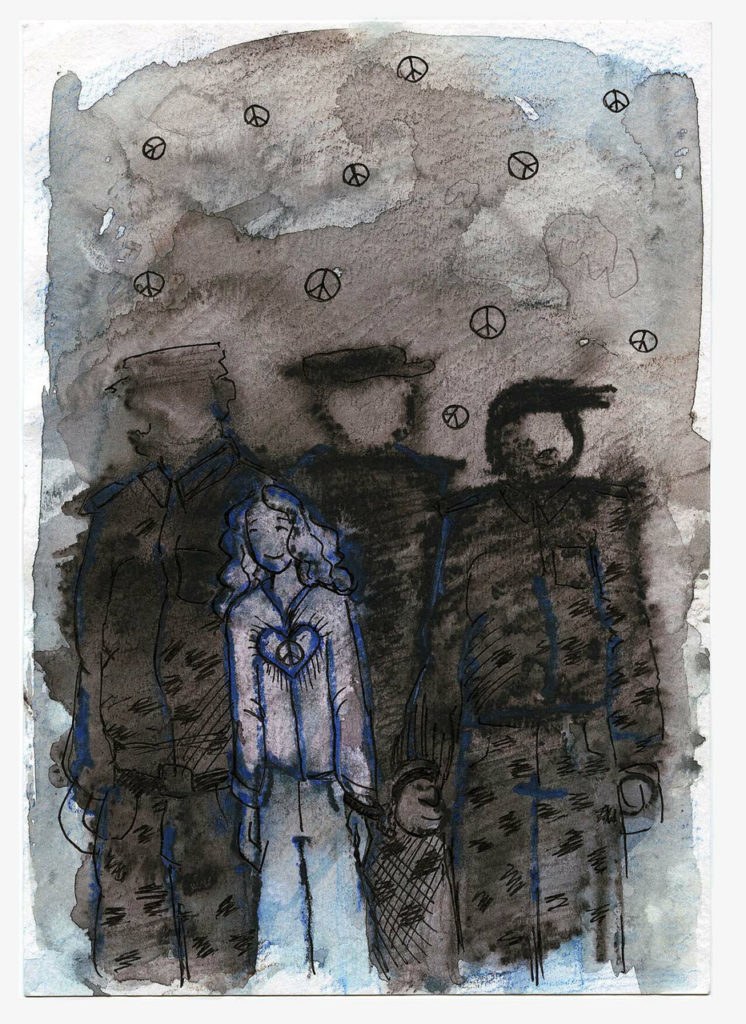
The reason for these fears is not only a person’s personal attitude to the prison, but, as it seems to me, a consequence of a collective injury. Society is also a subject, and it can receive injuries: in 1930–1940, almost every person has, if not a relative, then a familiar, no, no, and was among the repressed ones. People owned the fear that a loud knock on the door would be heard. And this fear is not just violence or unbearably heavy survival in the camp. This fear of death as such: physical - repressed were shot or simply slowly killed; And spiritual - such people simply crossed out of life, relatives rejected from them so as not to get into prison.
This fear is passed down from generation to generation. Children could not tell the whole truth, but any child feels when something is wrong, and parental anxiety is always given to him. That is why this fear is so monstrous - it is the monstrous of all that I had to go through.
Now the medicines that the doctor prescribed for the treatment of bipolar disorder help me - they reduce the intensity of PTSR symptoms. Respiratory gymnastics, running, meditation, exercises from EMDR and KPT specialists also helps me. But in the first place in the cure of PTSR - of course, psychotherapy (unlike the bar, PTSR is not treated with medicines). And I can really and truly cure PTSR only when my conclusion ends and the traumatic experience is behind.
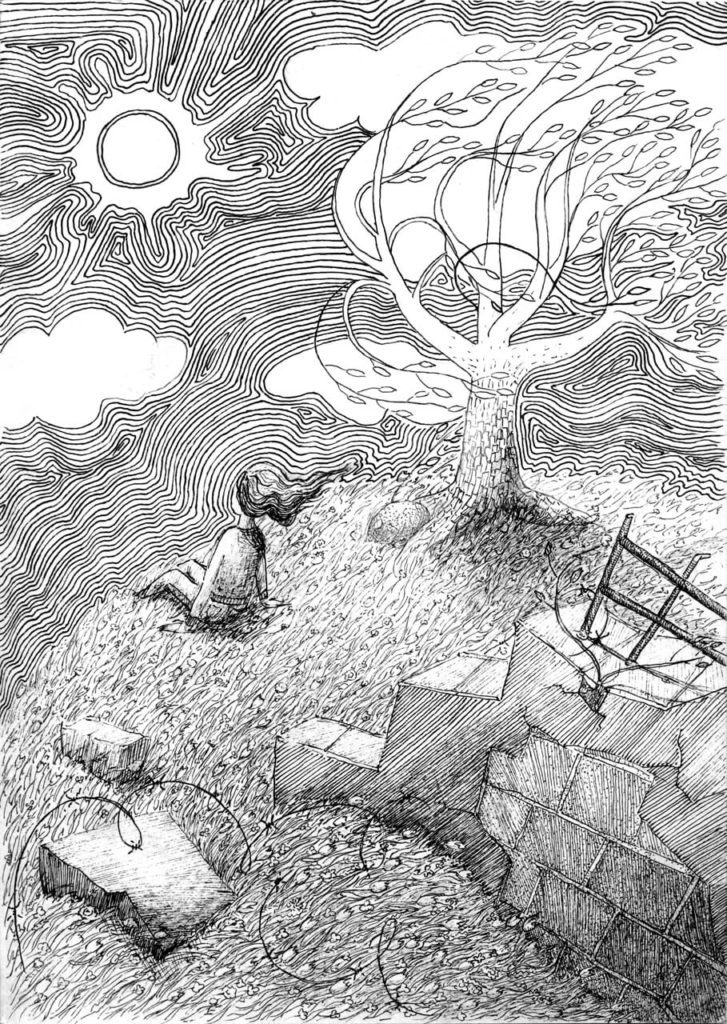
If in this text any of the symptoms of PTSD seemed to you familiar, then please contact a specialist. A serious psychological trauma can be obtained not only because you were subjected to violence - physical or psychological - but also if you witnessed violence , visited the war zone, got into an accident, survived a natural disaster, experienced the death of a loved one or even underwent a very painful medical procedure in early childhood, and also much more.
If you are faced with PTSD, you need to get help in a timely manner. One of the worst consequences of the advanced PTSR (which, fortunately, I do not have) can be suicidal thoughts and even a complete suicide.
But I believe that even the most severe injury can be healed if you work a lot in this direction.
The commentary of the candidate of psychological sciences Maria Padun, which Sasha describes, can help one people and not help others. Therefore, if you have symptoms that bother you, contact a specialist correctly.
As for the PTSD in political prisoners, this is a big topic for future research, since most people are now inside this situation and the consequences are still unclear.
Наука говорит о том, что людям в большей степени свойственна жизнестойкость, чем уязвимость. ПТСР — достаточно редкое явление в популяции, и даже у участников военных действий оно встречается не более, чем в 20% случаев.
ПТСР у заключенных встречается достаточно часто (18% у мужчин и 40% у женщин), но не в связи с арестом и заключением, а из-за предшествующих травматизаций, которые часто имеют место с раннего детства.
Однако это результаты западных исследований, проведенных в странах, где в целом соблюдаются права заключенных. Как это выглядит в современной России, нам только предстоит узнать. Понятно, что сама ситуация лишения свободы негативно влияет на ментальное здоровье из-за фрустрации жизненно важных потребностей человека. Вместе с тем все очень индивидуально — вспомним Виктора Франкла, написавшего в концлагере главный труд его жизни.