
Translated material
Operation Red Cross
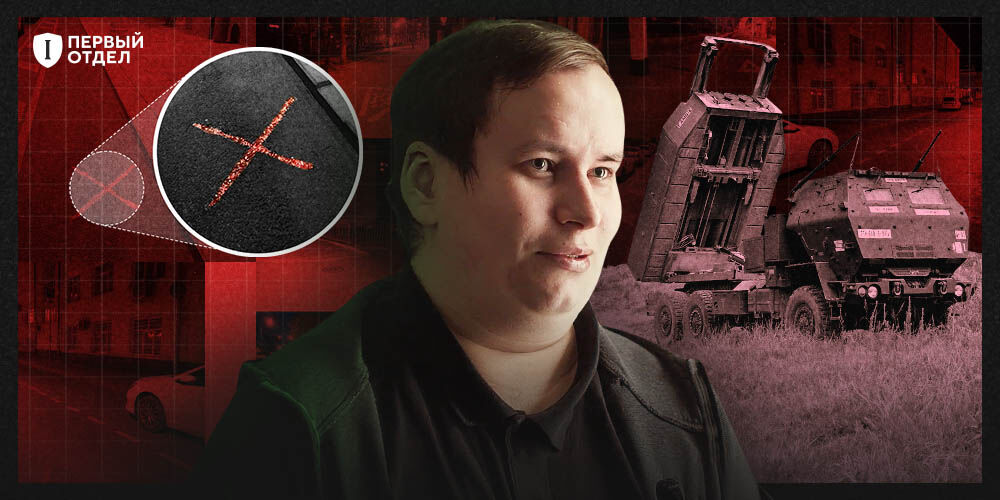
An electrician from Moscow was facing life imprisonment for graffiti in the center of Moscow, the “First Department” saved him
In the spring of 2023, first Ukrainian and then Russian telegram channels exploded with messages about strange graffiti - red crosses that began to appear in the center of Moscow. They wrote that these were tags for Ukrainian missiles. Their author turned out to be an ordinary electrician, outraged by the war. “The First Section” tells why he did it, how he was detained and how he was saved.
Victory Day
On May 9, 2023, 26-year-old electrician Konstantin Kochanov had his first day off in a long time. At about 11 a.m. he left the house to go to the store and noticed a car parked near the entrance. There were three people in the car.
Kochanov felt that something was wrong with this car. He looked away, walked past, and, after taking a few steps, looked at her again in the reflection in the window. The car doors were open. Three men were running towards him.
A moment - and now electrician Kochanov is lying with his arms twisted on the asphalt. A couple of minutes - and he was on a bus with SOBR soldiers, who were hiding in a neighboring yard in case Kochanov, short and overweight, resisted.
Kochanov, of course, did not resist - he understood what was happening to him and why. On the bus, the security forces asked him only one question: “Whose Crimea?” “From your point of view, yours,” Kochanov replied.
Operation Red Cross
For most of his life, Konstantin Kochanov was not interested in politics and believed that “we have a normal president.” Faith in power has been shaken by Navalny’s investigations. This faith was completely destroyed by the war.
During mobilization, Kochanov lost a friend. He was detained right on the street and taken to the military registration and enlistment office, and then sent to the front. “Then I realized that I didn’t want to be next,” says Kochanov. He started Googling what options he had in case he was drafted into the army. I found the Ukrainian project “I Want to Live,” which calls on Russian military personnel to voluntarily surrender.
“I wanted to establish a connection with them in advance, so that, if anything happens, I would immediately give up. I wrote to them. They answered and asked if I was ready to help with anything from Moscow. I answered: yes. They suggested this option: draw red crosses in public places,” says Kochanov.
At night, a few days before Victory Day, he put on a cap and hood, took a can of red paint, rented an electric scooter and went to the addresses to paint his primitive graffiti.
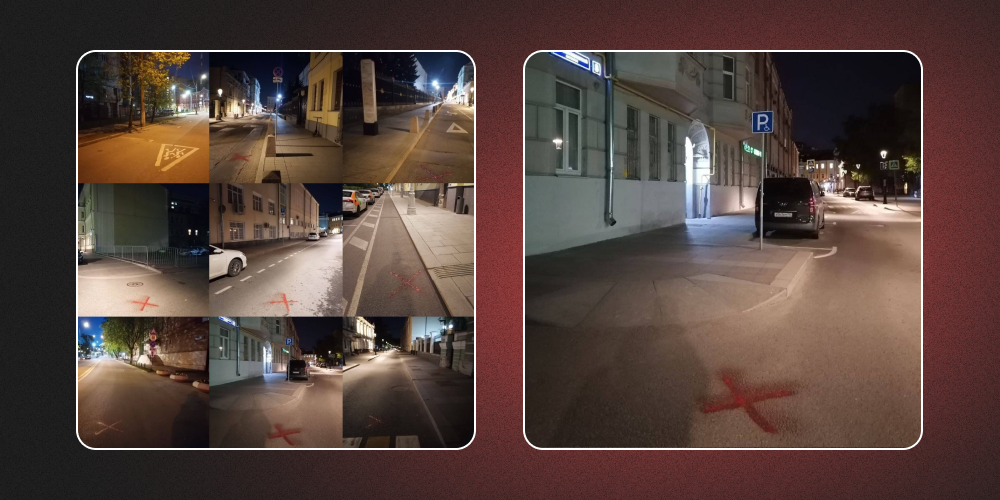
Kochanov understood that he was drawing “scarecrows.” Ukrainian telegram channels spread rumors that these crosses were markers for missiles. It appears that some war-scared Russians believed them. Few civilians understand how military drone navigation works. Perhaps, however, without a cross there is no wall - they will get lost in the dense Moscow buildings?
However, the most devoted audience of Ukrainian telegram channels are employees of the Russian special services. Of course, they couldn’t miss the news about the “missile tags” in the center of Moscow. There are two good news,” they smiled when they saw the first message: the person who drew this is in Moscow, and is obviously naive.
“When I saw these crosses on the news, I thought that no matter who painted them, big troubles could happen to him in the near future,” says lawyer Evgeny Smirnov. He understood that the center of Moscow was entirely covered with surveillance cameras and the author of the graffiti would be found in the very near future.
Three days later, Kochanov was already in a special detention center. A day later, Kochanov’s relatives contacted the First Department and asked for protection.
15 days with the prospect of a life sentence
“Either you tell everything, or we take you to the basement, work with you, and you tell us everything there,” the security forces told Kochanov during interrogation after the arrest. Kochanov repeated that he was not going to hide anything and admitted: yes, the crosses are his work.
First, he was charged with an administrative offense - disobedience to a police officer, and was given 15 days. This is standard practice of the FSB - while a criminal case is being “assembled”, a person is imprisoned for nonsense, then they are detained at the exit from the pre-trial detention center, they again register insubordination, again they leave for 15 days - and so on until the real, big charge.
Nobody hid from Kochanov where everything was going. They directly told him: “you will go along the 275th” - this is an article about high treason, which now carries a punishment of up to life imprisonment. That is why the First Department team had no doubt about whether Kochanov should be protected.
Yes, Kochanov is formally guilty. But is he guilty enough to receive more time than for murder?
Evgeny Smirnov: “Kochanov did not kill anyone, he did not cause any real harm to the Russian Federation, because these crosses were talked about in telegram channels for several hours and safely forgotten. But the risks for him were absolutely monstrous. This was the first case after it became possible to impose life imprisonment for treason. These are disproportionate risks to what he did. It is clear that in this situation the person needed help.”
Chekist mistake and miraculous rescue
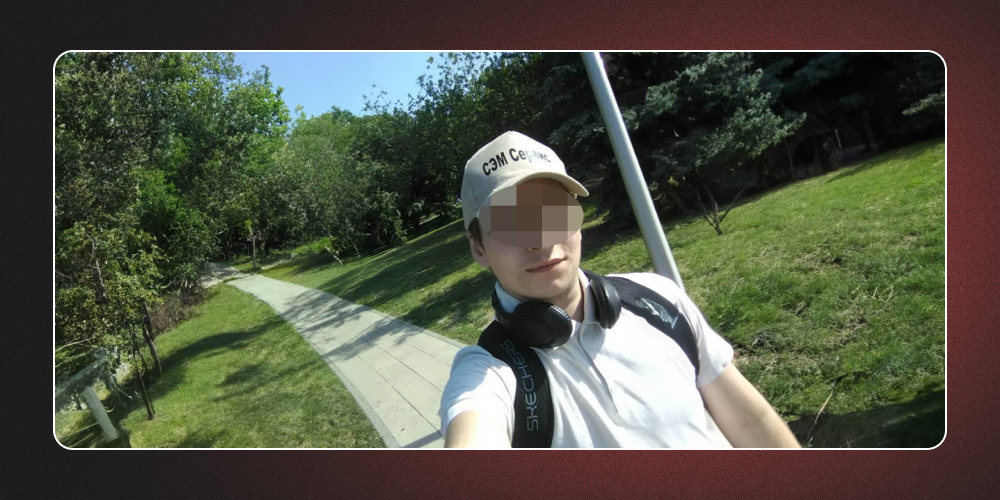
The story of the rescue of Konstantin Kochanov is the story of the mistake of the security officers and the instant reaction of lawyers to this stupidity. In order not to renew the arrests every 15 days, the FSB decided to open criminal cases against Kochanov for hooliganism and vandalism. This made it possible to leave him in a pre-trial detention center for several months and prepare all the materials for charges of treason.
“The main thing for them is to fix a person in a pre-trial detention center, and in what way is not the point. A person is deprived of contact with the outside world and any help. FSB officers come to him whenever they want. He is completely in their power,” explains Smirnov.
The nuance is that in cases of hooliganism and vandalism, which the special services rarely deal with, there is a certain period of inquiry. When this period expires, the case must go into investigation. The security officers, it seems, simply did not understand how it worked, and they did not have properly established communication with other security services.
At some point, Kochanov’s investigation period ended, and the case was handed over to investigators who did not know the background of the case. The security forces simply made a mistake. A temporary lag formed, which the defense immediately took advantage of and changed Kochanov’s preventive measure. The next day he was released from the pre-trial detention center on his own recognizance.
“He is being released under another preventive measure that does not involve imprisonment. In fact, this means that the person leaves the pre-trial detention center and is sent to all four directions. He is not allowed to leave Russia, but he can walk freely around the city,” explains the head of the First Department, Dmitry Zair-Bek.
Escape
It was clear to Kochanov’s defense that he was about to be detained again, and this time for a long time. It was necessary to hide the graffiti artist and organize his escape from Russia as soon as possible.
“It is very important to think through all the elements for safe departure from Russia. Each escape is a unique special operation with an individual plan. Crossing the border is a difficult journey that involves enormous risks. Not only legal, but also physical. Try, for example, to cross a swampy area from Russia to Finland in the spring - you will have to travel many tens of kilometers at night, with your phone turned off, and at best, having only a compass,” says Smirnov.
We cannot tell you exactly how Kochanov left Russia, but we can assure you that during his escape he managed not to violate the procedure for crossing the border of any state. “In the petition for choosing a preventive measure, the investigator always writes that the person can hide from the investigation. In fact, Kochanov hid from the investigation, he really abused, violated his preventive measure, but at the same time legally left the country. This is possible,” confirms Dmitry Zair-Bek.
This is a unique case when a person who collaborated with the Ukrainian side was detained, placed in a pre-trial detention center, against whom a case of treason was being prepared, was able not only to avoid punishment, but also to leave Russia.
In the new country, Kochanov quickly found work: “Every day I wake up, wash my face, go to work, assemble electrical panels, and then go home. Nothing interesting,” he tells of his current life.
"Nothing interesting." Thousands of Russians, languishing in dungeons, accused or convicted under the most serious articles of the criminal code for graffiti, fasting, careless statements, transferring a tiny amount to Ukraine, would give everything to lead such an uninteresting life.