
Translated material
Crimes without punishment
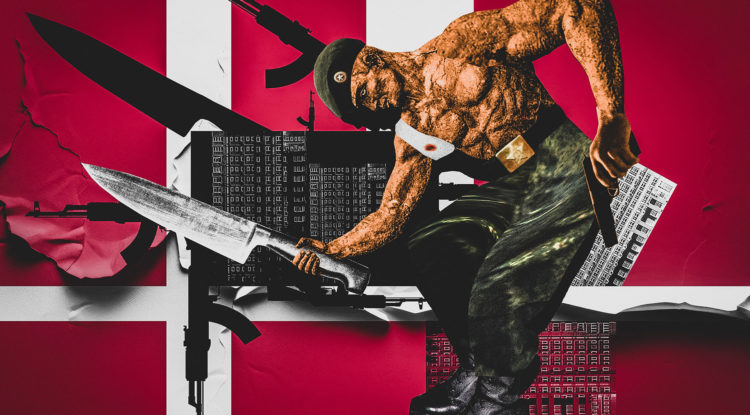
Hundreds of fighters who returned from Ukraine forgive murders, drugs and beatings. For “Heroes of Svo”, the law works in a special way
The war changed the Russian legal landscape - now involvement in hostilities becomes a mitigating circumstance not only for those who committed a petty offense, but even in case of serious crimes. For drugs, robberies and violence, “Heroes of Svo”, unlike other Russians, receive conditional punishment. Similar concessions act in relation to those who are ready to go to fight - sometimes they are not even judged, but immediately sent to Ukraine. Relatives and friends of former fighters most often suffer from the "returners". What crimes are committed by the fighters who returned from the war and how Russian courts turn a blind eye on them - in a large study of the "cold".
In order not to miss the main materials of the "cold", subscribe to our Instagram and telegram .
In the war with Ukraine, more than 600 thousand Russian military were involved , but only hundreds of them manage to return home living: the authorities hold them at the front without the possibility of demobilization. It is almost impossible to return from the war: the contracts that sign with the Russian Ministry of Defense are unlimited - they cannot be terminated until the end of the hostilities. Even the fighters mobilized in 2022 refuse to change , despite the fact that they did not sign contracts.
Until the summer of 2023, the exceptions were only for those who fought as part of private military companies, first of all, Wagner PMCs. The fighters who survived until the end of the contract got the opportunity to return to a peaceful life, and former prisoners - freedom and even recognition of combat merits. The riot of Evgenia Prigozhin put the cross on a special position of the mercenaries, and now the conditions of their agreements are the same as that of the rest.
Cooperation with the Ministry of Defense is one -way ticket with weekly breaks in the form of short leave. One of the few ways to return from the war is to get a wound incompatible with the continuation of hostilities, or to die. However, those few who were able to return can often adapt to a peaceful life, becoming the heroes of criminal reports.
The "cold" analyzed publicly accessible court decisions and found out that justice in respect of "Heroes of Switch" works in a special way. For murders, robberies and violence, the “returners” receive the most mild terms and loyalty of the authorities.
* As the cold thought *
The research was based on two sources: the official database of GAS Justice and an alternative site with a database of court decisions . With the help of keywords, “cold” selected 220 sentences for two years of war - from February 24, 2022 to February 24, 2024. Only criminal cases in which the military personnel and mercenaries of the PMC appeared in the sample who took part in the hostilities in Ukraine appeared in the sample.
The following words and phrases were used to search for criminal cases: “soldier”, “Wagner”, “PMC”, “Special military operation”, “Ukraine”, “mobilization”, “mobilized”, “awards”, “awarded”, “pardoned”. The study is based on the already issued sentences of the courts, so many high -profile cases that are still being considered did not fall into the sample.
The folder of criminals
Most often, residents of the regions closest to Ukraine and the so -called depressive regions , where the population have low income, suffer from the “returners”. In the leaders - the Rostov region. According to the analysis of the "cold", it accounted for 19 criminal cases. In second place is the Stavropol Territory, where 17 cases were recorded. The Volgograd Region and the Republic of Bashkortostan (12 each) are closed by the three. Also in the leaders of the Chelyabinsk and Orenburg regions.
220 Ceyes “Cold” divided into two categories: criminal cases of crimes with the use of violence and without it. The non -violent criminal horizons of the returners are very wide: from the falsification of documents and the use of official powers for personal purposes to drunken driving and illegal hunting.
Non -violent crimes are more popular among "returners". In the first place in the number of offenses was the management of the vehicle in a state of intoxication-56 cases, in the second-theft (51), the 36th Ceyes is closed by the three “drug” article. The TOP-5 also included the illegal spread of weapons (15 cases) and fraud (9 cases).
Yesterday's fighters steal, as a rule, something insignificant in stores: for example, vodka or take some personal belongings from passers-by. Drugs became popular among the “returners” due to the horrors and stress of the experienced: some of the accused directly indicated that they wanted to forget or relieve pain.
*Of court decisions in relation to "returners" *
“I took four bottles of vodka, four sticks of sausages, a bottle of oil, a loaf, one package of milk, mayonnaise and cheese for a total of 2073 rubles 83 kopecks from the trading racks, which the purchasing basket that did not represent material value.”
“He participated in his, he has injuries and injuries that cause him pain. On the Internet, I read that if you use narcotic drugs, the pain is easier to bear . ”
“I stole cash in the amount of 914307 rubles for free, socks 10 pairs, of which 8 pairs are 41–46 sizes, 2 pairs of 12-14 sizes with a total cost of 840 rubles, a wallet with a male value of 390 rubles.”
As for the weapons, most of these cases are associated with its illegal export from the war-sometimes the military simply take away something from the weapons “as a keepsake”, and sometimes use it. In the Belgorod region, the military sold civilian weapons, which they were able to take out from the front. In one of the criminal cases of illegal storage of weapons, the defendant so explained his motivation for the commission of a crime: “he intended to use the weapon as the protection of his family, the elderly parents living in the territory of the territory in the conditions of a tense situation in the region in a special military operation.”
Criminal cases with the use of violence “Kholod” were counted by 43. The most popular article among former participants in the war with Ukraine is the 111st article of the Criminal Code of the Russian Federation: intentional infliction of grievous bodily harm (10 cases). Those who return from the war conflict with relatives and friends, and sometimes simply with random passers -by while drinking alcohol. The main reason for disputes and conflicts is a war with Ukraine.
A separate point is home violence, as a result of which the wives and children of the former military are threatened. For example, one of the “returners” greatly beat his wife and threatened her with a murder. True, the court failed to remove the instrument of the crime. For health reasons, in connection with the amputation of the left lower limb as a result of the injury in a special military operation, ”the court decision said .
** From the decisions of the courts in relation to the "Returners" ****
“ The husband returned from Ukraine, began to drink often and quarrels began to appear between them again. On June 5, 2023, the husband came home drunk. The wife saw that her husband hit their son in 2016 in the face, unable to calm her husband, she called the police. Currently, the husband was treated from alcoholism, relations in the family are good . ”
“During the drinking of alcohol, a dispute arose between them, who shows itself better and more effectively in the fighting: the Wagner PMC or the Ministry of Defense. At about 5 in the morning he took a small ax with a yellow wooden handle, approached the victim No. 1 lying on the sofa and delivered one blow to the chest from the side of the back and one blow with an ax into the left thigh from top to bottom. He did not have intent to kill the victim No. 1, he did it from anger . "
In second place is the use of violence in relation to a representative of the authorities (8 cases), in third - causing harm to the health of moderate gravity (7). Top 5 also has a threat of murder (6) and murder (4). Representatives of the authorities become victims of “returners”, as a rule, as a result of household and family quarrels. Usually, police officers who cause one of the parties to the conflict are suffered to protect themselves from the second, which is intoxicated. In one of these cases, the “Hero of Svo” was so drunk that he did not even remember that he hit a police officer.
Know the hero
Court documents often do not allow to determine the war participant in Ukraine. Of the 220 sentences analyzed by “cold”, only 45%, or 100 of them, give an idea of the criminal. In other court decisions, representatives of the judicial branch are limited to a blurry wording - “participant in a special military operation”.
The privileged position when concluding contracts for mercenaries made them the largest group in the study of the Cold. In the first place were representatives of the Wagner PMC - out of 100 trials, they accounted for 42 cases. In second place, in which there may be representatives of two categories of military at once: mercenaries of PMCs and contractors of the Ministry of Defense. They are identified by the courts exclusively as “contractors”, without specifying the place of service. There were 27 of them among 100 cases. The third place in the Volunteer group - 17 people. The top 5 also included former prisoners, six people, and mobilized-two cases.
From the descriptions of some cases, we can conclude that the “returners” were repeatedly convicted, and are also pardoned by President Vladimir Putin personally, as a result of which their past criminal records are considered “repaid”, and new crimes are not related.
** From the decisions of the courts in relation to the "Returners" ****
“He was repeatedly brought to criminal liability, is characterized positively, has state awards, the Russian Ministry of Internal Affairs is characterized satisfactorily, does not consist of a psychiatrist’s doctor, does not consist of a narcologist,“ “mental disorders and behavior disorders associated with combined drugs and other psychoactive substances, and the syndrome of dependence”.
“ *The man offered to distribute “ AK-74M automatic, ammunition to it for free, a shot of VOG to the grenade launcher “bonfire” , which were brought after the Russian army from Kharkov: “He explained that there is a lot of such weapons and he can give it free .” *
Judicial cases also indicate that prisoners who were in the colony back in the 1990s went to the war. One of them was convicted back in 1995, and after liberation he again hit the bars and went out of there already to the war as part of Wagner's PMC: “He did not go through military service, since he was convicted in 1995 when he was 14 years old. Verich E.K. He worked in the Wagner PMC, and therefore considers himself a military person as a military service. Based on the Decree of the President of the Russian Federation, Verich E.K. It is pardoned, in connection with which he has the criminal records are repaid in the established legal order. Currently, the Baksan Broiler agricultural group as an agricultural group as a bird handler. ”
Humanity for their own
The war in Ukraine is an officially mitigating circumstance for court decisions. In almost all the “cold” cases analyzed by the “cold”, the “Svo” is filed as an occasion to mitigate the punishment - and in almost all criminal cases the court softened the final punishment.
A striking example is a drug article (228 of the Criminal Code): If ordinary citizens on it are most often given a real term, then ex-military is finished with conditional punishment or fine. Even for crimes related to violence, those who visited the war receive conditional punishment. For particularly serious crimes (for example, murder), according to the estimates of the “cold”, former fighters receive an average of 6.7 months of a real term, for heavy (beatings, storage of weapons) - 6.5 months of imprisonment, and for medium -sized crimes (theft, drugs) - only 1.2 months.
* Of court decisions in relation to "returners" *
“I dropped it to the floor and inflicted at least 10 strokes with fists in the head, chest and at least twice kicked with his right foot in the legs. Continuing the realization of his criminal intent, he pushed the victim in an open underground 2.2 meters deep, from which the latter fell into it from a height of its own height, while falling, hit the chest on the wooden step of the stairs, and then hit her head on the floor of the underground. After that, Dondukov b.g-g. He threw a cardboard box with the contents on her, which fell on his head. Continuing the realization of their criminal intent, the b.g-g-g belk. He went down to the underground indicated and inflicted at least two strokes with fists of his hands on the head and body, ”for this beating the wife of Bair Dondukov from Ulan-Ude received three years conditionally.
A separate mitigating circumstance, when considering criminal cases, the court is perceived by all kinds of awards and insignia obtained in the “zone”. Diplomas or gratitude from the authorities of the annexed DPR and LPR are equated with state awards and medals from the Wagner PMC - for example, “for the capture of Bakhmut” or “for the capture of Soledar”. According to the analysis of the “cold”, in 49%, or 107 criminal cases of “returners”, the court took into account the listed awards as a softening circumstances.
In the case of participants in hostilities, justice works selectively. There are cases when the defendant simply leaves to fight further and the verdict is actually not issued: “A preliminary investigation in a real criminal case against D.A. Testov, in connection with the latter concluding a contract with the Wagner PMC and a departure to participate in a special military operation, was suspended.”
A similar decision was made in relation to “who showed courage and marked by the departmental awards of the“ Wagner ”PMC” Kaurnykaeva Kh.A. After his decision, the court freed him from punishment for drunken driving, the official reason - "in connection with a change in the situation" to continue his service in the ranks of the mercenaries. Some criminals managed to escape to the war before the hearing.
However, it is possible to avoid punishment even when the accused was not a participant in hostilities, but expressed a desire to become them. In most similar cases, the court really counted the promise to conclude a contract and go to war as a softening circumstances and changed the verdict for less strict. For example, Sergei Shishmarev was accused of attempted murder - he brutally beat a friend with whom they drank alcohol, and hit him several times with a knife (the man managed to save).
* Of court decisions in relation to "returners" *
“Shishmarev entered the store, he was intoxicated, he said that he would go to Ukraine, he was dressed in a pea jacket. His hands were in blood, there was also blood on his clothes. He [witness] Shishmareva brought him to the street, began to ask what happened, and he answered him: “ I cut it there, went to the war ,” the materials of this case said .
It comes to the point of absurdity: some defendants directly justify the crimes with the desire to go to the combat zone. For example, the circus watchman Vyacheslav Shlykov, who torn several hemp bushes, claimed that he was going to throw them out later, since "he plans to take part in a special military operation." And the defendant Roman Kozlov said that he had theft of a punch worth eight thousand rubles to get to the mercenary base and conclude a contract.
* Of court decisions in relation to "returners" *
“At the hearing, he explained that his intent covered the theft of only a network punch, which he planned to pass into a pawnshop. For the proceeds, I wanted to go to the place of completing the combat units of the Wagner PMC for the conclusion of the contract, ”the case materials said . Now Kozlov will be able to go to the war from a maximum security colony, where he was sent for a year and eight months.
The presence of a relative who fought in Ukraine, or volunteer work also helps to get a concession from the court. You can achieve mitigation of punishment with money. Many defendants literally ask the court about this, since after the service they have significant funds. “In the deed, it repents, asks to assign a fine within the sanction of Part 1 of Art. 264.1 of the Criminal Code of the Russian Federation in the minimum amount of 200 thousand rubles, since he has funds that he received in connection with a wound on his own in Ukraine, ”one of the cases said .
Correct charity can also help: in one of the affairs of the “returner”, the mitigating circumstance was the material support of the “I without Mom” charity fund. The same method helps those who do not fight relatives, but there is money. Donations for the needs of the army or in the correct charitable foundations also helps to build up or soften the final punishment. Moreover, the amount of donations is unimportant - in some cases it was only one and a half thousand rubles.