
Translated material
"Where are the ammunition?"
Journalists Ilya Barabanov and Denis Korotkov wrote a book about the history of PMC “Wagner”. That's what it turned out
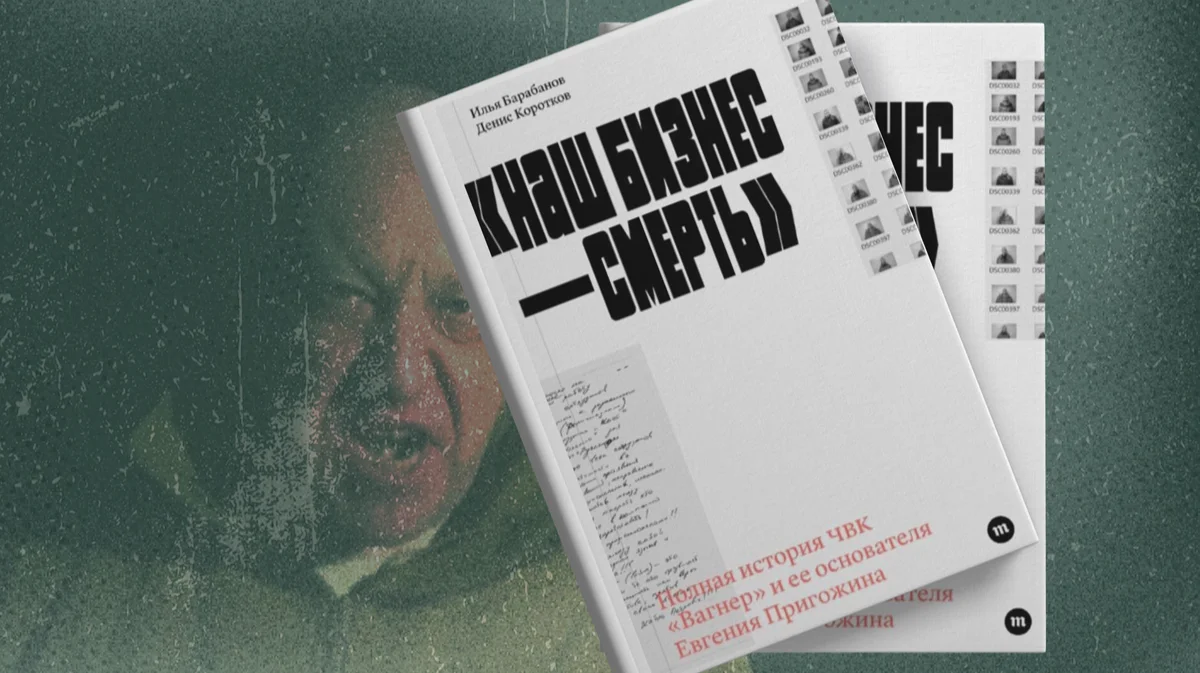
Illustration: Especially for Novaya Gazeta Europe
I'll start with a personal story. The fact is that the Wagner PMC did not pass by and my family too. In my father’s hometown, the monument was erected by Evgeny Prigozhin and Dmitry “Wagner” Utkin - not far from the hot key is the Molkino military training ground, who served the “Wagner” of the transshipment base and the training center, a whole necropolis from the monuments killed mercenaries grew near the city. And shortly before the rebellion, the roommate of my aunt, the 50-year-old veteran of the Chechen wars, went to Wagner to work. Since then, there has been no news about him.
The Wagner PMC left, as it is customary to say, a noticeable mark in Russian reality, and its influence will be felt for a long time. In the meantime, you can summarize preliminary results-which is what the journalists Ilya Barabanov from the Russian BBC service and Denis Korotkov from the Dossier Center took up.
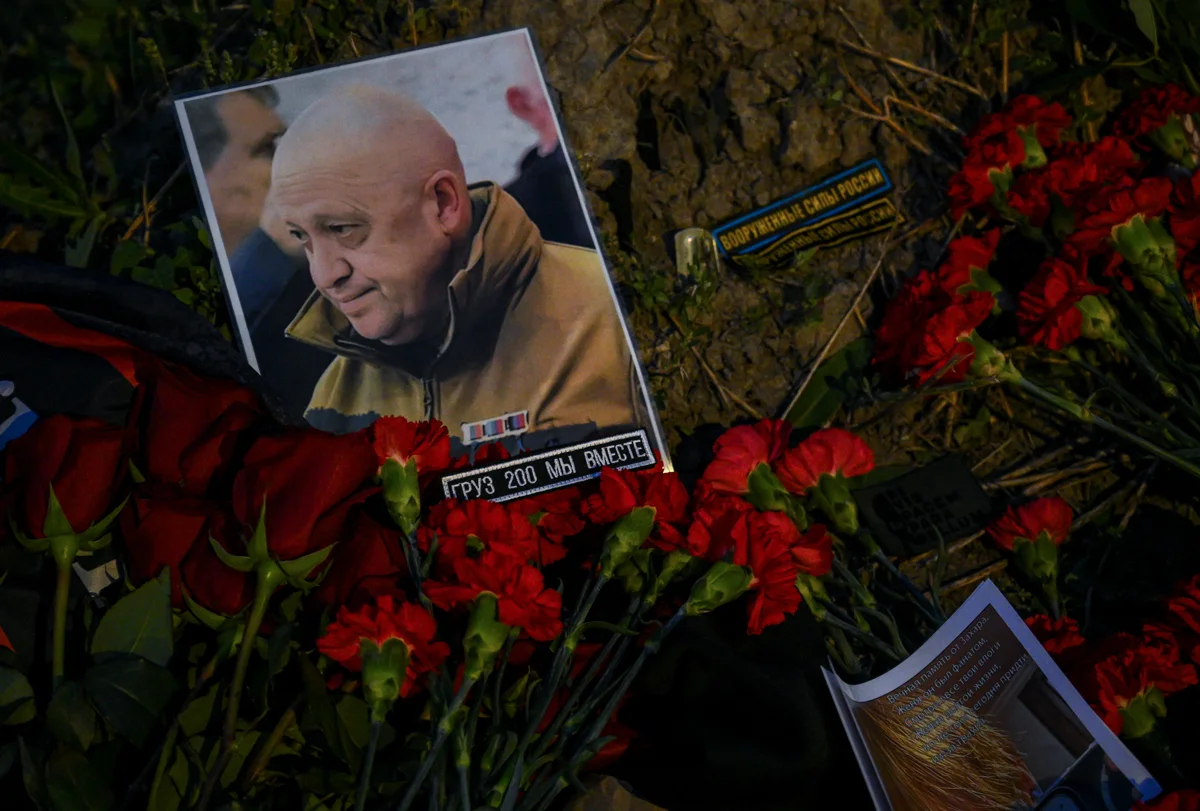
In the sense of the composition of the text, the story of Prigozhin and his mercenaries ended as a more cinematic - an explosion of an airplane, the involvement in which the authorities do not really try to deny.
Due to such an ending, a documentary story about Prigozhinsky military adventure is read approximately as an unwritten volume of the “godfather”-with the adjustment that Prigozhin does not pull on the role of a noble mafiosi.
Details, with the involvement of internal documents of PMCs, drums and Korotkov, they describe Prigozhin’s path from the St. Petersburg Street Shpana to the Metordotel at the most important meetings of Putin with Western politicians and then to the head of the private army. Along the way, the authors disavow the widespread myths about Wagner PMCs, some of which the head of the corporation himself distributed with pleasure. For example, that Wagner was no different from other world PMCs: no, the activities of PMCs are regulated by international agreements , which Prigozhin spat with a high bell tower - its private army can be compared only with a very swollen organized crime group. No, Wagner was not a Nazi organization, despite the frankly fascist views of his commander Dmitry Utkin (Prigozhina he sometimes remembered only “Khale Petrovich”), men of different origin and religion served in PMCs. No, Wagner’s mercenaries never fought effectively - a few military successes in Africa, Syria and Ukraine are explained by the numerical superiority and support of the Ministry of Defense, and not the strategic military genius of Prigozhin and Utkin.
By the way, about him. Probably, the central episode of the book is a massacre near Hasham in Syria in February 2018. Then, as a result of the blow of American aviation, about a hundred Russian mercenaries were killed, about two hundred were injured. This happened as a result of the next adventure of Prigozhin: he wanted to take away to his hands under the control of the Kurds of the refinery, but he did not calculate the consequences. As a result, the United States said they notified the Russian side before the blow and received a notice that there were no Russian troops in the sector. The dead citizens of Russia turned out to be mercenaries, whom the whole world soon spoke about . The situation with the dead looks more tragicomatic: the relatives of the dead mercenaries tried to get benefits from the Ministry of Defense and clarify the status of Wagner's internal awards, and the Russian bureaucracy had no idea how to respond to this.
For example, such a dialogue took place in one of the courts about the inheritance of the murdered “Wagnerist”:
- Why did you get it? What is this private military company? You would better listen to and look at the smaller media! What is this organization? Is this a group, or something? - Shulgin was indignant.
- This is an organization that helps our armed forces in Syria. Our son is not the only dead there.
“I don’t understand at all why your son went there.” Make money? Here the representative of the defendant spoke at the preliminary meeting that he went there to grow strawberries.
-Well, you can imagine that in the country where the war has been going on for several years, someone is going to grow strawberries?
- Have you been there yourself?
- I see it on TV!
-Why watch something on TV? It is generally harmful to watch, as well as listening to the news, ”said Shulgin.
In the course of reading, the question arises of how such a confusing structure could exist in general. As the drums with Korotkov, belonging to Prigozhin, explain the Concord group was hundreds of legal entities, which did not connect anything but the figure of Prigozhin. At the same time, these legal entities operated around the world, from St. Petersburg to Madagascar, which did not affect the effectiveness of the work of PMCs in the best way.
But in how the Russian vertical of power works, helpfulness is appreciated above competence. And he knew how to serve Prigozhin - as well as masterfully to eliminate competitors in his path. The book provides a story about how the catering company competing with Concordus tried to occupy the corporate catering market, and in response, Prigozhin PR structure arranged a whole performance with an event that St. Petersburg officials were invited to and where employees of Prigozhin were present under the guise of businessmen. The event was served by the company - competitor to Concord. At a certain moment, several people in the hall - those very dummies - began to pretend that they were bad, and later said that the food was spoiled. The planned tender competitor “Concord” lost.

However, in the successes of Prigozhin, the grain of his main failure was sprouted. According to Barabanov and Korotkov, Prigozhin turned his head in success in Africa. In Tsar and Sudan, he managed to successfully fit into the local political establishment and even imagine himself as a serious force in civil wars within countries (and he made this impression outside - including spectators in the Kremlin). Prigozhin decided that since he was able to put some kind of order in the third world countries, then it's time to do this at home. Hence the conflict from the Ministry of Defense develops into a direct collision, in which Putin refused to take the side of the PMC.
Behind all these political interweaving and thriller twists looms, in fact, a much more important social issue. Why were such a number of such different people ready to join Wagner, a muddy structure, which implies a huge risk, including being outlawed, and, moreover, does not give almost any guarantees?
Before a full -scale invasion of Ukraine, the number of PMCs reached several thousand people, after growing to tens of thousands . Former military, electricians, handymen, employees of Chop-in general, people who found themselves at the very end of the career path, but did not want to retire, although they wanted some changes. In Wagnere, they were given the opportunity not only to earn a lot of money, but also to make feats - as Prigozhinsky propaganda painted - for the “Russian world”. This was especially true for the military, who was not threatened with an increase above the colonel, and in Sudan, for example, they could communicate as adjutants on equal terms with the heads of entire states. So it turned out that such men in fifty, like a roommate of my aunt, went to Wagner from hopelessness, and Prigozhin generously promised and literally even fulfilled, albeit in a perverted form, their dreams. Just as later promised to pardon the rapists and killers in Russian colonies (and many really waited for him).
“Our business is death” is a meticulously written chronology of the life of PMC “Wagner”, especially useful for those who first learned about Prigogine during the rebellion of June 23 last year. Its only minus is in some dry presentation: it seems that Barabanov and Korotkov was so important to maintain the documentary accuracy of the narrative that there was almost no place for stories outside the main plot, although the drums are shared by the history, as the journalists had to cross the front lines in 2014 on a stolen SUV with French numbers.
At the same time, it is unlikely that people who are already familiar with the history of PMC “Wagner” will tell the book something new. Drums and Korotkov immediately say that they use the same internal documents of the company that were available and previously appeared in investigations. In other cases, they use information that is in the public domain. Therefore, you cannot call a sensational book - this is a well -set forth, but in general terms the already well -known story of Prigozhin and its military adventure.
The most interesting here is that Prigozhin found his chroniclers in people, whom during his lifetime he actively pursued both in the judicial and non -judicial manner so that they stop writing about him. But life, as usual, is more unscrupulous in literature.