
Translated material
"Uranus particles will irradiate a person from the inside"
In the Kurgan region, the wells of dangerous metal deposits flooded. What threatens the environment and people? Novyevropa learned from ecologists
The consequences of floods in Kurgan, April 17, 2024. Photo: Eugene Reasonable / Kommersant / Sipa USA / Vida Press
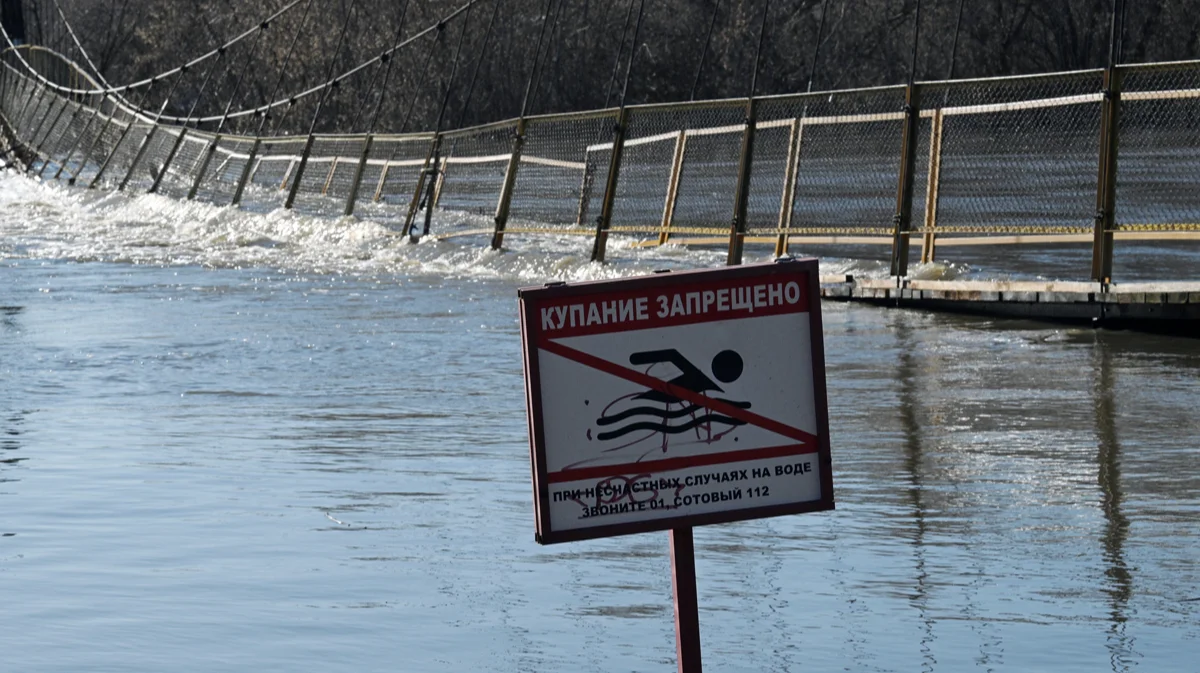
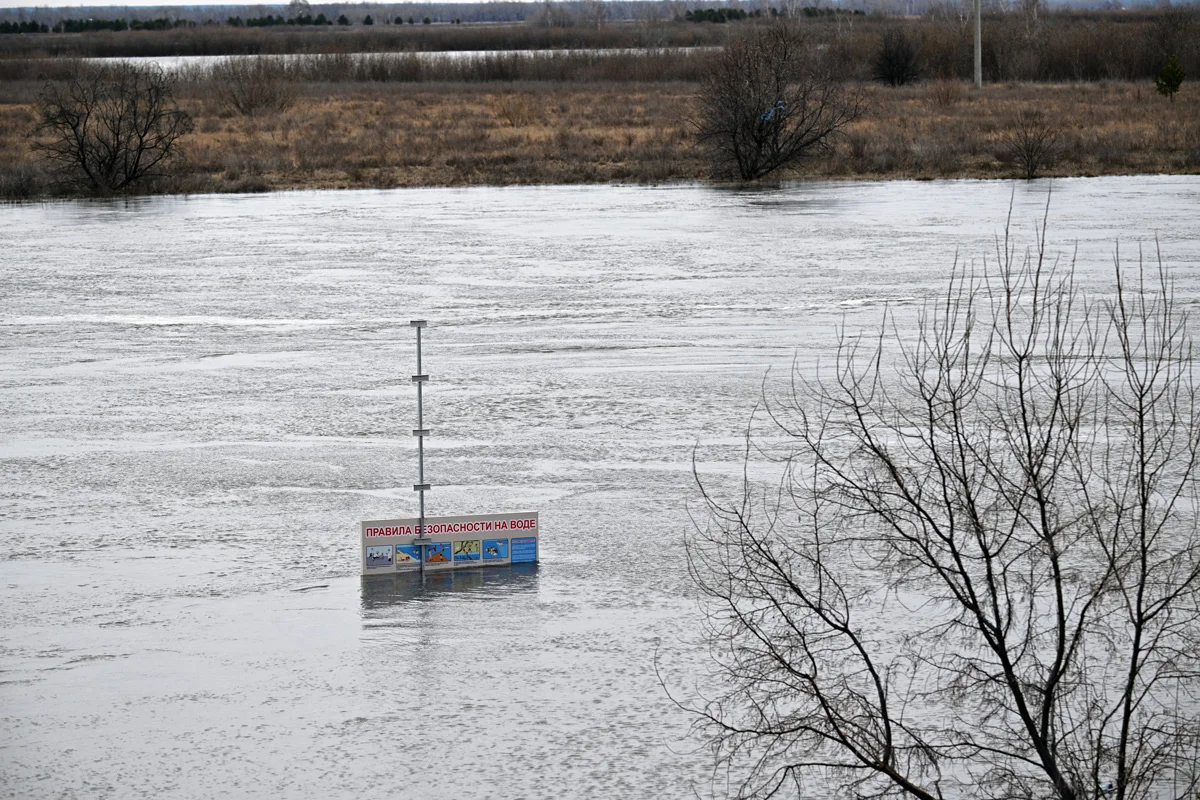
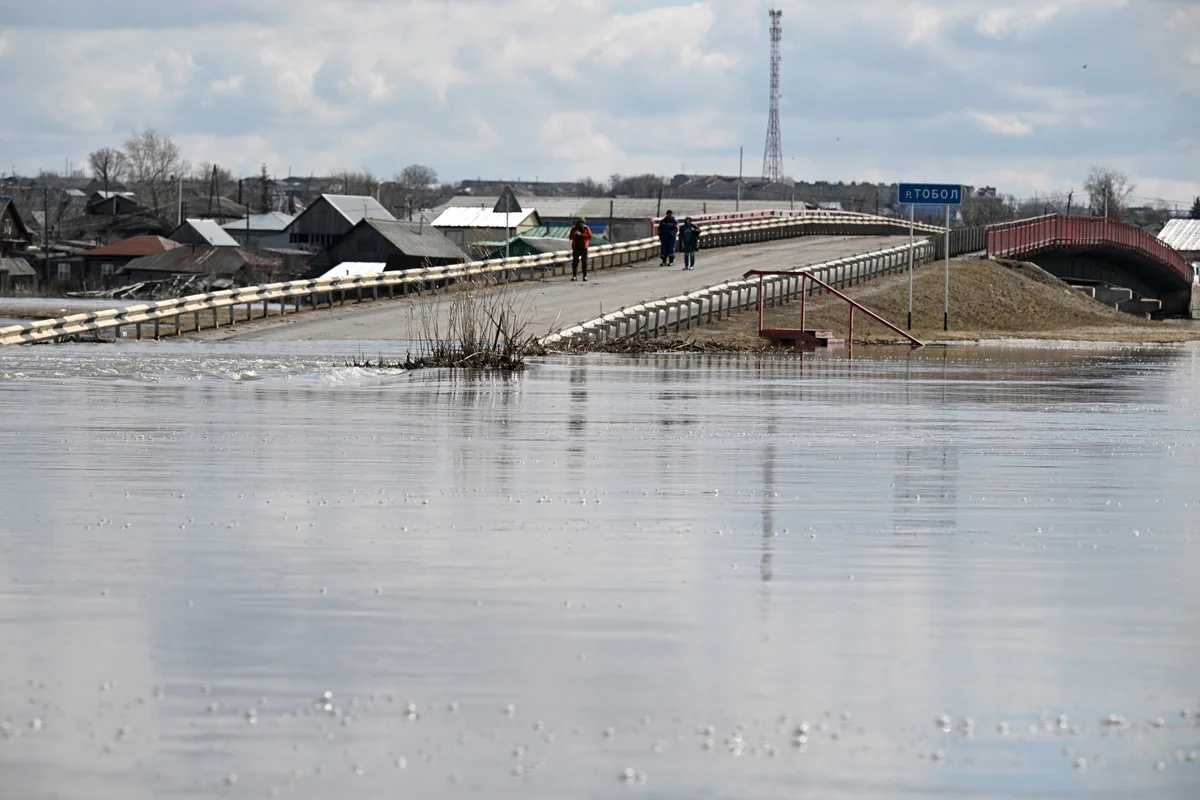
In the Kurgan region, the old wells “Voluntary” deposits were flooded, where one of the Rosatom enterprises mines Uranus. The territory was in the zone of the Tobol River, which had emerged from the banks, so that the metal could get into the water.
What threatens the ecosystem and what consequences are generally leading large floods? Novyevropa asked ecologists.
In April, floods led to floods in several regions of Russia: the city of Orsk in the Orenburg region, as well as part of the Kurgan region, suffered most of all.
The territory of the “voluntary”, consisting of both new and old, officially not used wells, as the “agency” noted , fell on April 11, 2024 into the zone of possible flooding on the map of the Government of the Kurgan region. That is, the authorities admit that the deposit was covered by a flood. Three days later, the regional Ministry of Emergencies reported that the village under the name “Labor and Knowledge”, next to which is “voluntary”, was completely cut off from the rest of the region.
Rosatom denies the flooding of new wells, saying that they are on a hill. At the same time, there are old wells in the lowlands that are in a state of self -ISTROGY, that is, they do not officially work and are sealed, but the uranium solution still comes out of them.
Eco -activists have been fighting uranium prey in the Kurgan region for several years
The trial mining of Uranus at the Voluntary deposit was held back in the 1980s. According to Andrei Ozharovsky, an engineer-physicist of the Radioactive Waste Safety program, for this they chose the cheapest method-underground leaching. Thus, the seas of a radioactive uranium solution were formed right underground.
What is this method?
The extraction of uranium (the most severe element found on Earth in natural conditions. - Approx. Ed.) By underground leaching is carried out by drilling of wells through uranium -rod bodies, the supply of solution into them, lifting uranium -containing solutions to the surface and extracting uranium from them to sorption and exchange plants, and then by adding acid to the uterine solutions and by pumping them again to the bowels.
But they abandoned this prey for a while; So far, in June 2017, at that time, Prime Minister Dmitry Medvedev did not provide Dalura-the Rosatom enterprise-the right to use the deposits of the deposit. And Rosatom again began to extract uranium, including export, by the old method. The government of the Trans -Urals expected to increase the revenue part of the scarce budget due to this.
The Kurgan eco -activists demanded that Uranus were prohibited and paid attention to the danger of mining Uranus by the method of well leaching in the area - given that uranium salts would fall into the underground aquifers and the Tobol River. Activists appealed to the courts, but all their claims were rejected.
“All the water that flows into the Tobol will pass through the aquifer, washed out radioactive and toxic compounds, and all this will fall into the water, wells,” said the professor of Kurgan State University, Doctor of Technical Sciences Alexei Taranov.
He explained that the deposit is located on sedimentary horizons in the floodplain on the water bribe.
- It will be worse than Chernobyl. The uranium dioxide itself, which is extracted, is not so terrible. But simultaneously, Radiy is released - a persistent radioactive element, it has a half -life of three days, while radon is released - deadly radioactive gas. Toxic salts will also form, ”Taranov predicted .
Locals even tried to hold a referendum, but the Kurgan Duma rejected this proposal.
Representatives of Rosatom claimed that activists allegedly interfere with the extraction of “strategic raw materials” and the development of the region, and called their arguments “myths” and “radiophobia”.
Officials called the underground leaching method "ecologically safe."
A criminal case was even instituted against one of the activists: so, a local resident and participant of the “Movement for the Rights of Citizens of the USSR”, Lyubov Kudryashov, who fought with Uranus prey at the deposit, was accused of calls for terrorism and extremism, during the investigation she was appointed forensic medical examination in a neuropsychiatric hospital. In 2021, the court found Kudryashov guilty and fined it 300 thousand rubles.
"Radiation can cause significant harm to human organs"
The physicist Andrei Ozharovsky confirmed that the wells of the Uranus deposits were flooded: according to the expert, this is evident in comparison of geological maps and satellite images; The locals also speak about this.
The ingress of uranium particles into the river sharply reduces the quality of drinking water, Ozharovsky notes: Uranus itself is a chemically toxic substance, like any heavy metals, and small particles of uranium and its salts enter the person along with water.
- A significant amount of uranium solution got into Tobol. Of course, we must admit that this is a large river, and Uranus is diluted. That is, I do not expect any significant concentrations. But in the body, those who will have a fish from the Tobol River or drink water in the mound will appear uranium, and he will continue the alpha deck and irradiate a person from the inside, says the physicist.
The ecologist and expert on atomic energy Vladimir Slivak in a conversation with Novo-Europe confirmed that a significant amount of radioactive substances could get into the environment. It is impossible to evaluate how much harm has been received by the ecosystem, since the Russian authorities do not comment on the situation and do not provide accurate official data on the scale of pollution.
The ingress of uranium into the human body with drinking water leads to internal irradiation, which, in turn, increases the risk of serious diseases, in particular, oncological, the specialist noted.
“Any, even weak radioactive radiation can cause significant harm to the internal organs of a person,” he emphasized.
The Environmental Organization “The Public Control of the Environmental Status and the Population of the Population” also said that the flood could wash away the radionuclides to Tobol, which accumulated for years from spreading groundwater from old experienced wells.
- Uranium vein underground is not in the sarcophagus. For many years, the ore body was fenced with clay layers and hard rocks of the earth at a depth of 400 meters. For Uranus, hundreds drilled, and maybe already thousands of wells to this ore -bearing body, damaging the natural sarcophagus. Now all this has fallen into the water, ”the former head of the local headquarters of Navalny Alexei Schwartz told the agency.
Ecologists and climatologists warned that climate change will lead to more floods, emphasized in a conversation with the New-Europe. The authorities should draw up really working plans for the adaptation of the socio-economic life of the population to change the climate and follow them: to calculate all the risks, inspect and see where and what weak places are to strengthen them, the ecologist added.
- In Russia, this is not done at all, because the state, as you know, spit on climate change. Therefore, for the scale of floods we see now, and for all the consequences associated with it, the Russian authorities are responsible primarily, ”says Slivak ( officially in Russia there are plans to adapt to climate change: for example, they were provided by the Ministry of Economic Development , the agency of strategic initiatives and Roshydrome . - Ed. ).
The climate change plan can reduce the negative consequences for people and the entire ecosystem: fewer people will suffer, fewer houses will be flooded, radiation or toxic substances will not fall into the environment, it continues.
“But given that Vladimir Putin is nothing more than the war and does not pay attention to the problem of climate change, the consequences of this will be the most negative of all possible,” Slivak summed up.
"Great floods are also needed"
The flood in itself does not lead to irreparable environmental consequences, ecologist Evgeny Simonov said in a conversation with Novo-Europe.
- Pacchants and floods are a normal environmental process, and it should occur from time to time. So the climate is arranged. A huge number of living creatures are happy about the flood, because without it they could not live normally in the river and multiply. Therefore, nature also needs great floods, - the ecologist draws attention.
However, the lands of the floodplains, that is, the territories along which the river flows into large water, has been mastered by a person, so there is a lot of garbage, Simonov emphasizes. In particular, the source of garbage can be uranium wells, landfills, cattlecuffs, fertilizer warehouses, fuel storage, and the capacitance of treatment facilities. All this in high flood conditions is washed off from the inhabited lands, transferred to new places, partially dissolved in water, polluting it, and partially comes to the new shores, polluting them and them, the ecologist notes.
-Then this garbage clogs somewhere else, something pollutes. For example, water used by people in drinking wells and wells becomes unfit for use. Water in rivers can also become unsuitable for use with a large concentration of toxic substances. There are risks of diseases, primarily intestinal, ”said Simonov.
During such natural disasters, there are a lot of water, the concentration of pollution in it is low, so they do not much harm fish and animals living in the rivers, the ecologist added. Pollution go downstream, and valuable habitats can be littered there, he emphasized.
-Something, of course, has to clean up engineers. But first of all, people suffer from such floods. The worst consequence of living ecosystems is the fact that people are trying to fight flooding with large infrastructure projects, for example, large dams, thereby completely changing the river ecosystem and very ugly, ”Simonov added.