
Translated material
“Tunnel” is a thriller about the neighbors in the Moscow traffic jam, stuck underground. No one understands what happened outside
The most long -awaited novel by the author of Wonguzer Yana Wagner (it was her book that was shot by the "Epidemic")
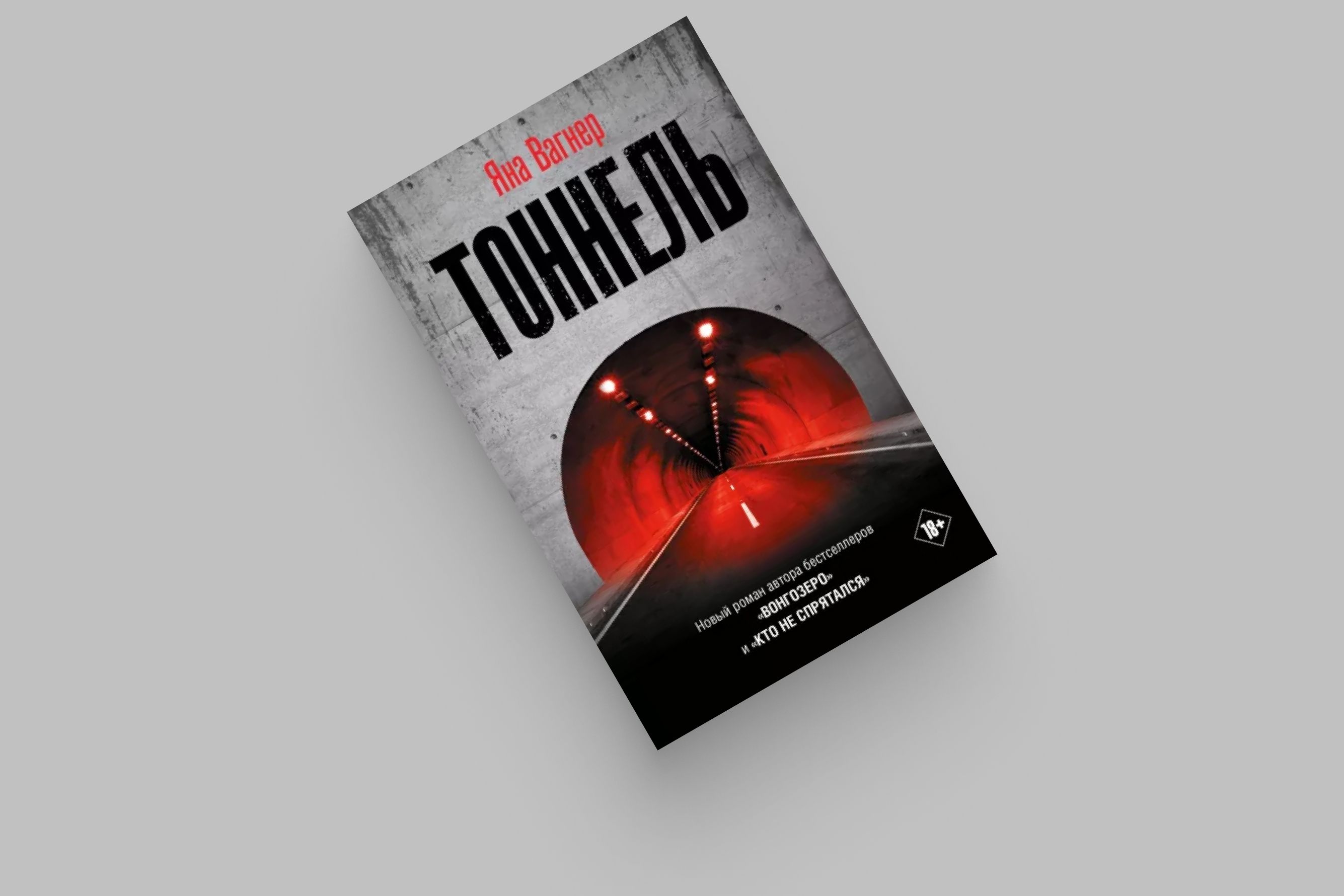
One of the most discussed novels in Russian, published this year, is the “tunnel” of Yana Wagner. The writer herself calls him a “sealed thriller”: in the plot, several hundred people are locked in a car tunnel near Moscow. It is not known to the end whether at least someone will get out of this trap, but not only a denouement is curious. The writer managed to offer a convincing answer to the question of what society will be if he is lucky to overcome the disaster. Literary critic Lisa Birger talks about the new story of Yana Wagner.
Yana Wagner. Tunnel. M.: AST, editorial office of Elena Shubina, 2024
“Tunnel” is the most long -awaited novel by Yana Wagner. She wrote it for six years, and back in 2020 she sold the rights to the film adaptation, introducing the producers, in her own words , a “detailed draft”. Just then the series “Epidemic” , shot according to her novel “Wongozero”, fell into the ten most popular Neanglah -speaking TV series Netflix, and the writer was entrenched in the reputation of the prophetess: in her text she described in detail the world pandemia with masks and Locks - even before it began in reality.
However, Wagner herself was interested not so much the entourage of that disaster (according to her, her descriptions of the Locksuan are based on WHO protocols) as the behavior of "non -jannese people in genre decorations." Indeed, the heroes of her books constantly find themselves in a limited space - whether these are the characters of the “hermetic anti -utopia” (“Wongozero”, 2011), “hermetic detective” (“Who has not hidden?”, 2015), and now the “hermetic thriller” - as indicated on the cover of the novel “Tunnel”.
Tiring traffic jam in the north-west of Moscow, the evening of the July Sunday. When the flow of cars finally rises in the tunnel, it turns out that there is nowhere to go - the iron gate slammed on both sides. There is no connection with the outside world, whether it still exists is unknown. In total, more than a hundred cars were stuck in the tunnel, nearly five hundred people. Yana Wagner describes in detail (closer to the final) in detail) as all her heroes spend the following day: swear, friends, fall in love, die or survive.
The author will not immediately explain what exactly happened - and how “this” may end. In anticipation of the answer, the reader will watch the motley crowd of heroes and the way each of them behaves in a closed space - and the sight is quite painful. This immediately hints at the epigraph from the “lord of flies” William Golding: “If it were light, they would burn with shame. But the night blackened around. "
And without an epigraph, a comparison with the “lord of flies”, of course, begs, only the heroes of Wagner are not adolescents, but the inhabitants of Moscow of different ages, prosperity and origin. In the crowd of survivors there is a priest on Lexus, an official at Mercedes, miners, a policeman, summer residents, migrant workers, teachers, plumbing, an engineer and (for some reason only one) a dentist. Even in the tunnel there is a runaway killer with a Makarov pistol, as well as children, a dog and a cat. All these characters line up for water and food, some begin to panic, someone-act completely unpredictably. The official from the Mercedes, to the cries of his elderly boss on the Maybach, begins to rewrite the crowd, look for doctors, engineers and scientists who should help everyone to survive, but the bureaucratic fuss is meaningless. In the tunnel, air rapidly ends - and no protocol here will help.
Neil Gaiman and Terry Pratchett in the book “Good Sign” argued that “the cause of the great triumphs and tragedies of history is not that people are kind or evil, but that they are people by nature.” In the "good signs" the angel and demon saved the world, simply because they liked him. Yana Wagner’s sympathy for his heroes (or to most of them) also cannot be felt - despite the fact that the events of the “tunnel” over time become increasingly bloody and gloomy.
If you want to buy the books of the Medusa publishing house, follow this link .
When buying our books, you help us to pay fees to the authors and support the publishing project, which is created so that the non -certificate literature is even now available to readers in Russia.
But the seeming main metaphor - the tunnel as a cut of Russian society - is actually deceptive. The author is not trying to explain how this society is arranged - rather the opposite. She offers to think about how his device would change in an extreme situation, when it becomes possible to discard his social role. For some reason, the doctor will continue to treat; And the father of two girls, the professor, suddenly refuses to save them forward the rest: “It comes out very ashamed,” he will say. But the official, strictly following the protocols, will suddenly show impressive humanity.
The characters of Wagner behave in every sense humanly-“great triumphs and tragedies” happen in the tunnel, which is why. This readiness of the author to see people in their characters, and not flat figures frozen in the doom of Russian life, makes thriller Wagner unexpectedly comforting. It remains to believe that the walls will collapse before oxygen ends. The heroes will look around - and see what they did.
Lisa Birger