
Translated material
Chemical weapons. Main
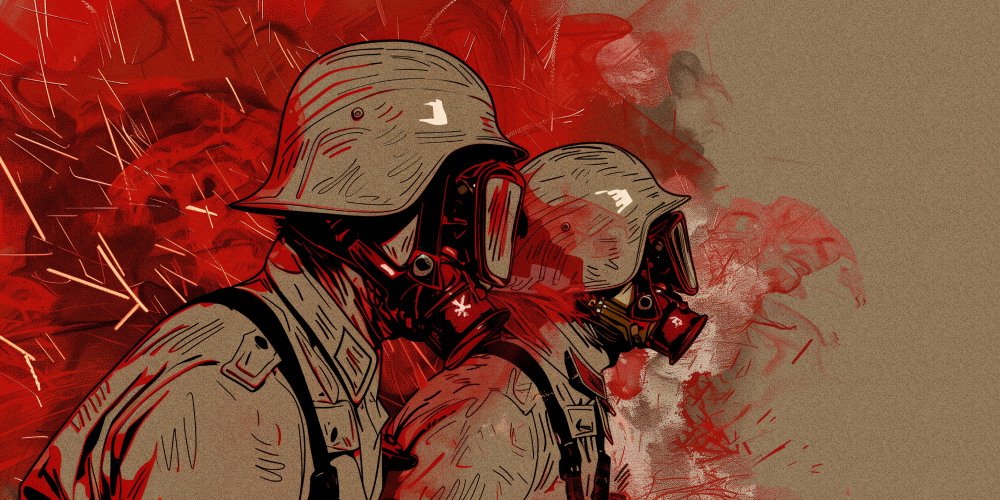
Everyone knows that chemical weapons are scary, but few understand exactly how they work, what they are like, and why they are prohibited if other deadly weapons are allowed. We explain what chemical weapons are, how they were used, and why almost all countries now claim that they got rid of them a long time ago.
1
What are chemical weapons?
It is any chemical substance specifically designed to cause death or other harm through its toxic properties. Ammunition, devices and other means of using toxic chemicals specifically designed for use as weapons also fall within the definition of chemical weapons.
2
How do chemical weapons work?
Toxic substances affect the central nervous system, disrupt normal mental activity of a person or cause temporary or permanent blindness, deafness, a sense of fear, and limited motor functions.
3
Why are chemical weapons prohibited if other weapons are allowed?
Because it is an indiscriminate weapon. It can kill or maim a person, whether he is involved in an armed conflict or not. In addition, the consequences of its use can be felt long after the end of the conflict.
4
What types of toxic substances are there?
Based on the nature of their physiological effects on the human body, there are six main types of toxic substances:
- nerve-paralytic effect - affects the nervous system, incapacitates a person
- vesicant action - corrode skin and soft tissues;
- general toxic effect - once in the body, they disrupt the transfer of oxygen from the blood to the tissues
- suffocating effect - affects the lungs;
- psychochemical effects - disrupt normal mental activity or cause physical disorders;
- irritating action - they are also called “police”; These include tear agents.
5
What agreements prohibit the use of chemical weapons?
- The Hague Convention of 1899, article 23 of which prohibits the use of ammunition the sole purpose of which is to poison enemy personnel;
- Geneva Protocol 1925;
- Convention on the Prohibition of the Development, Production, Stockpiling and Use of Chemical Weapons and on Their Destruction of 1993.
6
Hague Conventions
There were two Hague conferences: in 1899 and 1907.
The first took place on the initiative of the Russian Empire.
At the end of the 19th century, an arms race began in the world, associated with numerous conflicts and tensions in Europe. Russia spent more than a quarter of its budget on this race. Because of this, Russian diplomacy came up with a global initiative to convene an “international peace conference.”
The Second Hague Conference took place at the initiative of the United States.
It was preceded by the Russo-Japanese War, after which world powers sought to expand their influence by reducing the influence of Russia.
The Third Hague Conference was planned for 1915, but did not take place due to the First World War.
7
Geneva Protocol
The Treaty, formed by the League of Nations after World War I, called for rules for collective security in Europe. The protocol, introduced by the second president of Czechoslovakia, Edvard Benes, proposed sanctions against the aggressor country and provided a mechanism for the peaceful resolution of disputes.
8
Chemical Weapons Convention
A treaty by virtually all countries of the world, motivated by a common understanding that chemical weapons should be prohibited. There are 193 states that are parties to the Convention. Israel has signed the Convention but has not ratified it. Egypt, North Korea, and South Sudan have not signed or acceded to the Convention.
9
Major incidents of chemical weapons use
- First World War. France was the first to use toxic substances, then other countries.
The first truly major episode of the use of chemical weapons occurred on April 22, 1915 in Belgium. German troops sprayed approximately 168 tons of chlorine in front of the French army. The attack killed 1,100 people. In total, during the First World War, about 100 thousand people died as a result of the use of chemical weapons, and 1.3 million were injured. - Italo-Ethiopian War. In 1935, on the orders of Benito Mussolini, mustard gas was used in Ethiopia. During the entire conflict, about 100 thousand people (military and civilians) died from toxic substances.
- World War II - Germany. The Nazis used chemical weapons to exterminate people in concentration camps. The hydrocyanic acid pesticide was first used in September 1941 at Auschwitz. In total, hundreds of thousands of people died from its use.
- World War II - Japan. In November 1943, the Imperial Japanese Army used chemical and biological weapons against Chinese soldiers. According to witness testimony, in addition to gas, fleas infected with bubonic plague were used. The exact number of victims is unknown.
- The Vietnam War. American troops used chemicals to destroy vegetation to make it easier to find the enemy in the jungle. The Vietnamese Red Cross estimates that 3 million people were affected by the chemicals, including 150,000 children born with the mutations.
- Terrorist attack by the Aum Shinrikyo sect. On March 20, 1995, cult members sprayed the nerve chemical sarin into the Tokyo subway. As a result of the attack, 13 people were killed and another 6 thousand were injured.
- War in Iraq. In November 2004, American troops used white phosphorus munitions during the assault on the Iraqi city of Fallujah. The exact number of deaths as a result of its use is unknown.
- War in Syria . The largest attack using chemical weapons occurred in April 2013 in Eastern Ghouta, a suburb of Damascus. Due to the shelling with sarin shells, according to various sources, from 280 to 1,700 people died. UN inspectors determined that the weapons were used by the Syrian military.
10
Are gas canisters chemical weapons?
Formally, yes, but it is allowed in many countries. Depending on the legislation, spray cans and gas pistols may be freely available or require permission to purchase.
11
Russia and chemical weapons
In 1993, Russia signed and in 1997 ratified the Chemical Weapons Convention. After this, the country adopted the federal program “Destruction of chemical weapons stockpiles in the Russian Federation.” Initially it was designed until 2009, but was extended several times. Russia officially destroyed all of its chemical weapons stockpiles on September 27, 2017.
12
What happened in Ukraine?
The US State Department said Russian troops used chloropicrin during the invasion of Ukraine. This violates the Chemical Weapons Convention. However, the American side has not yet specified where and when exactly this happened.
Russian Ambassador to Washington Anatoly Antonov said that the US accusations against Russia are “absolutely odious and unsubstantiated.” Previously, Russia was accused of using chemical weapons by the Ukrainian Armed Forces.
13
What is chloropicrin, which Russia is accused of using?
Chloropicrin is a liquid with a pungent odor that irritates the skin and mucous membranes. It causes lacrimation, eyelid closure, bronchitis, pulmonary edema, uncontrollable convulsions of the diaphragm muscles, and skin lesions.
Chloropicrin was first used by the German army during the First World War. Today, chloropicrin is primarily used for pest control in agriculture and for testing the functionality of gas masks.
The Organization for the Prohibition of Chemical Weapons (OPCW) included it in the list of prohibited chemical warfare agents.