
Translated material
The season of ticks began
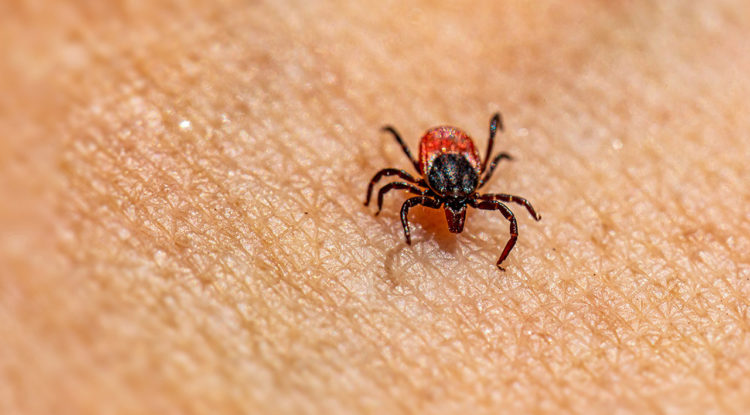
How to protect yourself from encephalitis and understand whether you are in a dangerous zone
With the onset of spring, the risk of bite insects becomes higher. And if we can simply dismiss from mosquitoes and midges, then ticks need more serious protection, because some of them can infect a person with encephalitis. In Russia, ticks have activated since April, by mid -May their population will reach a peak, and they will go hibernation only with the onset of the first frosts closer to October. "Cold" tells how to protect yourself and pets.
In order not to miss the main materials of the "cold", subscribe to our Instagram and telegram .
Are ticks really so dangerous?
In 2023, by August, more than 400 thousand people were officially injured from tick bites in Russia. The most dangerous infection among those that carry ticks are considered encephalitis. Often it is he who leads to the fact that people are seriously ill and die after bites. For example, last year in the village of Amursk, the Khabarovsk Territory, a teenager died from tick -borne encephalitis - he was not vaccinated. For the same reason, the 17-year-old Russian hockey champion with a ball among juniors Evgeny Khlylko died last summer.
Ticks can carry other diseases. The following in danger after encephalitis in Russia is Lyme's disease, or borreliosis, which several thousand people are infected annually. Granulocytic anaplasmosis can be transferred from 6% to 19% of Russian ixodic ticks. Also, among the most common diseases that ticks carry, monocytic erlichiosis and tick -borne spotting fever.
In 2022, there were half a million ticks injured from bites: of which almost two thousand people were detected by encephalitis, 49 people died. In other words, from tick -borne encephalitis, they do not die so often. However, the absence of timely treatment can still lead to human death, so it is important to monitor the well -being after the bite and consult the doctor as soon as possible if you feel unwell. Lima’s disease, for example, is easy to confuse at the first stages with a cold, so often people turn to doctors when the disease has already entered the active phase, which complicates the treatment.
Most diseases transferred by ticks can be cured by antibiotics if they are diagnosed in time. However, it must be remembered that the medicine should be selected by a qualified specialist.
You can also get used from encephalitis - this is effective protection, but the vaccine does not protect against other infections transmitted by ticks.
How to find out that you are in a dangerous area?
To understand whether it is necessary to fear tick -borne encephalitis in the country where you are, read how common the diseases carried by ticks are in this region. Endemic (that is, one that is characterized by this type of arthropod) is recognized when cases of the disease are recorded for several years in a row and cannot be stopped by the circulation of the virus in natural foci. For example, this is considered the territory of Belarus, the Czech Republic, and the Baltic countries.
However, the head of the scientific group for the development of new methods of diagnosing natural-focal diseases of the Central Research Institute of Epidemiology of Rospotrebnadzor Lyudmila Karans says that tourists should not relax and think that they cannot become infected with encephalitis in “safe” countries. “It is important to understand that a low incidence in such countries gives a false sense of security entering tourists and immigrants. The number of cases of tick -borne encephalitis here is insignificant, but this is among the vaccinated local population! And tourists who have not passed vaccination can become infected there in the same way as in their native lands, ”she explains.
In Russia, the situation with encephalitis varies from region to region. The list of endemic regions can be viewed in this document of Rospotrebnadzor. Until May 13, 2024, Rospotrebnadzor also has a hot line for the prevention of tick -borne encephalitis - by calling it, you can find out whether your region is considered endemic, as well as clarify the symptoms and get information about vaccinations.
How often do you need to vaccinate?
It is extremely difficult to keep track of ensuring that you are not bitten by an infected tick. But you can vaccinate to avoid severe consequences in case of infection.
Vaccines are for adults and for children. Keep in mind that it may take a lot of time for full vaccination . For example, in Russia, the full course consists of the introduction of three doses of the vaccine. The first two are introduced with an interval of about six months, and the third - a year after the second injection. “If you have done the first injection in the fall, then you will introduce the second in the spring and two weeks later the immunity will form an immunity to the tick -borne encephalitis virus, which will be successfully fixed by the third dose of the vaccine made in a year,” explains the epidemiologist Lyudmila Karan.
There is also emergency vaccination of two doses. When using it, it will take a month to form effective immune protection, so its second dose should be entered at least two weeks before the trip if you intend to visit the dangerous region.
To get used to it before going to the endemic region will be better than not to be vaccinated at all. In the future, you can complete the full vaccination course with another vaccination in a year. After that, immunity is supported by revaccination. Every three years you need to do a new vaccine.
In other countries, revaccination recommendations may vary. For example, in the EU countries, doctors can examine blood for antibodies and conduct revaccination every five years.
Do I need to vaccinate animals?
Dogs and cats often eat ticks. As a rule, they are vaccinated not from encephalitis, but from other diseases that carry ticks: pyroplasmosis (babisiosis) and borreliosis.
In addition to the vaccine, there are other ways to protect the animal: for example, preventive treatment from ticks using collars, sprays and drops. In addition, you can use insecticidal drugs that are sold in pet stores. They reduce the likelihood of transmitting diseases from tick to the animal , since his blood during treatment becomes toxic for parasites. These drugs can be used both preventively and after a bite. Regarding their use, you should consult a veterinarian.
Where do ticks live and how to examine yourself?
The tick can most often be filled in grass or from bushes. They crawl from the bottom up. Their favorite places for a bite are those where the skin is especially thin and delicate: on the head, neck, behind the ears, under the armpits and in the groin zone. The suction site of the tick chooses at least an hour, so regular inspection of oneself and others can prevent a bite.
When going to nature, you should wear tall boots or boots, clothes with long sleeves, tuck trousers into socks. On light clothing, a tick is easier to notice. It is better to remove the hair under the headdress. It is better to treat all the clothes and open skin areas with a special remedy for ticks. And on the grass you should not sit without litter.
What to do if the tick has already bitten?
If you can remove the tick in the clinic or hospital, it is better to do it there. In many Russian hospitals, a tick can be sent for analysis. If the test shows that the tick was infected, the infectious disease specialist will prescribe prevention to the patient.
But you can also remove the tick on your own. This must be done quickly and decisively. You can pick it up with a loop from a thread, tweezers or a special “tick -reached” or “tick -lover”, which is sold in pharmacies.
Do not drip on the tick with oil, alcohol, kerosene or use fire. From this, he will not “suffocate and fall off”, as advising this method usually believe, but, on the contrary, will scream at you even more.
If you tore the tick tick from the head, you should not pick the wound stronger - so you can bring the infection. First, treat the place of the bite with iodine or other alcohol -containing antiseptic, and then remove the head by picking up the sting, for example, with a needle, which before this is also treated with an antiseptic. After that, grease the wound again with an antiseptic.
Having pulled out the tick, it is worth preserving it to take it to the laboratory and find out if it is infected. To transport the tick, any sealed bubble is suitable: place a tick there and a slightly moistened cotton wool. If it could not be removed alive, fragments can be put in a bag and transported in a thermos with ice.
In other countries, ticks may not be accepted for analysis or analysis may be paid. Check in local medical organizations, what are the rules in your country of stay.