
Translated material
"Tear out disagreements"
Students in the United States are striking in support of Palestine. The police storm campuses, more than 1300 people were detained throughout the country. Why do they protest and what do they get in response?
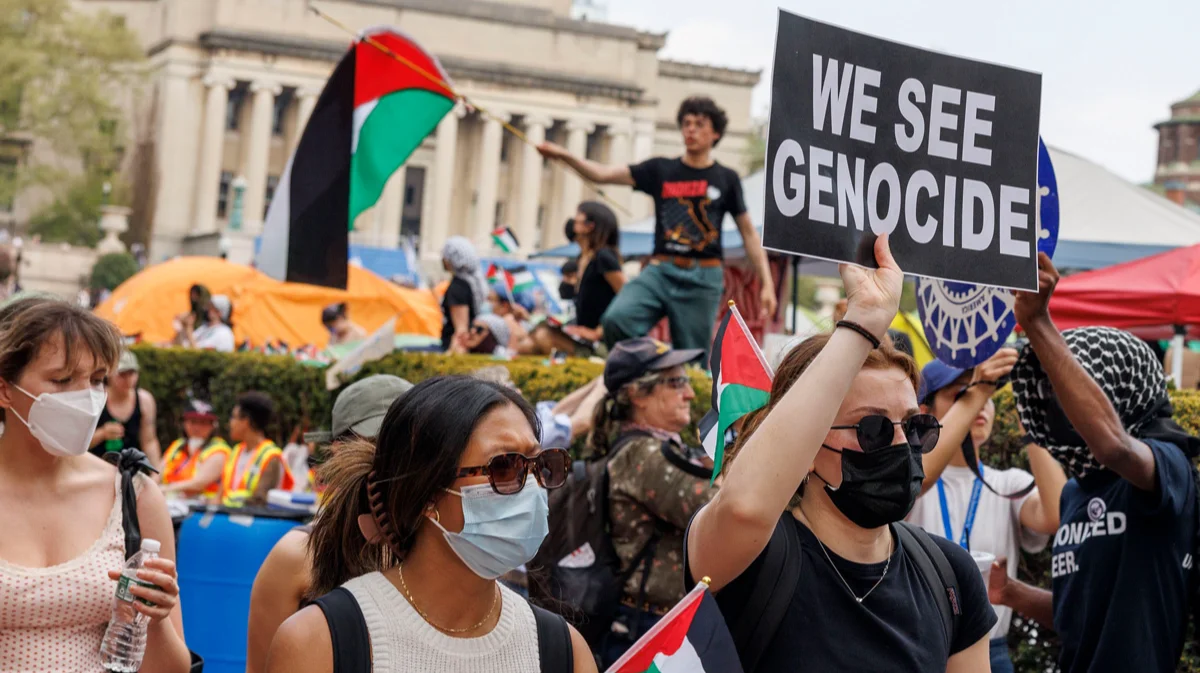
The missing students protest at the Campus of Columbia University, USA, April 29, 2024. Photo: Sarah Yenesel / EPA-EFE
In a few days, the police in the United States detained more than 1300 students participating in the missing protests. A new wave of demonstrations began with Colombian University in New York and spread to many other educational institutions in different states.
Demonstrators block buildings, occupy the central territories of campus and set up tent camps. In response, law enforcement agencies storm them and delay the protesters. What students require, why do they consider protests peaceful, and police officers do not, and what the university administration meets, ”says Novyevropa.
Where is the center of protests and what do students do?
At the Columbia University in the center of New York, one of the most prestigious universities in the United States, the third week is continuing the missing protests.
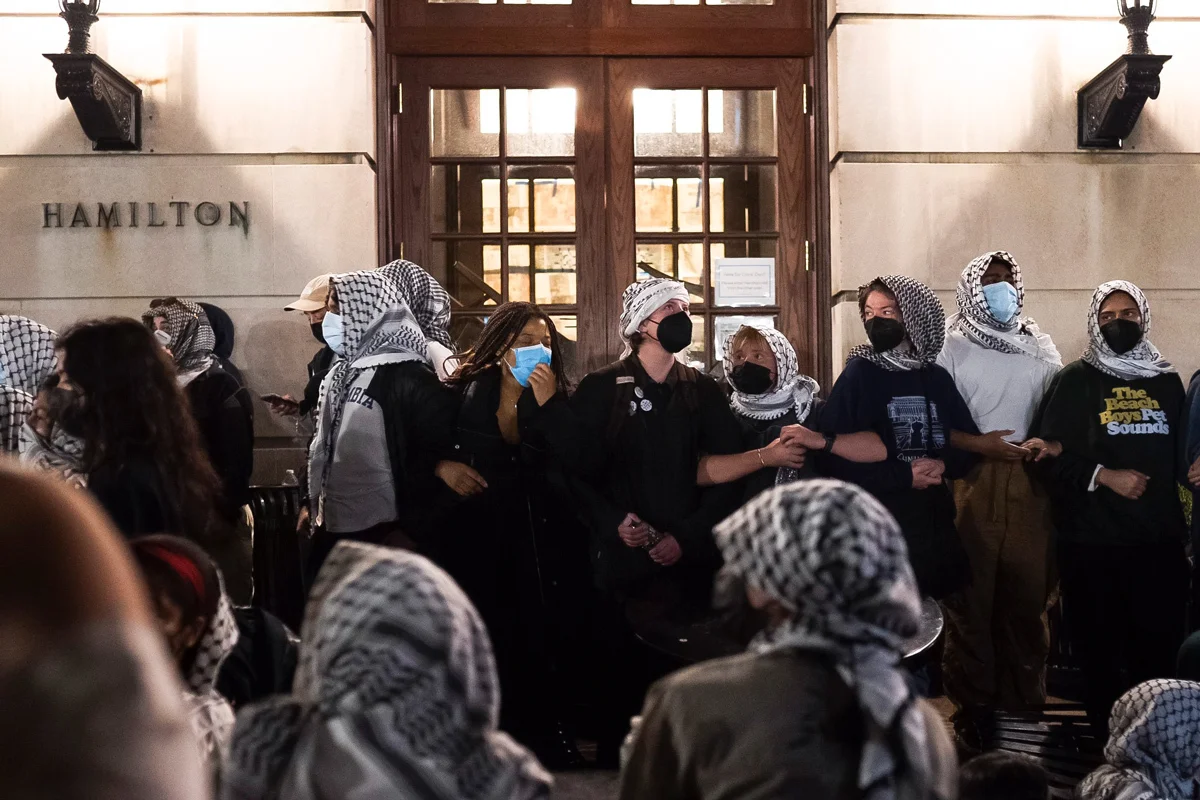
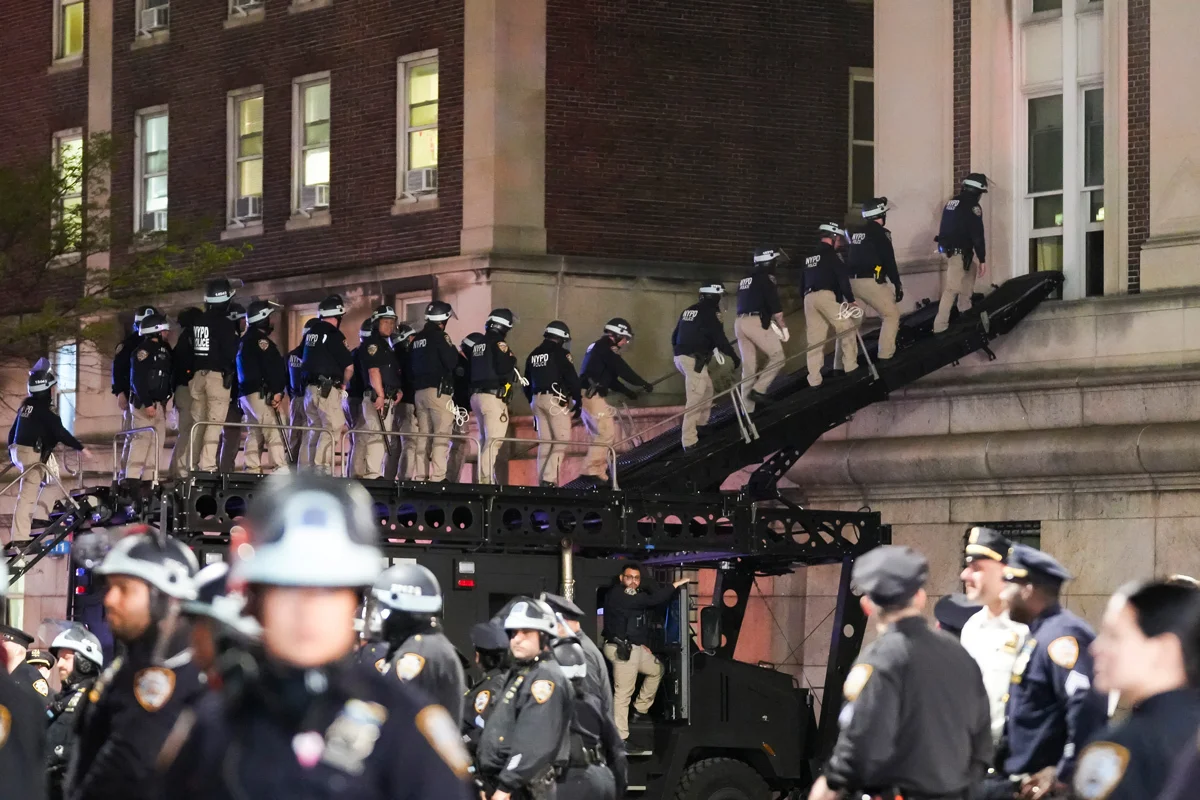
On the evening of May 1, the police arrested about 300 demonstrators: at the request of the leadership of the educational institution, officers broke into the Hamilton Hall building, occupied by protesters.
The University administration asked the New York police to stay in the campus until May 17, after two days after the ceremony of presenting diplomas. Protesters continue to resist and occupy the territory of the building.
On Tuesday, law enforcement agencies stormed the building of Colombian University and arrested more than 100 demonstrators hiding in Hamilton Hall.
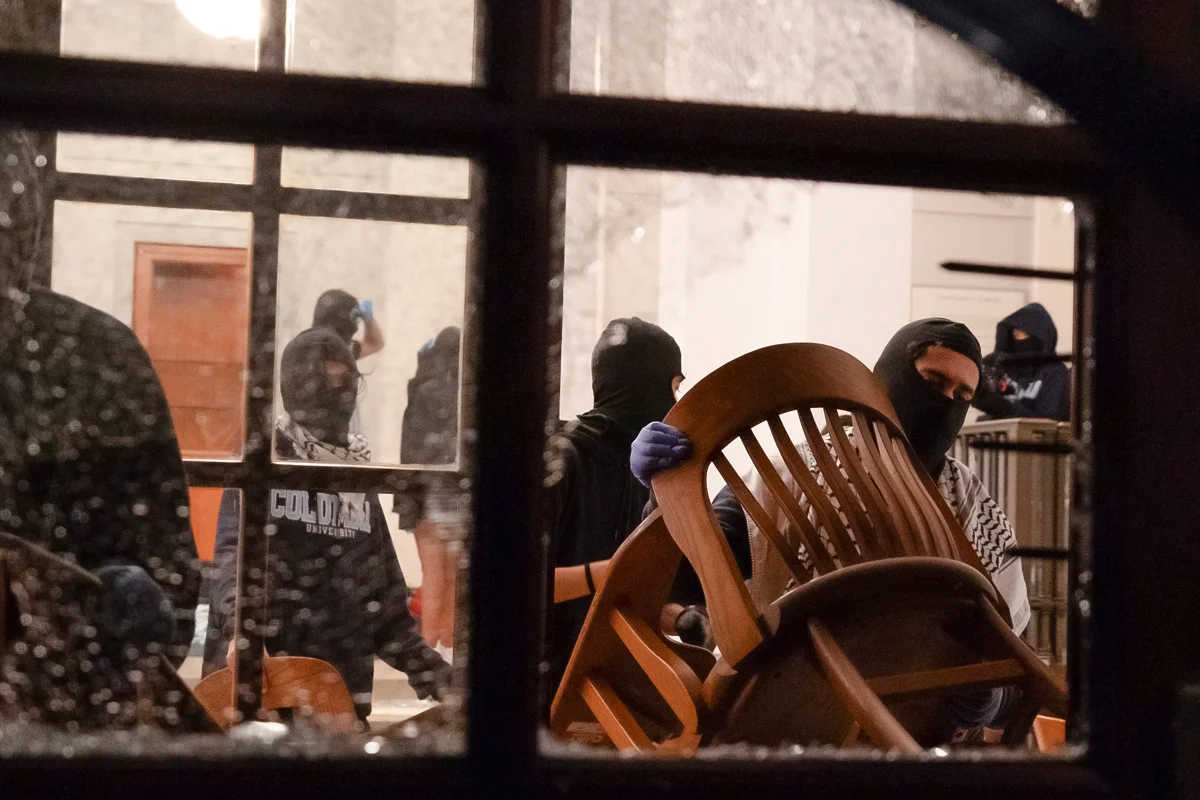
In addition to blocking buildings and entrances, students set up large tent camps in the territory, built barricades and broke surveillance cameras. “Freedom Palestine! Let go of the students! " - chanted the protesters.
Sometimes the demonstrations, as the New York Times and Associated Press write, were accompanied by anti -Semitic statements, the language of hatred and words in support of Hamas. Due to such sharp statements, according to NYT, some Jewish students began to feel unsafe.
The previous time such mass arrests took place about five decades ago, in 1968: the protests of students against the war in Vietnam became one of the most numerous student demonstrations that occurred around the world. Only at the Columbia University, more than 700 people were detained then, about 100 of the activists in skirmishes with the police were injured.
What do students require?
Universities finance all their directions - from research laboratories to scholarship funds - mainly due to donations, mainly from large donors. Among them are both private entrepreneurs and entire structures. Student activists say that companies leading business in Israel or with Israeli organizations are involved in the continuing war in the gas sector.
Activists, including some Jewish students advocate the preservation of human lives in Palestine. In addition to the withdrawal of assets from companies, which, according to students, support the Israeli government, they also insist on the "complete transparency of all financial investments." Demonstrators also demand to release those who were detained for protests.
What did the leadership answer?
The President of the educational institution, Perm Shafik, said that the university will continue to finance companies related to Israel, but will invest in healthcare and education in the gas sector.
“I know that many of our Jewish students, like other students, found the atmosphere of the last weeks of unbearable. Many left the campus, and this is a tragedy. <...> As the last seven months have shown, our campus is torn by disagreement about the war in gas. <...> But we must take into account the rights of all members of our community, ”she wrote in a letter.
Why did a new wave of protests arose?
At the Columbia University, in which there is a leading faculty of Middle Eastern research and a double diploma program with Tel Aviv University, a large number of Jews and Arabs are studying.
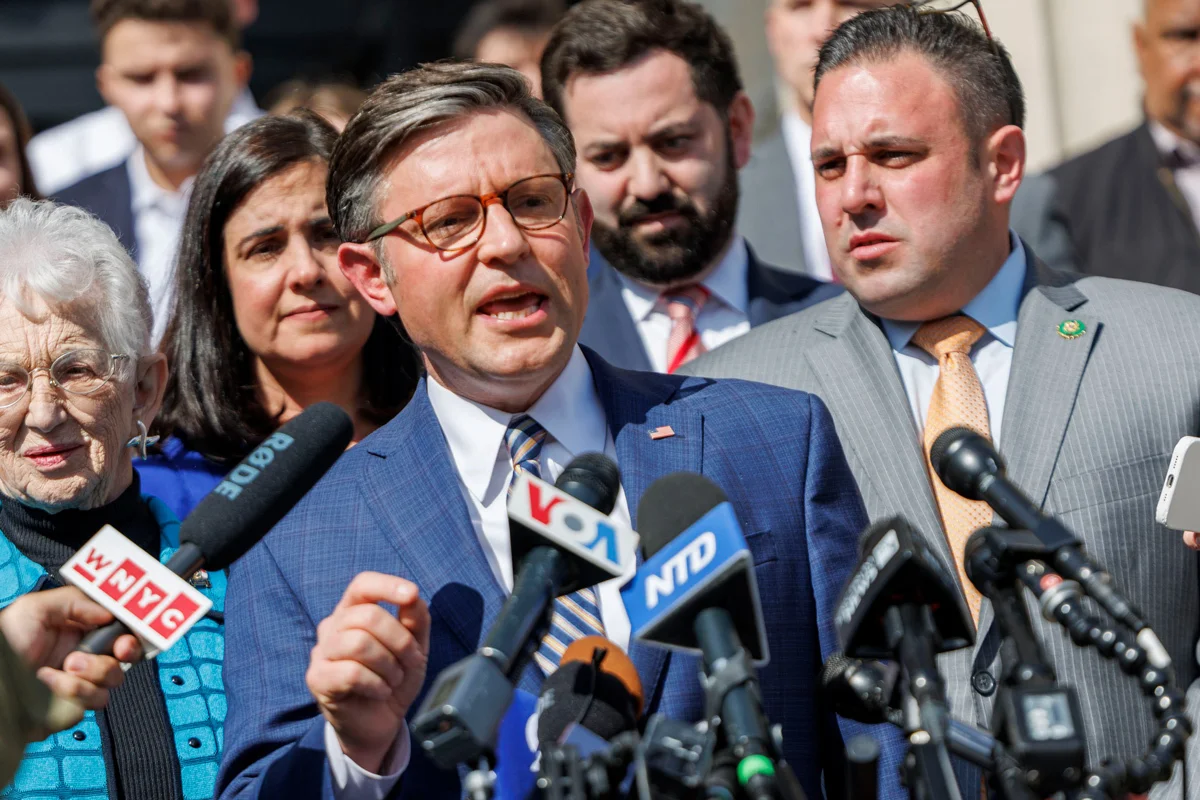
Protesters repeatedly carried out demonstrations after the Hamas attack on Israel on October 7 last year. A new wave of protests began on April 17, on the day of the performance of Shafik in Congress . At a meeting of the Committee of the House of Representatives entitled “The Reply of the Columbia University to Anti -Semitism”, Shafic was criticized by members of Congress, especially the Republicans who demanded stiffness with students and teachers accused of anti -Semitism.
Shafik promised to punish the Congress for protests not agreed with the university leadership. On the same day, a group of students broke their tents at the University of Colombian.
The next day, the president turned to the New York police, after which the law enforcement agencies detained more than 100 people, the university removed them from classes. Many professors, students and graduates expressed fears that the university violates the right of students to freedom of expression.
Hundreds of teachers held a mass strike in protest against the actions of the president. “Apparently, it was a non -violent protest - a group of students set up a camp on a lawn in the middle of a campus. This was no different from everyday life in a campus, ” said Havaja Bassam Law Faculty of Law Faculty of Law Faculty of Law.
Full -time classes were temporarily canceled for several days (now they are already held again). The University administration claimed that the students who occupied Hamilton Hall are threatened with expulsion from the university. In the fall of 2023, the University suspended the activities of two student groups “Students for justice in Palestine” and “Jewish voice for peace”.
Why did the protests spread throughout the United States and where were the most massive of them?
In solidarity with students of Colombian University, students in many American states began their own protests. Many of them called on their educational institutions to maintain a ceasefire in the gas sector and abandon cooperation with companies related to Israel.
Only a few days remain to the graduation ceremonies, but in the territories of many universities, the protesters camps are still set up. In total, throughout the country, according to The Washington Post, more than 1300 people were arrested.
“This is a peaceful protest. We are not here to attack someone. We are not here in order to cause any violence. The university’s reaction to this is unprecedented, ” said one of the demonstrators.
Where else did the protests go?
Yale University in New Hayven , Connecticut: April 22, the police arrested 47 students after they refused to leave the camp on the territory of Campus. Several hundred people took part in the protests: students, graduate students, as well as people who are not related to Yale University.
The New York University on Manhattan : in the evening of April 22, the police arrested dozens of people after students occupied the square on the territory of the campus. About 400 people participated in the protests, they built barricades from tables and chairs.
The University of Minnesota in Minneapolis : on April 23, nine people were taken into custody after they set up the camp. The protests continued, and the university was forced to close 13 campus buildings. On the evening of April 29, protesters lined up in a live chain, the police ordered them to disperse, but they remained in the place.
The University of South California in Los Angeles : April 24, the police arrested 93 people at a demonstration. They were accused of illegal penetration into the territory. The protest was mostly peaceful until the police began to clean the campus from tents.
Texas University in Austin : April 24, the police arrested 57 protesters. The representative of the district prosecutor’s office said that the accusations against many were removed after the police discovered “legal shortcomings” in their arrests. On April 29, 79 people were detained on charges of illegal penetration into the territory. One was charged with obstructing the performance of public duties.
At the Emerson college in Boston on the night of April 24, the police arrested 118 people during the cleansing of the camp. On April 27, 98 people were arrested at the North-East University in Boston, almost the same day was detained at the University of Washington in St. Louis. On April 27, at the University of Arizona, 69 people were arrested at the pace after the protesters defeated the camp.
Protests are also held at many other US universities:
Ohio University in Columbus,
University of Emory in Atlanta
Indian University in Bloomington,
Princeton University in New Jersey,
University of Connecticut in Storras,
California State Polytechnic University,
Denver University,
Illinois University,
Mary Washington University in Virginia,
Virginia Technological Institute,
University of the Commonwealth of Virginia in Richmond,
Tulein University in New Orleans,
University of Florida in Gainsville,
Utah University,
University of Georgia,
University of North Carolina,
University of South Florida,
University of New Mexico,
University of Florida in Tallahassi,
University of South Carolina in Colombia.
The missing protesters also gathered last week in university campuses of Australia, Canada, France, Italy and Great Britain.
Why do private universities depend on the congress and what difficulties are faced during the crisis?
The mission of universities forces them to balance between the inadmissibility of anti -Semitic statements and freedom of speech, emphasizes The Guardian. Some universities try to negotiate with student activists, others put forward ultimatums and as a result call the police.
Although the Columbian and other universities that have become centers of protests are private educational institutions, their buildings are exempted from real estate tax, the value of which is hundreds of millions of dollars. This non -core status can be canceled by lawmakers. Universities also receive significant amounts from the federal government, and Congress has the right to cancel them.
For many years, missiles university groups urged their institutions to support the movement “Boycot, removal of investments, sanctions” (BDS) as a means to repulse Israel. But no US University has never adhered to BDS. Although the sale of assets will have a slight impact on the war in the gas sector, if at all, it has any influence, the protesters claim that this will help increase awareness of the problem, the BBC notes .