
Translated material
“Clanses”-a drama about three tennis players who are different in love with each other
Luka Guadagnino made his most expressive film (and Zendea played the best role)
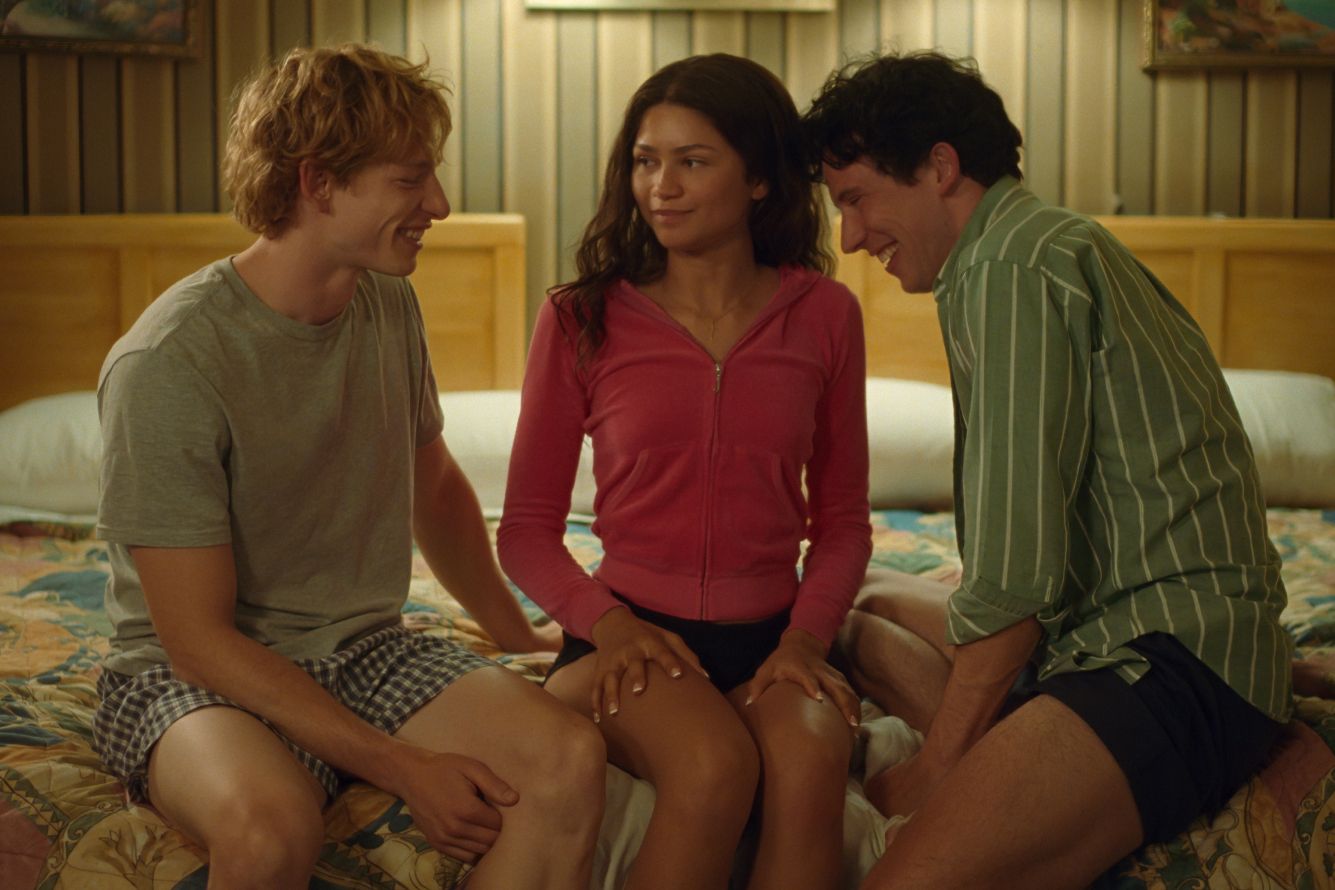
At the world box office there is a new film by Luke Guadaninino “Applicants”. This is the story of a love triangle: the famous tennis player experiences a strip of failures and goes to competitions, where he will have to fight with his former lover of his wife (and part -time his coach). Zendea, Josh Okonnor and Mike Feist brilliantly play this sensual plot. More about the picture of Guadanino, made more subtle than him “call me with your name,” says film critic Anton Dolin.
Vladimir Nabokov in one of his lectures described the adventures of Don Quixote as a tennis match, giving a useful lesson: any plot can be represented as a sports competition. Cinema has known about this for a long time, and tennis also does not disdain-many films are dedicated to him from “strangers on the train” of Hitchcock to the “Match-Punt” Woody Allen. Despite the solid competition, the “applicants” of the Italian Luke Guadaninino definitely fight for the title of the best tennis picture in history.
The non -linear story was built on a decisive one - not in the sports, but in the meaningful sense for their greatness - the duel of the main characters, tennis players of Art Donaldsen and Patrick Zweig. Art (Mike Feist, known for the role of charismatic riffs from the recent “Westsay history” of Spielberg) is a star and a favorite of the public, losing self -confidence and interest in sports; At the same time, his relationship with his wife, Tashi, a former tennis player, after an injury, became a coach (Zendea in his, probably better role), spoils. Patrick (Josh Okonnor from the “Crown” and “Himers” Guadaninino turned into a new sex symbol)-the UNIOR player who once gave hopes, now a beggar and forgotten. On the court, he is only to earn extra money. Although this is so? After all, Patrick since childhood was the best friend and partner of Art, and then - his opponent and lover of Tashi. Gradually, leading us through the match, the film will penetrate the background of these three.
It would be possible to add that in fact a movie is not about tennis, and the game is only a shell for a tense history of relations of three young people who are in love with each other differently. But it will be incorrect. You can’t say that it is more important for Guadanino - the beauty of rivalry on the court or the drama of personal relations. In any case, the main match of the “applicants” is not between the screen rivals and rivals, but between the artificial reality of the tennis and the life itself with its unpredictability and hidden conflicts. Between the form and content.
Guadagnino has always been enough technical virtuosity and formal skill, which, however, emphasized the shortage of thoughts and emotions in his films. “Big surge”, “Suspiria” , “entirely”-these in their own way interesting paintings serve as confirmations. Only in “Name me with your name” the director managed to harmoniously combine aesthetics, nostalgia and a thrill of born feelings in the frame: it is not without reason that this film is considered his hallmark. Now it is fair to recognize the "applicants."
This film is declarative more light than, but also sexier, angrier, funnier. It is devoid of artificial sentimentality, but full of Saspens and adrenaline. At the same time, the author does not claim to be a serious conversation about friendship or love. Rather, he offers a sketch on the topic of falling in love and the dynamics of relations equally important for heroes in bed and on a tennis court. “Applicants” are not only a sign tennis picture, but also the most erotic of all in this genre, despite the fact that there are almost no erotic scenes in it: in the key moments of the audience, disappointing darkening awaits if the heroes generally reach these points. The scene in the sauna can be called frank, but it is also spoken.
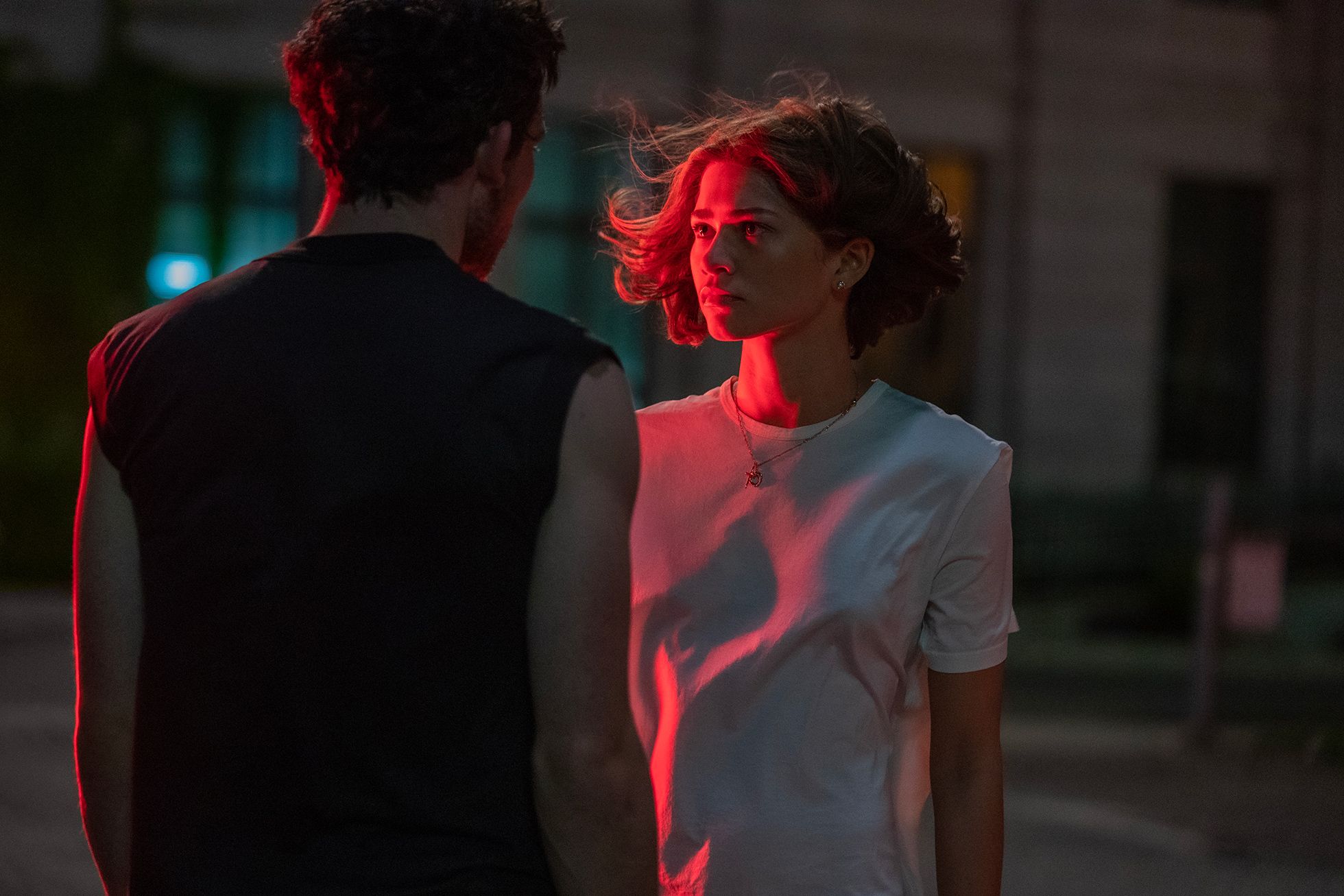
The picture is full of operator tricks - you can’t call the manner of Thais Saimbiprom, who shot the best films of Apichatpon Virasetakun, in any way. In the “Applicants” he shoots the match from the point of view of the player, and the judges, and the viewer in the stands, and the invisible observer in the air, but this is not content, showing the “look” of the racket itself, a flying ball, even a tennis court. If any sport is subordinated to the laws of gravity, then Mukbiprom and Guadaninino are repeatedly violate them - and not only with the help of the forced rapids. For example, they placed the climax in the center of the storm: the wind circles in the air with paper and other objects, and the heroes, in the decisive moment of the relationship, seem to tear off the ground.
An equally significant factor for creating artistic fabric is the soundtrack, over which - this is their second cooperation after “entirely” - the musicians of Nine Inch Nails, the winners of the two “Oscars” and “Grammy” Trent Rezor and Atticus Ross worked. A hard, uncompromising and energetic electronic sound occasionally interrupted by cold, as if mechanistic piano arpeggio - the breadth of the range and stylistic capabilities of the composers again surprises in the fact that their intonation is accurately recognized.
Music serves as a key that starts the action of the film. At the same time, the soundtrack that is actual and hinting at retrostization, as it were, raises events over a specific temporary context. The claustrophobia of the melodies of the Atticus Ross is torn by foreign inserts - Bowie, Britten, who unexpectedly heartbroof Bosanov Kaetan Bike, intonationally converging “applicants” against the “love mood”.
Both a racket and a ball according to the plot are repeatedly become sexy images, which you can’t call metaphors. For the first time when he saw Tashi, one of the heroes dreamily remarks that he would give her “fuck” himself with a racket. It is also not empty scasteness - after all, “applicants” are called so not at all because two men here claim to be one woman, conquer her as a trophy: we are talking about leadership claims, and wins from the very beginning of Tasha. Zendea is an energy and plot center of intrigue, its most active participant, and not an object of anyone's desire. Tashi dominates this match, and after the injury that destroyed her career, more than before. It is she who does not answer the recognition of love “I,”, but “I know” (a quote from Star Wars is one of the many microders of Sinefil Guadanino to the viewer).
Having chosen a sport suggesting two main participants, the authors proportionally distributed the load on three. Dramatic three - the most stable number; The classic trekact structure inside the broken chronology of “applicants” also reminds of this. Events are divorced in time: first 2006, when Art and Patrick win a youthful tournament and get acquainted with Tashi (she promises to give a phone number to the one who will win on the court), then 2011-Tashi and Art are married, they meet Patrick at the Atlanta tournament, and finally framing the 2019 story.
If you experience a light deja vu, this is not surprising. A year ago, the similar relations of the two men and one woman in three different time layers described the wonderful debut of Selin Sleep “past lives” . His heroine also chose between a more stable partner and the one to which she was drawn. A curious fact: screenwriter Justin Kuritzkes, for whom the “applicants” became a bright debut - Selin Sleep's husband. At the same time, she hints that she wrote off “past lives” from her own story, while Kuritzkes calls “applicants” with pure fantasy. The ideal plot for our era of unreliable storytellers and widespread fashion for auto -firm . The truth is in the eyes of the watchman, especially if he is in love.
Anton Dolin