
Translated material
"This is the solidarity of society in front of evil"
Interview with lawyer Zhanna Urazbakhova. She seeks punishment for Kuandyk Bishimbaev, a former Kazakhstani minister who killed his wife
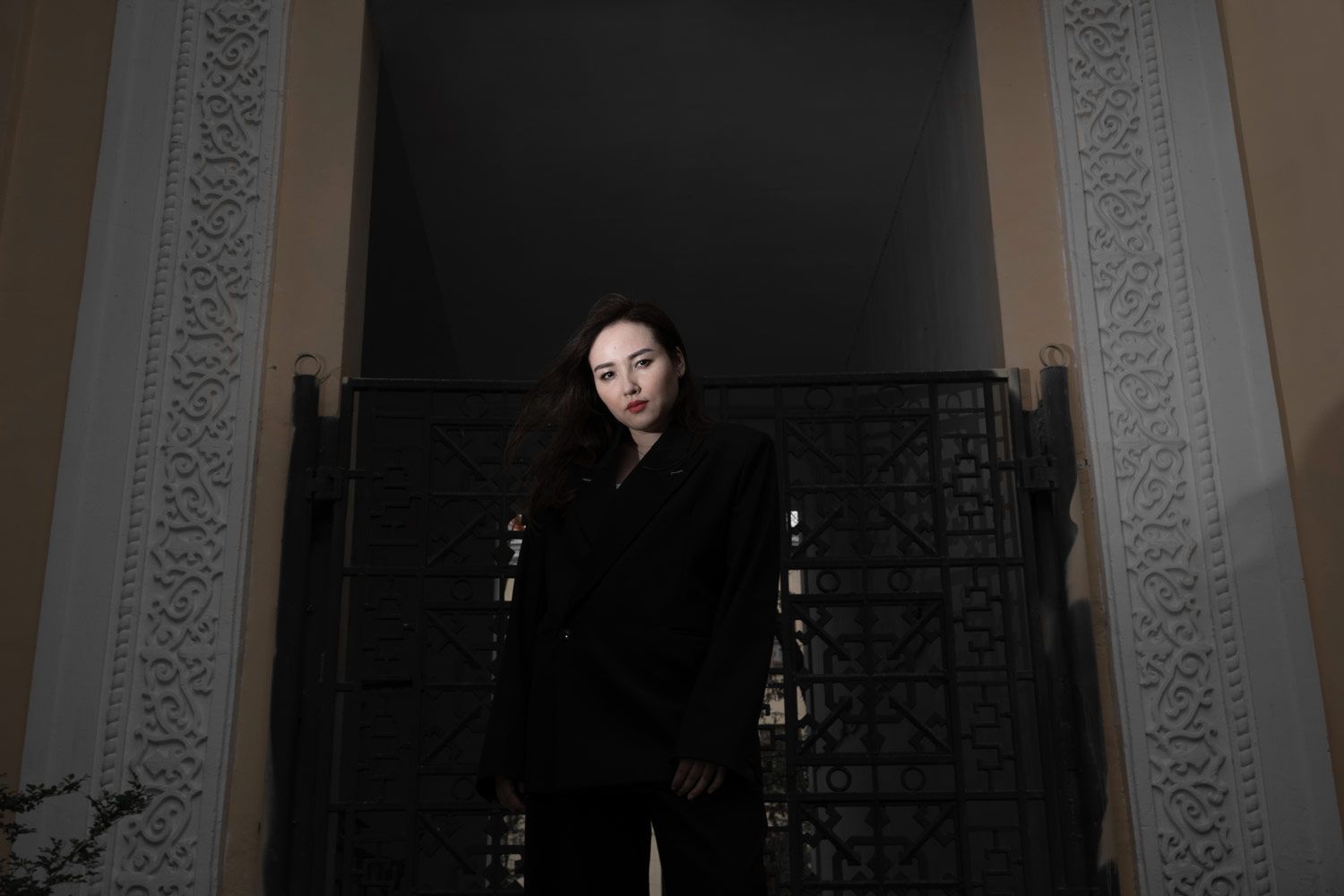
In Kazakhstan, they are judged by former minister Kuandyk Bimimbaev, accused of killing his wife, Saltanat Nukenova. The public trial began at the end of March: according to the prosecution, he beat and strangled his wife for several hours in the VIP Kabinka of the BAU restaurant in Astana. The court attracted special attention not only in Kazakhstan, but also in other CIS countries - the process is broadcast on Utube, and in social networks they launched a flash mob #Zasaltanate, in the framework of which girls post their photos with glasses of wine and the signature “If I drink wine, it does not mean that I can kill me”. The family of Saltanat Nukenova in court is represented by a well -known lawyer Zhanna Urazbakhov, who protects women injured from domestic violence. The cooperative of independent journalists “Coast” talked with her about the process of the process - and how he could help solve the problem of domestic violence in the country. With the permission of the Medusa publication, it publishes this interview.
“Even a female-man-act-even being right in the court building! - Not protected from violence "
- How did you become a lawyer?
- As a child, I dreamed of working in the police. Inspired by the series of those years [1990s and 2000s], I believed that I would grow up and investigate complex criminal cases, punish criminals, reveal gangs, restore justice-in general, continuous romance. But during the internship, to which I was sent as a student of a legal farm, I realized that the reality of the police is different. And that I definitely will not find myself there. In the police, as in politics, it is always dirty.
Having received a diploma, I came to an internship at a college of lawyers, then handed over to a lawyer license, engaged in economic and corruption crimes, large corporate disputes, and civil matters. And in July 2017, she decided to help a woman who her husband beat for ten years. He was an aggressor and an abuser - she had to hide from him, even when they had already divorced.
My help was needed, because she and her ex -husband then sued, with whom the children would live. And on the first day of the process, her husband attacked me - right on the threshold of the court building. At first he just shouted, swearing: “You are feminists! Damn in Europe! " We asked the bailiff to call the police, turned to people sitting in a guard booth. No one spoke. And at some point he ran up, began to pull my client somewhere-and when I threatened that I would call the police myself now, hit me in a grand scale. I shot his actions on the phone all the way - and this moment also hit the video.
Then, in July 2017, in Kazakhstan, domestic violence was precisely decriminalized , and causing mild harm to health transferred from the Criminal Code to the administrative. And this man was eventually brought only to administrative responsibility - just for three days they put him in a special receiver. It was then that I realized that even a woman-adulter-even being right in the court building! - Not protected from violence. I ran into this. How many more women will collide?
Since July 2017, I began to consult women who were on the verge of a divorce or collided with domestic or sexualized violence. Now we have already achieved five rape sentences, and I want everyone who conceived such a crime to understand the inevitability of punishment. That now it will not be possible to slip, even if it happened before.
And to avoid punishment with rapists, it really succeeds: women are afraid to contact the police, because employees often prefer to blame the victim of what happened. “What did you do at night? What did you go to the club? Was you in a skirt? Have you drank? "

- The cases of violence against women are not priority for law enforcement agencies in all CIS countries. How are they investigating in Kazakhstan?
- They do not know how to collect evidence, that’s the worst thing! In the first 72 hours after the crime - the golden time to collect evidence - catastrophic mistakes are made. I had a rape, when they did not buy bedding elementary. In another case, the panties lost. That is, there will be no DNA in the investigation. Due to such omissions, sometimes it turns out that the case cannot even be sent to court.
Another frequent phenomenon is when the police asks the victim to pick up the application. Only 10% of all who survived the rape of Kazakh women are decided to turn to the authorities - and already of them only 2% of cases reach the court.
I represented the interests of the Almaty Ulzhan: on the day when she testified about rape, two police officers came to her home and demanded that she withdraw their statement. The argument was this: "You still can’t prove anything." They tried to dissuade my other client to write a statement right in the department: "This is a shame, this is a stigma - why do you need it?" The security forces tried to reconcile another victim with the rapist: they advised him to “just pay her” - and left them in the office to “agree”. Continuous savagery.
In all civilized countries, the interests of women are represented by the prosecutor's office - but in Kazakhstan the victim of violence also needs a lawyer.
"All the year of their life together, he inspired the Saltanate that something was wrong with her"
- How did you go into the murder of Saltanat Nukenova?
-Right on the day of the funeral, Saltanat, on November 11, 2023, some telegram channels and journalists began an information attack on the family: they wrote that the Saltanat allegedly drank strongly, and on the day of death behaved inadequately, he fell off, and she fought her head-and generally died in a dream. The first such post, according to the [brother of the deceased] Aitbek [Amangeldy], appeared right when they were in the cemetery.
It shocked them. Parents Saltanate knew that she was a mentally healthy person; They saw a body on which there was no living place. What other "death in a dream"? They thought that it was obvious to everyone that their daughter and sister were killed. But when they realized that they had started the information war against them, they decided to hire a lawyer.
We met Pope Saltanat and her brother Aitbek in mid-November 2023-met to discuss the defense strategy. These were devastated people who took the most important thing in life. It’s even difficult for me to describe my dad: he was all black. He just looked at one point and could not realize that this really happens to his family. And Aitbek was in some kind of prostration. It took him a lot of time to accept this grief.
But even in this state, the family found strength and began to refute all these rumors and speculations, made an official appeal. And I - so that this time all evidence and traces were collected and recorded - immediately filed about 20 petitions for examinations. Now there are 16 volumes of criminal case materials in the court, and I think that the charges managed to prove the guilt of Kuandyk Bishimbaev in the murder.
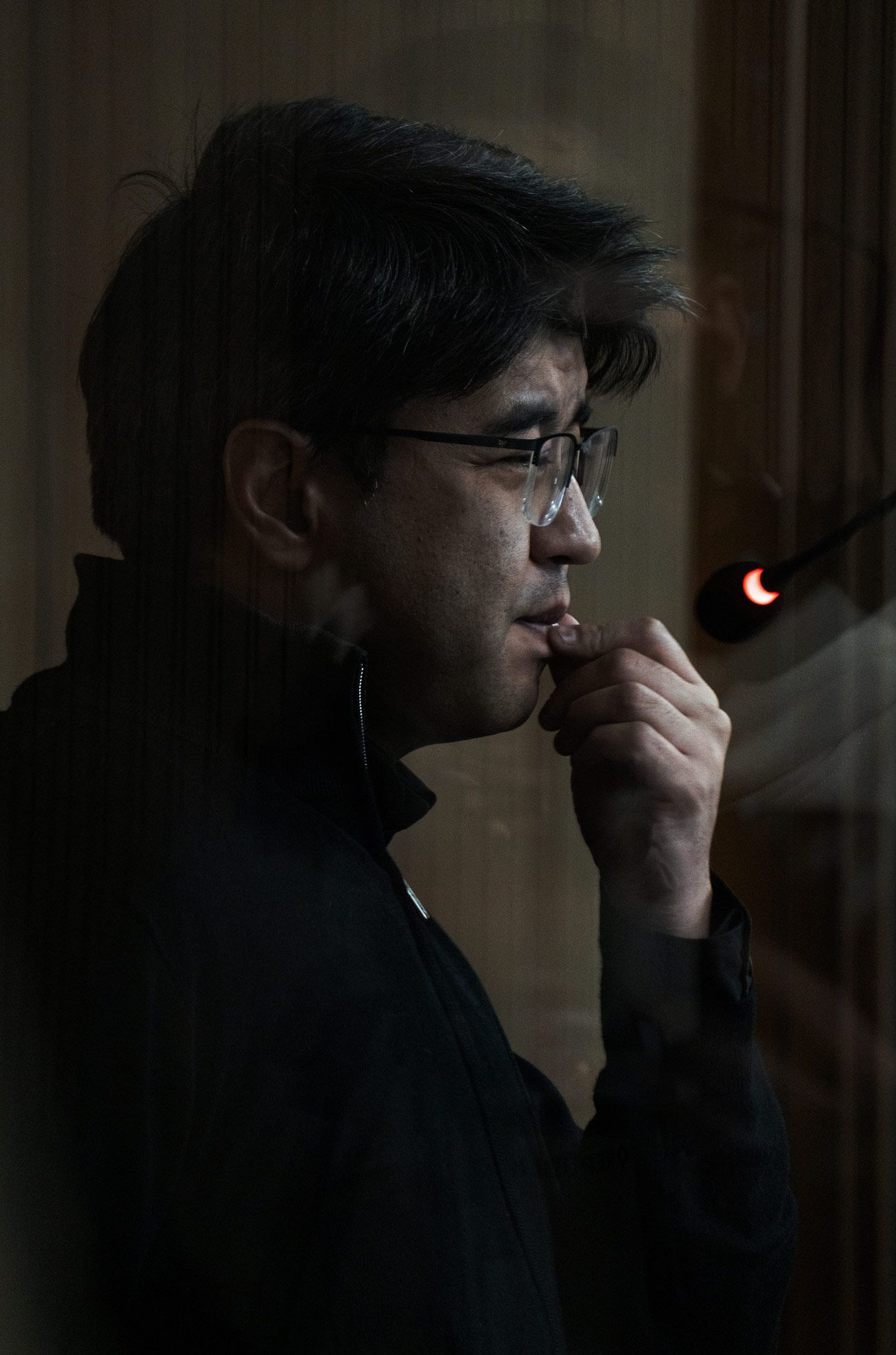
- By the time of the murder of Nukenov and Bishimbaev, they did not stay in marriage and a year. What is known about their relationship?
- He was jealous pathologically: he demanded that she constantly throw off her geolocation - where she is, with whom she is. He accompanied her at meetings, looked at her phone: she asked her friends even comic messages not to send her, because anything could be a reason for the conflict with Bishimbaev.
She also suspected that a spy program was installed on her smartphone. In addition, he knew her password. So that you understand: it was Bishimbaev who reported the password from the Nukenova phone.
After marriage, Saltanat closed its page on social networks and opened a new one, where she posted mainly a photo with her husband. Very few have access to this profile. With the Nukenov family, communication limited communication, and she told her friends that she was afraid of Bishimbaeva - and that he "just would not let her go."
All the year of their life together, he inspired the Saltanate that something was wrong with her: he demanded that she go to psychologists; He forced her to take anti -lane drugs that he bought for himself. He did not let her sleep: he could see some pornographic video with a girl allegedly like a saltanate at night-and immediately wake her up and arrange her interrogation.
The materials were attached to the case file [taken even before the murder] pictures where traces of the rope are visible on her neck. There are photos from [their vacation on] the Maldives, where she has a bruise throughout her body. She told her sisters about the beatings; I sent a photo with the beatings to my brother. When in September [2023] at the family event, the Saltanat took off the jacket, it turned out that she had bruises throughout her body.
Moreover, he constantly convinced Saltanate that it was she who was to blame for what was happening. And even now he is broadcasting to us in court that on the night of her death, Saltanat simply “brought him for six hours” and therefore he “could not restrain”.
- Why did the Saltanate contact the police?
- This is fear. He is an influential person, a former minister , with connections, with money. And he blackmail her: when he watched his phone, they found an intimate video with the Saltanate, which he threatened to post on the Internet. He also said that he would put pressure on her and her family.
I know dozens of women who were blackmailing or blackmailing their former partners, including intimate videos and photos. And women are afraid to contact the police, because even there they do not see a source of protection.

"Perhaps he killed her for saying that it would not leave it so"
- What happened on the night of November 9, 2023?
-The psychiatrist Bishimbaev during the investigation said that the conflict began due to the fact that Saltanate forgot to order a deodorant to her husband. You understand, yes? Deodorant. They began to swear at the Dima Bilan concert that [held that day in Astana], then continued the skirmish in the Bau gastrokent. Already from there, Saltanat called her brother and said: "I want to get away from him - now I will come to you." Bishimbaev began to hold her in a restaurant, and beatings began at two in the night.
And I can’t even call it animal cruelty, because animals are much more merciful. In the forensic medical examination, only a description of external damage takes two and a half sheets of computer text: broken nose, damaged ears. And what was found in her head during the autopsy ... The volume of the subdural hematoma turned out to be 230 milliliters - that is, she had a large glass of blood in her head. When the brain was removed, even under it there was blood.
Saltanate's body was so disfigured that relatives did not immediately recognize her. The mother was not shown to her mother: the family wanted her mother to remember her as she was during her life, and not the way she was given out of the morgue.
But Bishimbaev, even during a psychiatric examination, told the doctor: “I know what vital organs cannot be touched! I just lost my temper, because she forgot to order a deodorant. ” In his retelling, this sounds like some kind of small quarrel, and in fact we see the body. And the state in which it was delivered to the morgue.
- In court, Bishimbaev claimed that he was not going to kill Nukenov and that she had inflicted the most difficult injuries to herself - losing her balance and several times hit her head on the toilet.
-The court interrogated the forensic expert, who completely destroyed this line of defense. Bishimbaev said that she allegedly made two falls from his one blow: at first she hit the toilet, then on the floor, then got up - and hit again. But the examination showed that a person can’t ricochet from the toilet and from the walls - but what the Saltanate was held by the hair and beat the toilet, the expert just does not exclude.
- Even Bishimbaev’s lawyers are trying to convince the jury that the victim “brought” his killer to beatings.
- The line of protection that “the Saltanate was inadequate, drinking, suffered from mental disorders,” traced from the very beginning. The brother of Bishimbaev’s lawyers asked the brother of the deceased: “How often did your sister drank, the material of you? Are there any hereditary diseases in your family? "
Bishimbaev even specifically provided the court with a password to his phone - so that the jury could see the correspondence with Nukenova allegedly stored on the device, confirming her inadequacy: that she was abusil, that she had been drunk and jealous.
But when the smartphone was opened, we received the main evidence of the fault of Bishimbaev. It turned out that on the night of the murder, he took off on his own torture, torture and mockery of Saltanat Nukenova for two hours. 27 short videos made in the interval from 6:40 to 8:24 in the morning. And the court, and jury, and prosecutors were shocked by the cruelty of these personnel. Everyone who watched the broadcast of the court saw our emotions - it was a genuine shock. People from the hall required an ambulance. Brother Saltanat could not hold back tears. I recommended that he not watch it, but he wanted to know what happened to his sister.
Bishimbaev simply tortured her - as in concentration camps they do not try. He did not let her go to the toilet, undressed, torn all his clothes on her, forced him to crawl on his knees and look for something on the floor, pulled her by the hair, kicked-and all this time he interrogated with perverted pleasure.
And Saltanat in these videos tells him that "you will sit for ten years." He keeps his bloodied shirt in front of him - and says: "It will be evidence." I think that for this he, perhaps, killed her - because she said that it would not leave it. And he will go to court with this.
This is a turning point in business. Because before that, Bishimbaev pushed that he "just beat her, then she went to bed - and died in a dream." The defense insisted that it was a crime by negligence. But intent became obvious right in court - during the opening of the phone.
The irony is that the phone was seized immediately after the arrest, but the involved specialists could not open it - and he was simply stored in the materials of the criminal case. And Bishimbaev could refuse to name the password - this is his constitutional law, no one should testify against himself. But he really wanted to demonstrate to the court what Saltanate was “inadequate”.
He simply did not remember that he was shooting that night. He was in a state of wilder intoxication. Alcohol literally erased his memory so much that he forgot that he took off his own incriminating evidence. Video with torture Saltanate for himself was a surprise - you saw [in broadcasting from the process], how, when the court began to get acquainted with them, he began to panic? How did he rush around the cage? "They threw it to me, this was my voice, it is not me!"
The next morning, after the murder, he took care of destroying the evidence: erased the imprints, destroyed the clothes of Saltanat, her phone sent home so that he would not find him on geolocation. I destroyed the video from the surveillance cameras of the restaurant: in BAU, everything is decorated on his relatives, Kuandyk there is the king and God. Bishimbaev simply wrote [his cousin and director of Bau Bakhytzhan] Baizhanov “Remove the Camer of the Gastroenter”.
But the most important thing he missed! The most important evidence was in his phone, which he simply forgot about. I just forgot that I shot these videos.
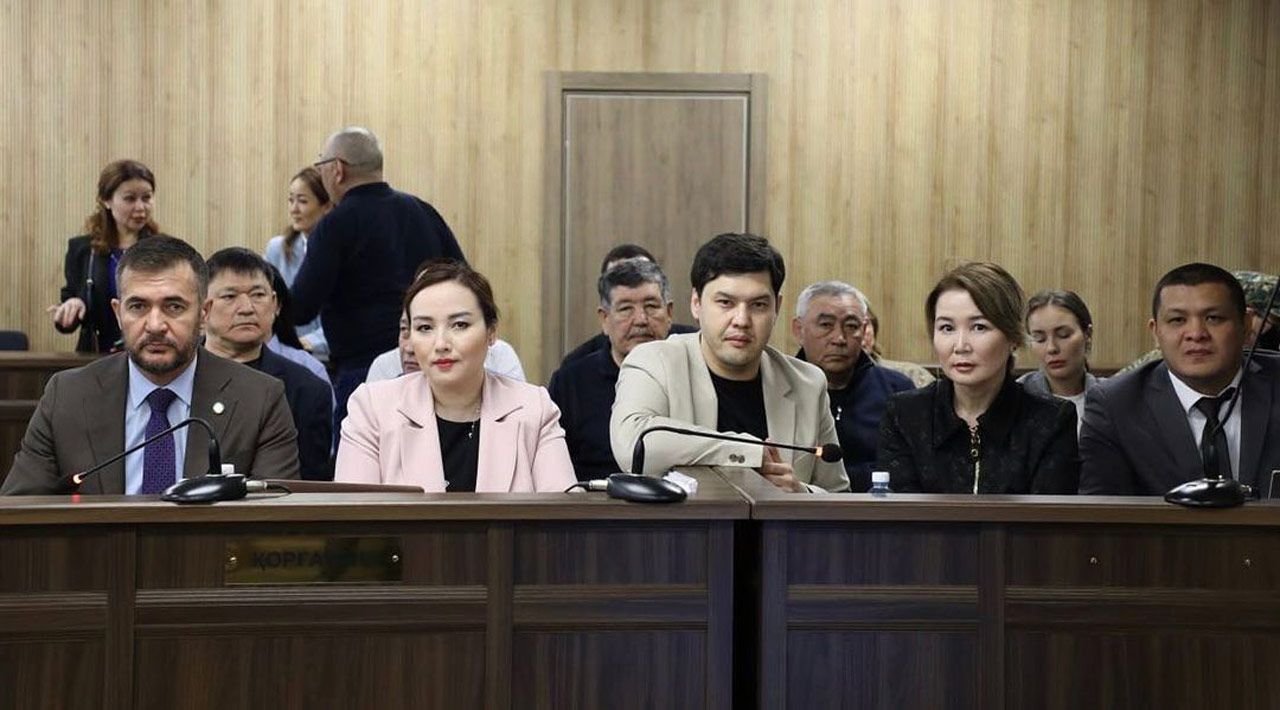
- Did none of the restaurant employees really see what was happening?
- It was his institution! She had no one to turn to. And he knew that no one would help her. And already late at night, when the Saltanate was killed, her screams were heard only by the Malyars in the building. They also preferred not to intervene-although they still wrote a message to the Bau administrator: "I hope the wife [Bishimbaeva] is alive." But the administrator did not call the police.
At some point, the Saltanat began to publish dying wheezing-the side of protection, however, describes it differently with incredible cynicism: supposedly Bishimbaev put it with love, covered it-and she snored sleepily. The forensic expert in court explained that it is impossible to confuse the agonic state, when the brain of the dying is not enough oxygen is impossible with a simple snoring: it would be clear to anyone why it would wheezes so terribly.
According to histologists , Saltanate died somewhere in the area of dinner. Bishimbaev asked [the restaurant’s employees] two blankets, wrapped her body in them, did not call an ambulance. I think that he wanted to take him out-but on that day [November 9, 2023] Putin was an official visit to Astana, and the delegation was just in the building near the BAU. Everything around was cordoned off by the Presidential Protection Service, and he was simply afraid to take out the body.
"Why if my grandmother suffered, then I have to endure?"
- Bishimbaev himself petitioned for his case to be considered by the jury. For what?
- It was a procedural move: according to the second part of Article 99 [of the Criminal Code of the Republic of Kazakhstan], a term of 15 years to life was provided for the murder. And if the jury is considering the case, then the lifetime cannot be appointed until all ten jury vote for it unanimously. And even during their selection, the defense of Bishimbaev insisted on excluding everyone who has daughters. They hoped that all ten votes would not be set.
Еще сторона Бишимбаева думала, что им удастся склонить на свою сторону консервативную часть общества. Свои показания Куандык начал с очернения Салтанат: описывал ее как пьющую, неадекватную, агрессивную и ревнивую женщину, которая все время его провоцировала. Отдельно упомянул, как она «выкинула серьги», которые ей подарила его мама. Заявил, что «шесть часов терпел от нее унижения и оскорбления, после чего не выдержал». Все это было попыткой дискредитировать Салтанат в глазах присяжных, чтобы вызвать их сочувствие и снисхождение [к себе]. «Я ее побил — но тому были причины».
Но в результате публичного процесса все это обернулось против него. И фамилия Бишимбаева стала нарицательной.
- This is true. Но были ли у вас накануне процесса опасения, что кто-то может поддержать Бишимбаева?
- No. Это настолько очевидное преступление… Молодая девушка в расцвете сил — она же с ним и год не прожила. Не дожила до первой годовщины их свадьбы. И ее с такой жестокостью и цинизмом убивают в самом сердце Астаны. У меня не было никаких сомнений, что общество будет с нами солидарно.
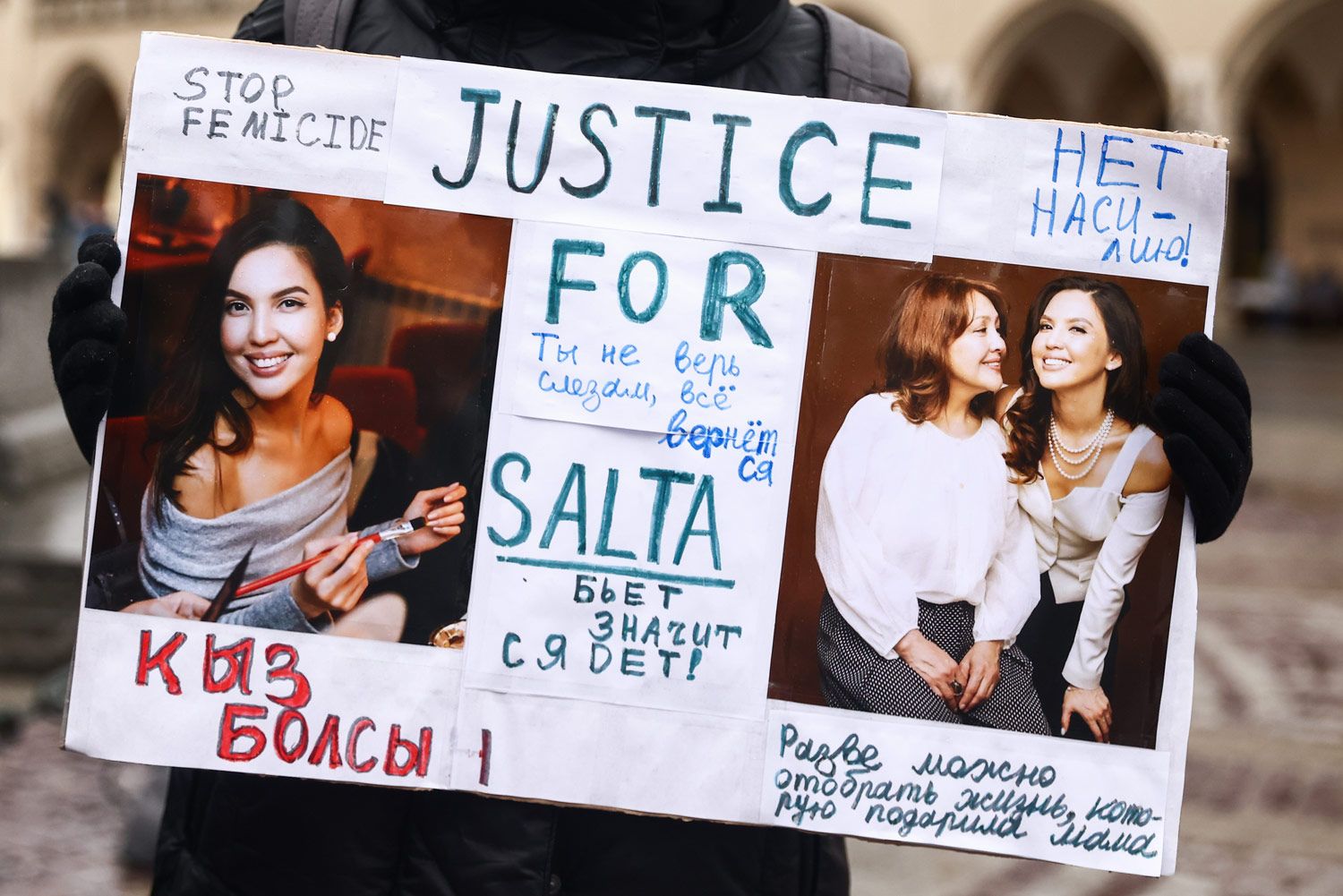
— Меня поразило, с какой простотой Бишимбаев описывает нанесенные им побои: «Просто пнул ее со злости раза три-четыре». Как будто для него это норма. Казахстанские правозащитники связывают это с тем, что Куандык родом из «более консервативной» части страны, где «по статистике, больше насилия по отношению к женщинам».
— Я не люблю проводить такие разграничения, но между югом и западом страны действительно есть различия. Женщин у нас даже предостерегают, что «лучше не выходить замуж в Шымкент» или куда-то на запад Казахстана. Потому что там традиционный уклад сильнее: существует специальное понятие «келин» — это женщина, которая должна терпеть, подчиняться семье мужа, преклоняться перед ним. Там такие устои, что женщина практически не человек, а некая прислуга, которая должна терпеть все.
Понятно, что мы живем в Центральной Азии, и те устои и традиции, которые нам с детства навязывают… Любая девочка сталкивалась с этими формулами: «мужчина главный», «мужик сказал — значит, он прав», «просто так ничего не происходит», «бьет — значит заслужила». Когда ты растешь, это накладывает отпечаток. Но с возрастом мы перестаем соглашаться: «Почему если бабушка терпела, то и я должна терпеть? Я так не хочу». С тех пор как я пришла в юриспруденцию, я поняла, что навязываемое традицией как «нормальное» — ненормально. А иногда и вовсе преступление. Теперь у меня нулевая терпимость к любому виду насилия.
Права женщин в Казахстане
Как объясняли исследователи Галым Жусипбек и Жанар Нагаева в своей статье «Права келин в Центральной Азии», после распада СССР в казахстанском обществе усиливаются консервативные настроения. В восстановлении традиций, которые включают в себя «уят» , многие видят возрождение истинной «казахскости», которая противопоставляется «советскости». Эти идеи поддерживают как мужчины, так и женщины.
Как сказала изданию Forbes учредительница казахстанской правозащитной организации SVET (StopViolence End Tyranny) Молдир Албан, в Казахстане «до сих пор обращают внимание на то, „чиста“ или „не чиста“ невеста»: «Даже если самому мужчине это не важно, это имеет значение для семьи, и они могут оскорблять невестку, говорить, что у нее „не та репутация“ и что она вышла замуж не девственницей. В некоторых областях до сих пор могут вытащить простыню после первой брачной ночи, в некоторых отдаленных областях, и могут проверить, действительно ли там была кровь».
По оценке казахстанской правозащитницы, доктора права Халиды Ажигуловой, в момент заключения брака статус женщины в некоторых регионах страны «становится самым низким»: «В период начала своей семейной жизни девушки сталкиваются с большим психологическим насилием со стороны родителей мужа. Очень часто психологическое насилие переходит в физическое. Бывают случаи, когда сами матери мужей принуждают своих сыновей избивать жен, чтобы они были более покладистыми. В свое время эти свекрови сами подвергались такому насилию со стороны своих же свекровей. Это такой круговорот насилия в природе».
Сторона защиты Бишимбаева попыталась эксплуатировать такие настроения, считает Молдир Албан: «Бишимбаев устраивает шоу не для нас, а для присяжных. Он давит на стереотипы, на маркеры, определяющие „хороших“ и „нехороших“ женщин».
И когда я слышу, как Бишимбаев пытается оправдать свое насилие… «Ну, я бил ее — но я не бил по жизненно важным органам!» Меня шокирует, что для его картины мира это нормально. Еще когда я знакомилась с заключением судебных психолого-психиатрических экспертиз, я понимала, чего от него ожидать: психиатры отмечали, например, эгоцентризм. Он на каждый вопрос находит какой-то ответ, который в голове нормального человека просто не укладывается. Если у него спросить «это черное?», он ответит «нет, белое».
Он ведь так и не признал вину в умышленном убийстве: все еще говорит, что просто ее побил, а смерти не желал. Он всех нас попытался загазлайтить: люди в соцсетях так и пишут, что им после этого судебного процесса потребуется коллективная психотерапия. Потому что то, с чем мы столкнулись, разрушает психику любого здорового человека.
— Может ли это дело быть спущено на тормозах? Бишимбаева уже приговаривали к десяти годам заключения за взятки, но тогда он отсидел лишь полтора года, выйдя на волю в связи с условно-досрочным освобождением.
— Риски всегда есть — мы же не можем залезть в головы присяжных. Каким будет приговор, мы узнаем только после того, как они огласят его.
Но семья Салтанат требует пожизненного наказания. Ее маму госпитализировали с гипертоническим кризом: она долго не могла осознать потерю своего ребенка. Ее теперь никогда не оставляют одну: врачи опасаются за ее здоровье.
Папа Салтанат с ноября почти полностью поседел. И как будто постарел на 20 лет. Салта была папина дочка. Его здоровье тоже пошатнулось: проблемы с сердцем. Сейчас они держатся только на этой борьбе — борьбе за справедливость.
«Это солидарность общества перед злом»
— Почему домашнее насилие остается настолько серьезной проблемой в Казахстане? Каждый год от рук семейных агрессоров погибают не менее 80 женщин. Ежедневно в полицию поступают 300 заявлений от жертв.
— В первую очередь это культ мальчиков. У нас особое отношение к мужчинам: почет, уважение; им с детства внушают, что они особенные, что у них привилегии. А от женщин, наоборот, требуют полного подчинения: рассказывают, кому и что они должны. При этом женщины работают наравне с мужчинами, а то и больше — только после офиса у них начинается вторая, «домашняя» смена.
Когда я это рассказываю, звучит не так уж и страшно. Но когда роль женщины обесценивается поколениями, насилие становится чем-то нормальным.
— Что государство должно сделать, чтобы прекратить насилие в казахстанских семьях?
— Здесь нужна политическая воля: к любому насилию должна быть нулевая терпимость. Если про человека известно, что он бьет свою жену и детей, он должен становиться нерукопожатным в каждом коллективе. Нужно ввести принудительную психокоррекцию абьюзеров: их нужно — за их же счет — принудительно лечить. Потому что навсегда его от общества изолировать не получится, и нужно его [психологическую] проблему проработать.
Нужна уголовная ответственность за харассмент, за преследования и сталкинг. Многие женщины умирают от рук бывших мужей — даже развод им не помогает.
И необходима серьезная реформа МВД, потому что сейчас даже в групповом изнасиловании правоохранительные органы порой не видят ничего страшного и пытаются все замолчать и списать. Нашим органам не хватает эмпатии к жертве.

— Вы ожидали, что процесс станет настолько громким? Весь Казахстан смотрит трансляции заседаний, люди выходят на митинги и подписывают петиции в поддержку закона о криминализации домашнего насилия.
— В начале процесса я не ожидала, что за ним будут так следить. Но в ходе суда стало понятно, что убийца, вместо того чтобы каяться, пытается снять с себя ответственность. И тут разумная часть нашего общества проснулась — по всему миру начались митинги, протесты, появился хештег #ЗаСалтанат.
Я ощутила невероятную гордость за наше общество, которое впервые за долгое время объединилось в едином порыве и встало на сторону семьи Салтанат и самой Салтанат. Это солидарность общества перед злом. Мы устали от новостей о насилии и очередном убийстве или изнасиловании — мы хотим перемен. И я сейчас прямо чувствую дух нашего народа.
А 11 апреля благодаря делу Салтанат Нукеновой президент Казахстана [Касым-Жомарт Токаев] подписал закон о криминализации бытового насилия. 15 июня эти поправки вступят в силу — и отныне всех домашних агрессоров и абьюзеров будут привлекать к уголовной ответственности.
— В России такой документ тоже обсуждали, но разговорами дело и ограничилось: у нас домашние побои до сих пор декриминализованы.
— Я бы рекомендовала никогда не сдаваться. В Казахстане закон о профилактике бытового насилия приняли еще 15 лет назад, в 2009 году. Все это время [в него вносили поправки, которые] то криминализировали, то декриминализировали побои. Но ситуация с Салтанат все разом переломила.
Я слежу за ситуацией в России и, если честно, думала, что после истории Маргариты Грачевой общество сможет консолидироваться. Но этого не произошло. А сейчас людей, осужденных за убийство своих жен и партнерш, милуют и отправляют на войну в Украину — это же страшно, когда они оттуда возвращаются в общество.
Но какие бы страшные преступления ни происходили в России, единства не хватает. Я не знаю почему. Нам, казахстанцам, единство подарила Салтанат.
Лилия Яппарова для «Берега»