
Translated material
"Memory": Jessica Chastain and Peter Sarsgard in the drama of amnesia
The heroine recognizes in the hero of her old offender. He does not remember anything because of the early dementia. Will love help them to heal?

The drama of the Mexican director Michel Franco “Memory” was released in Russian rental. In 2023, Peter Sarsgard, who played the main male role in it, received the Volpi Cup at the Venice festival. Together with him, Jessica Chastaine starred in the picture. Her heroine meets at a meeting of graduates of a long -standing acquaintance - and accuses him of a crime, he also loses his memory - and refuses to plead guilty. Film critic Anton Dolin talks about a picture dedicated to injuries and love as a way to cope with them.
This is the perfect film of the era of psychotherapy, those ethics and sincerity of the “new” ethics and sincerity. At the same time, his semantic rod is criticism and deconstruction of the current picture of the world, in which it is customary to assign responsibility for words and actions to the past, pulled out of the very memory that gave the name to the picture of Michel Franco. But first of all, “Memory” is an excellent psychological drama that withstands an impeccable transasse up to the end. You have to overcome the remarkable temptation to retell it or at least hint, it is so simple, elegant, at the same time unexpected and obvious.
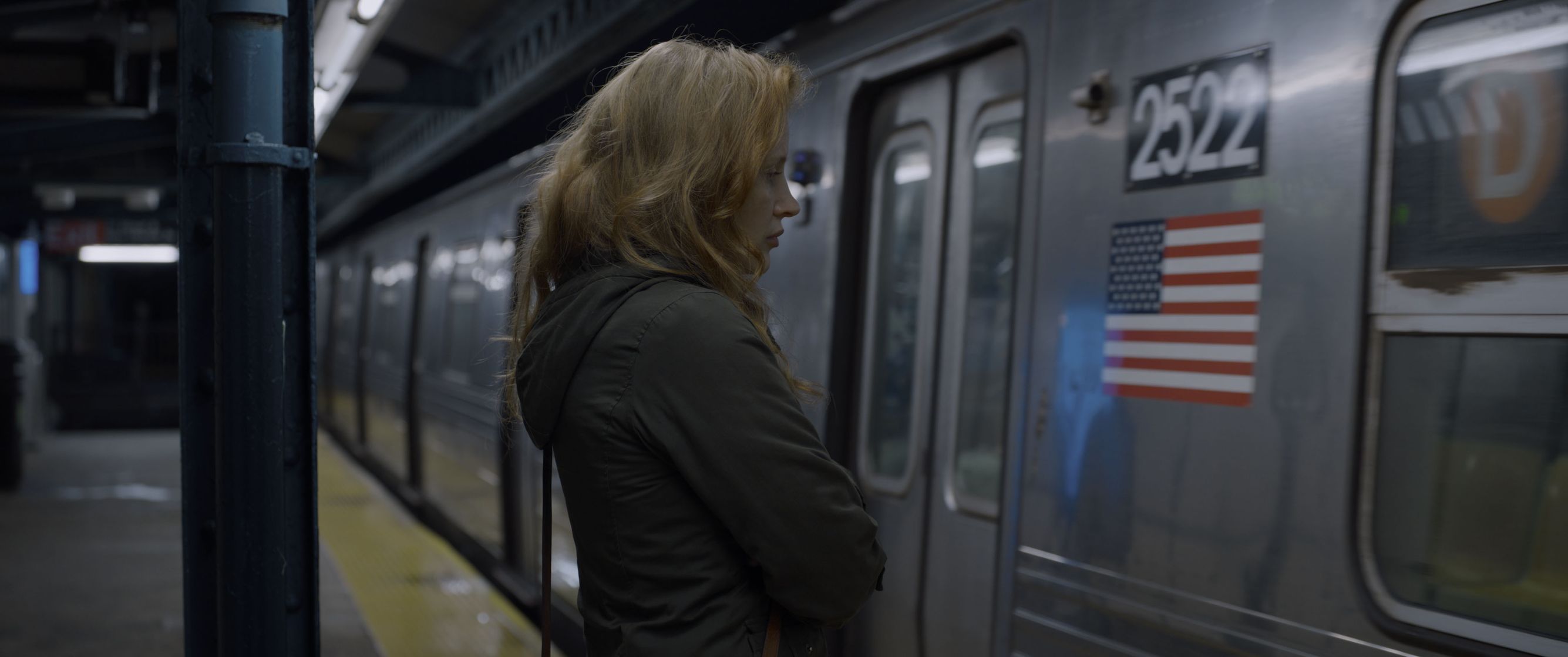
Sylvia (Jessica Chastain) regularly attends meetings of “anonymous alcoholics”, one brings up a child and gives all his strength to social work. Neither day nor at night she can relax, the door of her small apartment in a dysfunctional region of New York is always closed to several locks, and her teenage daughter lives under an incessant supervision-her mother wants to know passwords from her gadgets and computer, meets from school, does not let go to the parties.
The intrigue becomes a trip to the meeting of graduates, where Sylvia is hardly dragged by the younger sister of Olivia (Merritt Wyver). There, Sylvia, feeling uncomfortable and constrained, meets a strange bearded man. When the heroine runs out of the holiday, he follows her until the entrance. In a panic, having run home, Sylvia slams the door and pulls the curtains. And in the morning he finds a stalker sitting on the asphalt at her house, with difficulty capable of pronouncing two words. The man’s name is Sol (Peter Sarsgard), and he, as his appeared brother Isaac (Josh Charles) explains him, dementia. He is equally harmless and helpless.
The name of the film is not symbolic, but quite utilitarian value. Sol, who had lost his wife many years ago - Sylvia’s red hair reminded him of her, but he realizes this later, at the time of enlightenment - loses his memory, the failures are more and more extensive. It needs round -the -clock care, and this Isaac and his family are not yet able to organize. Sylvia, on the contrary, is obsessed and tormented by obsessive memories that loved ones declare false. She is sure that she was frightened by Sol not by chance: in it she recognized one of the high school students who sold her at school and forced her to sex. The mother of Sylvia and Olivia-Samantha (the living legend of Jessica Harper, who once shone in the "Suspiria" Dario Argento)-did not believe the Windows. Then the family problems began, which led to a complete break in the relationship between Sylvia and Samantha.
In the plot of “memory” there are many surprises and turns that the viewer is best explored independently. The film moves forward in a straight line, avoiding flashbacks and retreats, while Sylvia and Sol slowly but steadily begin to feel the craving for each other. You can call them the opposites of temperament too: a soft apologizing smile of salt, to any acute question of his hands - "I do not remember!" -against Sylvia's nervous frowning, without great success, striving to restore self-control (Su, due to illness for this aspect, waved his hand for a long time). The sensations of the public when viewing, of course, will be closer to the borderline state of Sylvia, always waiting for the worst: the paranoid spirit of the narrative as if slowly pulling a loop on her neck.
The 44-year-old Mexican Michel Franco, after the Grand Prix, awarded his shocking“new order” in Venice, became one of the most discussed modern directors. The new film confirms and refutes this status. On the one hand, the author this time resolutely refuses the political agenda, returning to the minimalism of private drama (this genre and tone is closer to it, as prove “after Lucia”, “chronicle” and “sunset”): we have a classic, quite conservative movie language.
On the other hand, the same one is felt here as in the “new order”, emotional duality, even provocation. The directorial method requires an active position from the viewer and, one might say, his own investigative work in relation to what is happening on the screen, his ethical background - so Franco continues the line of Michael Hankee and Lars von Trier. “Memory” is an interactive game in “I believe - I do not believe” in which it is impossible to maintain neutrality.
The most important question asked here is - is it really deeply injured (like Sylvia) or inconspicuously sore (like Sol) person is healed not by pills and psychotherapy, but, how did ancient fairy tales taught, love? The attraction of the heroes to each other - Stockholm syndrome, retime, fatal error or intuitive faith in a miracle that happens not only in the cinema, but also - I want to believe - and in life?
Moreover, the "memory" is made very convincing and reliably. This effect also works surgically accurate, deprived of the slightest aesthetics, the Belgian Camera Yev Kapa (he also filmed the “new order”, and before that painting by Leos Carax and Bruno Dumon). But first of all, they are serious from the point of view of both technology, frankness, and psychological immersion of the work of all artists, especially the Chastin and Sarsgaard, not without reason the Cup of Volpi in Venice. So, regardless of the assessment of the substantive side, “memory” can be enjoyed as a master class of acting.
The weekly drama of the picture is also hidden by the metaphorical layer, which, for example, are deprived of thematically similar films by Florian Zeler (“Father”, “Son”). The first replica is "I remember." Franco explores our total dependence on the past, which we consider unshakable and not subject to changes. But the memories make the story of a subjective, swell, trusted by an unreliable storyteller - are there others? The clash of conflicting pictures of the world, a meeting of mutually exclusive versions of the past makes our consciousness chaotic, and the actions are unpredictable. This is true in relation to large communities, up to entire nations (so, the “new order” studied Mexico's collective memory about revolutions and dictatorships of the past).
Amnesia paradoxically gives a chance for forgiveness, opens a window with possibilities for mercy. The key scene in which Sylvia finds salt naked - then, in another situation, the director responds to itself with a mirror episode - is devoid of eroticism or soreness. The film speaks only of a person returning lost innocence. The same thing is sung in the hit of the 1960s, which returns again and again, serving as the leitmotif of “memory”, “a Whiter Shade of Pale” Procol Harum: a white sheet from which our memoirs are erased is an impracticable but desired utopia.
Anton Dolin