
Translated material
Ruanda project
The Great British government has sold the law on the deportation of illegal migrants to Central Africa. This venture is criticized by opponents of conservatives, human rights activists and experts
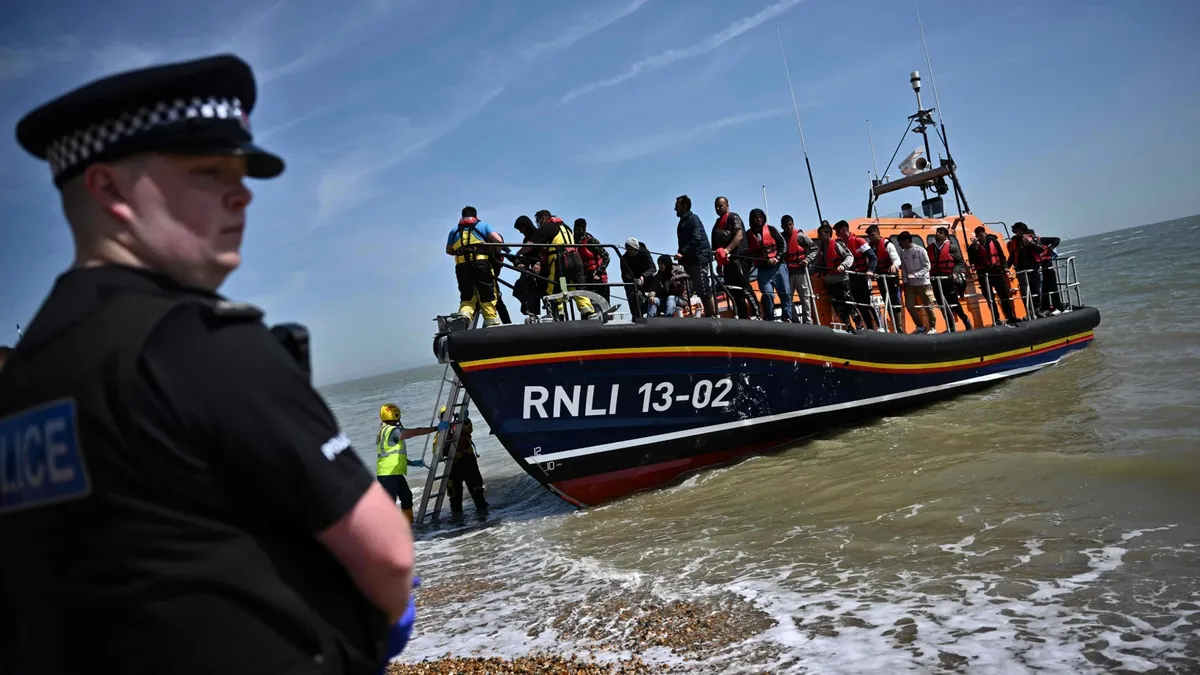
The British police are on duty on the shore where the boat with migrants arrived. Photo: Ben Stansall / AFP / East News
Like the whole rich Western world, Britain is experiencing a migration boom and, despite all the concern of the ruling party of conservatives with this problem, reached 672,000 people last year (unfortunate, falling into the country in inflatable boats - their small part). And after a long struggle in the courts and the UK parliament, a bill that allows the country's government to deport illegal asylum petitioners to Rwanda became law. Critics warn that Rwandian history raises serious questions about the rule of law, the separation of powers in the UK and creates a pernicious precedent for British democracy.
The promise of Sunaka
The control of the emigration was the key bait of Brexit - the exit of Britain from the European Union (recall the main slogan of the 2016 campaign: “Take Back Control!” - “I will return control!”) And the victory factor for conservatives in the 2019 elections.
Brexit took the right to live freely from EU citizens to live and work in Britain, and then Covid pandemia came, and the world seemed to froze - any movement of people stopped.
But as soon as the pandemic fainting ends, the number of illegal migrants (and as a result - asylum suppliers) began to grow.
Frequent illegal crossings on inflatable boats through the “English channel” (as the British call La-Channel), began back in 2018. Gradually, this method of getting into the country was replaced by the smuggling of people in trucks, which became too difficult and dangerous due to the new technologies of the border police. Since then, 30–40 thousand people per year have been sailing on boats to the country annually, and in 2022 the new Prime Minister Rishi Sunak made a solemn promise to “stop the boats” (Stop the Boats).

And here's what they came up with: through a number of bills and agreements, Tori approved a policy according to which people arriving on boats through the Strait (or in any other illegal way) can no longer receive refuge in Britain. They will be detained and sent to another country - to Rwanda, where (in case of successful consideration of their asylum) they will be allowed to settle.
Prime Minister Rishi Sunak expects that regular flights to Central Africa will begin in 10-12 weeks and will be “frequent as drum fraction”. The inevitability of deportation, according to the government, breaks the “business model” of criminal groups for the delivery of desperate people through the strait.
Officials claim that the first group of deported refugees has already been determined, the flight has been ordered, the detention has begun, but they refuse to report the details, fearing that the departure can be torn again.
It is assumed that before departure, refugees will be in custody while their cases, if complaints are followed, are considered in court. For these purposes, the government will hire a special corps of judges (up to 150 people) and additional judicial halls (up to 25) are opened, so that if necessary, it is possible to organize vessels for 5000 business days.
The deportation will be accompanied by specially trained people (500 “highly qualified specialists have already been trained, and another 300 will be trained next week”, officials boasted). Security officers practiced in the forced landing of migrants in aircraft, writes The Times, actions with “destructive” staff, protests, etc.
An important question: will the deportation become a deterring factor in immigration? It is still unclear. Researcher Sophie Watt from the University of Sheffield, who spent several months “in the field” (on the banks of the La-Channel) with refugees in 2023, says that they were stopped by “neither the brutal evacuation of the police camps, nor the fear of the gangs of smuggles, nor the horror when crossing the border, nor even the promise of a flight to Rwanda after arriving in the UK.”
Matilda Rosine, author of the book “Crime of Illegal Migration in Europe,” emphasizes that migrants usually do not have reliable information about the destination. Her data show that two -thirds of her interlocutors did not know about any of the sanctions for illegal migration, nor about detentions, nor deportation. Those few who were aware of the case learned about sanctions only upon arrival in Europe. Few (about 12%) relied on the Internet in search of information about the ways of migration, the majority was relied on on family, friends and smugglers.
Who will touch the Rwandian scheme
Supporters of Brexit, which make up the backbone in all offices starting from the 2019 elections, conducted a campaign to “return control” over the borders of the UK.
But paradoxically, it was Brexit who aggravated the problem.
The agreements of the European Union allow the member states to return the asylum suppliers to the first country of the bloc, where they filed an application or lived for at least five months (fingerprints are stored in the central database). But Brexit canceled all such agreements for Britain.
In total, according to the Ministry of Internal Affairs of Great Britain, since 2018, about 120 thousand people crossed boats through the La Cans. Most of them seek international protection through the asylum provision system, and many were really recognized as refugees and received permission for a settlement in the country.
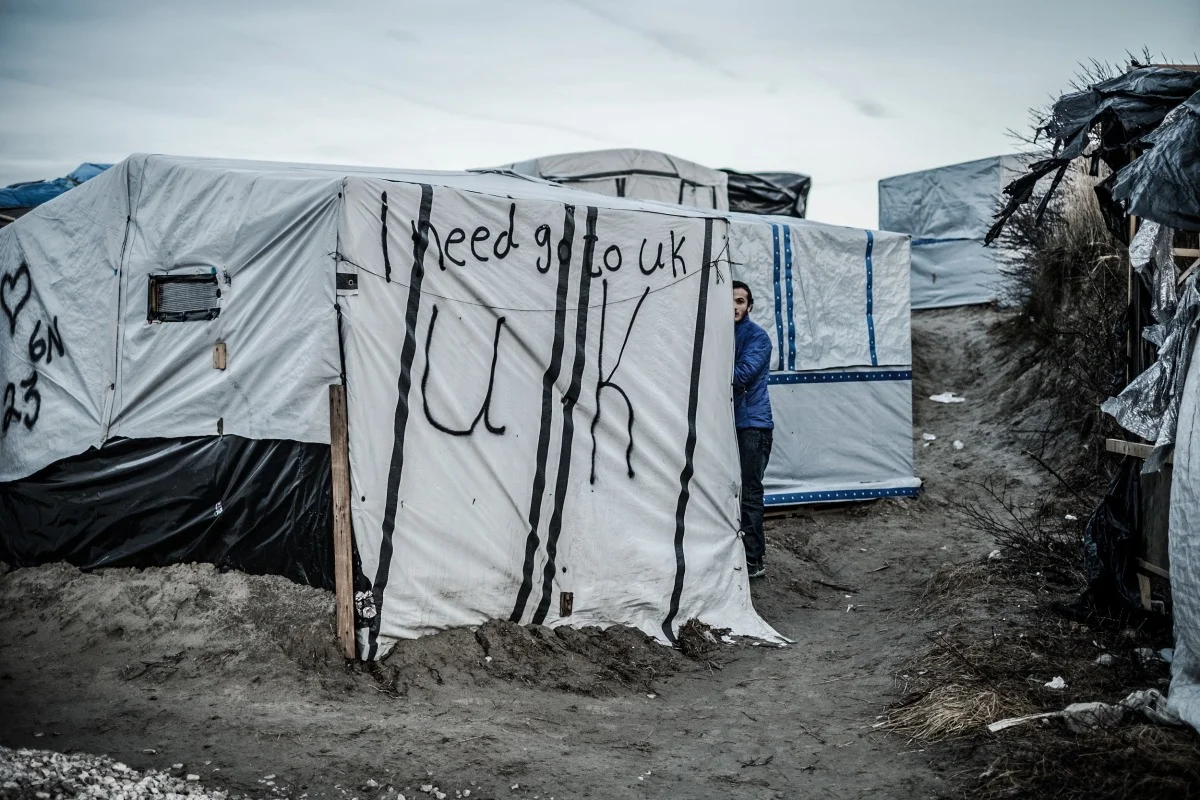
After March 2023, when amendments to the law made it impossible to ask for asylum to those who entered the country without permission, more than 40,000 people used illegal routes (only this year - 8300). Most of them, according to human rights activists, arrived from conflict zones (such as Iraq, Syria and Sudan). This means that the government has no right to return them to their homeland, where their life is at risk.
Under pressure from the House of Lords, the government promised to prevent the deportation of those who worked for the British government, in particular Afghans, whose ties with British special forces will be “reliable”.
Project cost
The cost of servicing the project is growing, although not a single person has yet been expelled. The British government paid Rwande 240 million pounds and pay another 120 million after the movement of the first 300 people, reported the Sky News TV channel with reference to the National Control Department.
The government allocated another 12.6 million pounds for the training of guards that will accompany the project - three accompanying per migrants.
The amounts of the additional five thousand days of the judicial corps have not yet been made public.
In general, The Home Office (as the Ministry of the Interior is called in Britain) said that expulsion to Rwanda will cost 63,000 pounds per person more than his maintenance in the UK.
At the same time, almost the same amount (in 541 million euros) - for three years, the UK promised to pay France for efforts to reduce the number of intersections of the strait. These funds were used for hiring an additional 500 officers and strengthening patrols on the beaches where smugglers operate. The joint efforts of the two countries are being built in the detention center.
Resistance
The Rwandian scheme was worked out for several years, at every step meeting the strong resistance of the political opposition, civil society and the church.
In the spring of 2022, the government has achieved the law to arrest and expuls the asylum suppliers who arrived in the country illegally, and concluded a deal with the Rwanda government to send visitors there - in exchange for hundreds of millions of pounds of investment.
But the first planned flight to Kigali was torn by a temporary prohibition of the European Court of Human Rights (he received the nickname “Pajamal Prohibition” because he was issued in the last minutes until midnight on June 14).
Then the government’s plans were again stalled in November 2023, when the UK Supreme Court ruled (unanimously!) That sending the asylum of asylum with a one -way ticket to Kigali is illegal and will be at risk. In response to a court decision, Sunak raised the level of agreement with Rwanda to an international treaty (finalized and concluded on December 5, 2023) and submitted a bill (December 6, 2023), which declared Rwanda a “safe” country. The document prescribed to all “persons who make decisions to relate to the Republic of Rwand as a safe country” and ignore the temporary prohibitions of the European Court. Some parts of other British and international laws were canceled.
The introduction of provisions to the legislation, directly indicating how something should be treated (and this is that the Supreme Court recently came to a different conclusion) is a “violation of the principle of separation of powers”, quoted The Financial Times of the head of the University of Cambridge, Mark Elliot. He evaluates as the real risk that the parliament will cut the wings to the judges and weaken the judicial system. Joshua Jovitt, Lecturer of Law in Newcastle University, continues on the Platesation platform:
“The parliamentary sovereignty does not give the parliament the right to change reality for the sake of their goals, and this is what this bill does. Just as he would demand from us to believe that 2+2 = 5 (I hope we would have raised an eyebrow if the parliament would go to this), he demands that all persons who make decisions ignore documented facts and give the legal priority of fiction. ”
In the House of Lords, the law was called "legally absurd", "an ominous form of exceeding the powers of the executive branch." The lower and upper chambers “played Ping Pong” five times, before the peers admitted that the House of Commons (where the majority of conservatives) could insist on their own.
Human rights activists argue that the plan is a “significant threat to the rule of law” and the protection of people from abuse of power by the state.
250 British human rights organizations sent a letter to the prime minister in which they promised to oppose the project in European and British courts.
It is expected that people who have received notifications of deportation to Rwanda will receive the necessary legal assistance in order to separately challenge and delay the expulsion in British ships, as well as to prepare claims in the ECHR. However, among lawyers there is a serious skepticism regarding the success of appeals.
The UN experts in the fight against torture warned commercial airlines against "promoting illegal deportation to Rwanda." Sky News quoted the warning in accordance with which “airlines and aircraft regulatory authorities may be involved in violation of international laws and court decisions, contributing to the deportation to Rwanda.” A number of airlines have already abandoned contracts with Home Office, and there is a possibility, writes The Times that AIRTANKER, who rents 14 Voyager aircraft for Royal Air Force, will also decide that reputation damage is too large.
Is Rwanda ready?
Work with migrants on the basis of "outsourcing" has a poor reputation. The Financial Times recalls that the migration centers, which for many years managed Australia in Papua, New Guinea and Nauru, caused serious political disagreements, and human rights groups indicated numerous abuses. But the Sunak government categorically rejected the idea of creating an independent monitoring committee, which could evaluate the situation for immigrants in Rwanda, which was insisted in the Lord of the Lords, and the Lords had to give in.
Among the options where you can place the processing centers of asylum petitioners, which were discussed in the government since 2020, there were old ferries, abandoned oil platforms in the North Sea, islands in the ocean, and offshore zones. Defeated the relocation project to Rwanda
- A small state of Central Africa with 13 million inhabitants.
It is probably familiar to the Russian reader, mainly from one of the largest genocide of Rwandian tutsi in history, carried out in 1994 by order of the Hutu government. Then, for several months, according to various estimates, from 500,000 to 1,100,000 people, or up to 20 percent of the country's population. The genocide was planned by the Rwandian political elite and was directly carried out by the army, gendarmerie, amateur armed groups and civilians. For the murder, Machete was used. Today, the denial of mass killings is a criminal offense in Rwand.
Over a few years, the Rwandians have done a lot of preparatory work, however, the FT indicates, serious omissions were made: under the contract, Rwanda was obliged to hire independent experts for counseling on the provision of asylum and appeal process and international judges to support and supervise the system. None of this was done.
And now a new problem has arisen: a number of British newspapers, including the pro -government The Telegraph, the other day reported that up to 70 percent of the housing stock intended for British refuge petitioners was sold to the Rwanders. The Rwanda government confirmed the fact of sale, although it insists that the figure of 70 percent is very high, and claims that the sale of houses to the local population gives guarantees to the towns of their turning into a ghetto.
Search for an exit where the entrance is
Many of those who are defending the project today, the former head of Foreign Office James Cleverly (now the Minister of the Interior) and Andrew Mitchel (younger Minister for International Development in Foreign Office) - recently evaluated him as contradictory, ineffective and very expensive. Sunak himself called him "ridiculous."
Now the leaders of the conservative party protect the project and allow the possibility of UK withdraw from the ECHR, and Mitchel claims that “Kigali is safer than London”. “That's what happens to people when they fall into power,” the famous journalist John Sopel is fidgeting.
Enver Solomon, who heads the British refugee Council, believes that the only “reliable way” to reduce the number of crossings is to create more opportunities for people to serve asylum. “We must see safe routes for those who are saved from conflicts and persecution, including more opportunities for reuniting families, refugee visas and cooperation with our European neighbors.”
Obviously, the problem of small courts has no simple solution. However, human rights activists indicate that purely police actions are often revealing in nature, and most refugees, no matter how hard their camps are raised, always return and sooner or later cross the border. LBC radio recently took a comment from a young woman from Sudan, who tried 30 times to sit on a boat going to the shores of England before she succeeded. “Leaves,” she explained, are always extremely traumatic: everyone is fighting to get aboard as quickly as possible, and there are not enough places to accommodate everyone. Another refugee said that smugglers often throw women overboard when the boat is too crowded ...

In case of victory in the election, the Laborists are going to “bury” the project, and instead to strengthen the protection of borders and work denser with European neighbors on the creation of proper refugee centers throughout the La Channel-with France, Belgium, the Netherlands and Germany, in order to end people trafficking networks. Human rights activists hope that, in the framework of such cooperation, the British could seek the right to return the asylum suppliers who went through another EU country back to this country - which the UK lost after Brexit.
Common sense, which the British generously call Common Sense, suggests that the fundamental causes of migration are poverty, war and injustice. These issues should be resolved by everyone, but what is happening in the world now is the road in the opposite direction.