Translated material
Salman Rushdi against utopia
The City of Victory is the first book published after an attempt on the writer. In it, he drew the epic saga of take -off and the fall of the mythical empire of medieval India
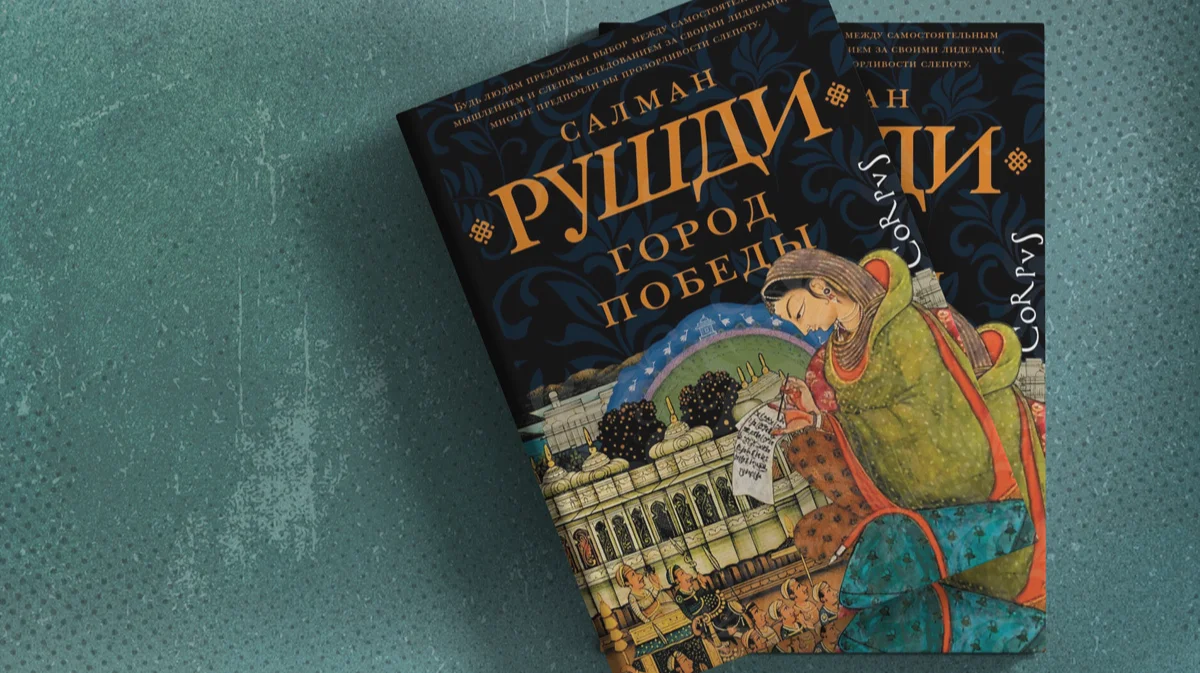
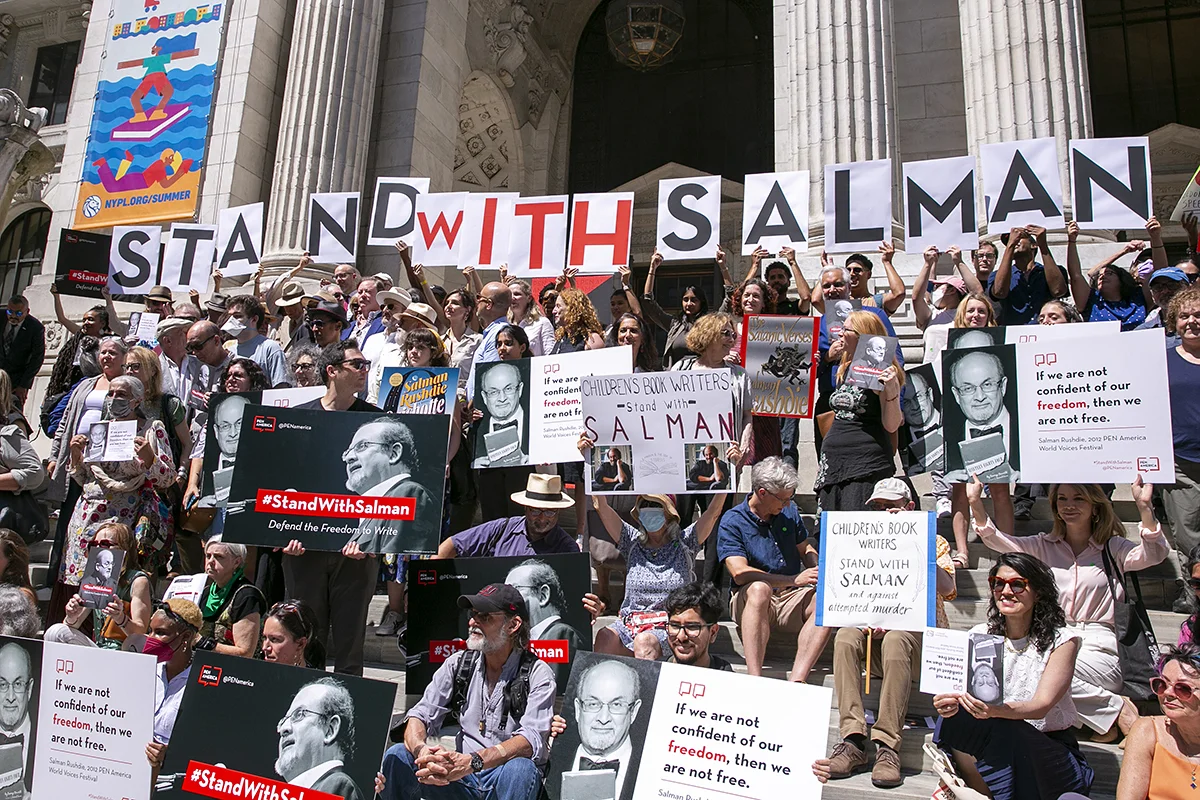
On August 12, 2022, Salman Rushdi was attacked. The 75-year-old prose writer received multiple stab wounds and lost his eyes. And although the writer completed work on the “Victory City” (published in Russian by Corpus) back in July 2022, it is not easy to believe in this: in the final of the novel there is a dramatic scene of literally blinding heroes.
The scene is medieval India (XIV - XVI centuries). The goddess Parvati commanded the main character of Pampan to create a society in which women will not be oppressed. The monumental epic covers 250 years of the pampa life (longevity and eternal youth - part of the gift of the goddess) and the history of the Bisnag empire created by her - from the emergence to the heyday and decline. Although the context pushes to read the novel as a political one, in fact, Rushdi writes about the eternal human search, death and love.
Why was Rushdi attacked Salman?
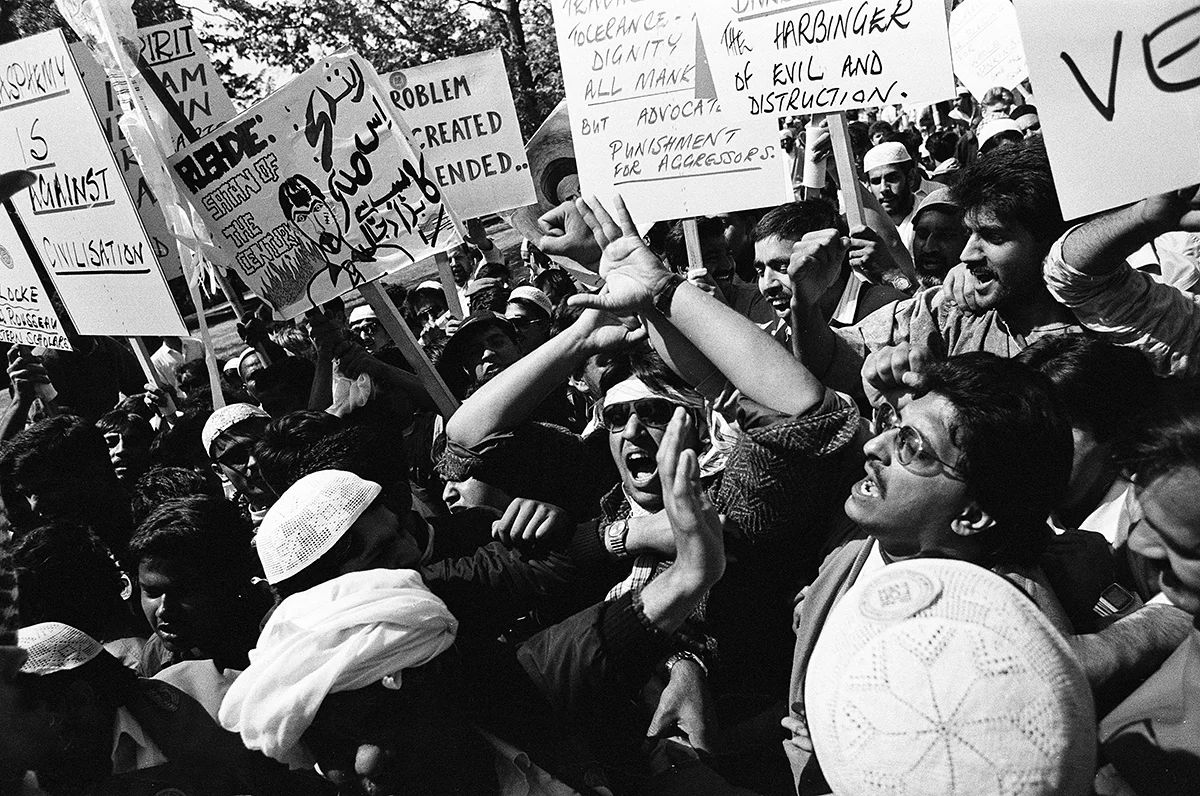
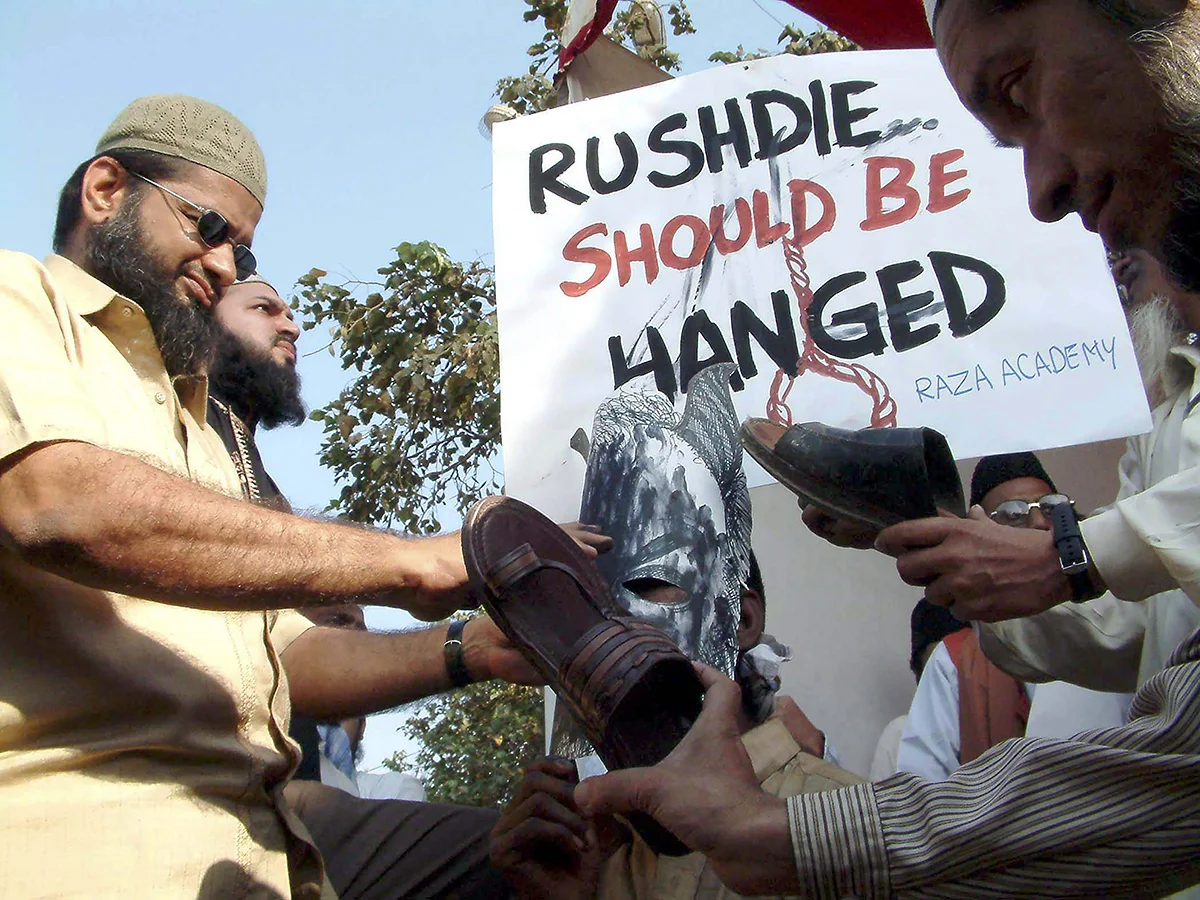
In 1989, shortly after the publication of the novel Satanic Poems, the Iranian leader Ayatollah Khomeini declared Salman Rushdi blasphemous and published a fatwa calling for the murder of Rushdi and all the books involved in the release. In 1990, the writer apologized, but they did not take action. For more than ten years, Rushdi had to live under constant protection. In 1998, the Iranian authorities said that they no longer supported fatwa, and in 2002, the UK have unwitting guarantees of the safety of the prose writer. However, a number of Iranian funds and media periodically increased the reward for the “execution” of Rushdi. The writer who moved to the United States in recent years has been emphasized boldly: “People were afraid to be next to me. I thought: “The only way to stop it is to behave as if I'm not afraid.” I have to show them that there is nothing to be afraid of. ” In the first, after the attempt by the interview , The New Yorker Rushdi said that he had encountered PTSR and revised his attitude to security. The prose writer also said that it became difficult for him to print texts due to loss of sensitivity in his fingertips. You can read more about Rushdi’s life under the protection in the autobiographical book “Joseph Anton”, and about life after the attempt, Rushdi already managed to write a new one - “Knife”, which should be released in Russian autumn 2024 .

The City of Victory is a fantasy on the theme of a medieval Sanskrit epic, where a historical canvas is melted into a myth. The writer takes on the role of a modern storyteller who sets out the autobiographical poem of the Campana Pampana “Jayaparajay” (“Victory and Defense”). This outstanding ancient text, like his author-heroine, are invented by Rushdi himself. But Bisnagi had a real prototype - Vidzhayanagar Empire , which existed in the southern part of India in the XIV - XVII centuries.
The city-state, in which nine-year-old Pampa with a mother, the widow of Radha campana lives, suffers a crushing defeat in the war. Most men die. Then the women left to the mercy of the fate go back to the funeral bonfire and burn themselves alive. Pampa’s mother looks at mass suicide, and then lets her hand away and gives herself to the flame. The daughter is left alone. It may seem that this image of protest against war as a “male” business is needed only then to explain the dream of Pampa about a different structure of society - about equality and respect for a woman. However, the injury of “Boarding” will accompany the heroine throughout the book, to influence not only political, but also on life decisions, and the Pampa itself will take more than a dozen years to “work out” it and get acquainted with their own experience. " The mercy of the gods is the sword exclusively mutual ."
After all, the gift of longevity and eternal youth is also a curse to repeatedly bury all loved ones, again and again, remaining alone in front of a funeral bonfire.
Having received this difficult gift, coupled with the historical mission from the goddess Parvati, the young pampa goes into wanderings and once finds himself in the cave of the young hermit, the sage of Vidyasagar, where he will live for many years, without saying a word. Later, the sage, full of ideas of a harmonious and peaceful society, will say more than once that during this time even a finger did not touch the girl, gradually turning into a young beauty. However, it quickly turns out that their hostel was accompanied by sexual violence.
“ Such is masculine nature, thought Pampa Campan. A man philosophizes the whole world, but the way he treats a defenseless girl sleeping on the floor in his cave, what he does with her is contrary to his own philosophy . ” Over time, pampa and Vidiasagar will become the main political opponents in the Bisnag. But the episode with their "cave" relationships is important and conceptually. Another problem of the book originates here - the ratio between global abstractions (about a fair society, for example) and the practice of private life. In this sense, the reader will more than once disappoint the pampa campan itself.
The table of contents of the “City of Victory” ruthlessly spoil the book: “1. Birth; 2. Exile; 3. Glory; 4. Fall ". The goddess Parvati says to Pampa: “ You will live long enough to taste your own success and your own defeat to see everything and tell this story, despite the fact that you will die at the same moment as you will finish your story.” Such shameless frankness on the first pages is a challenge even for a venerable author. The fate of both the heroine and the novel is a foregone conclusion. The reader can only be carried away by the way the pampa will experience what is happening, how he will work with experience and his own “human material”, as well as a lot of short storylines, each of which has its own conflict and drama. A painful love polygon (in general, the book is full of beautiful stories of tragic love), a break with children, attempts to atone for the cruel mistakes of the past, finally, the most difficult challenges are to abandon its main desire for the sake of the happiness of another person and worthy to transfer “defeat”, which is much more valuable than victory in the logic of the novel. These topics simultaneously crush the book on the “short stories”, set its dynamics and hold the reader in tension.
Two ex-peasant Khukka and Bukka, who had recently visited soldiers and fled from captivity, are faced with a young mouthpiece and receive an instruction to sow seeds, their only wealth. A beautiful city of Bisnag is rapidly growing from the seeds, immediately with citizens. Hukka becomes the king, Bukka-the heir, and the pampa becomes the middle between the Bogodis-Correfet and Margarita Simonyan, as it quietly whispers to citizens the history of their lives, relationships and values. At the first stage, this forced propaganda seems justified.
Here, Rushdi gives an understanding of the role of memories (after all, Campana “makes” the biography of citizens from his own). The experience inevitably forms the nature, models of perception and interaction. And the work of memory is an attempt to improve the real present, to get rid of the grains of worldview and communication errors, until they sprouted a threat to personality or community. The task is extremely difficult, if only because, as Rushdi writes further, "history is a consequence of not only human actions, but also what people have forgotten about." It is unlikely that a healthy society can turn out to be a healthy society from poorly conscious and long silent childhood injuries.
The heroine, meanwhile, becomes the wife of the ruler of Hukki Rayy I, but it shamelessly continues the romantic relationship with the lover, Portuguese traveler Domindo Nunish. Opponents experience a whole bouquet of gutters poisoning in this regard. The Emperor Hukka compensates for the vulnerability on the battlefield, creates an empire for a cold lover and for the time being looks an effective leader. But over the years of futile attempts to impress Pampu, falls into a long -playing despair, which will ultimately bring him to the grave. The fate of Domingo Nunish (the real father of the three imperial daughters) will not be better. The love triangle, which was 20 years old, is more like sophisticated revenge, but the “creator of a harmonious society” “did not experience any difficulties in connection with this situation” and did not attempt to resolve it.
The next victims of the "benefactors", by that time, the wife of Kurki Rayy I already, her children are. To establish the “female dynasty”, she forces the emperor to send the common men to the distant provinces. And the daughters are fatal not of attention. After the death of the emperor, the power is captured by one of the exiled sons, behind which Vidiasagar stands behind (Pampa previously revenge on him, and now a political answer has matured). Bisnaga turns into a totalitarian hell of religious radicals. And the recent empress, together with her daughters and few faithful associates, is forced to go on a political emigration to a magical forest.
Pampa will return to power almost a century later - there is enough time to rethink his life.
By the middle of the novel, the reader is forced to recognize several unpleasant things. Firstly, the pampa is not a God-chosen creature, but primarily a person. Secondly, a person is deeply injured and generously crippling others. It is not much different from Vidyasagar: its theoretical “noble thoughts” are badly combined with coldness and negligence in relation to the neighbors. Finally, Pampa involuntarily broadcasts the model of his mother, who released her hand and stepped into the fire. She “throws” relatives, leaving them alone with her own vulnerability to the universe, and out of deep fear she refuses to protect them: “It is difficult for me to love someone with all my heart, because I know that they will die,” Campana admits. “She understood that her share is to lose everyone she loves, and to be alone surrounded by their burning corpses.”
We are talking, of course, about universal natural fragility, given by the very condition of mortality. It was the defenselessness of the “rejected” by the Hukki that pushes him to aggression - conquests, which, in essence, he wanted to earn love and protection. Due to the same vulnerability, Pampa is afraid to become tied to mortals and chooses the path of closedness. This pair of heroes shows two sides of fear, their protective strategies only seem opposite.
The source of tolerance and equality in the Bismagnague of the heyday is the unity of individuals that accept each other's otherness. The decays are certainly connected with the split in society and the rejection of some by others. A myth from the second part is also built on the split. Mysterious pink monkeys attack the forest, where one of the daughters of the pampa is still hiding. They set up local green monkeys against brown and vice versa, and then help everyone kill everyone. The Bisnag itself in the final will die due to the well-known principle of “share and reign”.
The turning point in the worldview of Pampa comes during the battle with pink monkeys when the daughter calls the heroine to return to the forest and help to defend it. “I brought my daughters throughout their life,” said Pampa Campan. “At least this time I can answer when one of my children asks me for help.” She is first ready to risk herself for the sake of a loved one. This step radically separates it from Vidyasagar and from the abstract “Society of Love” and brings her closer to love as the practice of relations. Having miraculously survived in the forest war and for decades, having plunged into a dream, Pampa wakes up from the touch of his descendant of Zerny Lee. For simplicity, Rushdi calls her granddaughter, although the difference between them is several generations. Relations with Zernod will be a test for the pampa. After all, having returned to the Bisnagu, they will fall in love with one man - Emperor Krishnadevarayu.
Coming to the conclusion, “that the deep meaning of love is renunciation, the rejection of his own dream in the name of the dream of a loved one,” Pampa understands that the society of mutual acceptance cannot be built conceptually and from above. It is always built with “flaps”, at each specific point of space, where a person seeks to give his neighbor and is ready to make his own interests.
The final of the book is a complex plexus of personal tragedies of members of the imperial family. No matter how different their stories look, each grows out of a rejection of love for another and a thirst for love for himself.
The huge harems of the last emperors, as well as the rivalry of women who do not disdain poisons, is an accurate metaphor for this deep non-maintenance, radical inequality among themselves, a subordinate and an impersonal role of another.
Pampan Campan will survive betrayal, lose its former position, but against the backdrop of the dying empire will gain, perhaps, the most happy love. Another outcast heroine from the ruling family will come to the temple, where she will live on her century: “You are the mother of the Bisnagi, with whom her children, that is, your children, said,” she said, ”she said,“ and I am a child with whom his mother and grandmother were brutally treated. So, maybe I'm looking for a mother, and you need a child . ” Together, they will work on the poem "Jayaparajay" and "treat" each other from "Breaking".
The specific individualism of Salman Rushdi is also revealed here. It is not based on personal boundaries and self -sufficiency and certainly not on “self -defense”. His heroines are vulnerable. They are forced to accept their mortal nature and its inevitable “defeat” from time to time. But at the same time, vulnerable learn to accept the living individuality of others and protect them, if not from the harsh order of things, then from fear of him. This view is important for Western megacities with the eternal problem of alienation. But no less is needed by Russian society that cannot cope with internal contradictions for years, and gathered in thousands of crowds on the day of protest voting, so quickly scatters into loners that have been locked in apartments.