
Translated material
"Planet of monkeys: the new kingdom" is a worthy continuation of the anti -utopian franchise
300 years after the monkey revolution, the primates invented the dictatorship
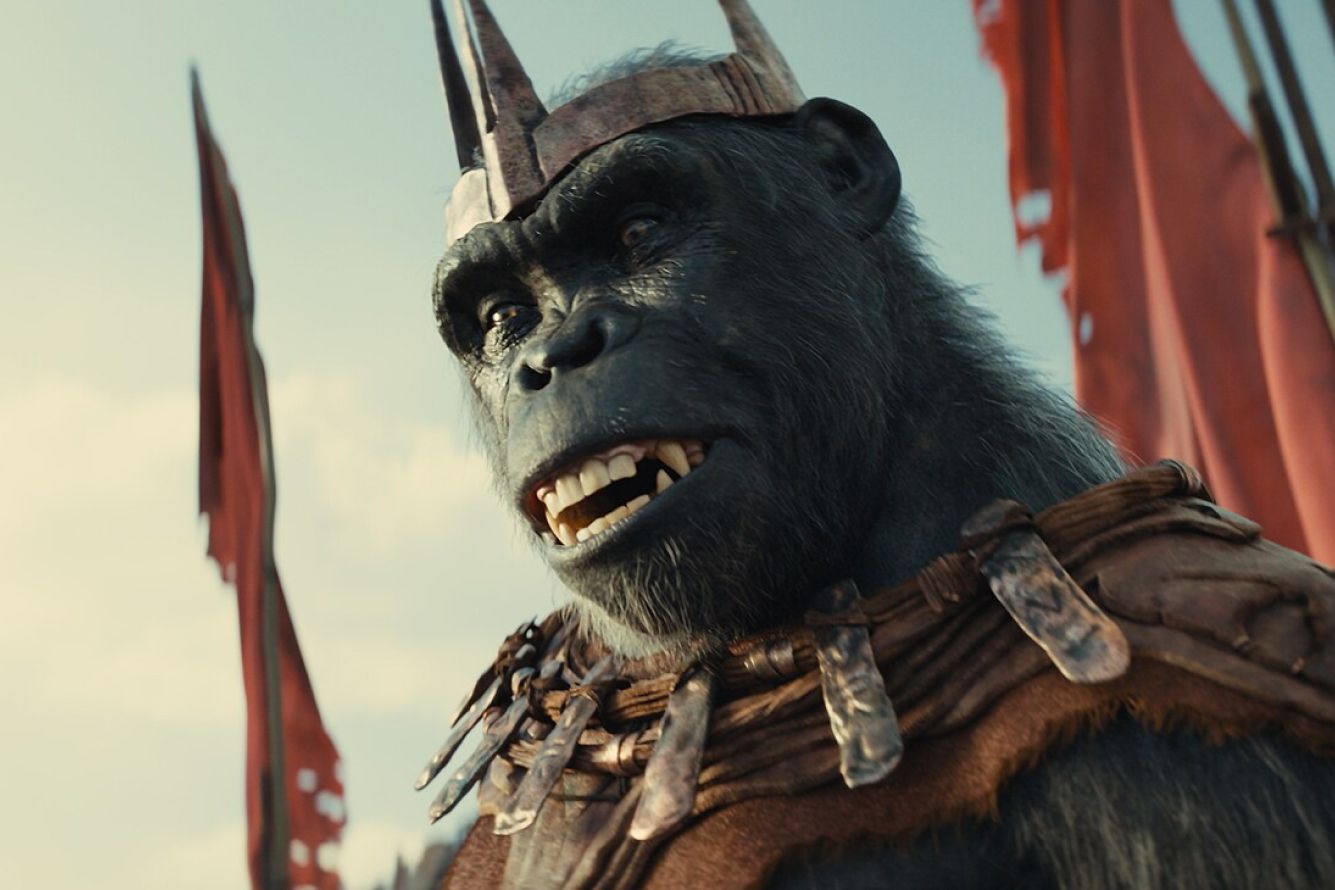
The blockbuster “Planet Monkeys: New Kingdom” of the director “running in the maze” of Wes Ball was released in the world rental. This is a continuation of the franchise restarted in 2011, which shows the formation of a monkey society - the audience saw its flowering in original films that came out from 1968 to 1973, and in the 2001 remake beyond Tim Berton. If the "New Kingdom" will show itself well at the box office, it will give the beginning of another movie trilogy about reasonable primates. The film critic Anton Dolin tells why the gloomy tone of Wes Ball was appropriate at the new stage of the franchise.
The first impression of the name, poster and trailer for the next “planet of monkeys” (the tenth over the past half century, the fifth in this century) is quite unambiguous: we are extremely optional continued by the frauded franchise, from which Hollywood continues to squeeze the money until the audience agrees to this. Fortunately, the impression is deceptive. The “New Kingdom” is a modern and timely anti -utopia that deserves viewing, even if you are suspicious of commercial American cinema.
Of course, this is not an author’s film, but a typical studio blockbuster - modern, thoughtful, bright, with even more perfect special effects than before. Although it is worth noting that the director of Wes Ball is known for the trilogy “Running in the Labyrinth” - Thus, here he continues to work in a familiar anti -utopian genre, again combining it with a teenage novel of education.
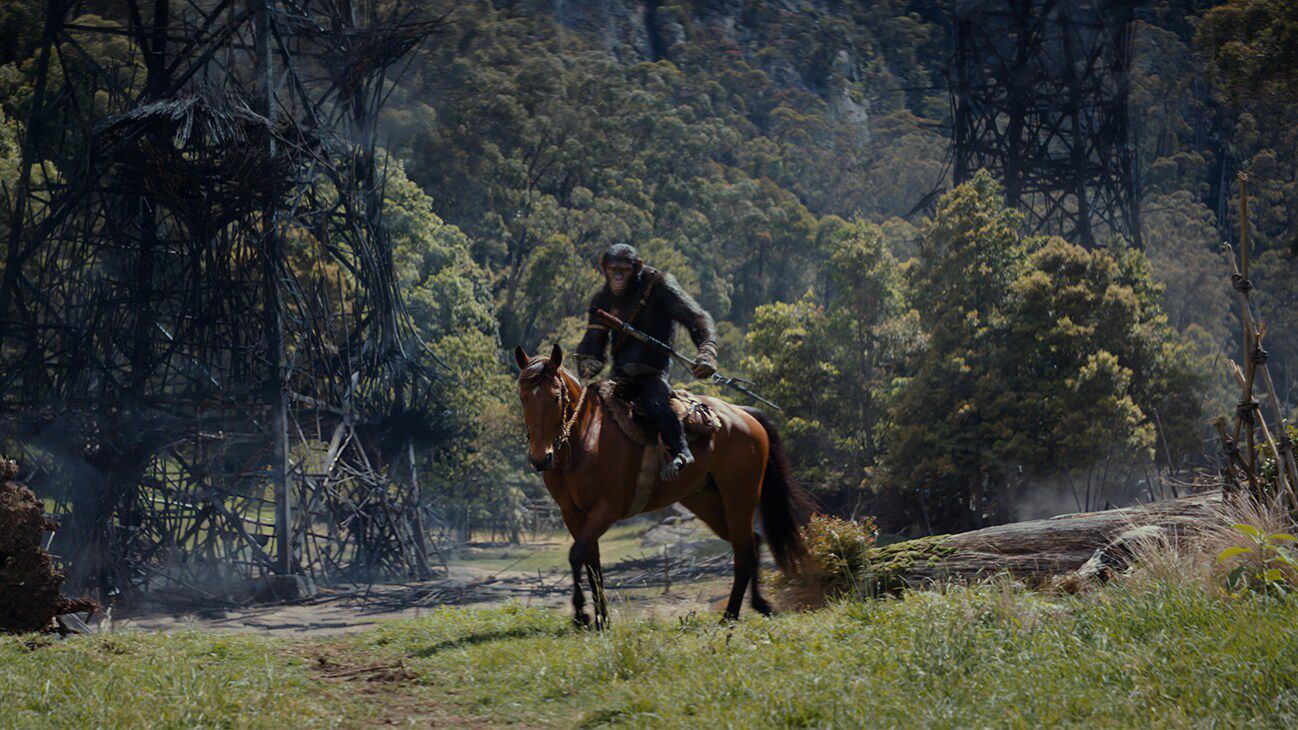
In the first shots, the main character, the son of one of the elders-the young chimpanze of Noah (Owen Tig)-is preparing with friends, a shy Anaya and a graceful Suna, to the rite of initiation. To do this, they need to show dexterity and courage, climbing into the eagle nest and kidnapping birds in the eggs. Their chimpanzees are not eaten - they bring up and tame the eagles that help them in hunting. After the events of the “Monkeys: War”, Matt Reeves (it came out in 2017) passed for several centuries, the leader of the Primates Caesar became a half-forgotten legend, and you no longer meet the memory and memory of the past, monkeys now call them “echo”.
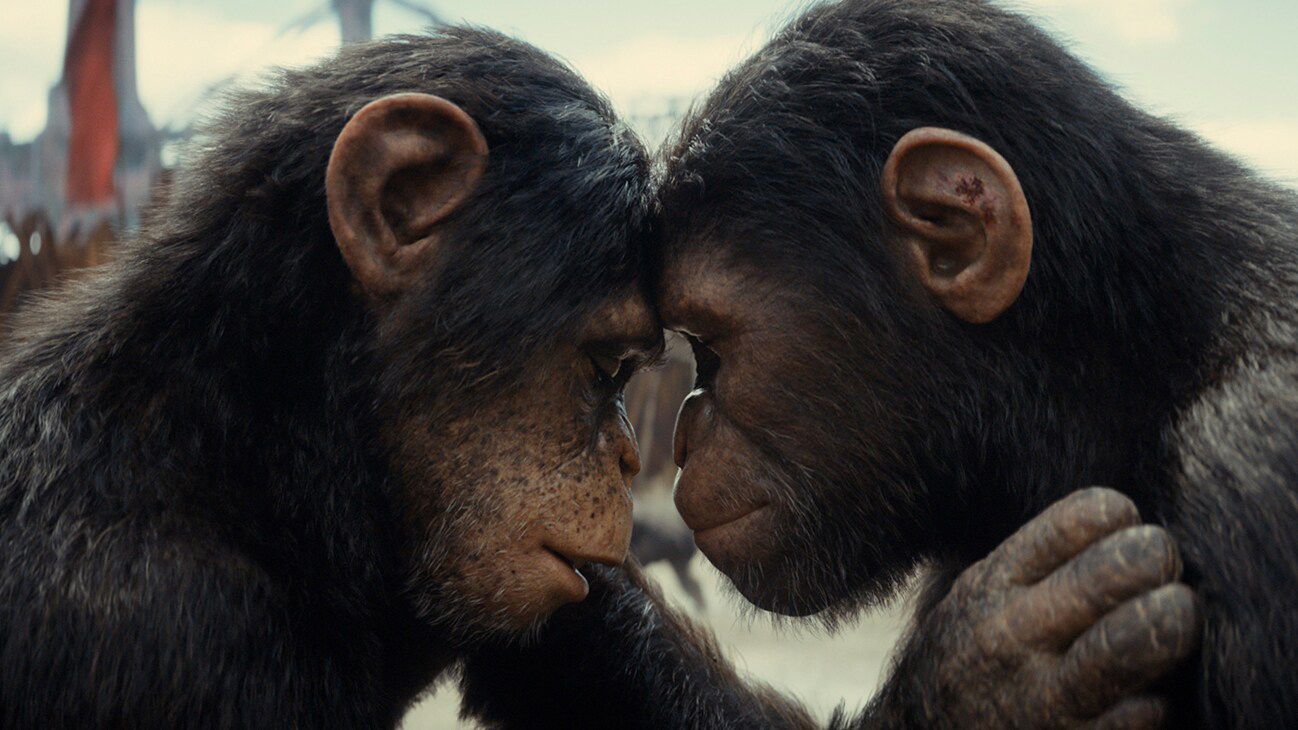
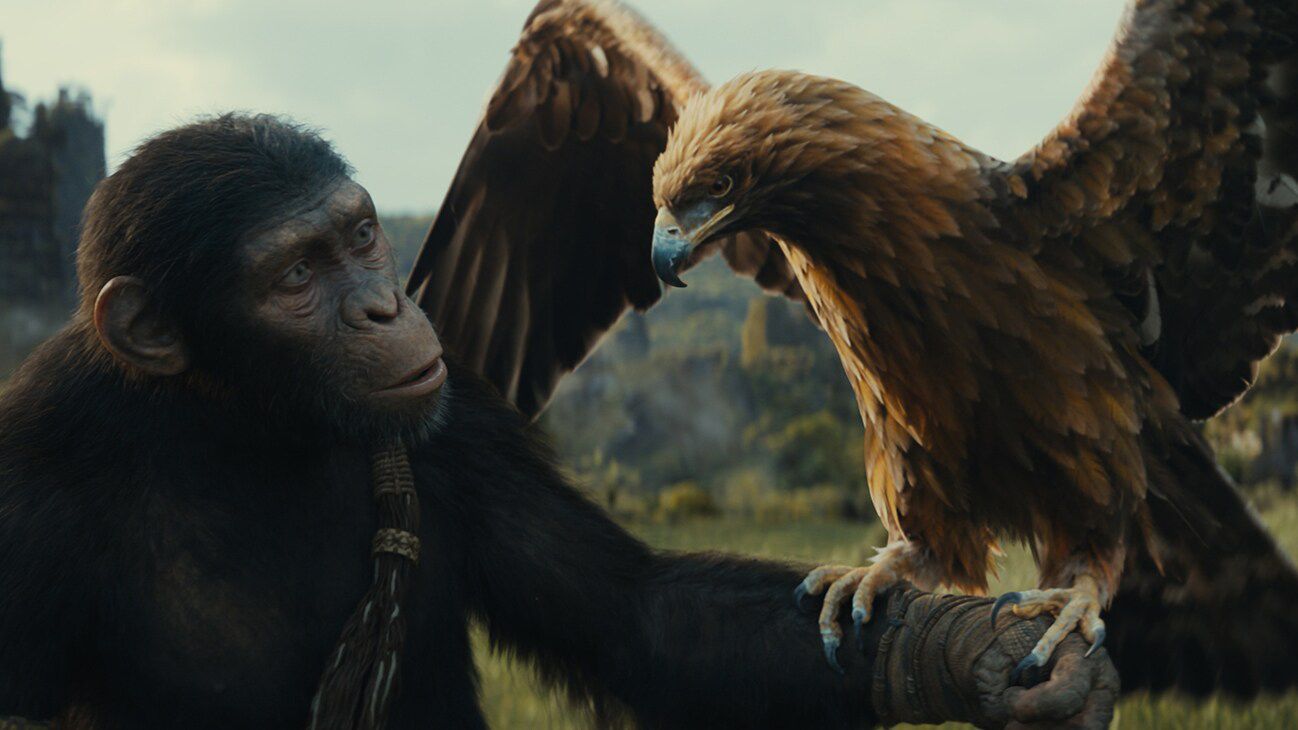
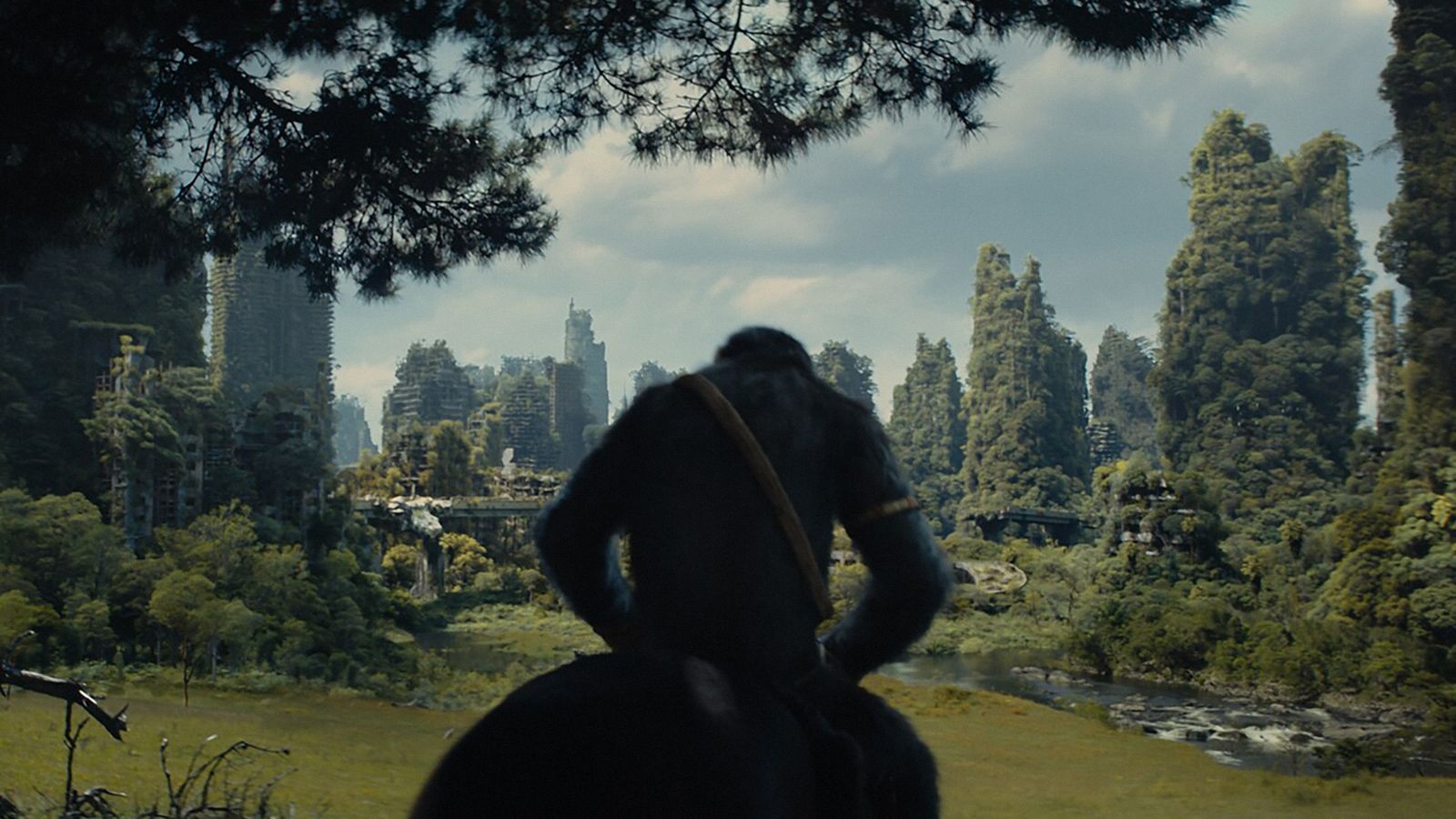
The official course of events is interrupted, the ritual of the entry of monkeys to an adult age will not end. In everything, the person who appeared from where the person came from. More precisely, gorillas hunting for him on horses, in combat masks and with stamps. The village of Orlyn clan is ruined, inconsolable Noah is orphaned and remained alone. He sets off on the road either in search of his tribe, or in the hope of taking revenge. And he finds answers to many uncomfortable questions that had never occurred to him before.
The critics of the version of Tim Berton in 2001 - in terms of visual effects, the film was for its time the advanced, original novel Pierre Bulya followed quite accurately - among other things were explained by the outdated messenger and an anthropocentric perspective. The story that man became the king of the universe relatively by accident and the situation may well change, it was time to tell on behalf of the monkey - since it was this shift that lay at the basis of a fantastic plot. This is exactly what the creators of the prequels trilogy, which have been released since 2011. From now on, the central hero was not captured by the monkeys of the earthling, but the clever chimpanzees Caesar (the breakthrough acting work of Andy Serkis, who was perfectly studied by the plastic and facial expressions of the gorilla in King Kong, Peter Jackson).
That plot was completely completed in the third film. Why is it removed and what is the “new kingdom” saying?
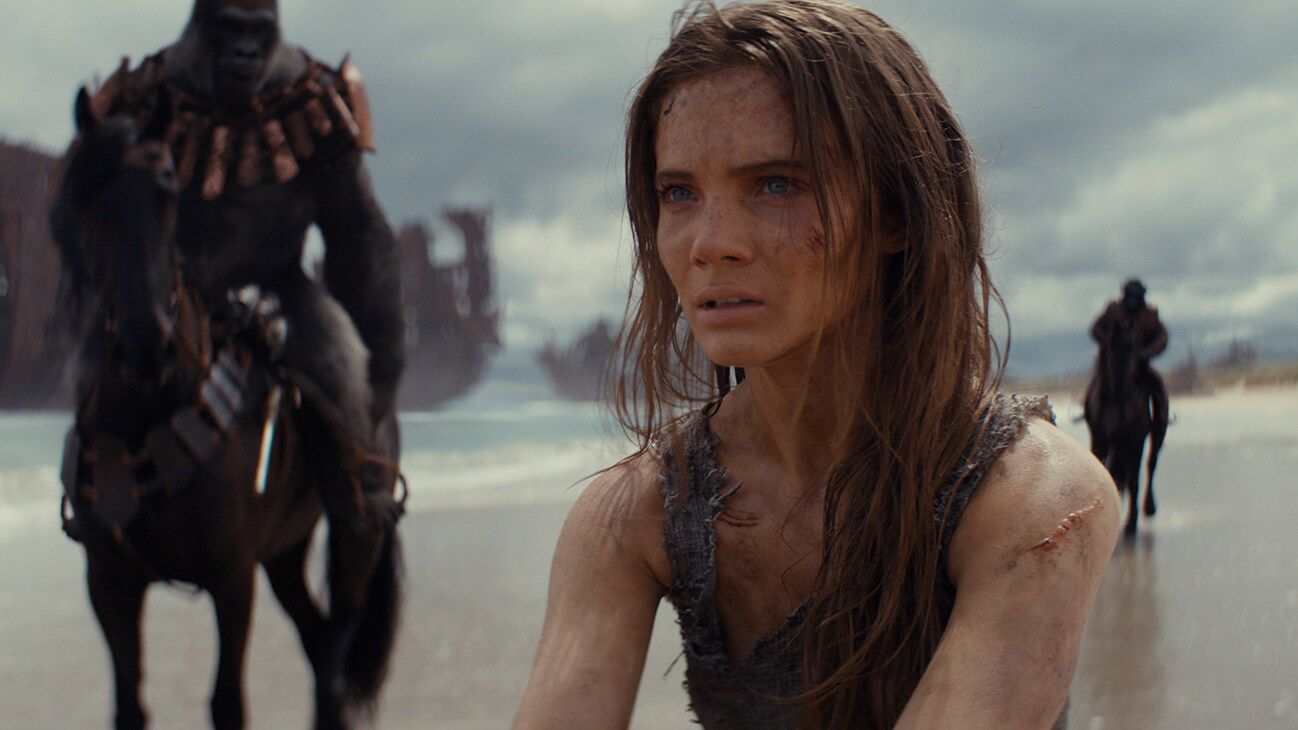
The teachings of Caesar, who dreamed of harmony between people and monkeys, in the universe shown here is forgotten by almost everyone, with the exception of the wise orangutan of the crayfish (Peter Macon). He stores human books, although he does not know how to read them, and insists: the monkey should strive for the world and certainly does not have the right to raise their paw on himself. Having become a mentor of young Noah, the old man persuades him to show mercy and save from the warlike gorillas Dikarka - the shy girl, whom they dubbed the new (Freya Allan, known for the “witcher”). Now they travel the three of them. But a person cannot be trusted. Nova hides a secret, and indeed not as simple as he wants to seem. The viewer guesses this earlier than simple -minded cancer and Noah, because he sees her clothes that are not at all like savage rags or skins.
Culmination reaches the action when travelers are on the seashore. There he set up his huge camp - and indeed the whole kingdom is a new leader who intended to unite the monkeys of the tribes. He calls himself a proximus Caesar (Kevin Durand), since a manual person (a small and rather funny role of William Macey) reads his books on ancient Roman history aloud. In this political and satirical part, the epic narrative begins to resemble the second part of the “dune”, then the recent inauguration of Vladimir Putin.
One way or another, it becomes clear that it is pointless to count on the moral purity of monkeys in comparison with hopelessly spoiled people. Together with civilization, the desire to oppress your own kind inevitably comes, justifying powerfulness with a common good. It doesn’t matter if you wear pants and whether you use two limbs or all four to walk.
The “New Kingdom” was built on the old dilemma as the world, which in a modern head could be chosen by the “Avatar conflict”: who will you choose in a decisive confrontation - your own, even if they are mistaken, or those whom you consider right, but strangers? Noah, in whose very hint of messianism, Monkey Paul Atrades is laid down, will fluctuate to the last, and then intuitively will make the right decision. At least the one that will provide the franchise continuation (producers in the case of commercial success plan the next trilogy).
"Are you familiar with the concept of e-military?" - Kezar's proximus at Noah is interested. And explains his sinister plan to accelerate it. The Russian ideal ideal of a “natural man” , which may not be a man at all, if only he would think and speak, in the “new kingdom” is destroyed before our eyes. For all the optimism of the declarative opening final, this is an extremely gloomy movie that perfectly reflects the mood of the current era. Indeed, now it is clear to the child that, talking about the distant future (as in this science fiction film) or about the equally distant past (for example, about the Roman Empire), we always mean the dead end in which we are stuck here and now.
Anton Dolin