
Translated material
Odes to a benefactor: We can repeat
We study poems about Putin. How the image of the leader has changed in the long years of his reign
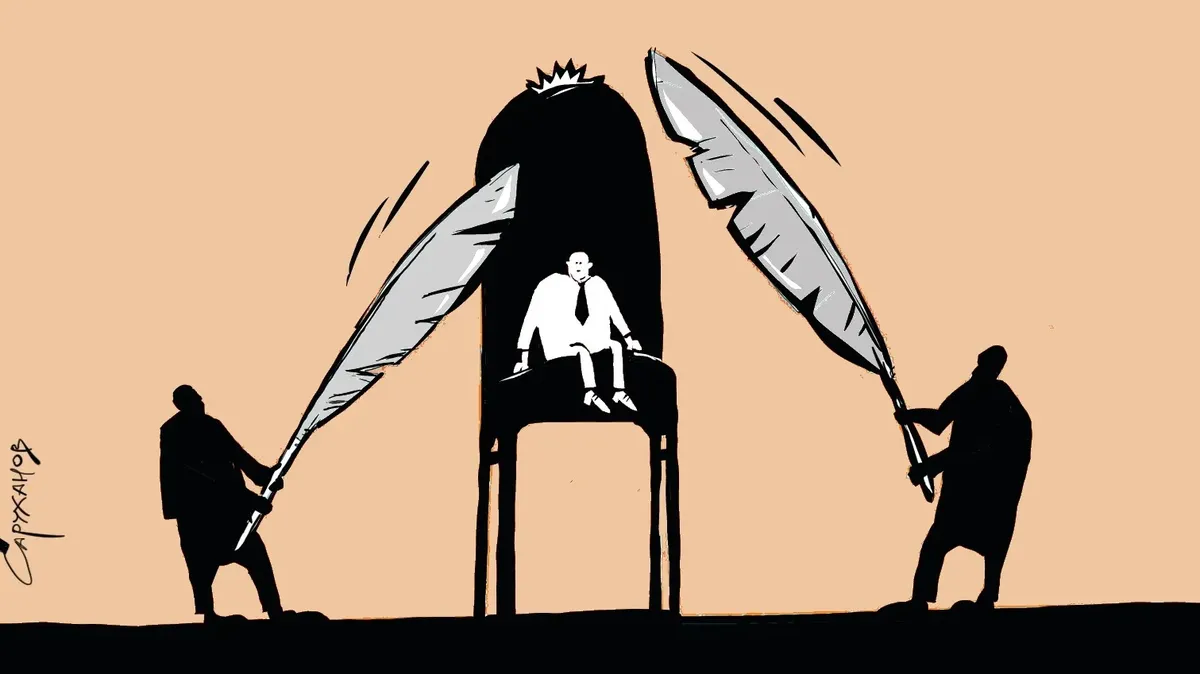
Peter Sarukhanov / "New Gazeta"
The ninth of May from the day of the Great Victory has long turned on the day of awkward silence. It is now difficult to remember when exactly the slogan is "never again!" turned into “We can repeat!”, - but since no one specified what we can repeat specifically, every day now reminds us of when the second slogan began to actively implement. Everything in Russia is now aimed at creating an atmosphere of “repetition”: here are the new Nazis (they are not similar, but they are rich), here are the new veterans (what are), here are the new decorations of red flags (almost as then!), But the new leader ... And if all other attributes for “we can“ be possible ”are descended from above, the image of the new leaders will quite successfully sculpt folklore.
The composition of the benefactor has become a favorite occupation of many poets from Soha since the time of his first inauguration.
By the fifth inauguration, the Internet is already crowded with folk hymns, and their most distinct feature is a change in the image of the protagonist, his whole larger Stalinization.
And what is most interesting, this Stalinization manifested long before the beginning of it - as always, folk art turned out to be the most accurate barometer. Therefore, today we are in the “read, we know” heading not good prose, but bad poems - and in order to trace the path from “never” to “we can repeat”, and in order to try again to figure out how the mechanisms of this repetition work.
In the time immemorial of the first presidential term, when the country had just begun to “rise from the knees” and was not to militarism, Putin’s image in folklore was painted extremely peacefully: the main character of all pro-government OD was such Russian folk machos in excellent physical and mental form. The features of this image were preserved in folklore for quite some time - in the later creations of 2017, the president called, literally, the "flagship of the gene pool", and it was also said that
And with sports he is on you,
And get along with the children.
(author Yanichkina_maria)
The first association after such characteristics is, of course, the Soviet cult of sports and the painting “Lenin and Children”. In other words, during the first time, the hero hero was drawn as the standard of what would be later called traditional family values. The most indicative in this sense was the song of 2002, which was destined to be a long and rich life - in 2024, students from the Congo, South Korea, Azerbaijan, Armenia and Tajikistan were quit.
Such as Putin full of strength,
Such as Putin, so that he does not drink.
Such as Putin, so as not to offend,
Such as Putin, so that he does not run away.
I saw him yesterday in the news,
He said that the world is at a crossroads.
With such as he is easy both at home and visiting,
And I want now such as Putin.
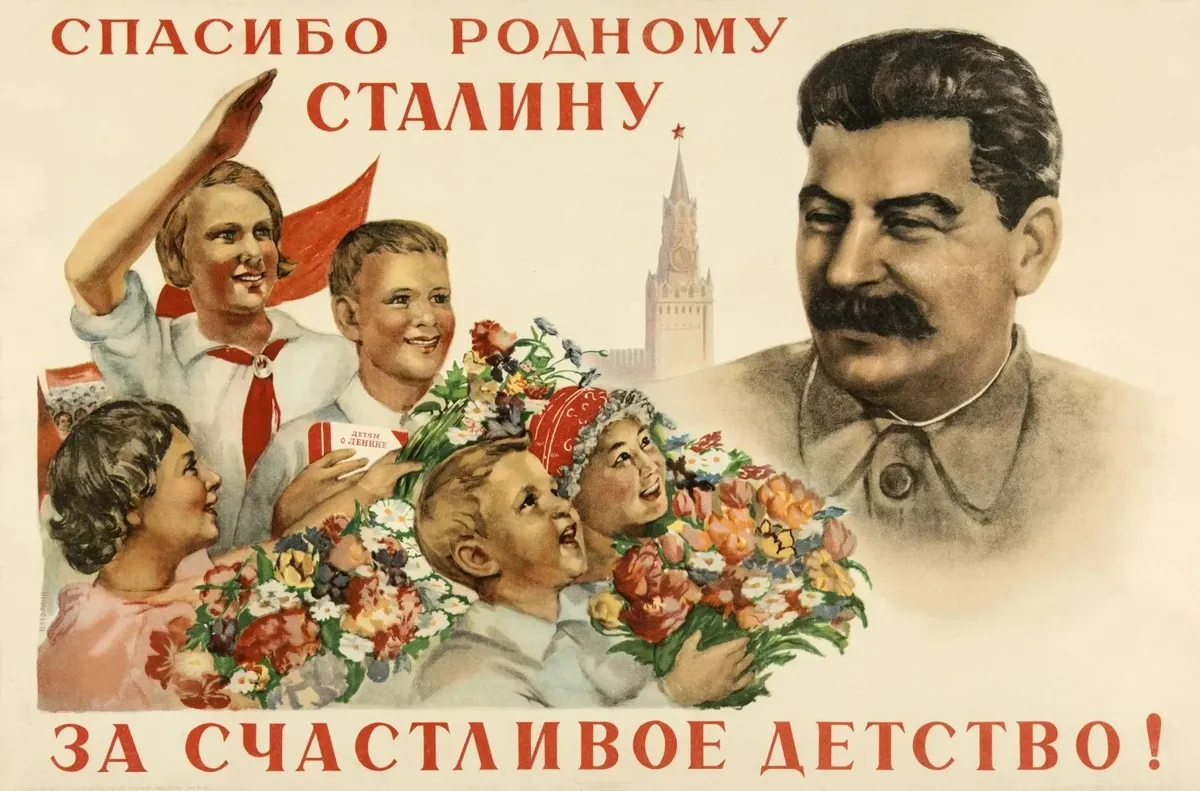
As you can see, in the early stages, Folklore did not try to draw the image of the president as the winner of anyone - the only thing that could be calculated by the foresight of the future rhetoric, this is an abandoned replica about the “world at the crossroads”. There is still little in common with Odam Stalin - if only the emphasized ease in communicating with the leader. The fact is that all the verses about Stalin describe him as a person as called, close to the people: either he lights up the soldier, then he walks along the village street, then he is interested in the affairs of the local collective farm drill (which, of course, immediately becomes a follower of a healthy lifestyle). Here, for example, the closest strings in the context of Alexei Nedogonov from a poem with the epic name “Flag above the village council”:
* - The weather was glorious,
The day was a fine day.
And for the outskirts of the village
I met a passerby.*
*He stopped. And I,
Like dug, it became.
My darling came in:
I found out Stalin.*
*“Comrade Stalin, I think,”
whose great will
In such clothes with you I
I met the field here.*
*Yes, I would run home
The new thing at least put on ... "
And he looks so dear
And I look timidly.*
*He is with a pipe with his carved,
in a military suit,
He was so sincere with me
cordial, frank.*
Apparently - especially by the fact that the heroine sees this scene in a dream and timidly retells her dream to her friends - it was the highest level of eroticism, which the author of the poem could afford, so that these immortal lines are not inferior to the hit of "such as Putin."
At the same time, with all the peacefulness of early poems about Putin, the theme of militarism and confrontation of the West began to sound quite early: in 2006, Esquire magazine published a selection of poetry as a Nationalist's birthday, including this:
*You came from the second echelon
Officials for the main post of the country.
Texas spitens of the column
Hoped, pride is full,*
*That a modest person from St. Petersburg
Lakes will take their course.
But you are through the political blizzard
I heard our Hyperborean pulse.*
*Now they sit with their mouths in Texas,
In the "Big Eight" the jaw hangs.
Russia returns home
Everything taken ten years ago:*
*Prestige, authority, oil income
Grow, and a man in the night Kremlin
Watching how to hide their ladies in fear,
Cowboys, completely shameful.*
(Alexey Zavidov, at that time 53 years, Serpukhov, doctor)
Despite this, the image of the hero in the pro -presidential lyrics, as I said, remained quite friendly for a long time. The rhetoric one has changed diametrically, as it is easy to guess, after 2014. The image of the playboy and the dreams of all Russian women began to gradually be replaced by the image of a fighter of a fighter with a collective West. In 2015, for example, the song “Letter to the President” appeared, in which only the characteristic that sounded from the lips of the father of the lyrical hero (the song was performed by a teenager) remained from the peaceful macho):
*My father told me then:
“Take an example, Vovan-Malet,
Handsome president with us -
Man!"*
The rest of the lyrics was already through the militarist, and the president was compared either with Prince Vladimir, then with Peter the Great, or was called a “simple kid” (which, apparently, was also a compliment). The main thing that sounded in this song was two attitudes that no longer disappeared from either laudatory hymns or from government rhetoric. The essence of the first was to the fact that "from behind the sea-ocean, threatening us with a finger, sometimes they want to finish us in the den in the winter so that we would not stand in the spring." The second sounded like this:
*And Crimea to Russia was growing,
Than the prince of the glorious Vladimir was honored
Although in vain, that, like the heirs of Peter,
We have not advanced along the Dnieper,
And there is Poltava, Dnieper, Berlin.*
Then, in 2015, the performer had to beat himself in the hands: they say, it’s too early to talk about Berlin, although in fact, if they give it, we’ll reach him. But the main thing is the slogan "We can repeat!" It sounded, and since then it sounded louder until 2022.
In the same 2015, the immortal song “Vladimir Putin Well done” appeared, in which the entire set of constant epithets was already assembled:
*Russia entered the New Age
And sighed with renewed vigor
I took the course for the Renaissance
After God's oblivion.*
*Euro -wander
The dirty lie has piled up!
Putin answered politely:
“Do not touch us, we are not joking!”*
In general, some confusion is read in the verses of the pre -Esoish period: on the one hand, the word “peace” and the idea of peace were then not only not banned, but also actively advanced, on the other hand - the theme of the war was already actively pedalized. Therefore, in some texts you can find quite schizophrenic lines:
*This world would be on this earth, but if the main commander
He will call for the last battle, Uncle Vova, you and I!*
("Uncle Vova, we are with you!", 2017)
No less contradictory at that time were the characteristics of the protagonist: on the one hand, the echoes of the old one president were sounded, on the other hand, a portrait of a fearless commander was drawn, and with the third (apparently, in an attempt to emphasize the same simplicity and proximity to the people)-the following sounded, for example, the following: the following:
*He asked God for strength, without noise, dust, chatter
He took the killed Russia on his shoulders fragile.*
(Poems of Heda Ulbieva, winners of the poetry contest about Putin, who held Ramzan Kadyrov in his blog in 2017. Poems turned out to be plagiarism)
Or again:
*Discreet in appearance, even, perhaps, timid,
But hard inside, like steel and granite ...*
(Author @Peccmapm, participant in the same competition)
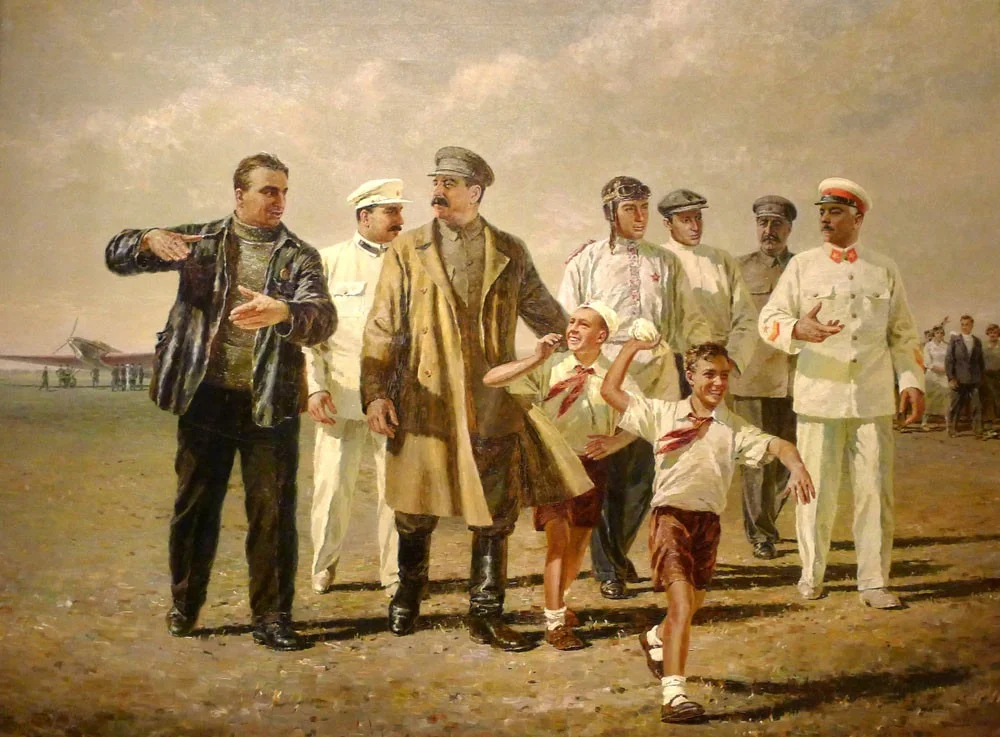
All these contradictory characteristics were very characteristic of poems both about Lenin and Stalin - and comparison with steel (it is difficult to say how intentions selected) it looks very organic here. And frankly in the Soviet way, the continuation of the same poem sounds:
*He is an old pension, he is coal to the miners,
He is a matinee for children, he is a current in the wires,
He is the "Alarm" button to stuck elevators,
He is the happiness of lovers in flowering meadows.*
We compare, for example, with a poem under another characteristic name “Voting for Stalin!”:
*I do not know more happiness forever -
I will give his voice to him!
I am the fate of Karelia dear
I entrust his hands.*
*Everywhere - on the lakes of the land,
In dense more often forest -
Our name is like a ray dawn,
Scattered gloom night.*
And finally, the apotheosis of the Stalinization of the image of the current president in ODD, in my opinion, is the song “Give him strength”, self-actualized before the elections:
*Glass looks into the distance,
And migratory, proud birds fly back.
He is an example for the guys
Those who also do not sleep when guarding the boundaries.*
*And not a step back, let it rain or hail,
He is not for the sake of awards, but on duty I call the Fatherland and heart.
He is an example for the guys
A detachment leaves at night, and he will hold it to everyone this word.*
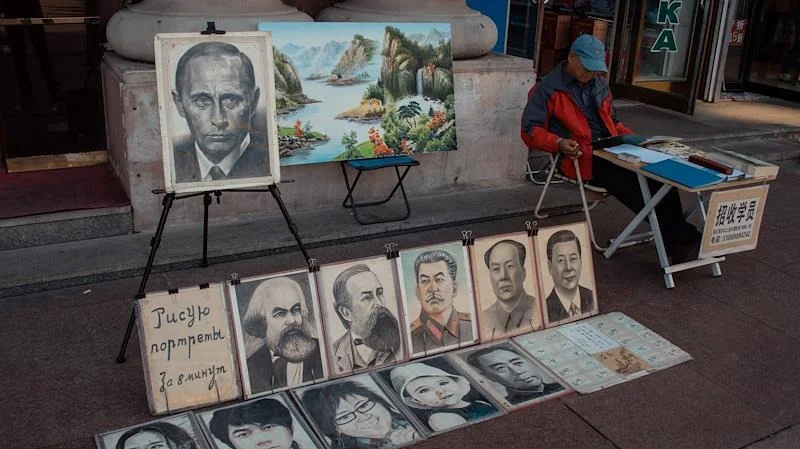
In addition to a direct reference to the Stalinist order “Not a step back!”, In addition to stylistics and even poetic sizes of songs about the Great Patriotic War, the image of Stalin of Military Times is almost quoted in this text:
*But listen, look: I have gloomily bypassing
All the thoughts of the country, having absorbed its whole heat,
Hundreds of thousands are buzzing many -linguistic
Iron language Autumn Telegraph:*
*“Kremlin, Stalin-Father. They kept their word
Fearless in work and faith in you are strong,
Workers in Moscow ... Rostov workers ...
collective farmers with the Dnieper ... from the Amur and Oka ... "*
*Over the roofs of Moscow, a lightning salute lit up ...
The day is over. He does not sleep. Does he sleep when?
His living thought to all minds flow,
The wires come from here!*
(Gribachev. "Kremlin, Stalin")
As you can see, the poetic masterpiece of the rapper ST combined all the main leitmotifs of one of the benefactor: the Soviet pantheism of the leaders with the image of the vain all -seeing eye, and the image of the “father” of the country, and a parody of the lyrics of the Great Patriotic War.
What is the moral of these poetic circles from Panegyric “Full forces” to the mourning requests of “Give him strength”? Yes, in general, no. Obviously, the slogan "We can repeat!" It worked - however, it is repeated, apparently, not quite what was planned.
But we all remember how the previous personality cult ended. And since everything repeated is repeated so literally, it means that there is hope that even now everyone will eventually sing differently.