
Translated material
A country without a future
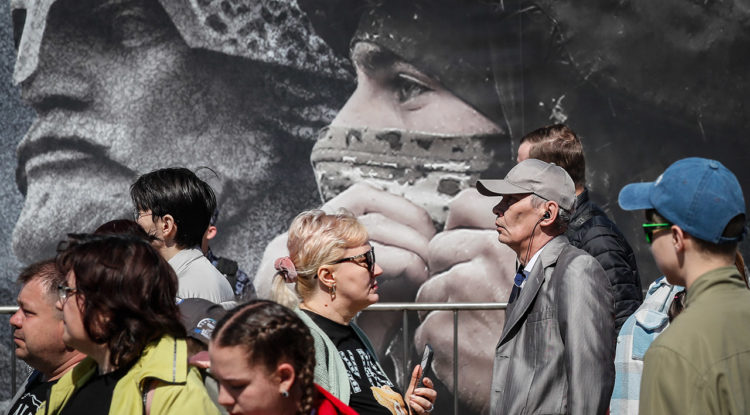
The Russians are tired of propaganda, expect the end of the war from Putin and are afraid of the repetition of the fate of the Russian Empire
The main hopes of Russians for the future are the speedy end of the war. They consider it beneficiaries not only to power, but also, for example, IT specialists, and even supporters of “Svo” do not expect anything good from Putin. The president turns into a symbol of hopeless future and is increasingly associated with problems, not achievements. However, the main complaint of Russians against Putin is not understanding, "for what is all." Such conclusions follow from a qualitative study of public opinion, which was conducted by independent sociologists. "Cold" tells what worries the Russians and what they are waiting for in the future.
In order not to miss the main materials of the "cold", subscribe to our Instagram and telegram .
At the end of 2023, the research projects “Chronicle” , “Laboratory of Public Sociology” and Extremeescan held eight focus groups in four Russian regions in which 64 people participated. The Russians asked about the attitude to the war, their financial situation and expectations from the future. By age, respondents were conditionally divided into two groups: “young” (up to 35 years) and “elderly” (after 35 years). The study was attended by Russians from millionaire cities and cities with a population of more than 600 thousand people. The results of focus groups show that people who remain in Russia practically do not see good prospects either for the country or for themselves.
A focus group is a research method when the organizers gain small groups of people and ask them questions, conduct a conversation and observe it. This is a qualitative, not quantitative study, it cannot be extrapolate for the whole society. Focus groups are usually carried out for a deep analysis of some problem, and this method allows you to get additional information and find out the logic of the respondent.
In conditions of war and censorship in Russia, it is very difficult to conduct sociological surveys: people can be afraid to give honest answers. However, sociologists believe that studies are necessary in any case, since they give at least some information close to reality. Independent hundreds of questions also help to look at an alternative picture: to ask those questions that pro -government researchers do not ask.
After the start of a full-scale war with Ukraine, the Russians began to plan only for the near future: participants in the focus groups say that “they are far from planning” and “live here and now”. Young people (a group of up to 35 years) are more pessimistic than the older people (group after 35), although some admit that they still try to plan their future at least somehow.
“Now I plan about a year and a half, but there is always the idea that everything can change. However, I still plan, because when you lose all the supports, life becomes a little senseless, and the only way to cope with this stress and continue life is to continue to plan, ”says one of the participants in the focus group.
Even worse with planning in people living in the regions bordering Ukraine: “From the planning horizon for five years - to the planning horizon for five days. And even in this horizon I can’t say anything. Literally on Saturday morning you will find out that Wagner has arrived. Now I don't know anything at all. Even five days a lot. [What will happen] tomorrow - I know. "
Most participants in the focus groups converge in one-they are waiting for the end of the war. It is with this that the research participants associate the improvement of their life and the economic situation in the country, as well as the opportunity to make plans again. At the same time, people do not expect that “sucker” will end in the near future. One of the representatives of the older generation thinks that "all this bodyup will last at least five years." The respondent from group to 35 years hopes for rapid restoration of the economy - within two years after the end of the war.
They don’t expect anything from Putin
If with the end of the war the participants in the study and connect some hopes, then there is no with Vladimir Putin. Although they are waiting for the end of the war, they do not believe that he can change something within the country for the better, since the president is concentrated on foreign, and not on domestic politics. The surveyed on the focus groups no longer expect anything from Putin: both the younger and older generation says that "once in 23 years he did nothing, he will not do anything." Young people are especially unhappy that the president did not defeat corruption, because “he is corruption,” and people over 35 years old recall the promises of 10 years ago.
“He did nothing that he promised. I remember the year 2010 - as he said: “By 2025, each Russian family will have a minimum of 100 square trees ( in fact, the promise was given by Putin in 2008 - and Treshka was supposed to appear in the families by 2020. On May 7, 2024, the president promised to provide each Russian with housing at least 33 square meters. - now by 2030. - Approx.“ Cold ” ). Now 2023, does anyone have a free three-wing one at least 100 squares? " - says one of the participants in the study.
Despite the gloomy forecasts regarding the future of the country, participants in the focus groups are trying to build their lives, relying on their own expectations and dreams. People of the older generation associate their plans for the future mainly with children and grandchildren - the need to “raise them to their feet” gives them strength to live on. A 10-year mortgage helps someone to “look forward”. If they don’t count on “good present”, then they still hope for the next generation for the next generations.
“I dream that the children live in a peaceful country developing. They did not know what mobilization was, only a positive agenda, as it was until 2014 ( before the annexation of Crimea and the beginning of the conflict in Ukraine.-Approx. “Cold” ), ”says one of the participants in the focus group.
The young generation dreams of improving their financial situation: buy an apartment, car, find a good job or build a successful business. There are those who would like to get a new education or achieve success in the creative field - for example, to become a writer or a popular psychologist on television. Young people also dream of traveling around the world, which is now difficult to do due to sanctions and problems with issuing visas.
"Someone is doing well"
Refined Russians are unhappy with the economic position in the country and are convinced that the current problems are directly related to the war in Ukraine-one of the participants in the focus group even called the beginning of the economic crisis annexation of Crimea in 2014. There are those who associate the crisis with the pandemia of the coronavirus. All respondents talk about the deterioration of the financial situation: prices are rising, and income falls. Separately respondents note that buying an apartment or car has now become virtually inaccessible.
“Cars grew up in price, the apartments grew up in price. It seems to me that the young family is now unrealistic to equip some of their nest, as well as civil servants: their salaries are incomparably growing with inflation. It seems to me that this is a passerby to ask - no one will say what has become better. Although today I read: they draw statistics that the average salary is 50 thousand, that it is growing. They constantly “have everything” with someone there, ”says one of the participants in the focus groups.
“In 2019, if the apartment cost 1.5 million, now it costs 3.5 million. How much time has passed? Just a little bit. Parents used to say: here you get a job at the factory, work for two years - and your apartment. Now there is no longer: when our children grow up, the apartment will cost 10 million, ”says another participant in the study.
Participants in focus groups complain of fatigue from economic problems and say that people have to bankrupt because they can no longer pay loans. “From my entrance, two people were filed for bankruptcy. And before they were solvent - at least a communal apartment, food, and so on. And, communicating with them, I understand that the [economic] situation has deteriorated directly at times, ”says the participant in the study.
Also, among the problems that worried the respondents, they called: the development of the middle class, the development of regions and decentralization. Members of the focus groups believe that the authorities pay attention only to Moscow and St. Petersburg, “where they shifted all the tiles”, as well as Chechnya and Tatarstan, while other regions are left without additional funding.
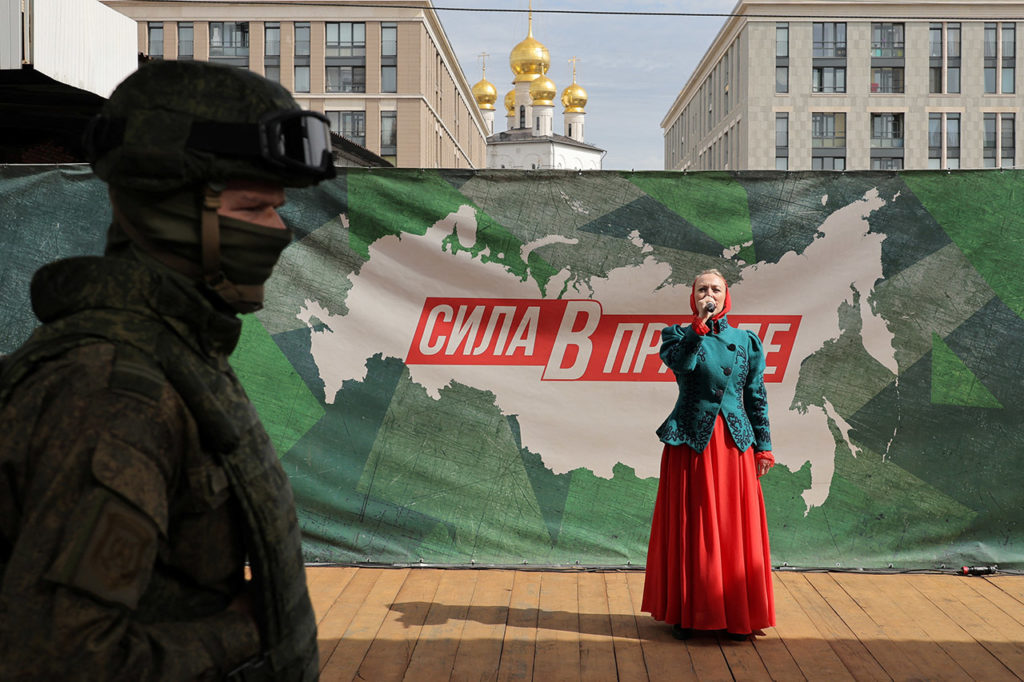
One of the surveyed from the group older than 35 is particularly worried about the problem of low salaries among women: “They have a salary of 15 thousand. They can neither themselves nor the child. They have no husbands, husbands throw them pregnant. [It is necessary to make] a salary of a woman-50 thousand to the 18th anniversary of the child. ” She insists that, despite the words of officials about support and calls for women to give birth to more children, there are no effective support tools.
Separately, the focus groups asked the question of what they think about import substitution. Respondents believe that in fact it does not work - there are no goods on the market that would replace the departed Western. Participants in the focus groups complain that now they have to spend more money and time to find the necessary household items-for example, order sanctions products through Turkey or Georgia: “Everything was as it was-just the price is higher. Logistics is different. "
There are certain successes: for example, respondents were satisfied with domestic analogues in the food industry and IT sector. The worst, in their opinion, import substitution works with medicines, cars, electronics and household appliances.
The main factor affecting the financial situation of people in the country is still a war. And to the influence of “Svo” on the economy, the respondents have a different attitude: someone notices the development of the military-industrial complex, someone is more concerned about the slow-down development of civilian industries.
All respondents agree in one thing: they cannot count on the help of the state, they also do not believe in improvement in the economic sphere - rather, they are waiting for a deterioration in the situation.
“It will be worse only. It depends on a person, not on the state. The life of a particular person may be better if he finds a highly paid job, but it depends on a person, the state will not help him, ”says a participant in the focus group.
Russians are tired of propaganda
The end of military operations is a through message from all respondents, but the expectations from the end of the war have different research participants. When asked what they are associated with the end of the war, the respondents answer: the return of men from the front, the moral recovery of the situation in Russia, the disappearance of fear of calling for war, establishing torn economic ties, and the abolition of sanctions. Separately, participants in the study noted that they were tired of propaganda.
“I believe that if it is stopped, then there will be a change in the direction of propaganda, there will be no such society schizophrenic,” says a participant in the focus group.
“To change state propaganda. No need to discuss France, the United States to suck - let them live as they want. We must think about yourself. Let's do it yourself, it’s good for Soloviev to discuss the gay parade in Rome. Let him talk about Suzdal, about Chita. But how Donetsk began in 2014 - it is impossible only to live with this. To develop. Then live. Just let them talk not about Donetsk, but about Chita, and they will already lag behind those people, ”the study participant says.
After two years of active hostilities, people are still perplexed about the goals of this war. Some representatives of the older generation asked the question of what the new “task of Svo” would be, because at first demilitarization was declared, then the regions were taken away, now they move the borders.
“For two years, all this is going on, we do not fully know what we are going to,” says a participant in one of the focus groups “older than 35 years”. - Let’s honestly, if he says: “So, guys, we have a goal, we have before, remember, five -year -olds have always been in the Soviet Union: for a five -year plan we are doing this, for the next five -year plan - this is.” We do not understand why, what we have next, for which we are fighting, that we are, what we are striving for. Or how much should we [finish]: for five years, for 10, for 20, for 50? We know neither terms nor plans - nothing. ”
The main beneficiaries of the war were named not only the leadership of the country and military personnel who receive a “military” salary, but also IT specialists-both those who remained in the country and left.
Despite the record growth of military expenses , participants in the focus groups are quite calm about them-they are bothering only tug of funds from civilian spheres and uselessly spent billions: if a lot of money is being poured into the factories, then when the war is over, they can simply not cope with the restructuring of peaceful rails and close, as in the 1990s.
Among the arguments for increasing the expenses of the war, the respondents called: the approach of victory in the war, the production of new weapons, which can be sold to interested countries, the transition of military technologies to peaceful life in the future (in particular, drones). Some respondents believe that investments in the war may turn into profit - through the acquisition of new territories.
Speaking against an increase in military expenses, the respondents talked about growing inflation, damage to financing civil areas, the impossibility of finding out what the state spends money, corruption on. Some respondents are worried that the country is now repeating the fate of the Russian Empire, which "military expenses and finished off." The main thing that outrages people - Putin leads the war for “their money”.
“How much does it cost, no one knows. One rocket caliber costs a billion. How many missiles bubbled? For two years, such money has been spent that each child under 18 years of age can be bought in a two -room apartment, ”says a member of the group focus. - That is, what is more profitable: Lugansk or in an apartment? I think most people will say an apartment. If they were so concerned about the Russian population, they could transport them to the Pskov, the Pskov region, it was already depopulated, everyone died there from alcohol. They would have been resettled there, the Russians would live there, if they want to reunite. Therefore, this war is for our money. ”
All respondents are united by fatigue from the war, which not only affects their present, but also prevents making plans for the future. The misunderstanding of why the fighting continues and what they should ultimately lead to, annoying people and causes disappointment in power, even if they once trusted her.