
Translated material
The same, only more dear
The new government will continue to transform “Russian resources” into the foundation of the stability of the families of the old and trusted elite: the view of the economist
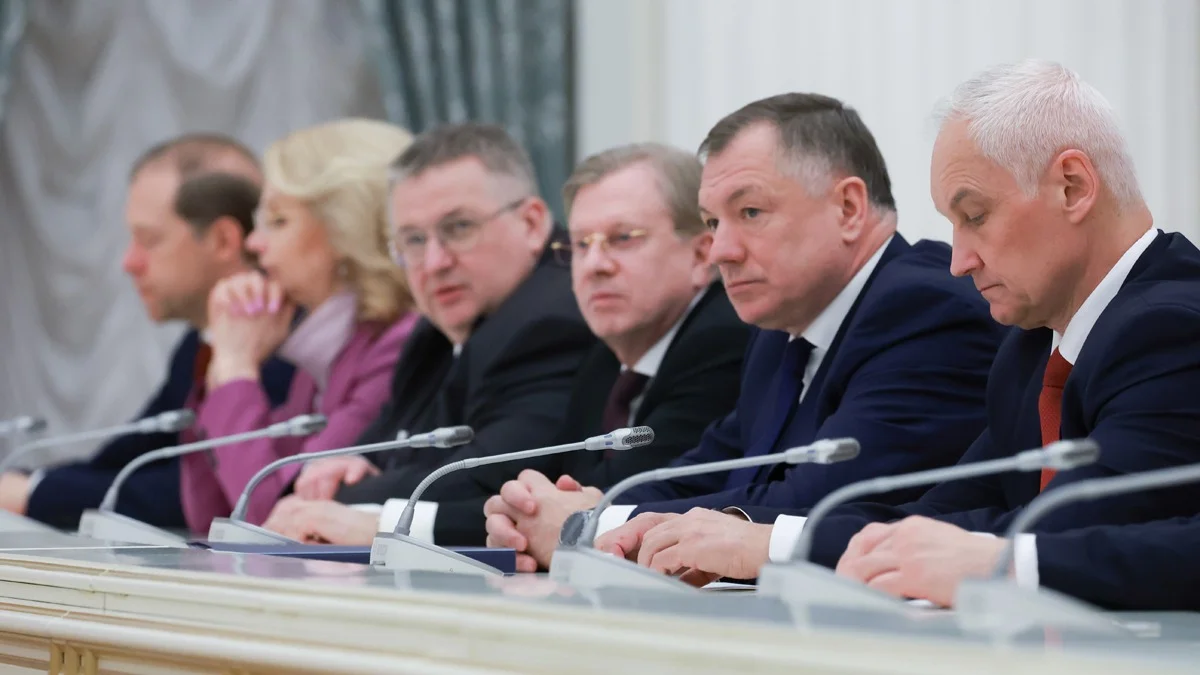
From right to left: Minister of Defense Andrei Belousov, Deputy Prime Minister Marat Khusnullin, Deputy Prime Minister Vitaly Savelyev, Deputy Chairman of the Government Alexei Overchuk, Deputy Prime Minister Tatyana Golikova and First Deputy Prime Minister Denis Manturov. Photo: Vyacheslav Prokofiev / TASS
Reason and habits
“In the affairs of the state, attention should be paid not so much to how the prince should have acted according to the instructions of the mind, how much he will probably act by nature and habits,” wrote the brilliant political thinker Francesco Gvichchardini back in the 16th century.
The only problem is that the “nature and habits” of our ministers are almost a state secret. The only thing we can firmly say about the people that the government consists of is that we actually know almost nothing about them. It is there, abroad, the minister is a public person, with his position and views, confirmed not only by word, but also by deed, and for the mismatch between the word and the case he has to be responsible. In Russia, each boss, of course, also says different correct words - only these words exactly correspond to today's political line, and not the position of things.
People in the government take their posts of ten, fifteen and twenty years - during this time the country's political course turned 180 degrees,
And ministers continue to remain in their posts and say things, let’s say, somewhat opposite to what they said fifteen years ago. So, it's not about words. We must look at something else.
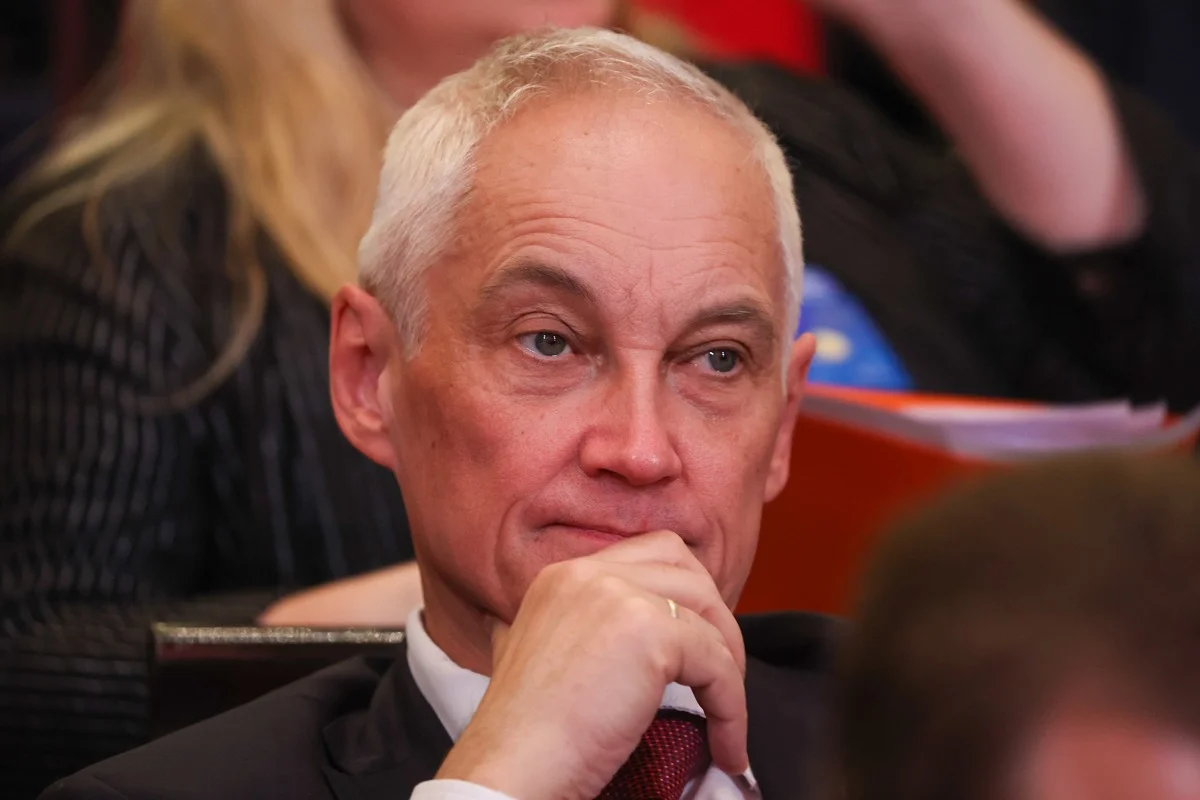
The only person in the government, about which we can say for sure that he has his own theory on the topic “who is to blame and what to do”, how to pursue an economic (and not only) policy, is the new Minister of Defense Andrei Belousov. The son of a prominent Soviet economist and the grandson of the honorary security officer, Belousov was always near the authorities, but his quick rise to the vertices began in 2006, after the publication of the report “Scenarios for the Development of Russia for a fifteen -year perspective” in the professional community (then the Doctor of Economics, Belousov was appointed Deputy Minister of Economic Development).
The famous report mentioned (though rather carefully) the possibility of a global financial crisis (which happened in 2008). But the main thing is that Belousov described the four scenarios of the country's development: from a “throw into globalization” to “energy autism”. At the same time, during the implementation of any of these scenarios, according to the researcher, the future size of the per capita GDP differed slightly, which means that for people it was generally the same as which way the Russian Federation would go - no one would get rich to them.
Moreover, the future Minister of Defense called the “increase in the population of the population constituting the middle class, its revolutionizing impact on consumption and model standards”, which entails “switching the demand for high -quality imported goods, a reduction in the role of competitiveness and narrowing of the niches occupied by Russian goods; Strengthening social conflict and growth of claims to increase wages exceeding the capabilities of companies to increase labor productivity. ”
And judging by the fact that the political rhetoric of the authorities began to change precisely in the second half of the “zero”, some conclusions regarding the future development of the economy were made just then.
From place to place
The fact that the authorities are about to undertake the “rotation of the elites” will exalt worthy, and will move unworthy to a less responsible work, have been discussing for twenty years-moreover, both large supporters of the authorities and small ones discuss this. Hence the endless stories about “social elevators”, “leadership programs”, “qualifying competitions” and “new horizons”.
Do not lose time for conversations, the rotation of the elites is the last thing the authorities needs, the political scientist Ilya Obporozhsky explains in the article “The influence of the rotation of elites on the stability of authoritarianism”. Who did not have time to stand on the escalator, which makes the upper hand, he was late forever. The train left, the rails were removed.
Yes, there is a popular reasoning that the frequent change of authorities can positively affect the authoritarian regime - this allows you to timely include new leaders in the ruling coalition, eliminate potential opponents and maintain loyalty among those who consider themselves worthy of the authorities by birth. Another theory says that the constant rotation of the bosses creates a situation of high uncertainty and deprives some of the elites of access to the previously obtained benefits.
Which of the theories is closer to the truth, does Ilya ask? And, having analyzed all the authoritarian regimes that existed from 1968 to 2010 (as well as all dictators who ruled from 1968 to 2008), the political scientist comes to the conclusion,
The autocrat produces that the fewer personnel permutations in the highest authorities are produced, the more stable the authoritarian regime, all other things being equal, turn out to be stable.
So to everyone who enrolled in managerial competitions in the calculation of high posts in the future, we would advise not to get excited.
Assembly point
In general, if we look at the career tracks of the current members of the government, we will see that they received the first truly key posts of the federal level in the second half of the zero-when the power was seriously thinking about whether it was needed by the middle class, and step by step began to pursue the policy, the results of which we see now. (The conspiracyologist would say that it was at this time that Vladimir Putin, who in 2008-2012 led the government, began to select the team ready to fulfill “any tasks.”)
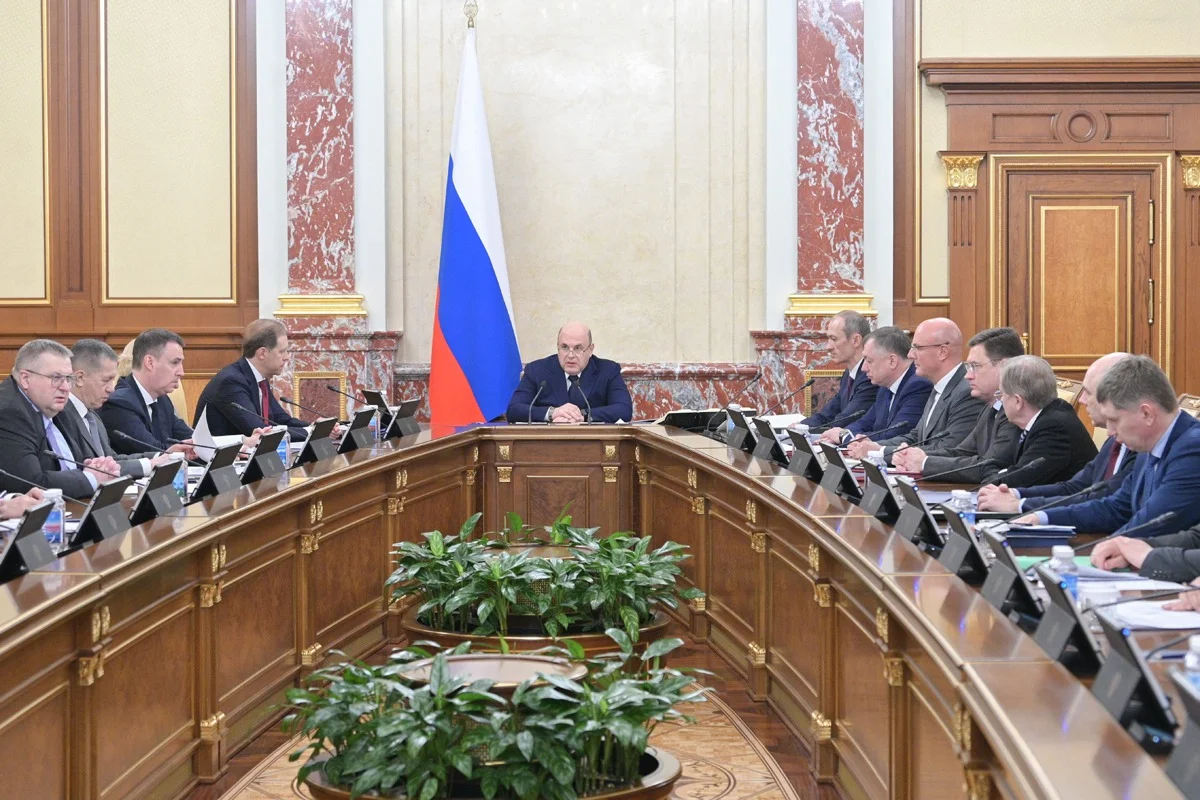
Mikhail Mishustin is again the Prime Minister. In December 2006, he took the position of head of the Federal Agency for Management of Special Economic Zones (Rosuez). Apparently, I coped with the tasks. Over the two years, the first two industrial production SEZs were opened-in Tatarstan (Alabuga) and in Lipetsk, as well as the first technical and informational SEZs in the city of Dubna of the Moscow Region, in Tomsk and Zelenograd. Then follows a break in the civil service-and in April 2010, 44-year-old Mikhail Mishustin was appointed head of the Federal Tax Service. Ten years later, he will head the government.
Now let's look at the list of deputy prime ministers.
First Deputy Prime Minister Denis Manturov is a native of the Soviet elite family, an official dollar millionaire (he made a fortune in the “dashing nineties”, when he was not even thirty), in 2007 he became Deputy Minister of Industry and Energy in the government of Vladimir Putin, was the deputy Minister of Industry and Trade, and since 2012 Denis Manturov-Minister of Industry and Trade.
Tatyana Golikova. In September 2007, the forty -year -old Tatyana Golikova was appointed Minister of Health and Social Development in the government of Viktor Zubkov, and since then has never dropped out of the power clip.
Alexander Novak. He began work in the government in 2008 - Deputy Minister of Finance, and since 2012 for 12 years he has unlimitedly answered "for energy".
Alexey Overchuk. In 2007, he became deputy head of the Federal Agency for Management of Special Economic Zones led by Mikhail Mishustin, coordinated work to attract investors. And in 2020 he became deputy Mikhail Mishustin in the government.
Dmitry Patrushev. He was the Minister of Agriculture from 2018 to 2024, but Dmitry Patrushev began engaging in large public finances from the middle of the zero-in 2007, thirty-year-old Dmitry Patrushev took the position of Senior Vice President of VTB Bank, and in 2010-headed by the State Rosselkhozbank.
Vitaly Savelyev. From 2009 to 2020, he led Aeroflot-Russian Airlines PJSC, in 2004-2007 he was Deputy Minister of Economic Development and Trade, but the most interesting line in his resume from 1993 to 1995-the chairman of the Board of the Joint-Stock Bank of Russia-the very one with Kovalchuki. Savelyev also succeeded in the “dashing nineties”, and it was in St. Petersburg.
Yuri Trutnev -he also earned his official multimillion-dollar state in the nineties, from 2004 to 2012 he headed the Ministry of Natural Resources, and since 2013 he was the plenipotentiary of the President in the Far East in the rank of Deputy Prime Minister.
Marat Khusnullin - all the “zero” was the Minister of Construction in Tatarstan, in the “tenths” was the “main construction” in Moscow, and in 2020 entered the government of Mikhail Mishustin.
Dmitry Chernyshenko - Since 2007, “President of the Organizational Committee of the XXII Olympic Winter Games and XI Paralympic Winter Games in 2014 in the city of Sochi” - and this, in fact, said everything.
In the past 20 years, Dmitry Grigorenko has been an amazing career. In 2003, he was a specialist in the 1st category in the tax inspectorate No. 4 in the city of Krasnodar, and already in 2012-the head of the taxation department of the Federal Tax Service, since 2013-the deputy chief of the Federal Tax Service, and was appointed deputy chairman of the Government of the Russian Federation-the head of the Government of the Russian Federation on January 21, 2020.
The list of important members of the office will not be complete if you do not mention two more characters.
One of them is the old -timer Anton Siluanov , the Minister of Finance since 2011, since 2005 - Deputy Minister of Finance.
And Sergey Tsivilev , the new Minister of Energy, who in 2007 acted as a co -founder of LenExpinvest, which was supposed to build a new LenExpo complex, - in particular, the St. Petersburg Economic Forum is held annually.
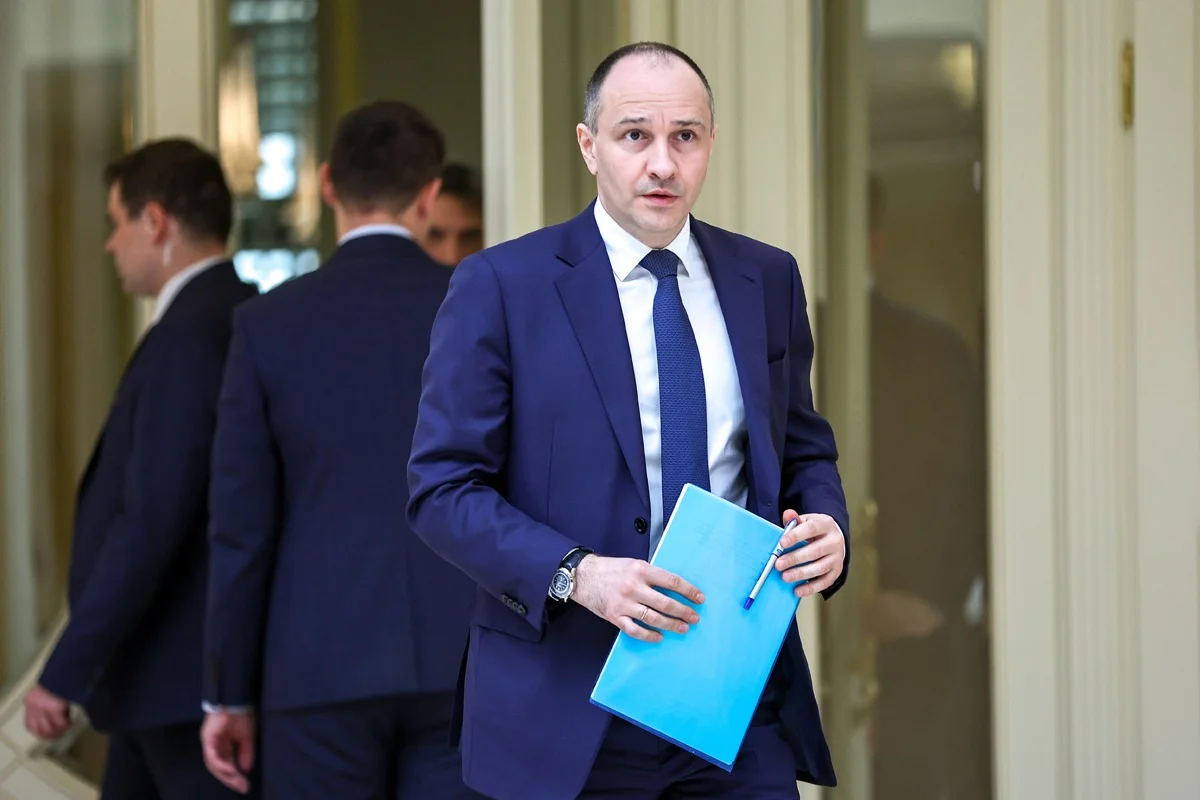
Plus, Boris Kovalchuk , the son of billionaire Yuri Kovalchuk, the main shareholder of the Rossiya Bank (from May 14, 2024), deserves special attention.
Capitalist ministers
What can be seen by looking at the government list?
Firstly, there are no “new people” there and close-all key figures have been at the tops of the authorities for at least twenty years.
Secondly, in the power there is no gap with the “dashing nineties”-all the leaders of key government departments in the “nineties” succeeded: they built careers, made ties and accumulated conditions. Well, the Minister of Foreign Affairs is generally an exemplary example in this sense: he was the deputy minister Andrei Kozyrev in the early 1990s, then for 10 years he represented Russia to the UN, now he has been led by the Ministry of Foreign Affairs ...
As for the forecasts of what policy this government will pursue, there are no questions strategically - one that will contribute to the preservation of the power and privileges of the highest thousand Russian ruling families.
From this point of view, government members are classic “capitals ministers” who are not represented by anyone but their families, clans and financial, industrial and power groups, in this sense they are classic heirs of the Leninist commissars and Stalinist generals. Moreover, the union of the authorities are soldered and family tunes that they hide - with the exception of cases when it is already completely impossible to hide this.
But about tactics - there are questions. And three appointments in the government give a hint of the main problem that excites the power for real. And no, this is not the appointment of a new Minister of Defense.
Yes, Andrei Belousov has a program according to which the “civilian” economy of the country should turn into a service contour of the military-industrial fortress (such as in the Middle Ages, shopkeepers and gardeners crowded under the walls of the feudal castle). But to implement this program (as well as to preserve the possibilities of the current policy as a whole), there is an important condition, which is impossible to exclude.
This condition is the presence of a “free currency” at the disposal of the authorities and the oligarchic business.
And currency revenue contrary to the entire demagogy about the “supply of Russian goods” to the promising countries of the third world - this is oil, gas and grain. Now the main channel for the flow of currency is export, because All other financial/credit and investment transactions are completely or partially blocked.
And now - attention: who received the "expansion of authority"? That's right, Alexander Novak, financier, all tenths for oil and gas and responsible. Plus, “Neftyanka” now is not that the “oil industry” ten years ago, everything is much more complicated here - the shadow fleet, gray calculations, “friendly currencies”, not very necessary even “friends”, plus barter and “parallel import”. And the leadership of the “energy” itself, that is, with oil, gas, coal, is to everyone that can be exchanged for Chinese components for the military -industrial complex and for consumer goods is entrusted to Sergey Tsivilev - the only person who does not hide his relationship with the highest political leader.
The elevation of Dmitry Patrushev is also quite justified from the point of view of the issue of export revenue. Agriculture has now become the second most important industry in the mining of the currency ($ 45 billion exports with a potential of up to $ 70–80 billion). Plus - pasta, bread, sugar and “meaty canned food” should be on the shelves of retail chains - and this is also agriculture (and trade, whose role is growing).
But in general, nothing fundamentally changed -
The government is still working as a mechanism for turning “Russian resources” into the foundation of the ruling class stability. Moreover, so that the population of these resources is obtained in strictly limited framework.
Previously, export revenue was “reinforced” and displayed “to the West” (of course, part of it was returned to “foreign investments” under various offshore flags), and now export revenue is “going into production” - only products of this production have nothing to do with the welfare of people, and what they have for what they have.
So trusted and close people are working on “prey currency”, professional and ideological - on its distribution, while other trusted and close ones will control this distribution.
Cash question
And with currency not everything is so simple. Yes, oil prices remain high. But, according to the official data of the Central Bank of the Russian Federation for the first quarter of 2024, the revenues of the export currency amounted to $ 66.3 billion (this is 60% of the total export of services of services). Of this amount, $ 23.5 billion is dollars and euros.
It takes about $ 50–55 billion per quarter to pay for imports (we are talking about imports that is paid in foreign currency, the rest of the import passes through ruble calculations).
Formally, the balance of payment balance per quarter is plus $ 12–13 billion. But not all exports taken into account in the payment balance are paid and available for use.
A significant part of the export is delivered through trading loans and in debt (CIS and Türkiye), and the other part of the export is paid by uncontested currencies (China, India).
According to official estimates, the export of the Russian Federation-Tovarov is 90% of the total exports. The raw materials are 85% of the export of goods. This means that with a total official export of $ 66 billion, the gross volume of the “raw material” currency revenue is about $ 50 billion.
How many of them came “live money”?
This can be judged by what basis. The largest exporters (raw materials) are required to sell foreign exchange earnings in the domestic market. In the first quarter of 2024, they honestly sold $ 35.3 billion. And $ 15 billion - about 30% of raw materials - are in suspended state. There is something to think about.
So the main challenge for the government, as well as the main indicator through which we can evaluate the stability of the economy as a whole, the degree of high -class loyalty and political stability, is the “difference” between the amount of raw materials revenue and the cost of imports that it was paid.
And if the currency is missing, then do not forget that the government is headed by a tax specialist.
A universal commentary on ministerial movements the same brilliant Francesco Gvichchardini gave five hundred years ago: “Do not achieve changes if you do not change the rules that you do not like, but only people; Such changes do not give satisfaction; For example, what kind of crook is to eliminate Messer and Poppi if Messer and San Miniato take his place, a person of the same position ... ”