
Translated material
ChatGPT: Saga about control
He who owns neural network algorithms, he owns the world. How do technology try to subjugate governments and corporations?
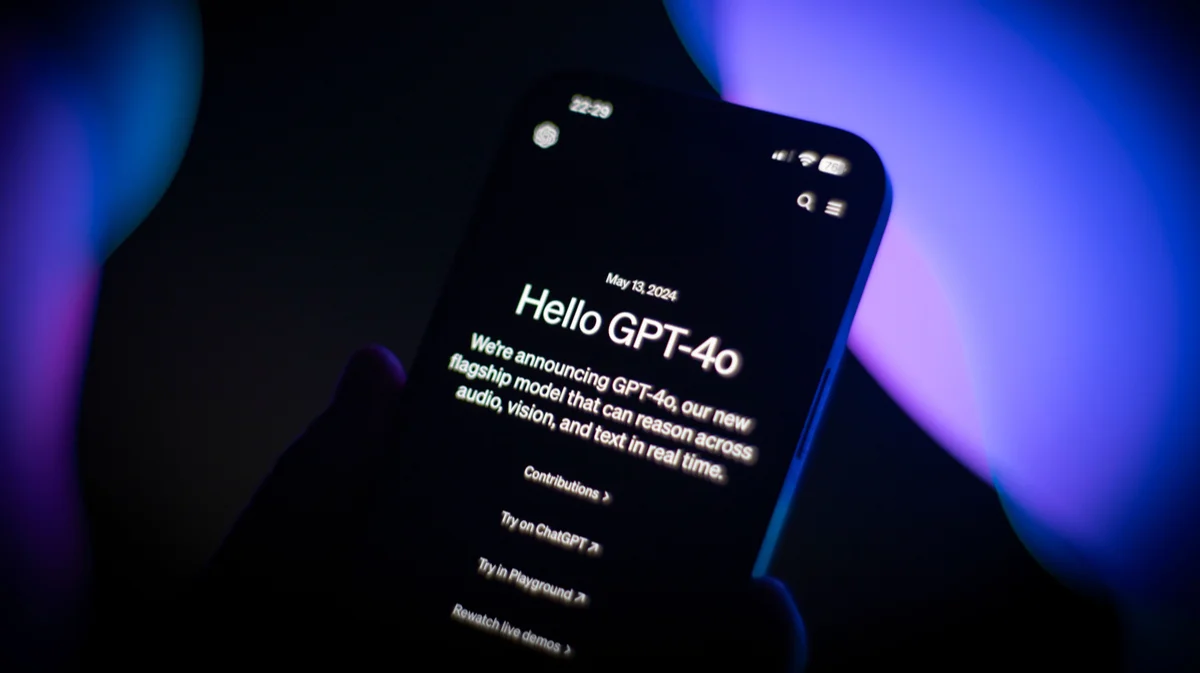
Photo: Jaap Arriens / Nurphoto / Shutterstock / Rex Features / Vida Press
Openai introduced a new version of the ChatGPT-4 OMNI, which looks like a breakthrough in the possibilities of modern neural networks in information processing. The key difference of ChatGPT-4O is the possibility of simultaneously working with text, images and sound, which allows you to create new user scenarios. The first demonstration videos were published in which the neural network supports communication in a natural language, recognizes the emotions of a person, describes what he saw through a camera camera, translates the conversation of people or helps in solving mathematical problems. Users note that the capabilities of the new platform came close to the level of the voice assistant shown in the science fiction film “She” (2013).
Neural networks working with large language models (LLM, Large Language Models) have become key technological innovation in the modern world in a matter of years, and radically change the scenarios of people with information. Judging by the capabilities of ChatGPT-4O, now this revolution is only gaining move. The observer of Novo-Europe, Sergei Golubitsky, talks about how the struggle for control over the technology unfolds: how government, corporations and civil society seek to use the capabilities of LLM and protect themselves from risks.
The plot of last fall-about the exile of Robert Altman with the post of the head of Openai ( Sam Altman and the Clikushi Apocalypse) -ended with a happy ending, seasoned with textured conspiracyology. The visitor, they say, was shifted solely because the company's reign on the eve received an important “signal”. A group of worried employees signaled the invention in the bowels of the company of the new LLM model, capable of independently finding information that is absent in the initial data of the neural network.
In other words, the ChatGPT engine, they say, went to the level of the super -element, and the rule burdened with moral responsibility to humanity pushed Gender from the corporate helm in order to prevent the monetization of such a dangerous weapon into a private pocket.
The only fraction of logic and truth in this conspiracy -free delirium is the word "monetization". Because without any supership (which, of course, no one has yet been created) is about breathtaking numbers: according to the most modest estimates, in 2032 the volume of the world market of artificial intelligence (AI) will reach $ 2 trillion 575 billion.
Obviously, not a single living soul, not a single government, not a single state, can pass by such amounts. The failed corporate coup in Openai pushed back the search for the overshoot in the background (at least in the public field), and the first brought the struggle for power and control. The struggle, which is simultaneously conducted on three sides: corporations, state departments and civil society.
The outcome of the struggle is unknown, but one truth is undeniable: who will control the development of LLM models in the world will control the whole world. In this article, I will try to introduce the alignment of the forces that has developed today on the battlefield for the intellectual future of the planet.

Who hunts LLM
I'll start with the key paradox. Structures responsible for the lion's share of scientific developments and practical implementations in the field of LLM: corporations Openai, Google, Microsoft, Anthropic, Meta, Amazon, Cerebras, Xai (all from the USA), Huawei and Baidu (China), DeepMind (Great Britain; Google), Mistral Ai (France), Yandex (RF), today were in the role of prey , for which two hunters fight.
A hunter named Goliath is a state (represented by national state structures); A hunter named David is a civil society that, to the best of limited forces and opportunities, is also trying to stake at least some independent place under the sun.
Despite the inequality of forces and capabilities, hunters unites precisely that the hunting object is the very corporations from which the most juicy pieces of Know-medical and finished products break out and gnawed by rally.
May the reader think that I was crazy and voluntarily became under the banner of Ain Rand as a public defender of the offended class of impudent entrepreneurs and a tanned Laissez-Faire capitalism! God forbid. I only state the obvious:
The history of the last quarter century with undeniable unambiguousness demonstrates the inability of the corporate world to resist both state control and the expropriation of knowledge and information from civil society.
It is characteristic that in the designated scenario there are no geopolitical exceptions. I believe that additional comments are unnecessary in the context of the countries of the so -called. Global South, in which private corporations have the right to vote purely in matters of tactical development of the business itself. All strategic decisions, as well as control over services and products affecting the interests of the state, have long been delegated to this state. Moreover, this delegation has been drawn up for a long time not indirectly, but in the forehead - through the appointment of officials for leading posts in the reign of corporations.
If someone is in doubt, I propose to recall the fate of the creator of Alibaba Group Ma Yunya (known as Jack Ma), who was holding on his posts exactly until he dared to indistinguish the state regulation of the industry and the banking system. After the press conference, he disappeared from public radars for three months (from October 2020 to January 2021). Then he showed up, but already in a purely private status - at charity lectures before rural teachers and at the golf sites.
In the countries of the Global North, state control over corporations is obviously veiled in the public consciousness with a verbal fleur about “inalienable rights and freedoms” and “inviolability of property”. However, in practice, this turns into endless patches, patches and proprietary encryption algorithms, which state departments responsible for “national security” award the program code of instant messengers and operating systems created by corporate developers.
All this is done under a good pretext of combating “world terrorism” or “bypassing of sanctions” (in the second row there is a demagogy that had a named about pedophiles, drug dealers and tax evaders).
The hunting of civil society on corporate hares, although it is not as bloodthirsty as the hunting of the state, also inflicts tangible damage to the chicks of John Golt's nest ( the mystical character of Atlanta, who straightened his shoulders, "Ain Rand, which symbolizes the restless nature of the corporate genius of capitalism. - approx. Aut. ). It is enough to say that over 30 years of studying software, I have not met a single software product that would not have been, as if it were softer, “creatively borrowed” by the masses , holy believing that knowledge must be free. The total defeat of the copy of the copy in all spheres of the enteric - from audio and video to book and visual products - another confirmation that the product created by corporate authors, sooner or later, is always free of charge, who does not want to pay for beauty .
Below I will show how civil society is trying to preserve for at least some oasis free from state control using decentralized artificial intelligence , which, however, consists of 80% of products created by corporate (read: “centralized” business). Direct Darwinism in a textbook format.
State against corporate neural networks
Now let's see how my metaphor for the sacrificial slaughter of the LLM main engine - corporate business - is implemented today in practice.
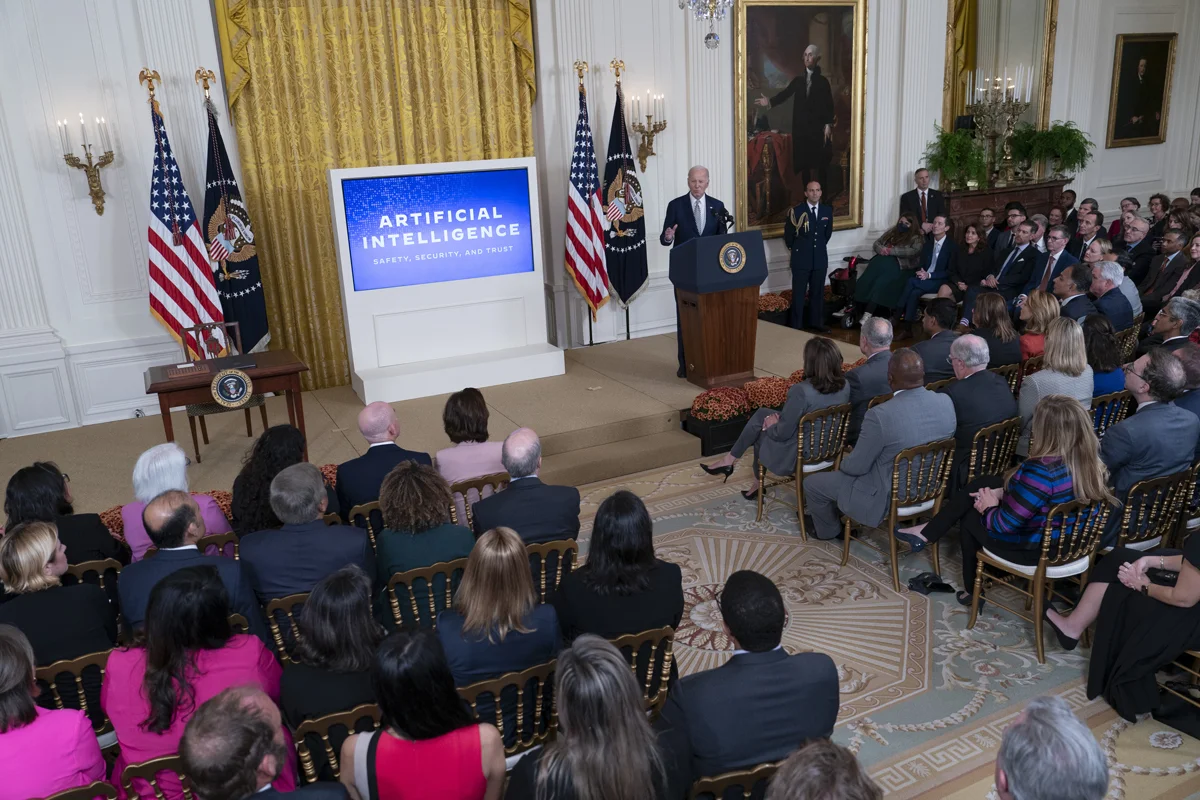
Let's start with a rude state. The backdrop for a failed corporate coup in Openai was the executive decree No. 14110 (Executive Order 14110), signed by US President Joe Bayden on October 30, 2023. This fruit of the bureaucratic genius became the culmination of the state’s unsuccessful attempts to negotiate with American corporations, the development of which underlies research in the field of AGI (Artificial General Intelligence, universal intelligence systems).
We remember ( “nesting dolls” ), as at the beginning of 2023, the state of the puppet legal entrepreneur Future of Life Institute suggested that LLM “voluntarily freeze” research in the field of AGI. There is no need to build illusions: an official is a creature, although with a unique instinct of conjuncture, therefore, “freezing” was meant, of course, not the termination of research, but their “ordering”. Of course, under the auspices of the most responsible part of mankind, that is, bureaucracy.
All corporate leaders (from Altman to Sundar Pichai and Satiya Valla) nodded respectfully, but continued to “defrost” research. For an obvious reason: if you stop at least one day of the aging in the AGI field, the separation from the competitors incorporated outside the United States will become critical.
The second demarche of the state in 2023 we also dismantled (“ Dipfect for both of your homes ”): at the May meeting in the White House and at the hearing in Congress, claims to corporate research were expanded to ethics. Conducting and congressmen-senators suggested that the “dipfaces” will turn into the visiting card of the presidential election-2024.
Finally, in October 2023, the Presidential Executive Decree No. 14110 on “Safe, Reliable and Confidence in the development and use of artificial intelligence” (SAFE, Secure, and Trustworthy DEVELOPMENT AND USE of Artificial Intelligence) formalized the intensity of the state in the field of LLM in LLM eight principles.
Eight principles of AI according to the US Presidential Administration
1. AI must be safe and reliable. For this, the state should develop effective mechanisms for marking the origin of content, by which Americans will be able to determine when content is created using AI and when not.2. The state must contribute to responsible innovations, competition and cooperation. To do this, the administration will support programs to provide Americans with the skills necessary for them in the AI era. And also attract talents in the field of AI from all over the world - not only for study, but also for permanent residence, so that companies and technologies of the future are created in America.
3. Responsible development and use of AI requires the support of American workers.
4. The policy in the field of AI must comply with the desire of the administration to promote equality and civil rights.
5. The use of new technologies, such as AI, does not exempt the company from their legal obligations. With difficulty won the principles of consumer protection are especially important in the moments of technological changes.
6. The inviolability of private life and civil freedoms of Americans should be protected, since AI simplifies the extraction, identification and binding of confidential information about the individual with its location, habits and desires. The capabilities of AI in these areas increase the risk that personal data can be used and disclosed. To combat this risk, the federal government will ensure the legality and safety of the collection, use and storage of data, and reduce the risks of the inviolability of private life and confidentiality. (I immediately want to draw the attention of readers to one piquancy of paragraph 6: before the advent of AI, all private client information was safely in the exclusive use of corporations: Google, Apple, Facebook, Microsoft, Amazon, etc., now I have deprived them of private information to everyone. The Biden administration makes a “logical conclusion”: control must be returned back, but not to corporations, but by the state .
7. It is important to manage the federal government by risks associated with the use of AI. It is important to increase its internal potential for regulating, managing and supporting the responsible use of AI to achieve optimal results for Americans.
8. The federal government should pave the way to global social, economic and technological progress, as the United States did in previous eras of breakthrough innovations and changes.
It was instructed to embody presidential decree No. 14110, which left no doubt about the true essence of the state demarche - the Department of Internal Security (Department of Homeland Security, DHS).
A key document for understanding what is happening is a regular report “The Evaluation of Threats for the Fatherland for 2024” (Homeland Threat Assessment 2024), prepared by the reconnaissance and analysis department (Office of Intelligence and Analysis) under DHS.
The report is called direct text the main enemies of the Fatherland, who need to actively counteract in AI: China, Russia and Iran. The main problem is the increased quality of generative AI, which already allow you to create an extremely reliable textual, visual and video production that is practically not distinguishable from the one that is created by a person.

If earlier Chinese, Russian and Iranian websites were written in clumsy English, today the conspiracy Chinese portal tells Shakespeare's impeccable syllable the naive and gullible American layman about how "the United States control the laboratory in Kazakhstan to create a biological weapon against China."
Another example from the report: “RT (earlier Russia Today) launches a diplay video created using artificial intelligence and humiliating the president of the United States and other Western leaders on social networks.”
Against the backdrop of such AI-Bescene, according to DHS and government, it is necessary to intensify the confrontation. Especially in the year of the presidential election, when “Russia is likely to continue the use of traditional media, fake websites, social networks, online bots, trolls and private individuals for the spread of pro-Kremlin narratives and holding influence within the United States.”
In addition: “After the invasion of Ukraine, Russian messages were focused on justifying its aggression, the desire to reduce the internal support of Kyiv from the United States and encourage disagreement among a variety of global partners that help Ukraine.”
Obviously, in the face of threats emanating from strategic enemies, it is urgent to ensure a united front of the struggle within the United States itself.
But how to fight on the fronts of AI effectively, if these AI are in the hands of private business? Can a private business give a coordinated worthy rebuff to the enemy? The question, of course, is rhetorical ...
If we were talking about some state of the global south, then the problem would organically solve before it was articulated. The authorized comrades would have come to the right offices, they explained everything on the fingers and met an ecstatic understanding with approval. After that, the “corporation-state” relationship would be reduced to boring resolutions, letting out yourself-know-ot and executed with the very knowledge of the effectiveness.
We are talking about the state of the global north. Therefore, it is not that it will not be possible to come with such a chipped sailor at the Pichai-Maski-Altman-Nadella office, but it will somehow be very radical to contradict the rules of the game, approved nearly 300 years ago.
The Ministry of Neural Estates
In order for the reader to evaluate the elegance of the methods by which the state prefers to control the corporate business in the countries of the winning capitalism, it is enough to consider the first step of DHS aimed at obtaining this control.
On April 26, 2024, the Department of Internal Security announced the creation of the Council on Artificial Intelligence Safety and Security Board). The Council will advise the head of the department, representatives of critical infrastructure, other interested parties from the private sector and the general public on the safe and reliable development and implementation of artificial intelligence technologies in the critical infrastructure of our country. The Council will develop recommendations that will help interested parties of critical infrastructure, such as transport service providers, pipelines and power supply operators, as well as Internet providers, more responsibly use AI technologies. Он также разработает рекомендации по предотвращению и подготовке к сбоям в работе критически важных услуг, связанных с искусственным интеллектом, которые влияют на национальную или экономическую безопасность, общественное здравоохранение или безопасность».
В Совет по безопасности ИИ при DHS пригласили 22 видных деятеля, которые дружно заявили о том, какая это для них честь и ответственность.
Десять членов Совета — руководители корпораций, создающих ключевые продукты LLM и выпускающих всё необходимое для ИИ оборудование:
Дженсен Хуанг (Jensen Huang), президент и CEO NVIDIA;
Сэм Альтман (Sam Altman), гендиректор OpenAI;
Дарио Амодей (Dario Amodei), гендиректор Anthropic;
Арвинд Кришна (Arvind Krishna), председатель правления и CEO IBM;
Сатья Наделла (Satya Nadella), председатель правления и CEO Microsoft;
Шантану Нарайен (Shantanu Narayen), председатель правления и CEO Adobe;
Сундар Пичаи (Sundar Pichai), гендиректор Alphabet (Google);
Чак Роббинс (Chuck Robbins), председатель совета директоров и CEO Cisco;
Адам Селипский (Adam Selipsky), CEO Amazon Web Services;
Лиза Су (Lisa Su), президент и гендиректор Advanced Micro Devices (AMD).
Остальные участники Совета — меланж из чиновников и научных работников.
Есть также два руководителя корпораций из системообразующих отраслей: Эд Бастиан (Ed Bastian), CEO Delta Air Lines, и Вики Холлуб (Vicki Hollub), президент и гендиректор Occidental Petroleum.
Что же мы получаем в сухом остатке? Руководители всех ключевых корпораций американского ИИ в тесной связке с чиновниками и учеными мужами под эгидой DHS (называя вещи своими именами: министерства госбезопасности) будут воплощать в жизнь политику государства в области ИИ под лозунгом противостояния экзистенциальным врагам. Если это не попытка государства взять под контроль развитие всей отрасли, то я не знаю, как иначе можно решить поставленную задачу в стране Глобального Севера (без того, чтобы она не превратилась в страну Глобального Юга).

DAI: децентрализованный искусственный интеллект и гражданское общество
Рассмотрим теперь третьего игрока в борьбе за контроль над ИИ — гражданское общество. На старте этот бедолага оказался в самом невыгодном положении. На протяжении четверти века вся информация, касающаяся частной жизни граждан, находилась в эксклюзивном владении корпораций IT.
Справедливости ради нужно отметить, что гражданское общество добровольно повторило «подвиг» Исава и обменяло свое первородство (корпус приватных данных — самый ценный капитал эпохи цифровых технологий) на чечевичную похлебку, сваренную из лайков и «15 минут публичной славы для маленького человечка», которую корпорации IT любезно предоставили в формате Web2 — социальных сетей и мессенджеров.
В текущих обстоятельствах гражданское общество попало уже под двойной удар. Мало того, что практически все научные разработки в сфере LLM, все готовые продукты (модели вроде ChatGPT), всё оборудование, необходимое для обучения нейросетей, и вся инфраструктура коммуникаций (облачные сервисы вроде AWS) создаются и полностью контролируются частными корпорациями, так теперь еще и государство вознамерилось эти корпорации себе подчинить под благовидным предлогом «Отечество в опасности!»
Перед гражданским обществом остро встал вопрос: «Как обеспечить независимость развития моделей ИИ и избавить их от любого контроля?»
Общество никогда не получит своего места под солнцем ИИ, если попытается по отдельности противоборствовать корпоративному контролю и контролю государственному.
Нет ни малейшего шанса. Благо, у гражданского общества есть полное понимание ситуации, поэтому был выбран единственный верный вектор приложения усилий — создание DAI, Decentralized Artificial Intelligence, систем децентрализованного искусственного интеллекта .
И здесь на горизонте возникают сложности (назовем их трудностями Web3), которые напрочь затмевают прежние «договоры с дьяволом» (Web2). Это только навскидку кажется, что децентрализация ИИ — лишь вопрос открытого кода , открытой сети (криптосети) и открытого учета данных (блокчейна). Эти три кита, разумеется, обеспечивают необходимые условия формата , в котором может состояться децентрализация . Формат, однако, это еще не содержательное наполнение.
Let's start with the definition. DAI, или децентрализованный искусственный интеллект «относится к системам искусственного интеллекта (ИИ), которые используют технологию блокчейна для распределения, обработки и хранения данных в сети узлов. В децентрализованной системе искусственного интеллекта пользователи могут применять предварительно обученные модели ИИ на своих локальных устройствах, что позволяет им извлекать выгоду из результатов, полученных с помощью ИИ, не передавая контроль над своими данными централизованному органу . Этот подход позволяет пользователям применять готовые модели ИИ для обработки данных локально на своих устройствах и делиться только результатами с третьими сторонами. Он сохраняет конфиденциальность, избегая передачи основных личных данных».
Пока всё замечательно, потому что речь идет о форматах. В самом деле, технология блокчейна, смарт-контракты, федеративное обучение, гомоморфное шифрование, состязательная нейронная криптография и безопасные многосторонние вычисления теоретически способны обеспечить процесс обучения нейросетевой модели. Не более, однако, чем теоретически.
Искусственный интеллект как явление представляет собой стек технологий и алгоритмов. Во-первых, нужна серверная сеть , способная вбирать в себя колоссальные массивы информации, поступающей из внешнего мира (через интернет) в реальном времени . Во-вторых, нужно оборудование с предельно высокой процессорной вычислительной мощностью для обработки поступающей извне информации и для подачи ее на входные узлы обучаемой нейросетевой модели. В-третьих, нужно оборудование с колоссальной графической мощностью непосредственно для обучения нейросетевой модели. В-четвертых, нужны математические алгоритмы, воплощенные в надежный компьютерный код , помноженные на, опять-таки, высокопроизводительное оборудование для того, чтобы произвести точную настройку данных на выходных узлах нейросети , а также для обеспечения вывода.
Только после всей этой гигантской работы пользователю является его величество поле промпта, в которое он волен вписать любую глупость, чтобы запросить ответ нейросетевой модели ИИ.

Очевидно, что за моими суперлативами про колоссальные мощности и оборудование скрывается неумолимая истина: технологии ИИ предельно заточены на централизацию и концентрацию вычислительных возможностей . Иными словами, решать вопросы, связанные со всеми этапами содержательного наполнения LLM, под силу не просто корпорациям, а исключительно гигантским централизованным корпорациям. Тем, что обладают неограниченными денежными ресурсами и техническими возможностями для мобилизации усилий в нужном направлении на любом этапе жизни моделей ИИ: от сбора информации до финальной доводки промпта.
Экономлю читателям уйму времени и предлагаю взять на веру следующее утверждение: у гражданского общества в обозримые многолетия даже отдаленно нет технических возможностей и материальных ресурсов для создания конкурентоспособных LLM, способных противопоставить лучшим корпоративным моделям что-то, кроме осознания собственного нравственного превосходства.
Как следствие, все существующие сегодня не то что практические реализации, но даже концептуальные решения для DAI (децентрализованных систем ИИ) являются гибридными . И не остаточно гибридными, а предельно гибридными, потому что большая часть этапов построения LLM реализуется с помощью централизованных корпоративных решений.
В создании современных DAI ключевую роль играют маршрутизаторы компании CISCO, серверы IBM, облачная инфраструктура AWS, не говоря уже про бесчисленные софтверные решения, которые «творчески заимствуются», опять-таки, из корпоративных централизованных источников. Без этого, увы, никуда.
Но даже перечисленное не передает всей сложности задач, поставленных децентрализацией ИИ. За рамками обсуждения я оставил весь аспект координации усилий по сведению воедино всех блоков и модулей LLM.
Всякий, кто хоть раз в жизни пытался заставить толпу конченых индивидуалистов выполнить сообща мало-мальски простую групповую задачу, поймет, о каких невообразимых сложностях идет речь.
В сухом остатке мы получаем область, в которой децентрализованный ИИ преуспевает больше всего, — заключительный этап построения LLM, то есть «вывод». На сегодня именно работа над выводом и промптом, их тонкая доводка представляет собой наиболее практичный и реалистичный сценарий для развития децентрализованного генеративного ИИ. Тем более, что это и единственно возможный сценарий на текущем уровне развития технологий, доступных за пределами корпоративного и государственного контроля.
Отдадим должное реалистичности оценок, которые разделяет большинство активистов движения за децентрализацию ИИ. Сегодня ключевым инструментом такой децентрализации выступает публичный маркетплейс (Public Marketplace) — площадки, на которых в свободном открытом и инклюзивном доступе находятся бесчисленные библиотеки исходных данных (Datasets), ИИ движки и модели.
Формат маркетплейса (читай: рынка) авантажен еще и потому, что решает ключевую для успеха всякой инициативы задачу — мотивации и поощрения, без которых совсем уж несерьезно говорить о перспективах развития DAI. На чистом энтузиазме и красивых лозунгах долго не протянет ни одна общественно-бескорыстная инициатива.
Приведу несколько примеров уже реализованных на практике успешных решений, которые в первом приближении стараются обеспечить будущую конкурентоспособность моделей DAI.
Сеть Render вознаграждает (раздачей собственного ревордного токена) участников за предоставление свободных вычислительных мощностей сетевым художникам, которым требуется рендеринг изображений, но у которых нет вычислительных ресурсов для достижения своих целей. Решения такого типа координируют работу людей в рамках ИИ с помощью финансовых стимулов, а технология блокчейн делает их возможными.
Другой успешный опыт по децентрализации LLM — маркетплейс Hugging Face , который содержит почти 650 тысяч готовых моделей искусственного интеллекта с открытым исходным кодом, включая большие языковые модели, генераторы изображений и многое другое. Там же выложено 143 тысячи готовых датасетов, которые можно использовать для тонкой настройки не только узлов вывода нейросети, но и самого процесса ее обучения.
SingularityNET позволяет агентам ИИ интегрироваться с сетью для взаимодействия со сторонними приложениями или другими агентами.
Bittensor создает одноранговый рынок машинного интеллекта, в котором децентрализованные независимые модели ИИ могут объединять свой «интеллект», создавая, по сути, «цифровой коллективный разум».
***
We will summarize. Объективная реальность такова, что в обозримой временной перспективе нас ожидает лишь борьба за контроль между крупнейшими корпорациями и государственными структурами. Борьба с почти гарантированной победой государства и, как следствие, перманентной склонностью моделей LLM генерировать контент, содержательно соответствующий геополитическим установками того государства, который данную модель LLM контролирует.
Перевожу сказанное на язык прагматики: если при корпоративном контроле движки ИИ подозрительно часто выдавали рекомендации, тексты и изображения, которые тяготели к монетизации тех или иных слабостей, предпочтений и интересов кверента (человека, вводящего запрос модели ИИ), то при государственном контроле можно не сомневаться, что нас ждут сугубо идеологические изнасилования разума и психики. Вместо денег будет формирование «правильных» (= нужных государству) взглядов и оценок.
Что касается DAI, децентрализованной альтернативы ИИ, то она, опять-таки, в обозримом будущем будет оставаться привилегией очень узкой, интеллектуально и технологически продвинутой прослойки общества. Той части общества, что и в прошлые времена не спешила повторять «подвиг» Исава.