
Translated material
Empty promises
Putin's May decrees for 12 years most often remain on paper. How does it happen and why does this not prevent him from publishing new ones?
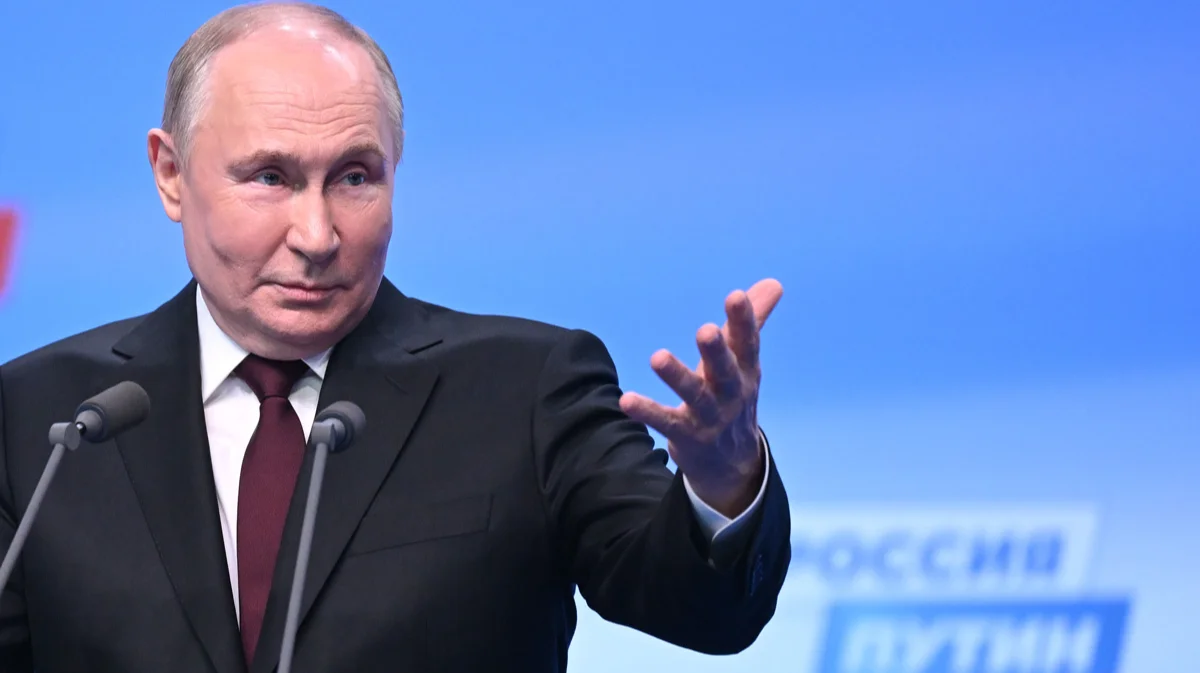
Vladimir Putin. Photo: Natalia Kolesnikova / EPA-EFE
After the inauguration, Vladimir Putin signed a decree “On the national goals of the development of the Russian Federation for the period until 2030 and for the future until 2036”.
The tradition of the so -called "May decrees" appeared in Russia after 2012. Since then, Putin, after each inauguration, signs new decrees that determine the goals that the country should strive for during his reign. The new newspaper Europe remembered what tasks Putin set before his government before, and compared them to the "May decrees" of the war years.
Economic cotton
The so -called “May decrees” have been determining the future of Russia for 12 years. If Putin’s appeal to the Federal Assembly can be considered as a pre -election speech, then a package of decrees is an imitation of the fulfillment of the promises that were given a couple of months before. In the package of 11 “May decrees” 2012 there were 218 points in which the head of state set out a plan for the development of the country for the next eight years, until 2020.
Planning the future of the country for a long time is a normal practice, says the “New-Europe” philosopher and political scientist Denis Greeks, but in the case of Putin Russia this is an illusion.
- approximately the same logic as with the Stalinist five -year plans that had to be fulfilled in three years. And, as it is easy to guess, no one has fulfilled them in three years. But then everyone was very desperately portrayed, - adds Greeks.
The first of the 2012 decrees contained the tasks of long -term economic policy. Then Russia also wanted to attract investments (up to 27% of GDP by 2018), as well as improve the country's position in the international ranking of the World Bank under business conditions. It was planned that Russia from the 120th place in 2011 to re-elect Putin in 2018 will be included in the top 20 of this rating.
In 2013, the Deputy Minister of Economic Development Andrei Klepach noted that for the success of the “May decrees” it is necessary to increase the economy by 7% every year. Answering the question of the New-Europe about the success of the economic part of the May Decrees, economist Sergei Aleksashenko says that
"The average growth rate of the economy since 2012 was 1% per year." In addition, the real incomes of Russians before the start of the war were below the level of 2013.
- Can this be considered success? - Ansashenko asks the question.
Official figures, on the contrary, say that almost everything turned out. In 2018, after Putin’s next victory in the elections, the government said that he had fulfilled 190 out of 202 instructions (for six years some decrees were removed from the agenda), that is, 94%. However, real numbers show something else. In fact, at first, at the end of 2017, the government reported on an increase in the volume of investment in GDP to 20.4%, which, however, did not reach the planned numbers by almost 7%. “In recent years, investments in fixed assets amounted to 17-18% of GDP,” said Vladimir Gamza, chairman of the Council of the Chamber of Commerce and Industry for financial and industrial and investment policy, which became the result of uncertainty in the political future of Russia.
In the ranking of the World Bank, under business conditions, it was possible to rise, but it was not possible to achieve targeted indicators for entering the TOP-20. According to data for 2020, Russia was in 28th place.
Social programs
One of Putin’s ambitious promises, which the government considered successful is to develop a set of measures to combat emergency housing. The authorities set a goal to resettle 10.81 million square meters. m of the emergency housing stock by 2018 and a year before, reported on the task of 94%. The numbers, however, only seem impressive: for 2010, according to Rosstat, the housing fund, assigned to the dilapidated and emergency housing, amounted to 99.4 million square meters. meters, or 3.1% of all housing in Russia. That is, even if we assume that new premises unsuitable for housing does not appear in the country, the government in five years got rid of only 10% of emergency housing. But in fact, according to Deputy Prime Minister Marat Khusnullin, every year in Russia there are another 2 million square meters. m of the emergency housing stock.
The most scandalous of the decrees was the order to increase the salaries of state employees. According to the plan, by 2018, the salaries of state employees were supposed to reach 100 or 200% of the average regional labor income, depending on the category of profession (for example, the salaries of doctors, university teachers and scientists - 200%). Seven years after the signing of the document of RBC , he said that only 16 regions had fulfilled Putin (among them - Bryansk, Vologda, Leningrad Regions, Tatarstan, Chuvashia and others). Against this background, Alexei Navalny created a trade union, who promised to check the degree of fulfillment of Putin’s decrees and, if the government set by the government, complain about governors. However, the Ministry of Labor reported that the decree was 99%. But it must be taken into account that in 2015 the government decided to change the method of calculating the average monthly salary in the country, significantly reducing it, which means that now the state employees could pay less as part of the implementation of the May decrees.
- To calculate salaries by decree of 2012, Rosstat came up with a special methodology that greatly underestimates the average salary in the region. Therefore, on paper the indicators are achieved. In life - no
- says Aleksashenko.
The birth rate increase program
In the “May Decree” of 2018, when Russia was already under sanctions, the authorities pushed economic transformations to the background, demography came to the first place in the new document . By that time, a decrease in the migration flow was observed in Russia for several years, and the natural increase in the entire history of the Russian Federation was only three years in the plus-from 2013 to 2015.
Demographic goals were in the decrees of 2012. Then the Putin government planned to focus on increasing the birth rate: it was expected to increase the total birth rate by 2018 to 1.753 children per family (in 2012 it was at 1.691). And in 2015 it even managed to achieve it: the coefficient reached 1.777. However, it was not possible to maintain relatively high fertility for a long time, and by 2018 the coefficient rolled below the level from which the program began - up to 1.579.
In the "May decrees" of six years ago, Putin reduced the forecast for the birth rate to 1.7 children per family. The numbers nevertheless talk about the failure of the decree of the head of state. The birth rate in 2023 fell to a minimum in 17 years - to the level of 1.41 children per family. In a conversation with the New Europe, demographer Alexei Raksha said that
The negative impact was influenced by the transfer of the maternity capital program to the first child.
It is also interesting that in 2018, Putin changed the formal indicator of the calculation of the average life expectancy in the decree: now the “expected duration of a healthy life” has become the determining factor. By 2024, it was planned to reach an indicator of 67 years. In 2019, WHO statistics indicated that this indicator in Russia was at 64.2 years. According to Russian Emiss, that year the average duration of a healthy life barely exceeded 60 years (60.3). According to the latest Emiss data, in 2023 the indicator increased slightly - to 61.37 years. And in the conditions of war, according to the demographer Alexei Raksha, it is impossible to raise the numbers of life.
Army
Another important task for Putin was the new equipment of the army. They wanted to reform the armed forces by 2020, bringing a share of modern weapons to 70%. Huge money was allocated for this: only in 2019, almost one and a half trillion rubles were spent to achieve the goals set by Putin. In 2020, when it was time to announce the numbers and report, Rusnano reported that the share of modern weapons in the army reached 68%. In 2021, the head of the Ministry of Defense Shoigu boasted of numbers and said that Russia has the most modern army in the world. At that time, according to him, the figures of the rearmament finally exceeded 70%. However, after a year of the war, Putin said displeasedly that in Russia there is not enough modern weapons. In the decree of 2024, the indicators of the military -industrial complex are not mentioned.
Increasing spirituality
The emphasis on traditional values and patriotism first appeared in the decrees of 2018. Putin ordered the government to educate Russians "on the basis of the spiritual and moral values of the peoples of the Russian Federation, historical and national-cultural traditions." What does this mean and how the government should comply with the decree on the education of youth is not clear.
In the 2012 decrees in articles on education, Putin set an ambitious goal: by 2020, at least five Russian universities were supposed to enter the TOP-100 “leading world universities, according to the world ranking of universities”. In 2020, according to the most prestigious QS rating in the world, only Moscow State University got into the TOP-100, taking 84th place (St. Petersburg State University was in the 234th position in the world ranking).
If we look at the decrees of 2018, we will see that the formulations in the articles on education have become completely vague, and the goals are unclear. According to Putin, the government should ensure the "global competitiveness of Russian education, the entry of the Russian Federation among 10 leading countries in the quality of general education." Recall that because of the war, Russia is not involved in the PISA program to assess the quality of students' knowledge, so there is no new data about this, and in 2018 the country was in 30th place.
May decrees of wartime
In the decree of 2024, Putin continued to talk about the creation of a “patriotic environment”. The head of state ordered the government by 2030 to create the conditions "for the education of a harmoniously developed, patriotic and socially responsible person on the basis of traditional Russian spiritual, moral and cultural-historical values."
Another point in the decrees is environmental well -being. According to the document, by 2030 in Russia 100% of municipal solid waste should be sorted, and by 2036, hazardous pollutants were halved.
Experts interviewed by New-Europe are skeptical of such promises. Denis Grekov says that now Russia has only one future that is subordinated to all reality - war.
- This is the only plan of possible development. Develop everything so that it works for war. What environmental well -being is possible in such conditions, it is incomprehensible,
- says Grekov.
The environmental agenda in Putin’s decrees appeared back in 2018. Then he promised to eliminate all unauthorized landfills within the cities by 2024. For this, they even came up with the Clean Country program. But in January 2023, the head of the Ministry of Natural Resources, Alexander Kozlov, said that by the end of the year they would remove "58% of unauthorized landfills within the Russian cities."
Another program that appeared in the footsteps of the “May decrees” is “clean air”. It was planned that by 2024 in the 12 largest industrial centers in Russia will reduce pollutants by 20%. But if you look at the last report of Roshydromet for 2023, then there will be all the same 12 cities in the list of the most polluted cities in Russia. The Deputy Chairman of the Committee on Ecology, Vladimir Burmatovv, interviewed Vedomosti admitted that "now there is actually the failure of the" Clean Air "project in the regions."
The economic future in the decree of 2024 looks very ambitious. Putin promises a decrease in poverty levels below 7% by 2030 and below 5% by 2036, a decrease in the genie coefficient (used to determine economic inequality) to 0.37, and also take the minimum wage to a level of 35 thousand rubles. Now the minimum salary is slightly more than 19 thousand rubles, and the poverty level is 9.3%. Economist Sergei Aleksashenko calls new goals “numbers”.
- It is possible to raise the minimum wage in six years, but I am not ready to evaluate what inflation will be. And she undoubtedly accelerates. I doubt that due to this it will be possible to greatly reduce the genie coefficient, since the main share of low -profit Russians is pensioners, and the minimum wage does not apply to them, ”says Aleksashenko.
In addition, Putin promises that by 2030 Russia will take fourth place in the world for GDP, designed for purchasing power parity. Now Russia takes fifth place, and these statistics have repeatedly been presented as the achievement of the Putin economy. The head of state spoke about this at a meeting of the Council for Strategic Development and National Projects , as well as in the message to the Federal Assembly . Economists relate to this indicator very skeptical. Without parity of purchasing power (PPS), Russia in terms of GDP falls in eighth place. Much more objective data on people's lives are provided by GDP statistics (together with the PPS) per capita, Russia is in 60th place, between the Maldives and St. Kits and Nevis.
To the question of whether something will change, if Putin's programs are injected, the political scientist and philosopher Denis Grekov finds it difficult to answer.
- Most of the population, in principle, poorly understands that this all means. People were always skeptical and tried to survive at the expense of their own resources. People do not even understand how much money they give to the state ultimately.
Putin is quite conscious, it seems to me that it reduces the standard of living of the population so that it is easier to manage it, and so that it cares only about survival and could not raise his head and think about something, Greeks concludes.