
Translated material
"They were given a couple of minutes to fees"
The grandchildren of the Crimean Tatars told New-European Stories of their relatives deported on May 18, 1944
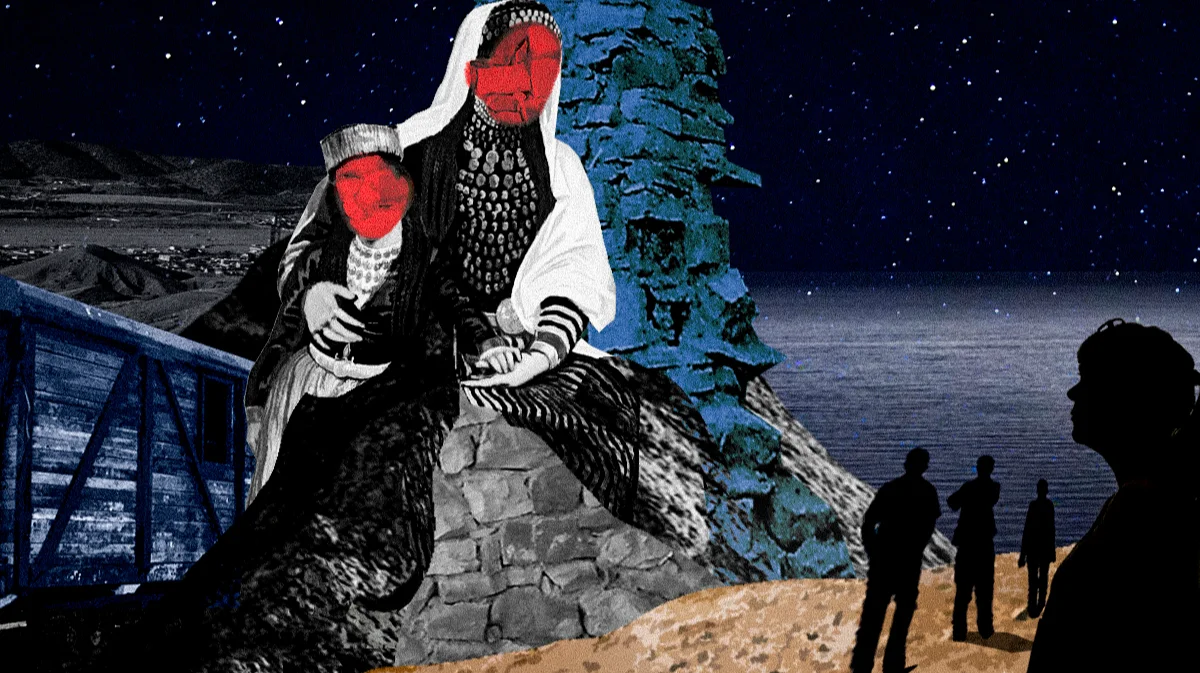
Illustration: "New Gazeta Europe"
1944 in the history of the Soviet Union was the year of mass deportations. The Stalinist repressions spread to millions of Ingush, Chechens, Karachais, Balkars, Crimean Tatars and representatives of other peoples, falsely accused by power of collaboration.
May 18, 1944 for Crimean Tatars - the day of the national tragedy. Then, on false accusations, they were forcibly moved to the Urals and to the Soviet Central Asian republics, according to various estimates, from 194 to 238 thousand Crimean Tatars. Researchers also note that about eight thousand people died during the forced relocation on the road. In Telegram No. 1476 of June 8, 1944, the death of 191 people “on the route in all echelons” was reported in the name of Lavrenty Beria. The grandchildren of the deported Crimean Tatars told New-Europe, how Stalin's repressions affected their families, how they experienced a deportation and returned to their native Crimea.
The phrase "Crimean Tatars" was abusive
Mavile is 25 years old, she lives in the eastern part of Crimea, where she was born and grew up. The girl knows very well the history of the deportation of her family: “Whose family did not affect the deportation at all? Ask anyone, they will tell you something. ” Mavile’s houses are stored on books on the 1944 tragedy. As a child, she, together with her grandmother, went to a memorial dedicated to the victims of deportation every 18th to honor the memory of repressed ancestors and compatriots. From the first grade, the girl knew that May 18 was a mourning day. Mavilea recognized the terrible details of the tragedy, listening to her parents' stories:
“I always say that this story [deportation] was simply transmitted to me with DNA - hatred of the people who created this with my ancestors,” she says. - This is all transmitted from generation to generation, so that this is no longer repeated.
Grandparents, when they were deported, were from one year to seven years old. They told how they were traveling to Uzbekistan on trains and lived there for the first years.
“One great -grandmother of soldiers during the fees for which 10-15 minutes were allotted, and not a few hours, as they write in the textbooks, they advised you to take a sewing machine with them,” the girl says. - The other is ghee. The first great -grandmother managed to survive in Uzbekistan in the first years only thanks to a sewing machine. She could take some orders, sew something and sell. There was no work for people who were deported and called traitors. The second great -grandmother, who took oil with her, gave it to the children a day in a spoon, because there was no food. Someone took flour, butter, cereals-everything was in very limited quantities. For more than a month they got to Uzbekistan by train. Many were dying of diseases, cold, hunger and dehydration. I remember, they said that sometimes there were stops, they managed to run out along the way, quickly to cook something at the stake-this food later fed them for a week or two.
In Uzbekistan, according to Mavil, the first 12 years, “as savages and killers, called the Tatars, they added that they traitors, bandits, and corrupt skins were called to the Crimean Tatars.
- In general, the phrase "Crimean Tatars" was abusive. Before they arrived in Uzbekistan, local residents informed that some savages were going to them, who would almost rush at them with knives.
For a long time, Mavile’s grandmothers did not have documents - they could not go to school and even more so to enter the university. The attitude to deported by local residents began to change when it became clear that the Crimean Tatars are hardworking and, contrary to all warnings, peace -loving people.
-I remember my grandmother from the side of my mother, until her death, was constantly doing something, constantly working. Here in Crimea she worked as a cook - they still remember how hard she was. In Uzbekistan, she worked in sewing production. When he and his family moved to the Crimea, the director of that factory did not want to let her go, because he said that she would no longer find such an employee as she: hardworking, honest.
Returning to his native land for the ancestors of Mavile was also not simple. The family from the mother returned to Crimea in 1989. The home was demolished by this moment: this happened with many houses of Crimean Tatars; To others - they settled those who were driven instead of deported. A little later, the family returned along the father’s line. When it became known that the Crimean Tatars were allowed to return, "the men went to intelligence in the Crimea." However, the police did not let them in a ferry for several weeks, explaining it to the peninsula. At some point, the men nevertheless broke through and in one of the villages arranged a “self-capture”:
“They settled in some territory, dug dugouts, defended this place,” Mavile retires. - They stood for 100 days, did not leave this land, did not let anyone in. The Russians were immediately scared, thought that some animals arrived.
Mavila says that to this day is faced with people who deny repression and call the deportation of a reasonable and fair measure. She is most unclear how women, children and old people could pose some threat to the Soviet regime. Mavile speaks calmly about cases of collaborationism: he believes that among the Crimean Tatars there were no more and no less traitors than among any other peoples, including Russians: also:
- No one says that absolutely all Crimean Tatars are the pure soul dandelions who could not create this in life.
The family spoke only in the Crimean Tatar
Enver is 29 years old, he was born and raised in the Crimea. His ancestors were deported in 1944. Enver found out about Soviet repressions at first at school, in the lessons of the Crimean Tatar, and then he began to ask his family, who did not speak too much on this subject.
“They came home when the great -grandfather was in the war. No one understood what was happening: the family spoke only in the Crimean Tatar. They were given a couple of minutes to fees, they told them to take the most necessary. Then they were simply brought in the wagons somewhere to the Urals, where there was a field and a swamp, ”Enver recalls family stories.
The great -grandmother and its four children were settled in clay lups reminiscent of stuck. There are two more children - the younger boy and the girl - the woman had to be given to the orphanage so that they could survive and feed. The older children worked and helped the mother - one of them died at work, where he was crushed by a log. Native Grandfather Enver graduated from eight classes of the school, then tried to enter several schools-he was denied everywhere because of nationality.
In the end, he was still able to enter, but soon he was expelled due to the lack of a passport, which was not laid by the Crimean Tatars: they were given only papers with a name and a designation of nationality.
The story of the family along the grandmother Enver knows worse - now she has dementia. It is only known that the great -grandmother had 12 children. The family was wealthy and lived in a large house before deportation. A man does not maintain a connection with other relatives: they went to different countries before permission to return to the Crimea.
15 years before returning to their native peninsula, grandparents Enver moved to the southern part of the Ukrainian SSR, where they were able to earn money for which they then bought a site and built a house.
“Grandfather worked as a driver, taxi driver, camasist, drove different people - so he earned money for all this,” says Enver.
For a long time, the family celebrated his grandfather’s birthday 16 days later-because of the problems with the documents there was confusion in the date of birth.
“Many people do not understand what it is,” says Enver. - When I laid out Storis with stories, acquaintances wrote that they had never heard about it. Once, a pair came up with [about deportation], the teacher [began to speak]: “It was not just that you were deported, there was a reason, all [Crimean Tatars] traitors.” The whole group laughed after his words, but I felt very offended. I could not object to him [then], burst into tears and left. Then he approached, tried to apologize.
Enver says that for him the history of Crimean Tatars is a difficult topic, it is especially difficult to discuss it with those who "have some ambiguous opinion on this subject." “For me, this is disrespect, I can be offended,” he admits. “I don’t know what this is connected with, some kind of generic garbage-I was not in those years, I should not feel all this.” Although the Soviet Union did not find, he also had more difficult because of his nationality. “I have never had fives in English and chemistry just because I am not Russian,” he said.
"They were brought to a naked plot"
Uryan is 21 years old, she lives with her parents in the central part of Crimea. It is very difficult for her to talk about the deportation of ancestors. At home, this topic rises extremely rarely and causes great pain:
-I lived with this since childhood, somehow they didn’t tell me about it separately, [the history of deportation] was always with me.
When soldiers entered the houses of great -grandmothers along the paternal and maternal line, they, like the ancestors of Mavile and Enver, did not give much time to fees. One woman was even said that you can not take anything with them, except for products on the road, since "the move will be temporary."
On the way to the Uzbek SSR, the brother of Grandmother Uryan was very catching a cold and died in the train of the train from hypothermia, he was two years old.
“They were brought to a naked plot, whether there was housing there, I don’t know, they didn’t tell me about it,” the girl says.
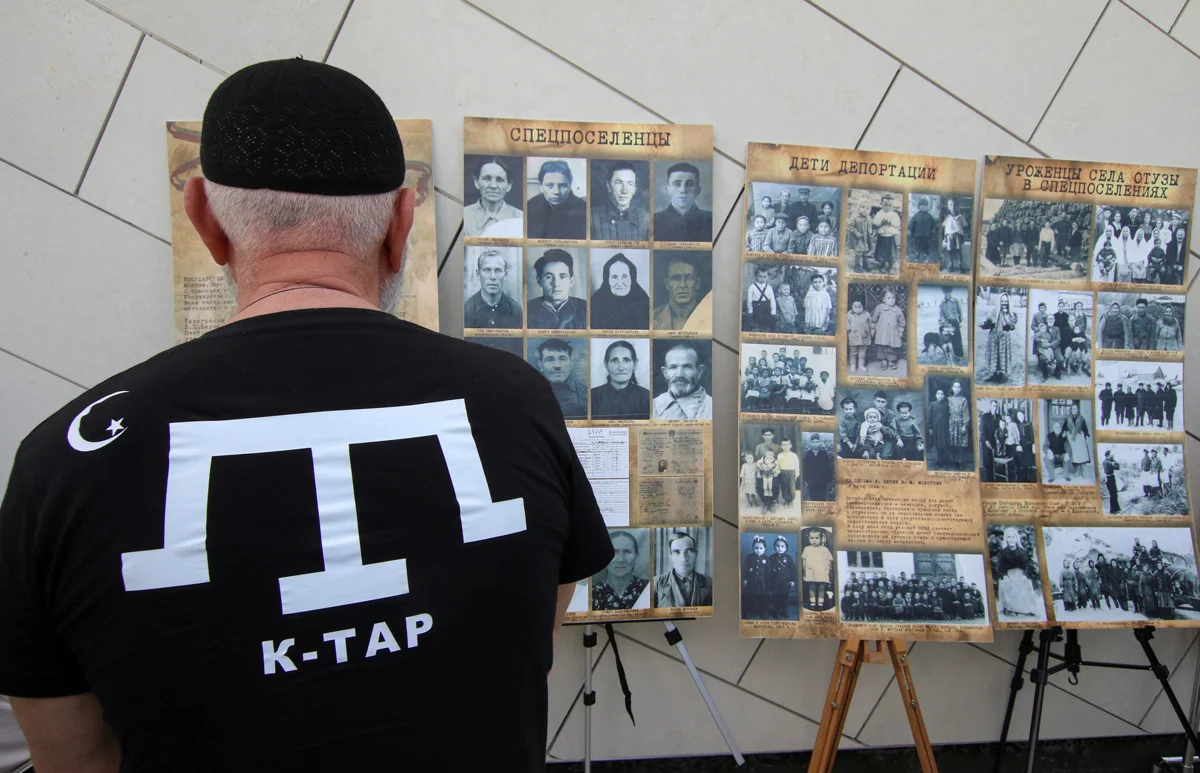
At first, no one had documents, but over the decades of life on the New Earth, the Uryan family managed to get comfortable and rebuild life, establish ties, and open a business. As soon as in 1989 it became clear that it was possible to return home to the Crimea, many Crimean Tatars, including the native Uryan, were faced with a dilemma: to return home, but to lose work, business, or stay.
“Many remained in the [Uzbekistan], because they have already built everything there for themselves,” the girl says. - It was a difficult choice for everyone. Those who returned to the Crimea came as if to an empty place, having nothing at all.
Grandparents Uryan returned to the peninsula as an opportunity. For them, according to the girl, this was a childhood dream that they could not help but fulfill.
Uryan, like Mavile and Enver, also came across people who tried to justify the deportation of the Crimean Tatars of their “unreliability”. One of the most striking cases, according to the girl, occurred at the university. Then the teacher on the couple said that all Crimean Tatars during the Great Patriotic War were traitors. Then she apologized, but added that the reasons for the repressions of the Soviet regime were still.