Date
Author
Отдел культуры «Новой газеты Европа»
Source

Preserved copy
Translated material
"We live in the world of Limonov"
The Cannes showed the "Ballad of Oednia" - the film by Kirill Serebrennikov about Edward Limonov. "New Europe" tells what the film and what it turned out about
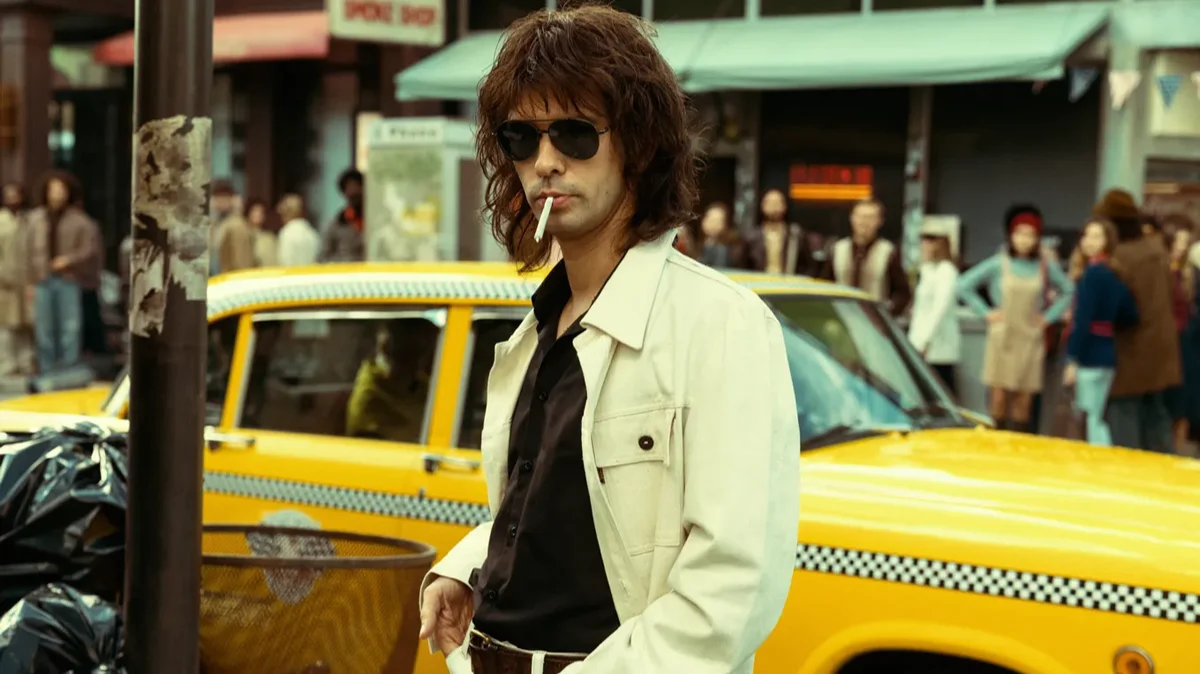
Ben Willish in the film "Limonov: Ballad of Edichka." Photo: Festival de Cannes
On May 19, at the Cannes Film Festival, the premiere of Kirill Serebrennikov’s film “Limonov. Ballad of Edichka ”, based on the novel“ Limons ”by Emmanuel Carrera.
This is the fifth visit of the director to the festival (last year he represented Tchaikovsky’s wife) and the second attempt to make a film about the eccentric writer and poet-in 2018, the Polish director Pavel Pavlikovsky (Oscars-2015 laureate for the film “Ida”) was going to film the novel, but the project did not work out, and the latter remained as a screenwriter. In the lead roles in Ballad - Briton Ben Willishou ("Perfumer: History of one killer") and Russian Victoria Miroshnichenko ("Dylda"). In Cabbish - emigrated cultural figures, for example, actress Chulpan Khamatova, journalist Sergei Nikolaevich, TV presenter Julia Pankratova. Music - in the range from Sex Pistols to a thieves Russian romance and Shortparis. The correspondent of Novo-Europe, who attended the premiere of the film, says that Serebrennikov’s new work is and how foreign spectators met it.
"Limonov already has something like a cult reputation"
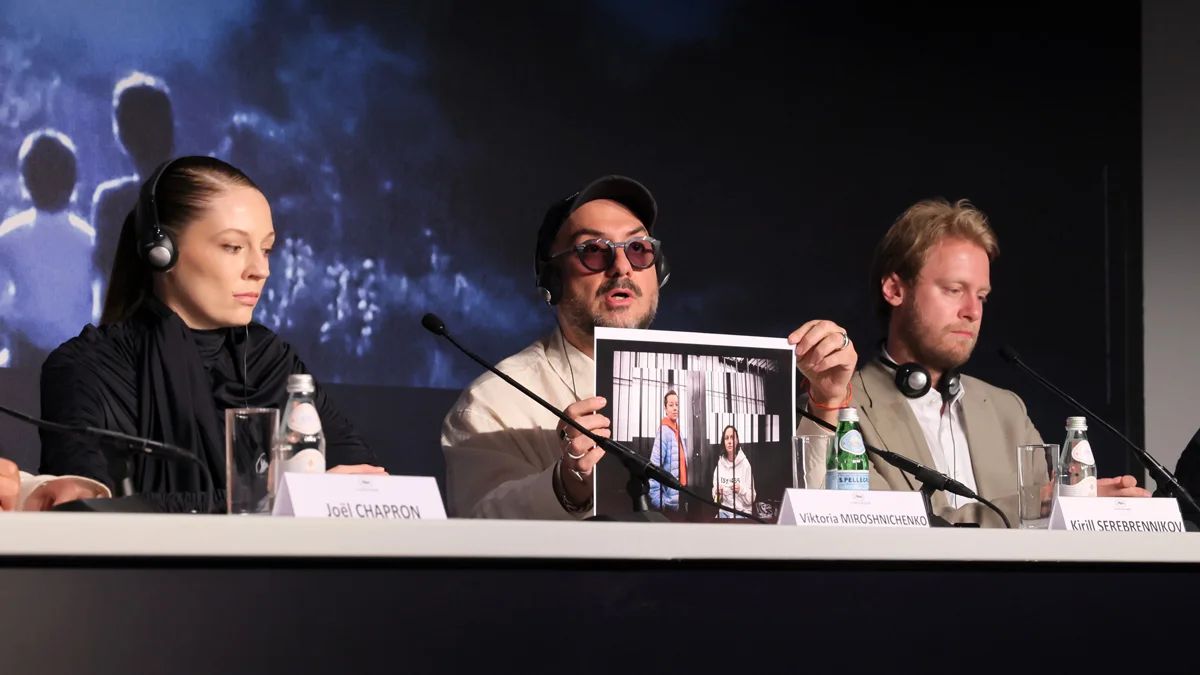
“Limonov. Ballad of Edichka ”is the first film by Kirill Serebrennikov completely in English. At the same time, the characters speak with a pronounced Russian accent. The director at a press conference in Cannes himself explained that although they managed to remove something in Russia before the beginning of a full-scale invasion, most of the picture was made abroad (scenes with New York were shot in Latvia). The picture itself is international and also tells about the universal experience of moving to another country, and, accordingly, about loneliness.
“I left where I feel bad, where there are my friends, work and more opportunities. Where I may be better. This is not an emigration. New doors just open, and we begin a new life ",
- Serebrennikov himself speaks of emigration.
The fact that the film is not shot in Russian does not surprise anyone in Cannes. The Italian, who was present at the premiere, shares his impressions: “He [Limonova] is already something like a cult reputation here. “Limonov” is a very peppy picture, it should attract more international attention than the previous films of Serebrennikov, ”the viewer said. He believes that lemons are quite popular in the world, and his popularity contributes to the promotion of the picture.
Another viewer, the Frenchman, suggested in the commentary of the New Evrope that even if the film was completely in Russian, he would hardly have been shown in Russia because of repressive laws. But “the question is not even in the language. How many people abroad as a whole will want to watch a film about the person who supported the annexation of Crimea? Especially after the start of the war in Ukraine, ”he asks a question.
The premiere itself became not as crowded as the shows of Megalopolis Francis Coppola or “All types of kindness” of Yorgos Lantimos, however, Serebrennikov and the cast met in the cinema very warmly - the applause, according to Cannes tradition, lasted about four minutes. Among the guests in the hall, the correspondent of Novo-Europe was noticed by the journalist Ksenia Sobchak, who later joined the film team in Aftepati.
"Carrer composed this character in something"
Kirill Serebrennikov fundamentally calls the film “Ballad”, not by Bayopic, since it is based on the “ fictional novel-biography ” of the authorship of Emmanuel Carrera.
“When I re-met with Limonov, whom I knew and even admired in the 80s in France, I began to reflect on his life trajectory, about his insurmountable desire to live a“ real ”fate, to become the hero of the novel. And I thought that, really, such a novel would be worth writing, ” said Carrer. “After all, Limonov is unusually suitable for the role of the hero of the Plutovsky novel, such as Barry Lindon, about the adventures of the adventurer who came out of the people.”
For this reason, the director admits at a press conference, and this particular material for the picture approached him: “Carrer composed this character in some way, making him from Limonov’s lyrical heroes. This is a triple composition. ”
Some real events are guessed in the plot, but attention is not focused on them-for example, the National Bolshevik Party (NBP) and Limonov’s activities in Russia 00s are released less than 15 minutes. This passage resembles documentary shooting, and the NBP shares themselves are mentioned only once - the audience is shown a rally in Latvia, at which several dozen demonstrators were detained. Accusations of attempts to create armed organizations, prison, participation in the Balkan war are not mentioned at all. Serebrennikov himself explains this arrangement of priorities with timing (at the same time, we note that in the essay of Carrera, all of the above is present).
Most of the plot unfolds in New York, where Eduard Savenko (only acquired by the pseudonym Limonov-from the word “lemon”) emigrated along with the Lioness from Moscow Bohemia, the poetess and model Elena Schapova-after threats from the KGB.
It is with Shchapova that Serebrennikov begins the study of the sexuality of the hero and the significance of this topic for the life and work of his character. The woman “not from his league” makes Limonov suffer, suffer from unhappy feelings, cut the veins and smear the walls in front of her apartment.
They are fond of erotic photo shoots, visit porno -therapists and have anal sex while watching Alexander Solzhenitsyn's television performance. After a heavy break with Schapova, he creates her altar, inflicts makeup, wanders around the city in search of a new himself and has sex with a dark-skinned homeless man-he then looks with different eyes at New York, which was initially emigrated to the pair as a crazy and colorful place, a “dream city”.
At the same moment, Limonov’s new reincarnation, his symbolic “death” (is also quite eccentric-in this fantasy of him, dressed in the Pigzon White costume, bandits are shot right on the very crowded street of New York). Installation transition - and now it is not just young and bright, full of hope of expat, but a butler in Manhattan. And, nevertheless, he continues to write - and tries to join the hated wealth to release his first book.
Disappointment with the capitalist world of the West pushes Limonov to return to the USSR - he cannot integrate into local society, which seems to him nasty and not far. In recent years, exile has been clearly reflected in the scene, where the poet runs along the post-apocalyptic streets of New York, not paying attention to historical events. It breaks out of the movie scenery (in the literal sense of the word) and runs out into the street.
The topic of “searching for oneself” will be repeatedly raised by journalists who interview Limonov. They all ask who he considers himself - a Soviet writer or dissident.
Limonov - no longer a poet, not a beggar, not a marginal, but a real celebrity and a real politician - evades these issues and ridicules them.
In one of the final scenes, an employee of the Presidential Administration of the Russian Federation, who was the same as an employee of the KGB who drove Limonov from Russia, offers a policy to become an assistant to the new president. Limonov, accustomed to be outside the system, refuses.
Despite the activities of the politician in the last years of his life, the “ballad” does not broadcast these values, but, on the contrary, is rejected from everything related to the National Bolshevism, the permanent war with the West and the “reunion” with Ukrainian territories. The film ends with an afterword that states that NBP members fought in the east of Ukraine, and Limonov himself died two years before the beginning of a full -scale invasion.
As Serebrennikov himself summed up, “it feels like we are now living in the world of Limonov. As if the Russian authorities read his last books and did exactly what he proposed. "