
Translated material
Cat landing
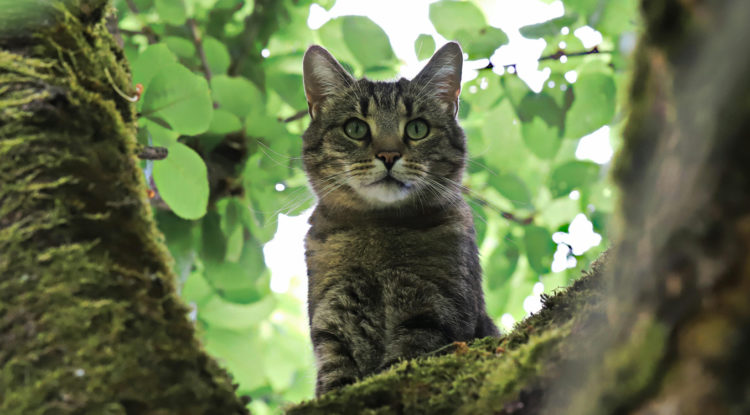
On the island in South Asia, a food chain was broken. To fix everything, 23 cats were thrown off the plane
In the 1950s, the World Health Organization sprayed the poison from insects on the island of Borneo to stop malaria. This helped get rid of mosquitoes that endured the disease, but on the island the invasion of rodents began. Then the WHO decided to drop the unusual “landing”- cats and cats-parachutists to the island. "Cold" tells what it led to.
In order not to miss the main materials of the "cold", subscribe to our Instagram and telegram .
In 1945, at a conference in San Francisco, representatives of 50 countries founded the UN-an organization that was supposed to prevent a new world war and ensure peace and security on Earth. On the same day, they discussed another initiative - the creation of an international organization that would be responsible for health care. Three years later, a WHO appeared - the World Health Organization.
One of the goals was proclaimed "the eradication of malaria around the world." Humanity has fought with it for several hundred years. Only in the 20th century, about 300 million people died from malaria-more than because of the first and Second World Wars combined.
Poison in every house
In 1955, WHO launched a global malary liquidation program (GMEP). The main carriers of malaria are mosquitoes. In order to get rid of them, I decided to use a chemical compound open in 1939 - dichlorordiphenylrichloretan (DDT). The tool became popular after during the Second World War discovered its effectiveness against parasites, thereby stopping typhoid, malaria and plague among soldiers. After the war, DDT began to be sold in the United States - in advertising, smiling housewives sprayed a “wonderful” remedy of the house to get rid of pests.
The WHO program was used in Europe, South America, Asia, some regions of Africa, as well as on the islands of the Pacific Ocean. The pesticide was sprayed from the sky and to the walls inside the houses.
Komarov really became smaller: they died from contacts with the surfaces treated with a chemical. However, other consequences showed. For example, in Malaysia, local residents complained about the destruction of the straw roofs of their houses after processing. During the investigation, the WHO found that not only mosquitoes, but also wasps that kill the larvae of moths living in the roofs were susceptible to DDT. At the same time, the larvae were able to survive, increasing the population so much that the roof ceased to withstand and this led to the collapse. Soon another problem appeared - the invasion of rats. Due to the spraying of DDT, natural enemies of rodents-cats died.
The death of cats after processing houses was recorded in several regions at once: they licked a pesticide from the paws and wool, after which, according to local residents, "shook and died a few days later." The 1977 Time article said that the disinfectors in Mexico are called Los Matagatos - “cat killers”. According to the story of one family, they processed a DDT section, and after a while they saw their cat in serious condition. The animal moved as if every step caused him pain, his eyes were poured with blood, and the mouth had foam.
In Bolivia, the deathof cats led to the spread of hemorrhagic fever - a group of viral diseases that affect the vessels and kidneys that transfer rodents (sometimes it is called a “mouse fever”).
Operation "Cat Troops"
Borneo - an island in South Asia, one of the largest in the world - also encountered the invasion of rodents. Representatives of the small people of Kelabit, living in the highlands in the north-west of the island, complained that the bred field rats destroy crops. To avoid flashes of the plague, typhoid and preserve crops, WHO announced the search for 30 cats.
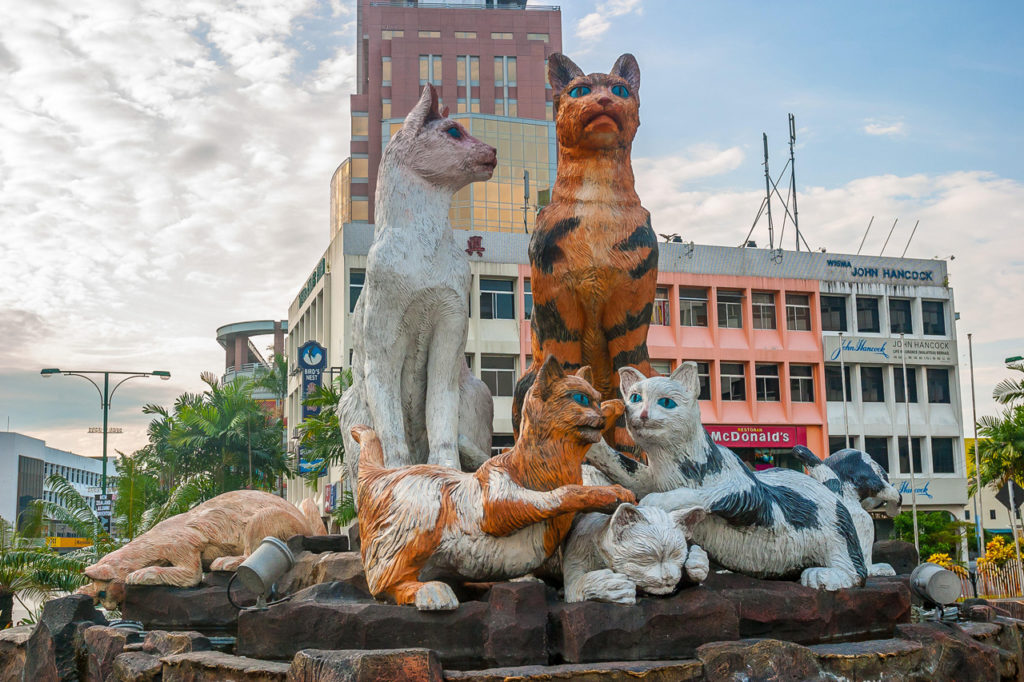
The inhabitants of Kuching, one of the largest cities on the island, which, according to one version, answered the request. [named] (https://biblioasia.nlb.gov.sg/history/2024/4/cats-rats-parachute-malaya/ ...:~::: ICH%20MEANS%20%E2%80%98CAT%E2%80%99%20in%20MALAY%20AND%20ILSO%20known%20AS%20City%20OF%20Cats) “Cats” by a malayska “ cat ”).
To deliver animals was a difficult task. Kelabits lived in isolation in a highland area, where it was difficult to land the plane. Then the WHO decided to surgery "Cat Drop". The British royal air forces (most of the island was a colony of Great Britain) made five test flights to make sure that it was safe. In March 1960, Kuching cats were loaded aboard the B-101 Beverley aircraft. When the plane reached the destination, the animals were put in wicker baskets with parachutes and one was thrown down one at a height of 120 meters. The operation took about an hour, from below the slowly descending baskets watched Kelabits.
In newspapers, this event was called "cat rain." Together with animals, more than three tons of supplies were dropped by Kelabits. A few weeks after the operation, the Kelabits reported that the number of rodents decreased, and sent a message to the residents of Kuching: “Thanks for the cats, no more problems with rats and mice.”
"DDT destroys my life"
Biologist Rachel Karson in the book “Quiet Spring”, published two years after the “cat landing” in Borneo, first suggested that DDT is dangerous not only with direct swallowing: “One of the most sinister characteristics of DDT and the chemicals related to him is how they are transmitted from one organism to another through all the links of the food chain.” Accumulation in the body is called biomagnification - if an insect, killed DDT, will eat a rodent or a lizard, and it is a cat, then a pesticide will also enter its body.
After the war, many called DDT "miracle." At different times, in the United States, they sprayed not only fields and vineyards, but also municipal landfills, dairy plants, cattle -somers, factories for the production of freezers, and sausage products. The cows protected from insects gave more milk, and bulls - more meat. Cockroaches and ants disappeared from kitchens, bugs from mattresses, and moth - from cabinets. The campaign begun in 1947 on the use of DDT in the United States over four years helped to practically defeat malaria. The Swiss chemist Paul German Müller, who discovered DDT's properties, received the Nobel Prize in 1948 for saving the “lives and health of hundreds of thousands” from diseases transmitted by insects.
But some media outlets already warned of his ability to violate the "complex balance of nature." DDT was called a weapon that saved the house from mosquitoes, flies and parasites, but at the same time it could harm human and animal life.
Some Americans, such as a farmer from Georgia Dorothy Kolson, tried to organize the DDT movement. At the beginning of 1949, she wrote to the National Health Council of New York that DDT “destroys the life of her family”: cows fell ill, chickens and honey bees died, and her daughter did not pass the sore throat, which Kolson also associated with the chemical.
Kolson wrote to state departments, chemical producers and healthcare organizations around the world. She did not find direct evidence that the substance could be dangerous for a person, but found that DDT is really harmful to other living creatures : small mammals, birds, fish, reptiles, bees, butterflies and other insects.
“Any poison, strong enough to kill honey bees, is probably strong enough to act on people,” Kolson wrote in one of the letters.
Dorothy Colson was not the only one who opposed DDT. In the late 1960s, Charles Wurster, a biologist from the State University of New York, united with lawyer Viktor Yannacon and several environmental defenders to create a movement that will stop the use of DDT. They filed a lawsuit of the Suffolk County County Commission in New York with a demand to stop the spraying of DDT from the air over local swamps. The lawsuit was satisfied - this was the first ban on the use of DDT in the United States.
The International Treaty on the termination of the use of DDT production was signed only in 2001 in Sweden. The Stockholm Convention determined that DDT is able to accumulate in the organisms and attributed a pesticide to 12 persistent organic pollutants subject to gradual refusal and final elimination, but its use is still allowed to combat diseases carriers.
In September 2006, the WHO said that they support the use of DDT indoors in countries where malaria remains a serious problem and the benefits of the pesticide outweigh the risks of health and the environment. Nevertheless, the organization said that she advocates refusing DDT and the search for alternatives.